

In a region grappling with a severe lack of affordable housing, the city of Wylie in Collin County is stepping up to address a critical need. Thousands of residents across the Dallas-Fort Worth Metroplex struggle daily to find stable, affordable places to call home, a challenge that civic leaders are now actively confronting. This proactive stance highlights a growing recognition of the housing crisis even in seemingly affluent areas.
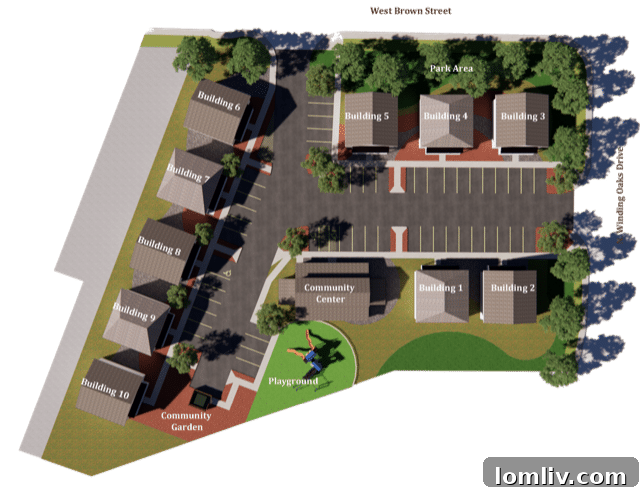
In a pivotal move demonstrating commitment to community welfare, the Wylie City Council granted approval in March for the rezoning essential for Jericho Village. This innovative development, set to feature 38 income-based, urban housing units, will be strategically located at 511 Brown St. Jericho Village represents more than just a housing complex; it embodies a holistic approach to supporting vulnerable populations and fostering long-term stability.
The ambitious $7 million project is bolstered by significant philanthropic support, underscoring the collaborative spirit driving this initiative. A substantial $1 million donation from the esteemed Kaleta A. Doolin Foundation provides a robust foundation for the construction phase. This foundational support is crucial in bringing the vision of Jericho Village to fruition, demonstrating a shared commitment to alleviating housing insecurity.

Further galvanizing community efforts, Janet Collinsworth, the visionary founder and director of Plano-based Agape Resource & Assistance, announced an ambitious fundraising goal. Agape aims to secure an additional $750,000 for the project by September 1st, reflecting a fierce dedication to ensuring the project’s comprehensive success and sustainability. Collinsworth’s leadership has been instrumental in advocating for and developing solutions for those experiencing homelessness.
Collinsworth eloquently articulated the pressing need for such initiatives: “While it’s hard to believe that homelessness exists in an affluent area like Collin County, there are women and children who fall on hard times. With the help from the foundation and others, we are investing in a future where families in need will have a safe and stable home.” This statement powerfully addresses the often-overlooked reality of homelessness in suburban and economically prosperous regions, emphasizing the universal nature of the challenge.
The timeline for Jericho Village is set for rapid progress, with groundbreaking anticipated by the end of the year. Prospective residents could begin leasing homes as early as the third quarter of 2023, offering a tangible light at the end of the tunnel for many families. The development is specifically designed to serve “homeless, women-led families” who have either successfully completed Agape’s transformative transitional housing program or are otherwise facing immense difficulties in securing stable housing due to the prevailing shortage of affordable options.
A staggering statistic underscores the profound vulnerability of Jericho Village’s target demographic: more than 85 percent of the women served by Agape Resource & Assistance have experienced the trauma of abuse, violence, or human trafficking. Recognizing these complex challenges, officials confirmed that rent at Jericho Village will be carefully assessed on a sliding scale, meticulously tailored to individual income levels. This flexible approach ensures that housing remains accessible and sustainable for those striving to rebuild their lives, fostering an environment conducive to recovery and empowerment.
Confronting Homelessness: Solutions and Strategies Across the Metroplex
Homelessness is a multifaceted crisis that transcends geographical and socioeconomic boundaries, affecting metropolitan areas nationwide. In response, cities across the U.S. are implementing diverse strategies aimed at prevention, intervention, and long-term resolution. These initiatives typically encompass efforts to prevent unlawful evictions, expand the inventory of affordable housing units, and proactively address the underlying systemic issues that drive individuals and families into homelessness. It’s a battle fought on multiple fronts, requiring coordinated and compassionate approaches.
The scale of the challenge is starkly illustrated by national statistics. According to a comprehensive report published by the National Alliance to End Homelessness, in January 2020, an alarming 580,466 people experienced homelessness across America. The report detailed that “Most were individuals (70 percent), and the rest were people living in families with children. They lived in every state and territory, and they reflected the diversity of our country.” This data highlights the widespread nature of homelessness and the varied demographics it impacts, emphasizing the urgent need for tailored local solutions.
Closer to home, the Dallas City Council recently convened to deliberate on the escalating situation within its jurisdiction. Elected officials expressed profound concerns regarding the rising numbers of unhoused individuals. In a significant commitment, the city has allocated $17 million within its extensive $4.51 billion budget specifically for housing and homelessness solutions. This substantial investment underscores the city’s recognition of the severity of the crisis, where approximately 4,400 individuals are currently experiencing homelessness in Dallas.
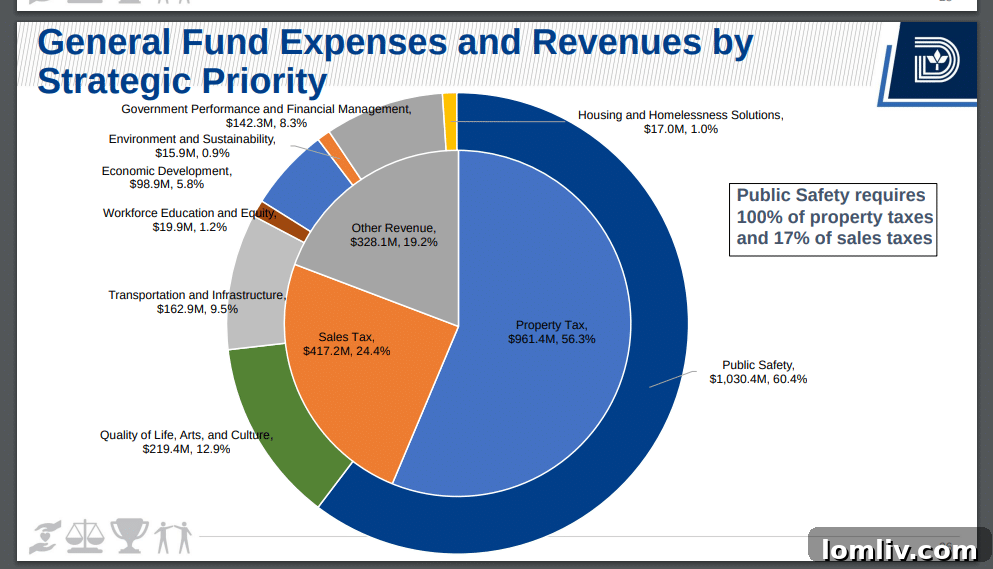
Christine Crossley, the Director of Dallas’s dedicated Office of Homeless Solutions, provided critical insights into the contributing factors behind the surge in homelessness. She attributed the increase primarily to soaring rental rates, pervasive inflationary pressures, and the enduring socio-economic repercussions of the COVID-19 pandemic. These intertwined issues have created a perfect storm, pushing more individuals and families to the brink of housing instability and into homelessness.

Crossley elaborated on the multifaceted approach Dallas is employing: “Our shelters do need support in ways we are working on internally, but at the same time, that does not negate the success we have had through the [Dallas Real Time Rapid Rehousing] and the encampment efforts — the commissioning, the cleanings that we’re doing — which are wildly successful in terms of, not only have we reached our goal, we’ve reached it early and we’re still going.” She emphasized the critical balance between reactive solutions and proactive prevention: “We do have the path forward, but we also have to look at how we prevent people from coming into homelessness. I don’t think those two negate each other, but we have to acknowledge each piece separately.” This comprehensive philosophy guides Dallas’s efforts.
The city’s strategy involves multiple specialized teams. The Homeless Action Response Team is on standby to address emergency situations, providing immediate assistance to those in acute need. Concurrently, other dedicated teams respond to service requests from the public, ensuring that ongoing support and resources are readily available. Furthermore, Crossley explained that code enforcement teams are being strategically deployed to systematically clean and maintain designated areas of the city by quadrant, enhancing public safety and hygiene for all residents.
While acknowledging the progress made, Crossley stressed that the journey toward eradicating homelessness is ongoing and demands sustained effort. “While it is getting better, it takes more movement and more staff to get better,” she asserted. Her vision for the future is clear and resolute: “We have the big picture in mind. We know where we’re going. You are going to see more activity before we get there. I think the thing we are all focused on is more affordable housing, because we only have so many resources and we’re already working a lot of magic.” This statement highlights the fundamental belief that increasing affordable housing options is the most potent long-term solution.
The Power of Community: Jericho Village and Collin County’s Housing Crisis
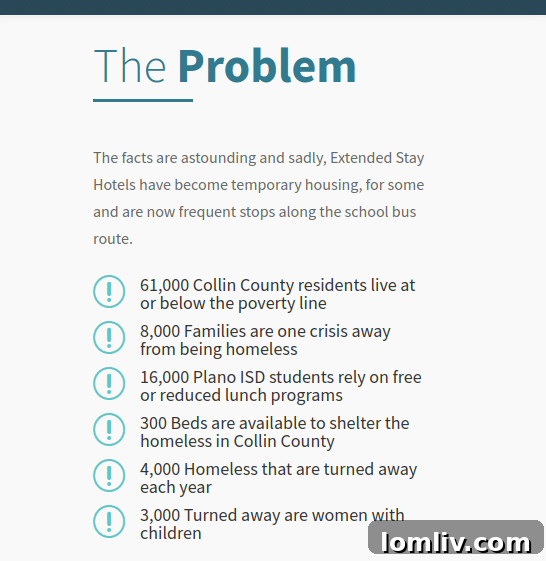
The stark reality of the housing crisis in Collin County underscores the critical need for projects like Jericho Village. Despite its reputation for affluence, the county faces a severe deficit in shelter capacity. According to official Jericho Village documents, a mere 300 beds are available for sheltering the homeless, a number tragically insufficient to meet the demand. This dire scarcity results in over 3,000 women and children being turned away from area shelters each year, leaving them with limited options and exacerbating their vulnerability. The human cost of this shortage is immeasurable.
The severity of the situation is further evidenced by the pragmatic, albeit temporary, solutions being employed: extended-stay hotels are now frequently utilized for temporary housing, a situation so prevalent that they have been incorporated into area school bus routes. This unsettling fact reveals the widespread impact of housing instability on the most vulnerable members of society – children whose daily commute now includes a stop at what should be a transient accommodation. Kathy Beazley, who manages communications for Jericho Village, highlighted another alarming trend: the number of Plano ISD children identified as homeless has escalated fivefold since 2009, indicating a worsening crisis for future generations.
Beazley also presented a sobering statistic that should resonate with every community member: “Recent statistics also show that there are an estimated 6,500 households that are one crisis away from homelessness, and almost 75 percent of these households are women-led.” This data illustrates the precarious financial tightrope many families walk, where a single unexpected event – a job loss, a medical emergency, or a natural disaster – can plunge them into housing insecurity. The disproportionate impact on women-led households further underscores the systemic challenges faced by single mothers and female caregivers.
Kaleta Doolin, the founder of the contributing Kaleta A. Doolin Foundation, articulated the long-term vision for Jericho Village: “The foundation board feels that Jericho Village is a solution to the large and increasing need in the community.” She emphasized that the project is designed to provide not just shelter, but a sustainable pathway for women transitioning out of homelessness, empowering them with the resources to achieve lasting independence and stability. This long-term perspective is crucial for breaking cycles of poverty and vulnerability.
Despite the immense hope Jericho Village offers, the charitable organizations backing it are keenly aware that this 38-unit housing complex, while vital, is but a “drop in the bucket” compared to the sheer scale of the problem. Collin County, with its approximately 1 million residents, reported around 500 homeless individuals in a January report from the Collin County Homeless Coalition. This statistic, while seeming low, doesn’t capture the hidden homelessness and near-homelessness prevalent in the region, highlighting the need for continuous and expanded efforts.
The problem of limited affordable housing opportunities often appears insurmountable, a daunting challenge that requires innovative and sustained engagement. Agape Resource & Assistance, with eight years of dedicated service, has been at the forefront, providing essential life skills, vocational training, and critical counseling to women navigating complex circumstances. Their extensive experience informs the design and operational philosophy of Jericho Village, ensuring that it addresses not only housing but also the broader spectrum of needs for its residents.
A recent study by the National Low Income Housing Coalition further underscores the regional severity of the affordable housing crisis, ranking North Texas among the top 10 worst metropolitan areas in the nation for housing affordability. Their 2020 findings revealed that Dallas-Fort Worth possesses only 21 affordable and available homes for every 100 low-income renters. This shocking disparity forces many to live in substandard conditions or dedicate an unsustainable portion of their income to rent. Furthermore, the study determined that a full-time worker in the area must earn an hourly wage of $25.82 merely to afford a modest one-bedroom rental home, a rate far exceeding minimum wage and many entry-level salaries.
Janet Collinsworth encapsulated the transformative potential of Jericho Village: “Jericho Village will be an inclusive, scaled-rent and innovative solution to ending the debilitating lack of economically attainable housing in Collin County.” She emphasized the integrated support system that will be a cornerstone of the community: “Building on the success of Agape’s transitional housing program, on-site case workers will help [tenants] gain convenient access to empowerment support services including equitable access and assistance with childcare, transportation, workforce education and training, financial literacy, budgeting, and counseling. By offering mixed-income rental homes and support services, Jericho Village will provide individuals and families with the tools needed to retain or attain economic, emotional and physical stability.” This holistic approach is designed to empower residents not just to survive, but to truly thrive, creating a ripple effect of positive change throughout the community.