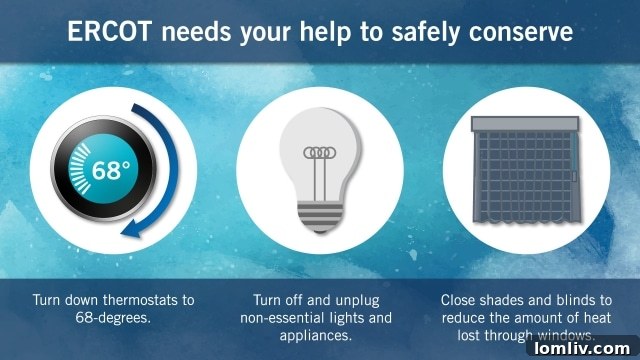
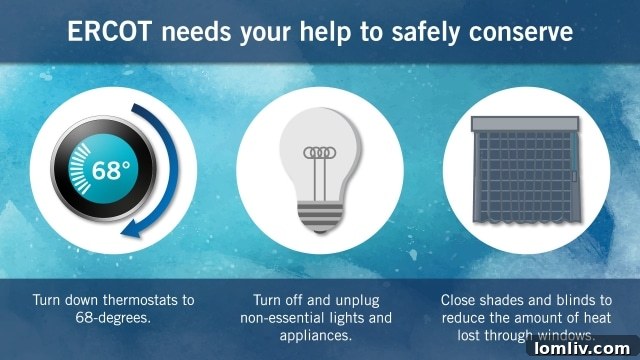
Texas, a state known for its fierce independence and the resilience of its people, faced an unprecedented challenge when a historic winter storm plunged millions into darkness. As extreme cold temperatures gripped the Lone Star State, the Electric Reliability Council of Texas (ERCOT), responsible for managing most of the state’s power grid, initiated emergency procedures, triggering widespread power outages. This article delves into the complexities of the Texas power crisis, offering insights into why the grid faltered, the impact on residents, and the ongoing efforts to restore stability. We aim to provide clear, concise answers to critical questions, ensuring Texans and concerned observers understand the situation, its causes, and the path forward.
Texas Power Crisis: Understanding the Unfolding Outages
The severe winter weather that descended upon Texas brought with it record-breaking low temperatures and an unprecedented surge in electricity demand. This surge, combined with a significant reduction in power generation capacity, led ERCOT to declare an Energy Emergency Alert (EEA3) – its highest state of emergency. This declaration signaled a critical imbalance: electric demand far outstripped the available supply, threatening the integrity of the entire Texas energy grid. Initially, many anticipated typical “rolling blackouts,” which are controlled, short-duration outages designed to manage demand without widespread system collapse. However, the severity of the situation quickly escalated beyond this, leading to prolonged and unexpected power cuts for millions of Texans.
On Monday morning, as the crisis deepened, ERCOT issued directives to transmission companies to drastically reduce demand on the system. “Reserves have dropped below 1,000 MW and are not expected to recover within 30 minutes; as a result, ERCOT has ordered transmission companies to reduce demand on the system,” an official statement clarified. This measure, typically implemented through rotating outages, became a desperate last resort to prevent a catastrophic, uncontrolled collapse of the entire grid. The implication was clear: power outages, initially thought to be brief, could extend for much longer durations, a reality that soon became apparent across the state.
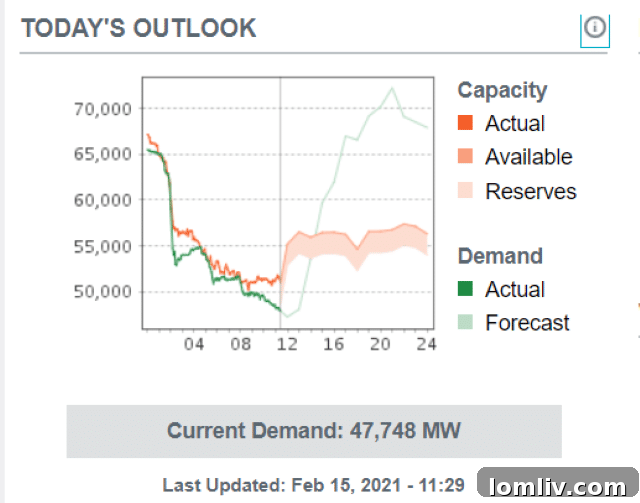
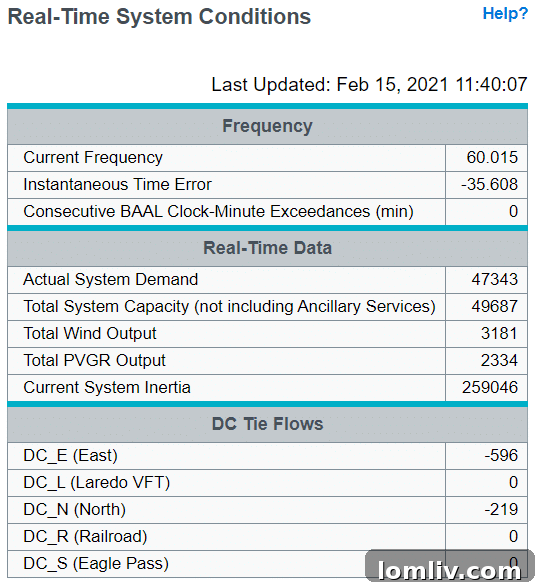
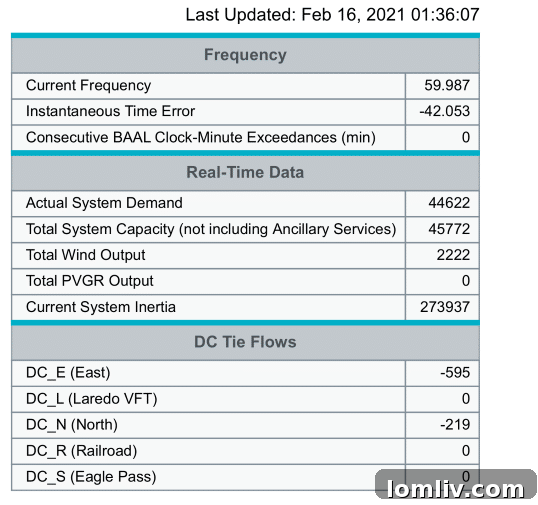
For those tracking the real-time conditions of the Texas energy grid, the official ERCOT dashboard provided a stark picture. This critical resource showcased the razor-thin margins between “Actual System Demand” and “Total System Capacity.” During the peak of the crisis, the system’s operating reserves plummeted to dangerously low levels, at times barely exceeding 1,000 MW. This precarious balance highlighted the extreme stress on the grid, as power generators struggled to keep pace with an insatiable demand driven by the relentless cold.
The crisis began to manifest on Sunday, February 14th, when ERCOT first appealed to consumers and businesses to voluntarily reduce their electricity consumption. Initial reports from ERCOT President and CEO Bill Magness attributed significant generation outages to “frozen wind turbines and limited natural gas supplies available to generating units.” This statement sparked widespread debate, with many questioning the primary cause of the widespread failures. While frozen wind turbines did contribute to the reduction in renewable energy output, experts quickly pointed out that the vast majority of generation capacity in Texas comes from natural gas, coal, and nuclear plants, many of which also suffered significant operational failures due to the unseasonably cold weather and a lack of winterization.
Related
Don’t Blame Wind Turbines for Texas’ Massive Power Outages
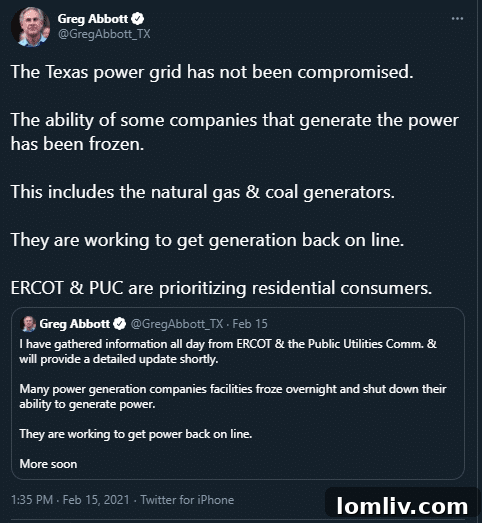
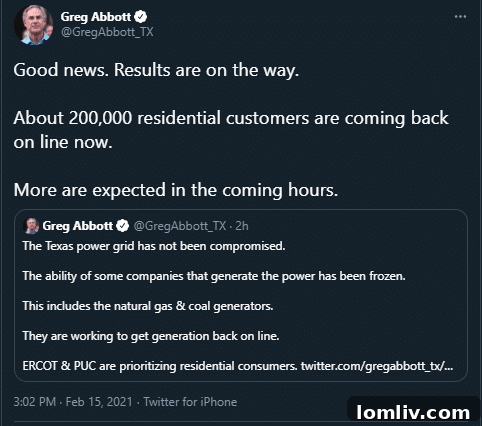
Despite the unfolding crisis, early reassurances from officials, such as Governor Greg Abbott’s tweet stating, “The Texas power grid has not been compromised,” quickly proved to be out of step with the grim reality faced by millions. The sheer scale and duration of the outages highlighted a profound systemic vulnerability.
The Evolving Narrative: Beyond Short-Term Outages
Initially, ERCOT’s protocol for rotating outages suggested they would primarily affect residential neighborhoods and small businesses, lasting typically between 10 to 45 minutes before power was restored and rotated to another area. This standard procedure is designed to manage temporary demand spikes. However, the severity of the winter storm quickly rendered these projections obsolete. Utility providers like Oncor, serving a significant portion of Texas, were among the first to convey the sobering truth: outages would last much longer than anticipated, extending potentially for days.
By Monday, Oncor revised its initial estimates, acknowledging that it could not predict when grid conditions would stabilize. “At this time, ERCOT is unable to predict when grid conditions will stabilize, and urge all customers to be prepared for extended outages to continue,” Oncor stated, reflecting the escalating gravity of the situation. This shift from controlled, short-term outages to unpredictable, prolonged blackouts caused immense distress and frustration among Texans already grappling with sub-freezing temperatures and limited resources.
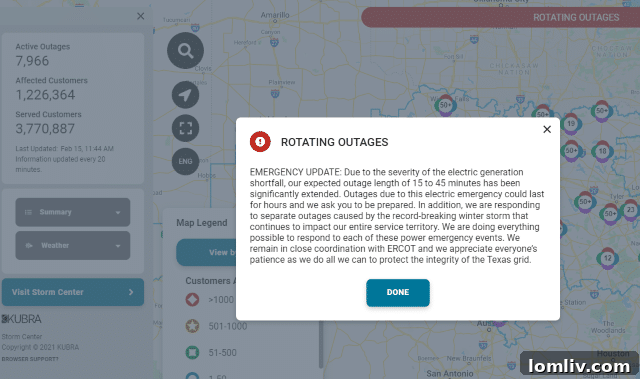
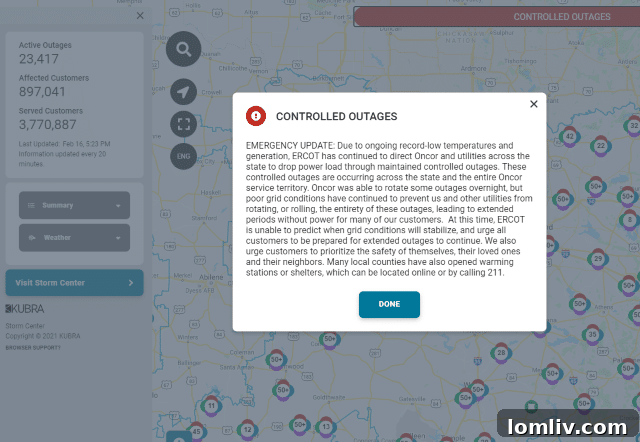
The alerts from Oncor continued to evolve, reflecting the deepening crisis. A Monday afternoon revision grimly stated, “The length of controlled outages have been significantly extended. These outages … could be required through Tuesday. We are asking all Oncor customers to be prepared to be without power for an extended period of time.” This dire warning underscored the unprecedented nature of the grid’s failure. Despite efforts, Oncor reported on Tuesday morning that while some outages were rotated overnight—a period when temperatures plummeted to as low as -1 degree in some areas—the poor grid conditions prevented the full rotation of all outages. This resulted in many customers enduring continuous periods without power, some stretching for 24 hours or more, amidst the harshest winter weather in decades.
The human impact was profound, with nearly 1 million customers across Texas reporting power outages, many experiencing critical loss of heat and light. The disparity in power access became a pressing concern, as some areas remained dark for extended periods while others, sometimes just blocks away, maintained full power.
Navigating the Darkness: How Long Will My Power Outage Last?
During a normal power outage, utility companies like Oncor provide detailed outage maps and estimated restoration times through platforms like the Oncor Stormcenter Dashboard. This resource typically offers granular information, allowing residents to track outages in their neighborhood and receive an ETA for power restoration. However, during the historic winter storm, these customary tools proved inadequate. The “Estimated Restoration” numbers frequently displayed “Currently Unknown,” a reflection of the grid’s unprecedented instability and the inability of utility providers to predict when system conditions would improve sufficiently to restore full service. Even with advanced mapping capabilities, which allowed users to zoom in and see specific affected neighborhoods, the fundamental question of “when” remained unanswered, contributing to widespread anxiety and a sense of helplessness among those without power.
In such a dire situation, traditional advice on reporting outages also shifted. While ordinarily, customers would be encouraged to text OUT to their utility provider to report an outage and receive updates, Oncor specifically advised customers against reporting their outages during this emergency. The utility explained that it was working in direct coordination with ERCOT to manage the integrity of the Texas grid, implying that all known outages were already part of a larger, coordinated response. This directive, though practical for grid management, left many residents feeling disconnected and without a direct channel for specific information regarding their homes.
Dallas County Judge Clay Jenkins further emphasized the uncertainty, reporting after discussions with Oncor that the utility could not guarantee a maximum amount of time for power restoration. This grim assessment solidified the understanding that the crisis was far from a routine event and that Texans needed to prepare for extended periods without electricity, heat, and, in many cases, running water.
What Are ERCOT and Oncor Doing to Restore Power?
The power restoration efforts during the Texas winter storm involved a complex, multi-tiered response led by ERCOT, the “big fish” overseeing the statewide grid, and implemented by local utility providers like Oncor, Garland Power and Light, Denton Municipal Electric, and Texas-New Mexico Power. These local entities, acting under ERCOT’s directives, were tasked with reducing demand on the system to prevent a complete collapse.
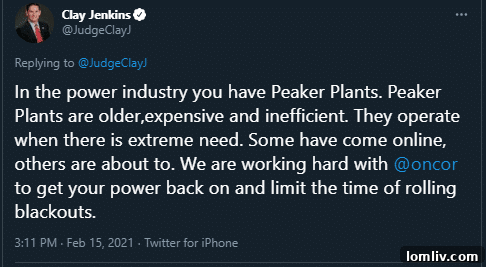
Initial efforts focused on bringing “peaker plants”—Texas’ network of reserve oil- and gas-fired power plants—online or ramping up their output. Dallas County Judge Clay Jenkins shared updates on these efforts, indicating some success in increasing generation capacity. Governor Greg Abbott also provided optimistic updates, initially reporting that hundreds of thousands of customers were brought back online and expressing expectations for more restorations. By Tuesday morning, an additional 400,000 homes reportedly had power restored, fueling hopes for a swift resolution.
However, the initial optimism quickly waned. By Tuesday afternoon, Governor Abbott’s tone had dramatically shifted. In a strongly worded statement, he criticized ERCOT, declaring, “ERCOT has been anything but reliable over the past 48 hours. Far too many Texans are without power and heat for their homes as our state faces freezing temperatures and severe winter weather. This is unacceptable.” He subsequently ordered an investigation into ERCOT’s preparedness and transparency, highlighting growing concerns about the management of the crisis.
ERCOT’s communication strategy during the crisis also drew criticism. The entity was not consistently providing specific public updates via social media and press releases. Its most notable public announcement during this critical period, a late Monday news release, indicated that the Public Utility Commission had granted ERCOT’s request to charge higher prices based on the scarcity of natural gas. This decision, aimed at incentivizing power generation, came amidst a widespread lack of transparency regarding the immediate operational challenges and restoration timelines, further complicating public understanding and trust.
Why Some Stayed Lit: Unequal Burdens of the Outages
One of the most perplexing and frustrating aspects of the Texas power crisis for many residents was the uneven distribution of outages. While millions suffered in the dark and cold, some homes and neighborhoods remained largely unaffected. This disparity was not random but a result of deliberate operational decisions designed to protect critical infrastructure and maintain overall grid stability. According to Oncor, homes located near essential facilities such as hospitals, fire stations, and critical utility pump stations were less likely to experience power outages. These areas are often part of “critical load” circuits that must remain energized to support vital public services and prevent larger system failures.
“Customers near critical facilities, or those in limited areas where rolling outages won’t take place in order to maintain grid stability, may not experience outages, while those farther from these facilities or areas may be out multiple times or for longer instances,” Oncor explained. Furthermore, the intricate design of the electrical grid means that even neighboring homes can be on different circuits. This explains situations where one side of a street might be completely dark, while the other side remains illuminated. These operational necessities, while crucial for grid integrity, inadvertently created a perception of unfairness and highlighted the stark realities of power access during an emergency.
Essential Resources and Winter Preparedness for Texans
The devastating winter storm underscored the critical importance of preparedness and access to reliable information. Beyond the immediate power crisis, many Texans faced additional challenges, particularly concerning their homes and plumbing systems.
Protecting Your Home: Preventing and Managing Frozen Pipes
Given the construction of many homes in North Texas, often built on pier-and-beam foundations, pipes are especially vulnerable to freezing temperatures if not adequately insulated. Frozen pipes can lead to burst pipes, causing extensive and costly water damage. It is crucial for homeowners to take proactive steps to prevent this. We’ve compiled comprehensive tips to safeguard your plumbing, including strategies to keep pipes from freezing, identifying the signs of frozen pipes, and actionable steps to take if they do freeze. Key preventive measures include dripping faucets, insulating exposed pipes, and opening cabinet doors under sinks to allow warmer air to circulate.
Future Resilience: Lessons Learned from the Texas Grid Failure
The 2021 winter storm exposed significant vulnerabilities in Texas’s energy infrastructure and its regulatory framework. As the state moves forward, there is an urgent need for comprehensive reforms, including mandates for winterization of all power generation facilities—regardless of fuel source—and improved communication protocols during emergencies. Investments in grid modernization, energy storage, and diversification of energy sources will be critical to bolstering the grid’s resilience against future extreme weather events. The collective experience of Texans during this crisis serves as a powerful reminder of the delicate balance between energy supply and demand, and the paramount importance of a robust, reliable, and prepared power system for the safety and well-being of its citizens.