For those closely following Dallas’s urban development narratives, the story of the Preston Place condos remains a poignant chapter. Over a year ago, a devastating fire consumed the Preston Place condos, leaving a void not just in the physical landscape of the Pink Wall area but also in the community’s sense of stability. The subsequent attempts to negotiate a comprehensive redevelopment plan for the area have been fraught with challenges, often ending in stalemate. Adding another layer of complexity, influential figures like former mayor Laura Miller, aligned with residents of the Athena and Preston Tower, have actively worked to impede progress, creating a deeply entrenched conflict that underscores the complexities of urban planning and community consensus.
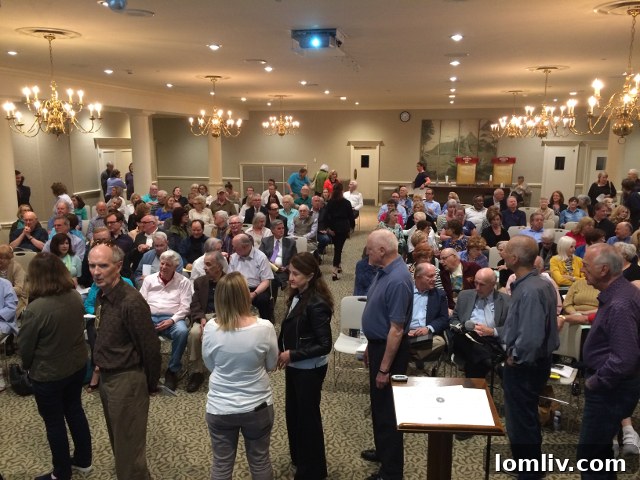
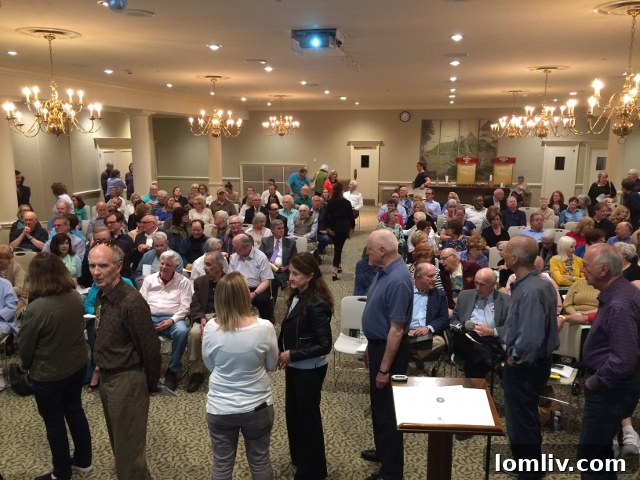
This ongoing saga reached a critical juncture recently, as Dallas City Council member Jennifer Gates convened a vital neighborhood meeting. The purpose was clear: to discuss the intricate history of the Preston Place site and outline the crucial next steps in its potential redevelopment. What came as a significant surprise to many attendees was the unexpected acceleration of an “authorized hearing.” Initially rumored to have a waiting list stretching two to three years, this pivotal process was announced to commence immediately, signaling a proactive shift in the city’s approach to the long-standing dispute. Gates promptly made applications available for community representatives eager to serve on the authorized hearing committee, setting the stage for a new phase of negotiation and decision-making.
Before delving into the specifics of that evening’s discussions, it’s important to understand the unique context surrounding this development.
Full Disclosure: The author resides within PD-15, and the publisher of this blog, Candy Evans, owns a unit at The Seville on Averill Way. This perspective informs our reporting on the nuanced dynamics of the area.
Understanding PD-15: A Legacy of Urban Planning Challenges
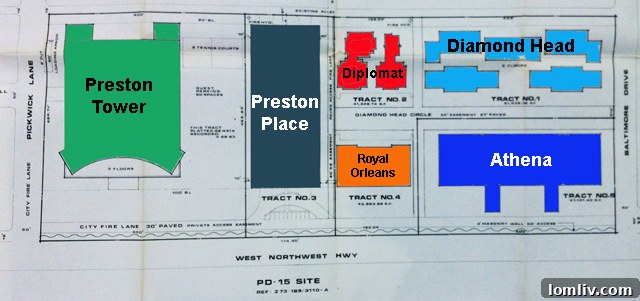
The history of what is now known as Planned Development District number 15 (PD-15) is as intricate as Dallas’s own growth. According to city planning representatives, the foundational concepts for this area date back to 1947. However, the formal designation as a “Planned Development District” only emerged in the 1960s, a period when such zoning tools became standard practice in urban planning. Prior to its official PD designation, the area was primarily zoned for commercial development, a classification that also historically permitted residential construction. It was during the formal PD designation in the 1960s that the zoning parameters were significantly altered. The area was reclassified to its current MF-3 (multi-family 3) under Section 51 (distinct from today’s 51-A) of the Dallas city code, a change that laid the groundwork for its present-day development landscape.
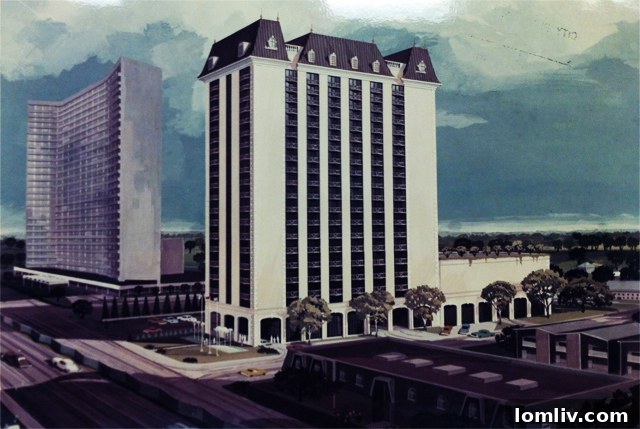
Under Section 51’s MF-3 zoning, the potential for development is substantial, allowing for unlimited building height, up to 60 percent lot coverage, and various setback parameters. These broad permissions, however, are overlaid and often constrained by the specific stipulations within the PD-15 documents. Crucially, these documents limit the total number of dwelling units permissible within the entire PD-15 district. Presently, there exists a significant pool of between 60 to 65 “unbuilt units.” These are not newly allocated units but rather a residual capacity from a failed high-rise project envisioned for the Preston Place lot in the early 1970s.
This pool of surplus units now represents a shared resource among all property owners within PD-15. Consequently, any new development seeking to utilize these units for increased density would require the unanimous agreement of all PD-15 members – a formidable hurdle in a diverse community. The only alternative for a property to undergo redevelopment without triggering a full-scale zoning hearing would be to rebuild the exact same number of units that previously existed on the parcel. Alternatively, a unanimous consensus among all PD-15 members to alter the district’s fundamental parameters could pave the way for new development. Last summer, a working group meticulously assembled by Council member Gates attempted to forge such an accommodation, striving to find common ground that all building associations could endorse. Regrettably, the process quickly devolved into an intractable dispute, with two opposing factions equally unwilling to compromise, highlighting the deep divisions within the community regarding its future.
This complex regulatory environment means that a developer cannot simply file a standard zoning case with the city to propose a project that exceeds the existing dwelling unit limits outlined in the PD-15 documents. For the Preston Place site, this restriction translates to a mere 60 units on a valuable two-acre plot, and only 15 units on the adjacent Diplomat’s one-acre parcel. These numbers are undeniably unrealistic and economically unviable given the soaring land values in Dallas and the high quality of residential construction expected by the sophisticated residents of this affluent neighborhood. The current zoning effectively stifles modern, high-quality redevelopment, creating an impasse that demands an innovative solution.

The Authorized Hearing: A Path Towards Resolution
In response to such intractable impasses, cities often turn to a mechanism known as an “authorized hearing.” This unique process differs significantly from a developer-initiated zoning request. In an authorized hearing, the city itself takes the initiative, instigating a comprehensive review of the most appropriate zoning and development parameters for a given area. The city then assembles a representative contingent of area residents, forming a committee tasked with meeting regularly to deliberate and ultimately hammer out a mutually acceptable agreement. Throughout this complex process, the city’s role is critical: it acts as both an indispensable information resource, providing expert data and guidance, and a neutral mediator, facilitating constructive dialogue between often-disparate viewpoints. The outcome of such a hearing can vary; it might result in a decision to leave the area’s zoning unchanged, or, more commonly, it leads to the establishment of specific accommodations and new development guidelines, often in exchange for defined “givebacks” or community benefits from developers. This author, for one, strongly believes in the power of this structured negotiation and firmly aligns with “Camp Negotiate.”
During the recent community meeting, following initial questions and comments, the expected dire predictions of overcrowding and its resulting traffic gridlock quickly surfaced. It seems that the potential redevelopment of even a few parcels in the PD-15 area is often perceived as having an outsized, catastrophic impact on major thoroughfares like Northwest Highway and Preston Road. While these intersections undoubtedly experience significant traffic during rush hour, handling tens of thousands of vehicles, the incremental increase from a few hundred new apartment units amounts to little more than a statistical rounding error in the grand scheme of regional traffic flow. The broader narrative of traffic congestion often overshadows the nuanced reality of localized impacts.
However, the impact on internal, neighborhood roads is a different matter altogether. There, increased density will absolutely have measurable effects. This is precisely where the role of the neighborhood representatives within the authorized hearing becomes paramount. Their mandate is to negotiate thoughtful and effective solutions for any new projects – implementing a “if this, then that” framework. This includes addressing critical issues such as parking provision, potential flooding mitigation, and all the other localized concerns that have long plagued the Pink Wall area. While it’s unrealistic to expect every single problem to be completely resolved or every historical woe to be undone – there simply isn’t enough financial capital in these few development deals to achieve that – a successful negotiation through the authorized hearing process promises to leave the area significantly better off than if no agreement were reached. It represents a pragmatic approach to managing change.
One of the most frequently voiced, and frankly, most galling sentiments expressed by opponents of the authorized hearing is the notion that it somehow strips residents of their fundamental rights. This assertion is poppycock. While it is true that an authorized hearing bypasses the requirement for unanimous PD-15 approval for zoning changes – a requirement that has proven to be an insurmountable barrier – it is precisely because of the contentious, often non-negotiable attitudes displayed by members of the previous working group that “unanimous” was never a truly viable path forward. The authorized hearing offers a structured process designed to break through such stalemates, ensuring that progress can be made for the benefit of the wider community, rather than being held hostage by a vocal minority.
The Preston Road and Northwest Highway Area Plan: A Flawed Blueprint?
Within the convivial setting of the Baptist church’s fellowship hall, many attendees spoke with a palpable reverence for the Preston Road and Northwest Highway Area Plan. Cheers erupted whenever a speaker expressed support for the plan and its various recommendations, signaling a strong emotional attachment to its vision. Key figures associated with the Area Plan task force, such as Steve Dawson and former mayor Laura Miller, appeared to elevate the plan to an almost sacrosanct status, placing it in the same pantheon as cherished American ideals like Mom’s apple pie and baseball. However, it is crucial to note that neither Dawson nor Miller are residents of the Pink Wall area. Furthermore, neither are residents of the Athena or Preston Towers; Miller’s husband, for instance, inherited his mother’s unit in the Athena, which they rent out but have never occupied themselves. Interestingly, neither of these influential figures championed the cause for tower residents’ representation on the Preston Center task force, even as they sat on that very committee, effectively deciding the fate of the area that would profoundly impact these high-rise communities.
Side note: It was quite ironic to hear Dawson eloquently wax poetic about the preciousness and unique character of the neighborhood, only to then grudgingly concede, under an insistent audience chant of “Where do you live?”, that his residence was in University Park. This geographical distance highlights a potential disconnect between some advocates and the immediate community affected by the plan.
It was at this point that I felt compelled to speak, a rarity for me in such forums. I highlighted a critical truth that Council member Gates, for reasons unknown, seemed unwilling or unable to acknowledge: the Preston Center Area Plan, despite its grand vision and detailed recommendations, utterly lacks any substantive financial underpinnings to support its conclusions. The plan, which spans a significant 95 pages, contains less actual mathematical or economic analysis than is present in just a few paragraphs of critical review. This fundamental absence of economic feasibility means that many of its aspirations are, regrettably, built on wishful thinking rather than practical viability. Previous analyses have consistently exposed these financial deficiencies, underscoring a significant flaw in its approach.
Because of this glaring omission, I directly addressed those in the audience who were enthusiastically cheering for four-story construction limits while simultaneously booing the perceived “ugliness” of existing developments like The Laurel apartments on the corner. My message was clear: quality matters. If the community truly desires “Laurel clones” – or worse – then by all means, they should continue to push for severely restricted four-story height limits. But they must then be prepared to accept the aesthetic and functional consequences without complaint. It’s a fundamental economic reality: assuming a standard 20 percent profit margin for developers, every dollar the neighborhood manages to “beat out” of a project directly removes 80 cents in potential quality from the construction budget. Developers’ profit margins in high-value areas like this typically do not decrease; rather, it is the quality of materials, design, and amenities that is inevitably compromised to meet reduced project budgets. Communities seeking to dictate density without understanding these economic realities risk getting exactly what they wished for, but not what they truly wanted.
Laura Miller’s Controversial Stance: A Question of Equity
During her comments at the meeting, Laura Miller made a particularly pointed statement that drew significant attention. She claimed that a supposedly “contingent-free” offer to purchase the Preston Place site for $12 million had been rejected by the owners in favor of the current $18 million contingent offer from Provident. (It has been widely known that Leland Burk, a friend of Miller’s and also present in the audience, had previously submitted an offer to acquire Preston Place.) Miller’s apparent intent behind this disclosure was to “greed-shame” the Preston Place residents, implying they were prioritizing financial gain over community consensus or a quicker resolution.
However, this argument raises serious questions of fairness and perspective. Assuming both figures are accurate, who among us, in a purely rational transaction, would willingly accept $12 million when a legitimate offer of $18 million is on the table? The answer, unequivocally, is zero. This difference translates to a staggering $200,000 versus $300,000 per Preston Place homeowner – a whopping one-third less for each unit. Given that these Preston Place owners tragically lost every possession in the devastating fire, with some even lacking adequate insurance coverage, to “greed-shame” them for pursuing the best possible recovery for their immense losses is profoundly unjust. Moreover, this criticism comes from a woman living over a mile away, in a sprawling 9,168-square-foot mansion situated on two impeccably manicured acres in Old Preston Hollow, renowned for its spacious dining room and luxurious amenities. The perceived hypocrisy of an individual of such wealth and distance criticizing fire victims for seeking fair market value for their property adds a contentious layer to the already heated debate, highlighting a significant disconnect between the critics and those most directly impacted by the tragedy.
Ultimately, the community meeting unfolded largely as anticipated. The residents of the Athena and Preston Towers, long organized against any form of rational development that challenges their existing views, voiced strong opposition to the authorized hearing process itself. Their sentiments, shaped by a desire for preservation and control, were clearly and forcefully articulated. Conversely, a significant portion of the remaining participants, hailing from various parts of the Pink Wall area (including some from the towers who held more open perspectives) and the broader Preston Hollow community, demonstrated a greater willingness to engage with and explore the potential of the authorized hearing process. This division underscores the diverse and often conflicting priorities within the wider community.
Council member Gates did make one crucial point regarding eligibility for the authorized hearing committee: anyone explicitly stating their opposition to the authorized hearing process itself would be disqualified from serving. This sensible criterion immediately excludes non-resident landlords like Laura Miller and Steve Dawson, vocal Preston Tower residents such as John Pritchett and Susan Conard, and Athena residents Carla Young and Brett Fincher, along with any other individuals who signed the letter sent to Gates last November expressing outright opposition. However, I believe Gates needs to go a significant step further to ensure the integrity and effectiveness of the new committee. I contend that anyone who previously served on the original PD-15 working group should also be automatically excluded. Their past involvement demonstrably proved their inability to reach a compromise, and their positions have become too entrenched to contribute meaningfully to a fresh, constructive negotiation. And, even though I myself resigned from that working group due to what I perceived as counterproductive shenanigans, I acknowledge that this exclusion should, by principle, apply to me as well. To effectively restart the engine of progress, one must first ensure that the “gas tank” is free of any lingering contaminants from past failures. Only then can the community hope to move forward productively.

Remember: My focus extends across high-rises, homeowners’ associations (HOAs), and the intricate world of property renovation. I also hold a deep appreciation for the delicate balance between modern and historical architecture, particularly within the context of the YIMBY (Yes In My Backyard) movement, advocating for thoughtful urban growth. My writing has garnered industry recognition; in both 2016 and 2017, the National Association of Real Estate Editors honored my contributions with two Bronze awards (2016, 2017) and two Silver awards (2016, 2017) for excellence in real estate journalism. If you have a compelling story to share, a perspective to offer, or even an unconventional marriage proposal to make, please don’t hesitate to reach out via email at [email protected]. While I encourage you to look for me on Facebook and Twitter for general engagement, please be advised that you likely won’t find a direct presence from me there, but your efforts are always appreciated.