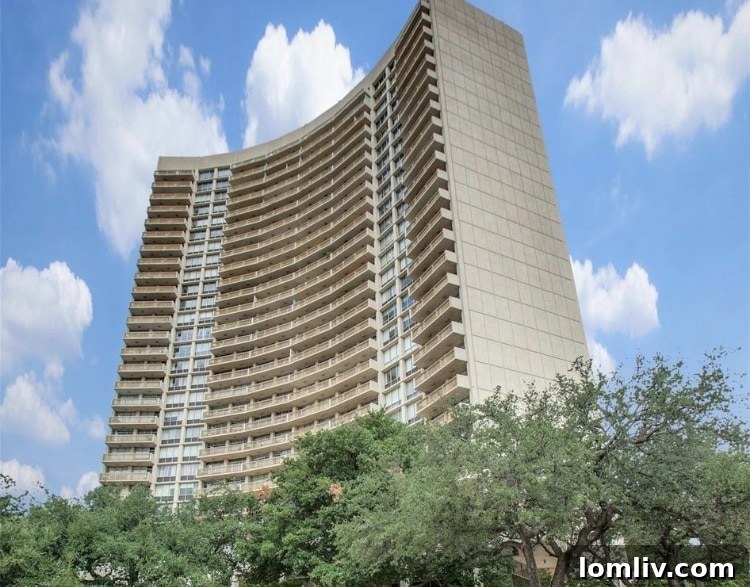
The landscape of condominium living often presents a unique set of challenges and opportunities for residents, particularly when it comes to the governance of Homeowners Associations (HOAs). In Dallas, Texas, the Preston Tower Condominiums have become a focal point for ongoing legal battles, illustrating the complex dynamics between homeowners and their elected boards. In a significant development that has drawn considerable attention across the Dallas real estate community, a long-standing dispute recently culminated in a substantial $1.1 million settlement, marking the eighth time in just seven years that a resident has successfully sued the building’s HOA.
At the center of this latest legal victory is David Jackson, a former resident whose persistent pursuit of accountability from the Preston Tower Condominiums Association ultimately led to this noteworthy outcome. Jackson’s civil suit detailed a series of grievances, beginning with an unaddressed roof leak in his unit back in 2015. What started as a seemingly straightforward maintenance request escalated into a prolonged struggle for transparency and access to crucial HOA documents. His legal claims were comprehensive, encompassing allegations of breach of contract, negligence, negligent supervision, and vicarious liability—charges that collectively painted a picture of an HOA falling significantly short of its duties to its members, failing to uphold both contractual obligations and a reasonable standard of care.

The Preston Tower HOA board has faced a consistent barrage of criticism and legal challenges over its alleged lack of transparency and communication. Residents of its more than 330 units have repeatedly accused the association of “stonewalling” their attempts to access vital records pertaining to their homes and the association’s financial health. One frustrated resident famously characterized the condominium association as a “fortress,” impenetrable and unwilling to facilitate open communication with its members. These accusations highlight a common source of contention in HOA governance: the delicate balance between the board’s administrative authority and the homeowners’ inherent right to informed participation and oversight of the community they financially support.
Despite the high-profile nature of this dispute and its considerable settlement, the key figures involved have largely remained silent. Leslie Warren, the president of the Preston Tower’s HOA, declined an interview request from Daltxrealestate.com, the publication that originally broke this story. Similarly, David Jackson, the plaintiff himself, chose not to comment on the specifics of the matter following his substantial win. This silence, while understandable from a legal perspective, underscores the sensitive and often contentious nature of such disputes, where public statements can be carefully managed or entirely avoided to prevent further legal complications.
Fortunately for those seeking to understand the intricacies of this case, the Dallas County’s 68th District Court, known for its commitment to judicial transparency, has made all related documentation publicly available online. The full records of Jackson’s suit, filed under Case No. dc1913360, offer a detailed account of the proceedings, the arguments made, and the evidence presented, providing an invaluable resource for journalists and interested parties alike. This public access to court documents allows for a deeper examination of the challenges faced by homeowners in navigating complex HOA disputes and holding boards accountable.
However, the saga surrounding David Jackson and the Preston Tower Condominiums Association is far from over. A new chapter in this ongoing legal drama is set to unfold with a jury trial scheduled for January 2023. This upcoming trial, titled David Jackson v. The Preston Tower Condominiums Association and Intercity Investments Inc., introduces a new layer of complexity. In documents related to this ongoing litigation, Jackson’s former attorneys, Christopher Payne and Christina Alstrin, have asserted their claim for $334,000 in unpaid attorney fees. In a surprising turn, Jackson responded to this claim by adding his former legal counsel to the suit, creating a contentious three-way legal battle that adds another dimension to the already intricate case.
Further attempts to glean insights from those directly involved in this new dispute also proved futile, with Payne and Alstrin declining requests for comment. This collective silence from key players leaves observers to piece together the narrative from the publicly available court records, highlighting the persistent challenges of reporting on sensitive legal matters where parties are often advised against making public statements that could jeopardize their legal positions.
Deciphering the Preston Tower Legal Maze: What We Know
Given the reticence of the involved parties, a comprehensive understanding of the situation at Preston Tower largely depends on piecing together facts from court filings. Here’s a breakdown of the key events and allegations that led to the significant $1.1 million settlement for David Jackson, and the subsequent legal entanglements that continue to unfold.
David Jackson’s journey began with a fundamental property issue: a roof leak in his condominium unit that went unaddressed by the HOA. This seemingly straightforward maintenance problem, which first emerged in 2015, became the catalyst for a much larger dispute centered on accountability and transparency. By 2017, Jackson began formally requesting access to the HOA’s records. As a homeowner and a dues-paying member of the Preston Tower Condominiums Association, he had an inherent right to review these documents, which often include financial statements, meeting minutes, maintenance reports, and vendor contracts. Jackson alleges that his legitimate requests were either ignored outright or flat-out denied, propelling him into a more aggressive stance to assert his fundamental rights as a property owner.
In response to Jackson’s mounting claims, the Preston Tower HOA stated in legal documents in 2020 that its records were indeed available to residents. Their claim was that homeowners could review these documents on weekdays by appointment. However, this assertion has been a point of contention and was vehemently disputed by several other residents, who suggested that the process was deliberately cumbersome or that appointments were difficult to secure, effectively limiting true access. This disparity between the HOA’s stated policy and residents’ actual experience is a recurring theme in many homeowner association disputes across the nation, often leading to frustration and distrust.
Frustrated by the perceived lack of cooperation and transparency, Jackson filed his lawsuit in 2019. This legal action set in motion a multi-year process that ultimately led to the substantial $1.1 million settlement he received earlier this year. Following the resolution of his case, Jackson swiftly moved out of Preston Tower, a prominent 29-story building situated on Northwest Highway in Dallas. According to court documents, the sale of his property to Preston Tower was finalized on July 28. This date is particularly significant, as it was just one day after a notification was issued by his former attorneys, Payne and Alstrin, indicating their intent to “filing an application to attach the settlement proceeds and alternatively to place the settlement proceeds in the registry of the court.”
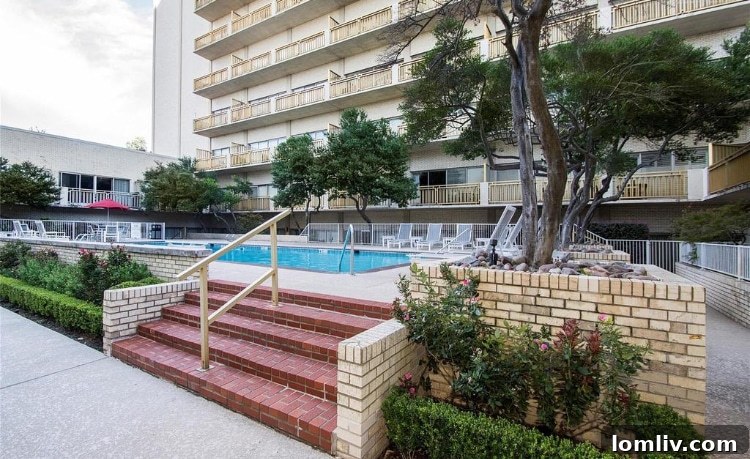
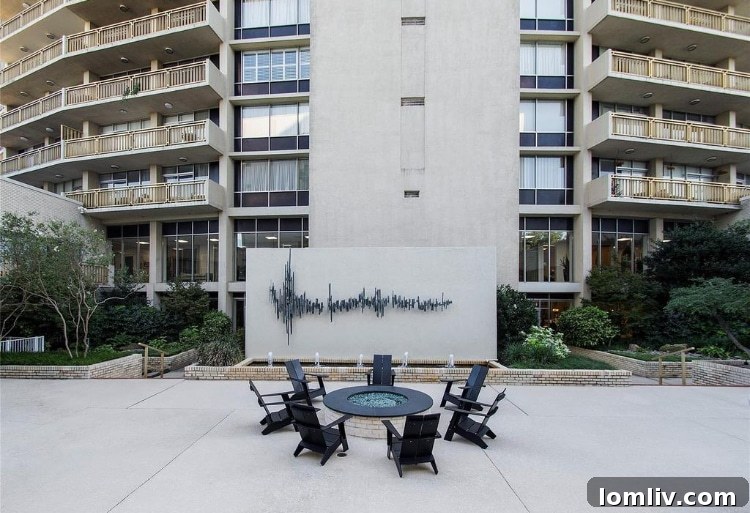
The timing of Jackson’s property sale and the legal action taken by his former attorneys strongly suggest a contentious relationship regarding the distribution of the settlement funds. The lawyers’ move to “attach the settlement proceeds” is a clear legal strategy to secure their payment directly from the award, preventing Jackson from disbursing the funds before their fees are satisfied. This legal maneuver, though common in high-value settlements, indicates a significant breakdown in trust and communication between Jackson and his former legal team. It implies that Payne and Alstrin believed their client, now enriched by a considerable sum, might not honor his financial obligations for their services rendered. As previously noted, with all parties declining to comment, this interpretation largely relies on inferences drawn from the precise timing and nature of the legal filings.
Indeed, Jackson’s prompt departure from his Preston Tower condominium did not go unnoticed by his former attorneys. A motion filed on August 10 by attorney Mitchell Madden, representing Payne and Alstrin, articulates their concerns vividly. The motion states, “This early closing is no coincidence. Rather it reflects the concerted and continued effort by Jackson, the [Preston Tower Condominium] Association, and [Intercity Investments] to evade their payment obligations to [Payne and Alstrin] for their rightfully earned attorneys’ fees in this action.” This powerful statement alleges a conspiracy among Jackson, the HOA, and Intercity Investments to bypass the attorneys’ claims, suggesting a coordinated effort. Furthermore, Madden’s motion highlights that “The sale of the trust’s property by Jackson, who was living at the property, means that Jackson is no longer tethered to Dallas County. Jackson has already indicated his intent to use the proceeds for other projects and has made it clear he has no intent of paying Payne Alstrin their fees.” This legal filing paints a picture of deliberate evasion and an attempt by Jackson to potentially move out of the jurisdiction without settling his legal debts, adding a layer of intrigue and complexity to an already multifaceted dispute.
A History of Litigation: Preston Tower’s Recurring Legal Battles
The recent settlement with David Jackson is not an isolated incident but rather the latest in a series of legal challenges that have plagued the Preston Tower Condominiums Association for years. Understanding this broader context is crucial to grasping the underlying issues that seem to perpetually surface within this Dallas community. Unlike some ultra-luxury high-rises, Preston Tower units typically range from around $214,000 for a one-bedroom to $675,000 for a three-bedroom, according to current listings. This pricing suggests that its residents are not exclusively the extremely wealthy, but rather a diverse group of homeowners who often invest a significant portion of their assets into their units. The repeated lawsuits, therefore, appear to stem from a “just do the right thing” mindset, driven by principles of fairness and proper governance, rather than speculative or litigious greed.
The pattern of disputes often revolves around the HOA’s management practices, financial transparency, and responsiveness to homeowner concerns. In 2020, Greg Gutman initiated a lawsuit against the HOA, also over issues of access to records. His case brought to light even older grievances, including a similar claim from 2018 by Leonard Wennmohs. Gutman’s petition was particularly scathing, asserting that the Association’s board of directors and its then-manager, Rob Kennehan, had “failed in their duties to operate the association with due regard to prudent money management, the existence of nepotism, self-dealing, absentee management, transparency of their conduct, management of the Associations’ facilities and common areas, and their duty of good faith and fiduciary obligations.” These are serious accusations, pointing to fundamental breaches of trust and governance standards. The implications of nepotism and self-dealing, in particular, suggest that board decisions might have been made to benefit specific individuals or entities rather than the collective good of the homeowners. Gutman’s persistence eventually led to a $200,000 settlement with the HOA, while Wennmohs successfully gained access to the records he had been seeking, demonstrating that legal action could indeed force the HOA to comply with its obligations.

Another prominent case involved Tatiana Frierson, who sued Preston Tower in 2016 following a catastrophic incident where a booster pump malfunctioned, flooding 26 units, including her own. Frierson’s lawsuit centered on a crucial point of HOA responsibility: arguing that the association is liable when damage results from a common element. At the time, the HOA attempted to sidestep this responsibility, insisting that the 26 individual homeowners should bear their own repair costs rather than the association filing a blanket insurance claim and covering a relatively modest $25,000 deductible. This stance by the HOA was a direct challenge to the very concept of collective responsibility for common property. Frierson, however, prevailed in her case and was granted a summary judgment, reaffirming the principle that HOAs are indeed responsible for damages arising from the failure of shared infrastructure. This ruling served as a critical reminder of the fiduciary duties HOAs owe to their members regarding the maintenance and protection of common areas.
The pattern of challenging HOA decisions continued with Robert Marcus. After three decades of living in Preston Tower, Marcus decided to move to a lower floor within the same building in 2018. However, his move was complicated by city code changes concerning the use of the building’s freight elevator, which prevented him from moving his prized $150,000 Steinway grand piano himself. In an attempt to resolve the situation, Preston Tower’s management engaged a moving company and arranged for freight elevator access to transport the expensive instrument into storage. Regrettably, the process resulted in approximately $7,000 worth of damage to the piano. Marcus subsequently sued in 2019, alleging negligence in handling his valuable property. This case, while seemingly idiosyncratic, underscores a broader issue: the care and competence with which HOAs manage shared resources and services that directly impact residents’ property. Marcus later received an undisclosed settlement, further adding to the list of successful legal challenges against the Preston Tower HOA.
These varied lawsuits — stemming from roof leaks, financial opacity, common area maintenance failures, and even the mishandling of personal property during a move — collectively paint a compelling picture. They suggest a persistent pattern where the Preston Tower Condominiums Association has either been unwilling or unable to proactively address homeowner concerns, leading residents to increasingly resort to legal means to assert their rights and force compliance with HOA obligations. The cumulative financial cost of these settlements, combined with legal fees, must be substantial, raising critical questions about the long-term sustainability of such an adversarial approach to community governance and its impact on the association’s overall financial health and reputation.
Looking Ahead: New Management and Ongoing Legal Complexities
In a significant shift, the management of Preston Tower is no longer overseen by Intercity Investments Inc. (ICI). The building has transitioned to new leadership, with Worth Ross Management Co.’s Glenn Williams now at the helm. This change in management could potentially signal a new era for Preston Tower, with residents hopeful for a more responsive and transparent approach to community governance. A fresh perspective and a renewed commitment to homeowner relations could be instrumental in mending the strained relationship between the board and its residents, perhaps mitigating the need for future litigation by fostering trust and proactive problem-solving.
However, despite this change in management and the recent $1.1 million settlement, the legal saga surrounding Preston Tower has not entirely concluded. The upcoming jury trial in January 2023 involving David Jackson, the Preston Tower Condominiums Association, and Intercity Investments Inc. highlights that some aspects of the dispute remain unresolved, particularly concerning the contentious issue of attorney fees. This trial will undoubtedly keep the spotlight on the association and its historical practices. While the residents—at least those who have spoken off the record—express cautious optimism that the major waves of litigation might subside for now, the enduring complexities of the legal system ensure that the full resolution of these disputes can be a lengthy process. The hope is that the lessons learned from these numerous, costly lawsuits will pave the way for a more harmonious and transparent future for the residents of Preston Tower, ensuring that their rights as homeowners are respected and their investments protected. The ongoing developments serve as a potent reminder of the importance of diligent HOA oversight and robust homeowner advocacy in maintaining the integrity and value of condominium communities.