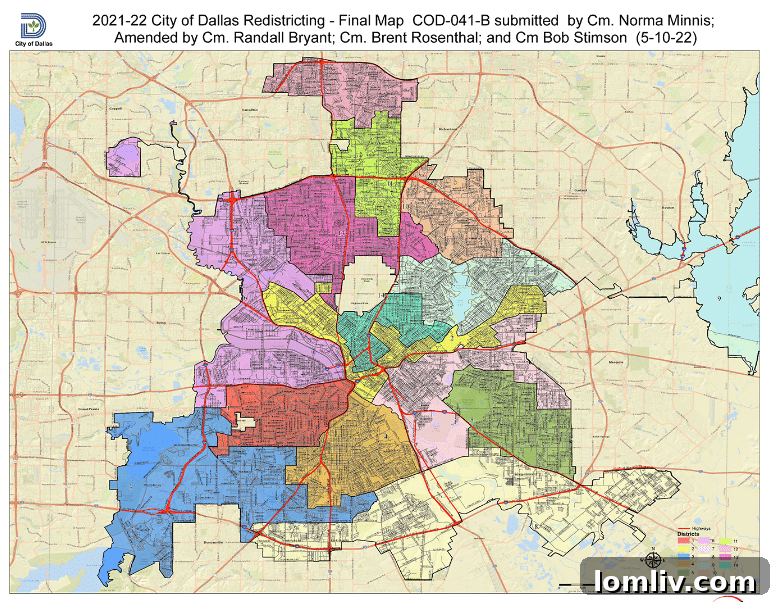
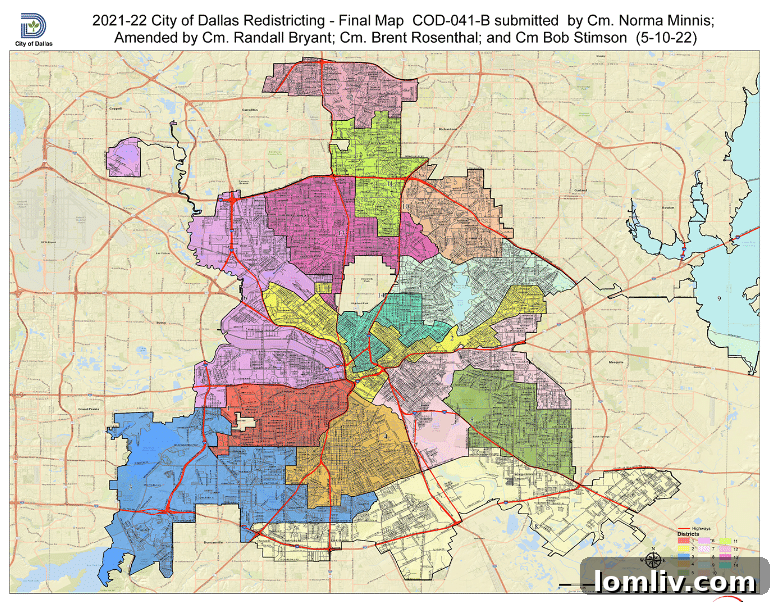
The Dallas City Council finds itself at a pivotal juncture, grappling with the challenging task of redrawing the city’s 14 council districts. With a firm deadline of June 29 set by the U.S. Justice Department, the council’s decision-making process has extended to the eleventh hour. Following a June 8 session that saw minimal progress, the council is now scheduled to cast its definitive vote on this crucial matter during a 9 a.m. meeting on Wednesday, June 22. This last-minute deliberation underscores the inherent complexities and the profound impact that these new electoral boundaries will have on the city’s future political landscape and its diverse communities. The outcome of this vote will shape how Dallas residents are represented for the next decade, making it a critical moment for local democracy.
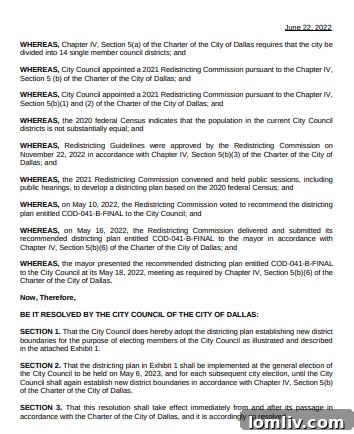
The journey to this final decision has been anything but smooth. On May 10, a council-appointed Redistricting Commission approved a proposed map in a 10-5 vote. However, this map quickly faced significant backlash from Dallas residents and various community groups. Critics raised serious concerns, alleging that the proposed boundaries were racially divisive, politically motivated, and ultimately failed to achieve the fundamental objectives of redistricting. The core purpose of this decennial process, mandated by state law, is to ensure an equitable distribution of population across districts while preserving the integrity and cohesion of neighborhoods. The strong public resistance signaled a deep distrust in the initial proposal and highlighted the sensitive balance required to satisfy multiple competing interests within the city.
Redistricting, a process undertaken every 10 years following the U.S. Census, is a cornerstone of democratic governance. It aims to realign electoral boundaries to reflect population shifts, ensuring that each district contains a roughly equal number of residents, thereby upholding the principle of “one person, one vote.” However, this seemingly administrative task is fraught with political and social challenges. Significant issues often arise when proposed maps lead to the fragmentation of established communities, forcing residents to lose their sense of cohesiveness with adjacent neighborhoods they have long shared. Furthermore, the redrawing of lines can sometimes result in incumbent elected officials being “redistricted out” of areas they have diligently represented for years, potentially altering the political careers of long-serving public servants. These inherent tensions make the process a delicate balancing act of demographics, geography, and political considerations.
The new boundaries, once officially approved by the Dallas City Council, will not merely be lines on a map; they will carry tangible consequences for future elections and community representation. These revised districts are slated to take effect immediately, directly impacting the upcoming May 2023 city council election. This means that voters will cast their ballots based on these newly drawn lines, determining who represents their interests at City Hall for the next several years. The composition of the city council, the allocation of resources, and the focus of civic development could all be significantly altered by the new district configurations. Therefore, the decision made this week holds immense importance, not just for the immediate electoral cycle but for the long-term trajectory of Dallas’s civic life and governance.
Navigating the Complexities of Setting Boundaries
The proposed map that landed on the city council’s desk for final approval originated from a dedicated effort by District 14 Redistricting Commissioner Norma Minnis. This initial draft was subsequently refined through collaborative amendments by Minnis herself, alongside prominent community leaders Randal Bryant, Brent Rosenthal, and Bob Stimson. Their work aimed to create a framework for district division that would meet the legal requirements while also attempting to address the diverse needs of Dallas’s population. However, given the contentious nature of redistricting, even a meticulously crafted proposal is bound to face scrutiny and calls for further adjustment, reflecting the complex tapestry of neighborhoods and communities within a major urban center.
Upon receiving the commission’s map, council members were given approximately one month to conduct a thorough review and to gather feedback from their respective constituents. This period allowed for an extensive engagement with residents, offering them the opportunity to voice concerns, propose changes, and advocate for their neighborhoods’ specific interests. The culmination of this public input and internal deliberation was a comprehensive 21-page proposed modifications report. This detailed document outlined a range of suggested adjustments, from relocating the Kiest Park neighborhood to Council District 4 to ensuring the Lakewood Shopping Center was squarely placed within District 9. Each proposed modification represented an attempt to rectify perceived imbalances or to better align district lines with community identities and practical considerations, emphasizing the granular detail involved in the process.
The June 8 council meeting became a platform for council members to formally present these constituent-driven modifications, leading to a vibrant debate over specific boundary adjustments. Councilwoman Paula Blackmon, for instance, championed the proposal to entirely incorporate the Lakewood Country Club into District 9, arguing against the commission’s initial suggestion to split it between Districts 9 and 14. This type of proposal highlights the importance of keeping community landmarks and identifiable areas whole within a single district. Similarly, Councilwoman Gay Donnell Willis introduced a highly specific amendment, explicitly formulated in direct response to what she described as “overwhelming neighborhood outcry.” Her proposal sought to address deeply felt concerns within specific areas of the city.
Councilwoman Willis’s detailed proposal aimed to address community cohesion and fair representation directly. It advocated for the return of most neighborhoods situated west of Webb Chapel Road and north of Walnut Hill to District 13, recognizing established community ties. Furthermore, it underscored the importance of maintaining the integrity of the Midway Hollow neighborhood within District 13, explicitly adding back a small portion that had been inadvertently drawn out, which would have unnecessarily divided the neighborhood association’s boundaries. Crucially, the proposal also specified that the significant Hispanic population residing in the northern triangle area (Marsh past Josey, north of Forest Lane) would remain within District 6. This meticulous attention to demographic composition and existing community structures illustrates the intricate level of detail and consideration that goes into crafting fair and equitable district lines, aiming to prevent the dilution of voting power for specific groups and to foster a stronger sense of belonging for residents.
The urgency surrounding the June 22 vote is underscored by a critical procedural safeguard: if the Dallas City Council fails to achieve a consensus on the proposed modifications by the overarching June 29 deadline, the redistricting commission’s initially approved map will automatically become the final official product. This provision places significant pressure on the council members to compromise and reach an agreement, as a deadlock would effectively bypass their final legislative input. The potential for the commission’s map to be enacted by default highlights the importance of finding common ground and underscores the council’s responsibility to deliver a solution that best serves the city’s interests, rather than defaulting to a map that garnered initial public resistance. This scenario emphasizes the high stakes involved in their impending decision.
Despite the extensive debate and numerous proposals, only one modification successfully garnered enough support to pass during the June 8 council meeting. This singular successful amendment was put forth by Deputy Mayor Pro Tem and District 5 representative Jaime Resendez. His proposal aimed to extend the southeastern border of District 5, specifically to incorporate the areas of River Ranch and The Texas Horse Park. The passage of this particular modification, while others faltered, underscores the difficulty in reaching consensus on such a politically charged and spatially intricate issue. It also suggests that some changes, particularly those addressing specific community assets or development areas, might be more readily agreed upon than those involving broader demographic shifts or established neighborhood boundaries. The isolated success of Resendez’s proposal highlights the granular nature of these negotiations and the precise impact each line drawn on the map can have.
In the midst of these complex deliberations, Jesse Oliver, the respected chairman of the Dallas Redistricting Committee, offered a crucial perspective on the process and its overarching goals. He emphasized the “challenging task” entrusted to the redistricting commission, assuring the public of the commissioners’ unwavering commitment to diligence. Oliver articulated the dual objectives of the process: not only to ensure that the redistricting outcome is “fair and equitable for every Dallas resident” but also to produce a council district map that genuinely “provides for fair and equitable representation of Dallas residents.” His statement underscored the democratic ideals guiding the entire endeavor, acknowledging that the lines drawn would profoundly impact how every citizen’s voice is heard at City Hall. This mission-driven approach aims to instill public confidence in a process often viewed with skepticism.
Chairman Oliver further stressed a vital component for the success of any redistricting effort: robust community involvement and participation. He unequivocally stated, “Because our goals cannot be achieved in a vacuum, community involvement and participation are critical to our success.” This highlights the belief that truly fair and representative maps cannot be created in isolation by a select group of officials. Instead, they must reflect the lived realities and expressed preferences of the residents themselves. Active engagement from neighborhoods, advocacy groups, and individual citizens provides invaluable insights, helps identify communities of interest, and brings to light potential unintended consequences of proposed boundaries. This collaborative spirit is essential for building trust in the final map and ensuring it genuinely serves the diverse populace of Dallas, laying the groundwork for stronger local governance and more inclusive representation for the decade to come. The final decision, therefore, will be a testament to both the council’s political acumen and its responsiveness to the voices of the people.