As the festive season winds down and the new year beckons, you might find yourself craving a moment of tranquility—a perfect opportunity to dive into a captivating project. Perhaps you’re seeking a quiet escape from the holiday hustle, a chance to unwind with a warm drink and uncover the hidden stories of your historic home. If that sounds like you, then settle in. Today, we’re embarking on an exciting journey to explore the invaluable resource of Sanborn Maps and how they can unlock fascinating details about your property’s past.
Last week, we encouraged you to delve into the fascinating archives of your local public library, specifically the Dallas Public Library, to unearth intriguing tidbits about your historic residence. Did you discover any scandalous secrets or surprising former occupants? Many of you likely found that once you start researching your home’s history, it becomes an addictive quest. The desire to know more about the lives lived within your walls is a powerful motivator, and Sanborn Maps are the next essential tool in your historical detective kit, offering an unparalleled level of detail that other resources simply cannot match.
Unlocking Your Home’s Past: What are Sanborn Maps and Why Are They Indispensable for Historic Homeowners?
The Sanborn Map Collection stands as arguably the most accurate and meticulously detailed record of urban development and individual building characteristics ever created in the United States. Established in 1867 by the Sanborn Map Company, these comprehensive maps were originally designed for a very specific, yet profoundly impactful, purpose: to assess fire insurance risk across twelve thousand cities and towns throughout the United States, Canada, and Mexico. This initial objective inadvertently created an invaluable historical archive for researchers, preservationists, and historic homeowners alike.
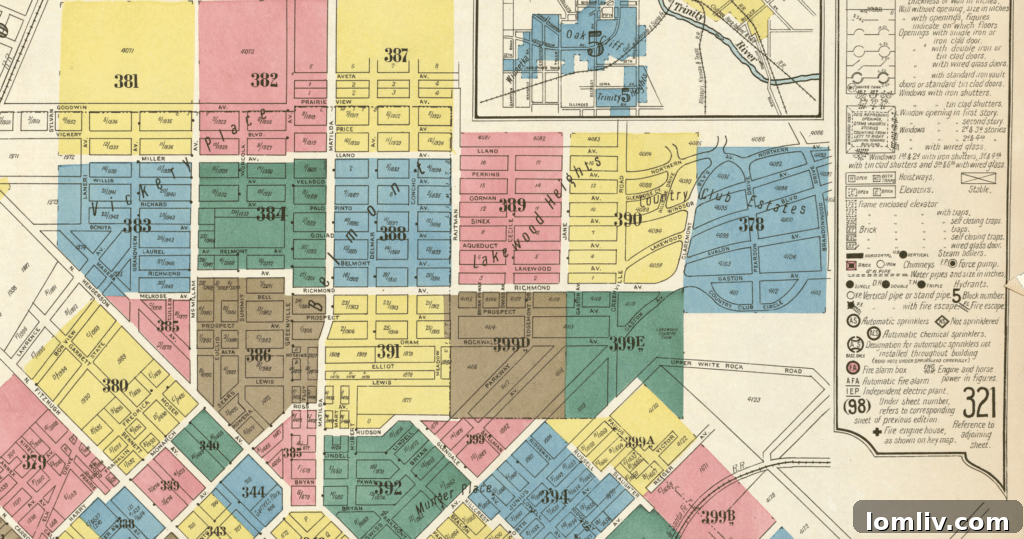
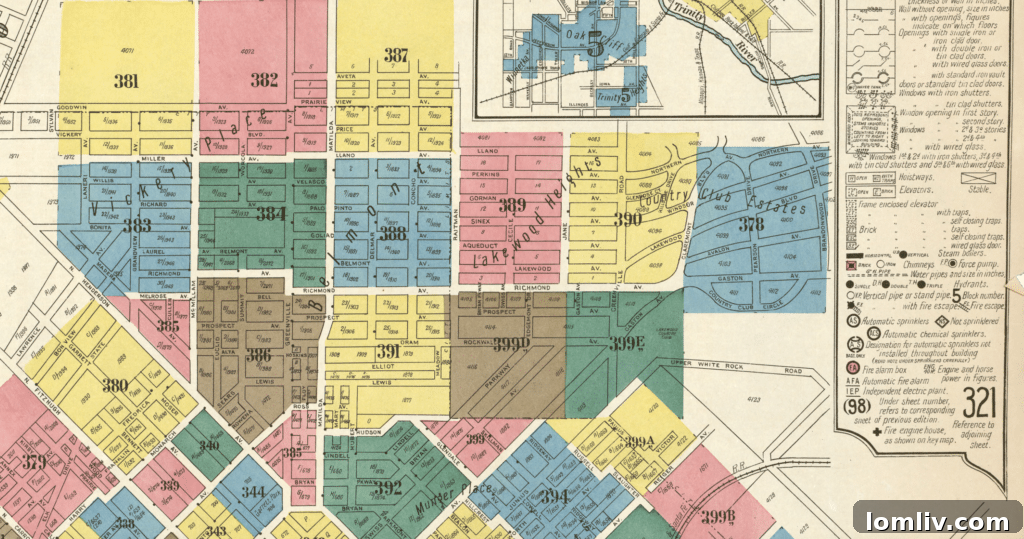
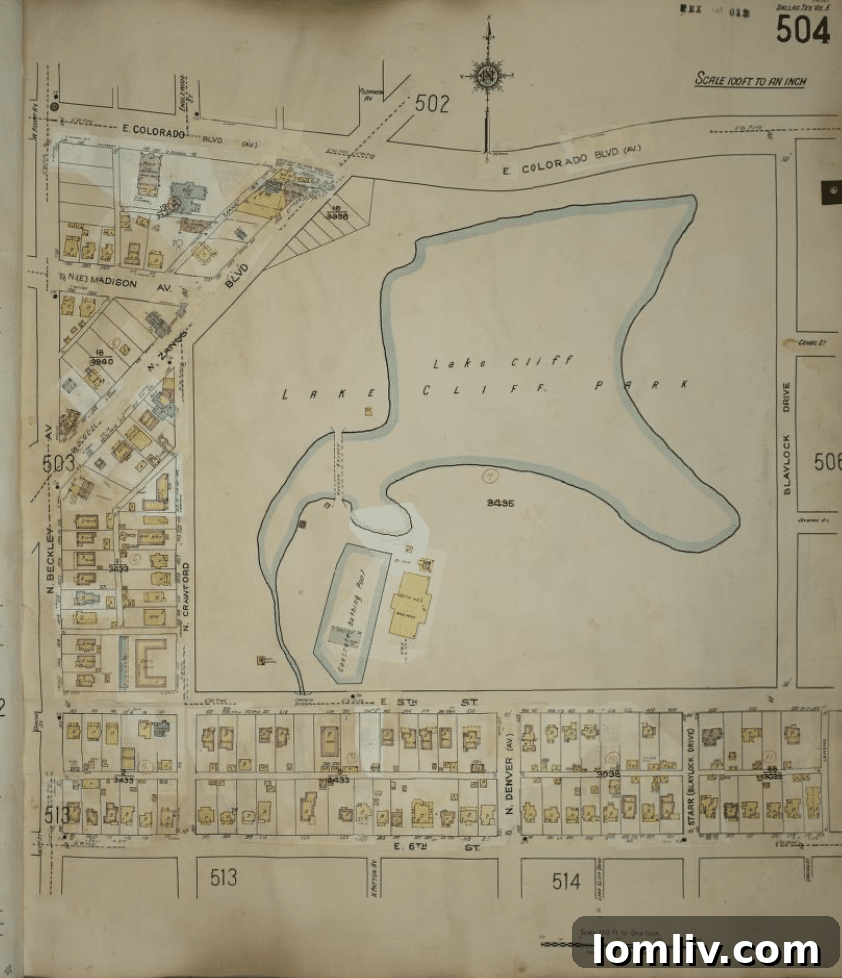
Each Sanborn map provides an extraordinary block-by-block snapshot, rich with granular details of residential, commercial, and industrial buildings. Imagine having access to the precise street address, the exact size and shape of structures, the specific construction materials used (down to the type of roof or wall cladding), and even the number of stories. But the utility of Sanborn Maps extends far beyond these basic architectural elements. They frequently illustrate the footprint of auxiliary buildings such as garages, carriage houses, and detached kitchens, along with property lines, street widths, and the locations of water mains and fire hydrants. This level of comprehensive information offers an unparalleled visual history of urban landscapes and individual properties.
A Dynamic Record of Change: How Sanborn Maps Evolved
One of the most remarkable aspects of these maps is their dynamic nature. Unlike static historical documents, Sanborn Maps were regularly updated, sometimes multiple times within a decade, up until the last major catalog was published around 1950. This continuous revision process means that if your historic home underwent modifications—perhaps an owner added a porch, converted an attic into a second floor, or built an extension—the exact date of these changes, and often the materials used, can be precisely pinpointed on a series of Sanborn Maps. By comparing different editions of the maps for the same property, researchers can trace the architectural evolution of a building over many decades, revealing layers of history that would otherwise remain hidden.
This systematic updating provides an invaluable timeline, allowing historic homeowners to understand not just what their house looked like at one point, but how it changed over time. For anyone undertaking restoration work, this chronological record is absolutely critical. It helps determine original features, identify later additions, and guide authentic preservation efforts, ensuring that any modifications respect the historical integrity of the property.
Practical Applications: Why Sanborn Maps Are Essential for Historic Property Owners and Preservation
For those navigating the complexities of owning or purchasing a historic home, Sanborn Maps are not just a curiosity; they are a vital practical tool. Real estate professionals specializing in historic properties, such as Elizabeth Mast, an agent with Briggs Freeman Sotheby’s International Realty, routinely leverage these maps when advising clients. Her insights underscore their critical importance:
“Sanborn maps define the exact location of your house and auxiliary buildings like garages or back houses. This information is essential in getting a Certificate of Appropriateness for work you may want to do on your home.”
A Certificate of Appropriateness (CoA) is often required by local historic preservation commissions before any exterior alterations, additions, or demolitions can be performed on a historic property. These commissions use Sanborn Maps as a primary reference to verify the original footprint, construction materials, and historical integrity of a building. Without accurate historical data, homeowners may face delays, denials, or costly revisions to their plans. Sanborn Maps provide the necessary documented evidence to support preservation efforts and streamline the approval process, ensuring that proposed changes are harmonious with the property’s historical character.
Beyond regulatory compliance, Sanborn Maps are invaluable for:
Authentic Restoration: They guide restoration projects by revealing original architectural elements, such as porch configurations, window types, rooflines, and outbuildings, allowing owners to accurately restore a property to a specific period.
Understanding Property Evolution: Tracing changes over time helps owners appreciate the building’s journey and make informed decisions about future modifications.
Assessing Historical Significance: The maps can confirm the age of a structure and whether it existed during periods of significant local history, adding to its provenance and value.
Dispute Resolution: Clear depictions of property lines and auxiliary structures can sometimes help resolve boundary or usage disputes.
Deciphering the Details: How to Read Sanborn Maps with Their Keys and Colors
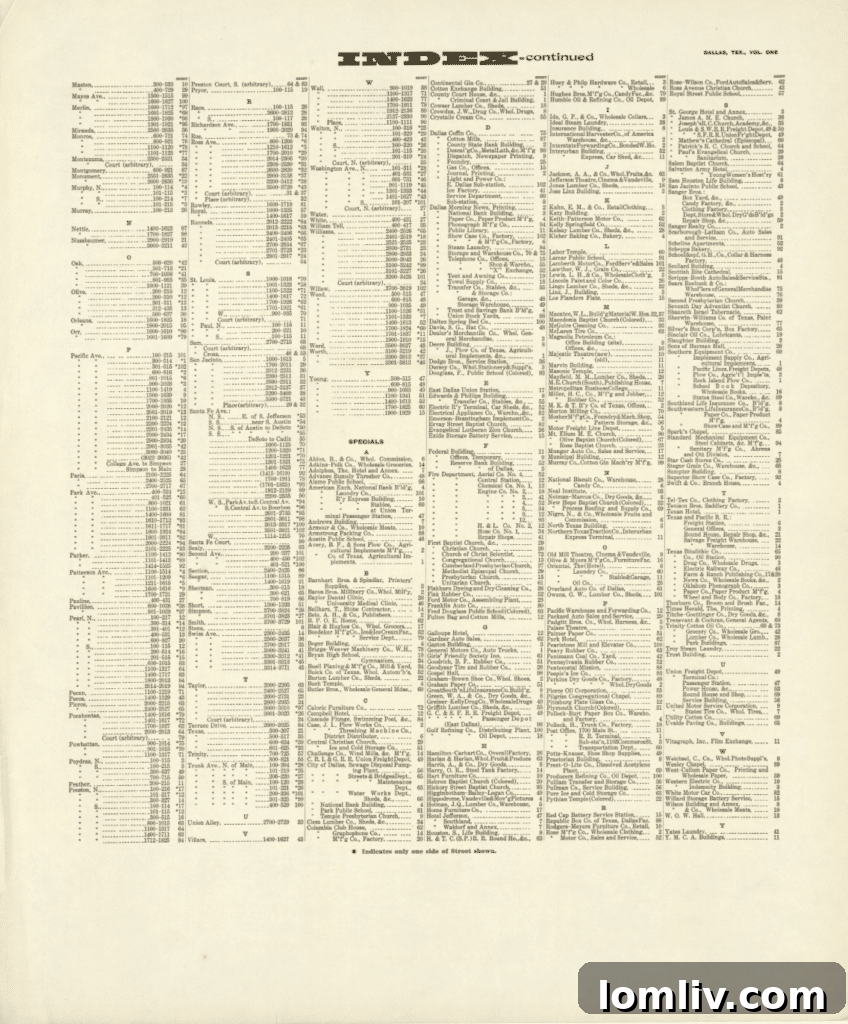
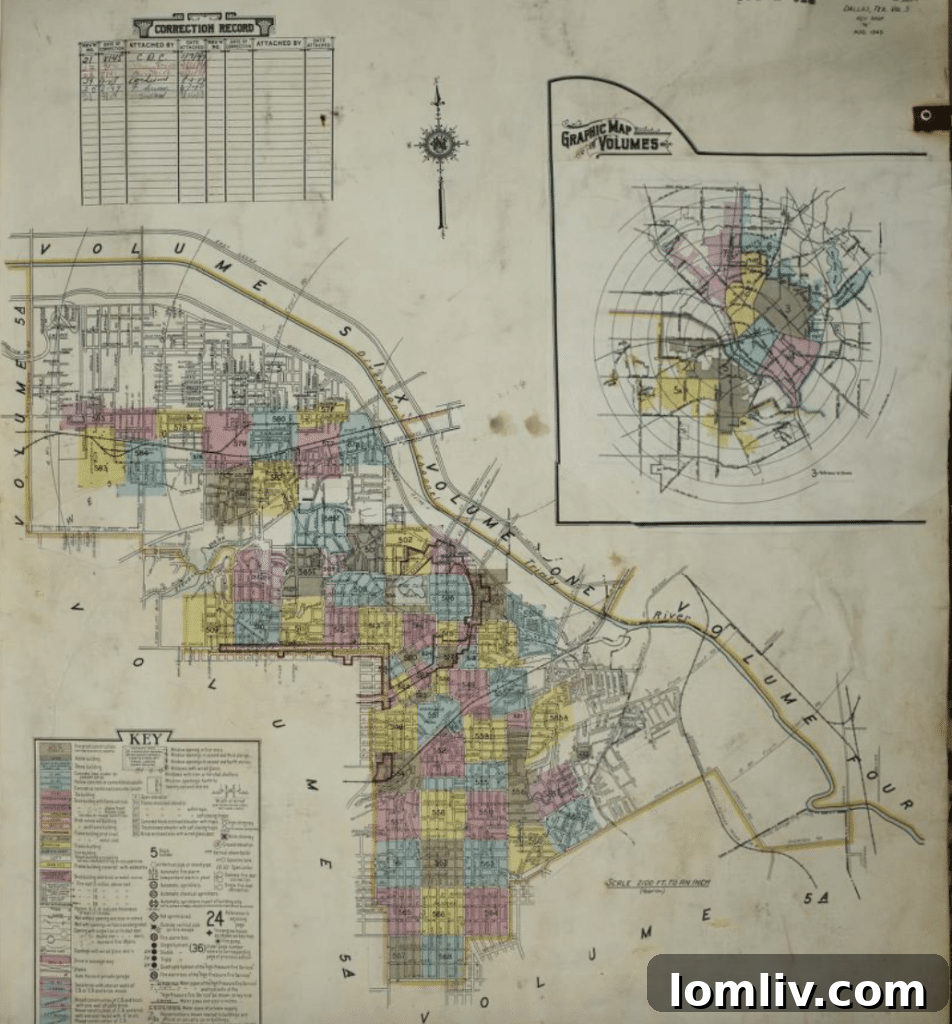
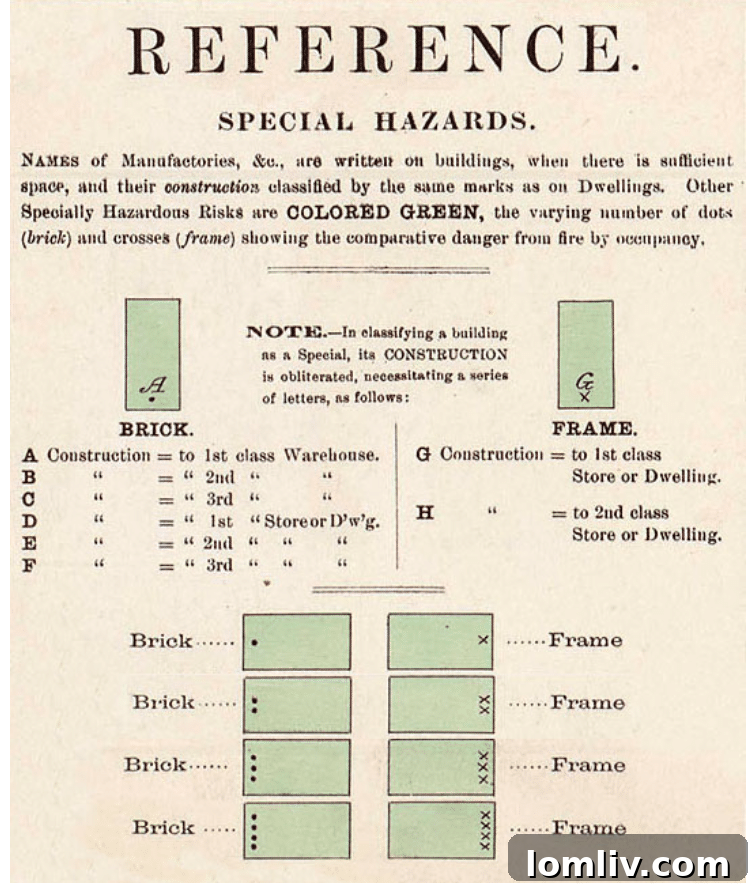
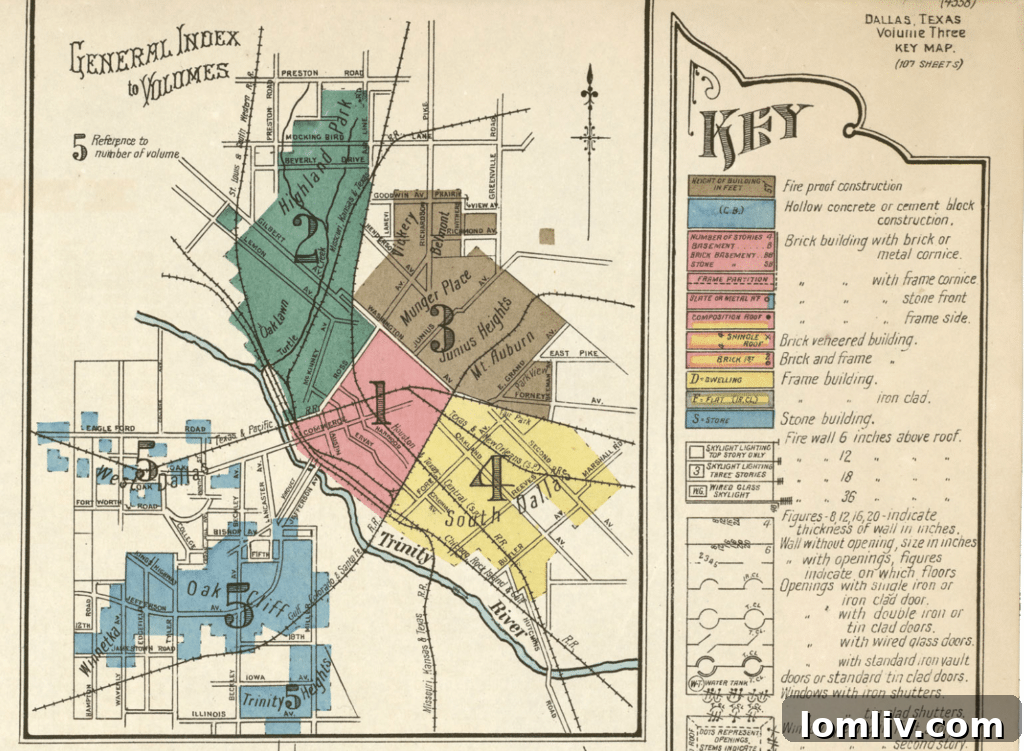
To fully harness the power of Sanborn Maps, understanding their sophisticated symbology is crucial. Each Sanborn volume typically begins with a detailed key, which serves as a legend for the myriad colors, abbreviations, and symbols used throughout the maps. This standardization was a stroke of genius, allowing mapmakers to convey complex information clearly and uniformly across thousands of different locations. The Library of Congress, a primary repository for these historical documents, offers an excellent explanation of their unique interpretive system:
Sanborn Keys & Colors: A Guide to Interpretation
Fire insurance maps are distinctive because of the sophisticated set of symbols that allows complex information to be conveyed clearly. In working with insurance maps, it is important to remember that they were made for a very specific use and that although they are now valuable for a variety of purposes, the insurance industry dictated the selection of information to be mapped and the way that information was portrayed. Knowledge of the keys and colors is essential to proper interpretation of the information found in fire insurance maps.
Color: The Visual Language of Construction Materials
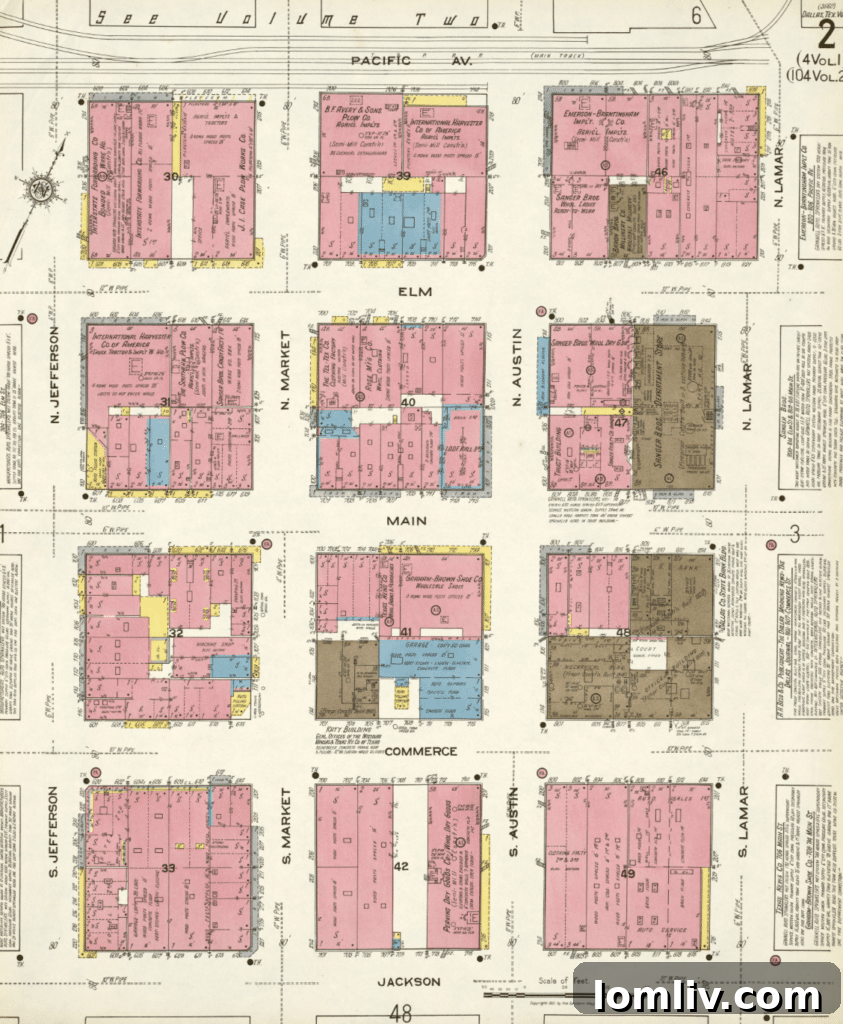
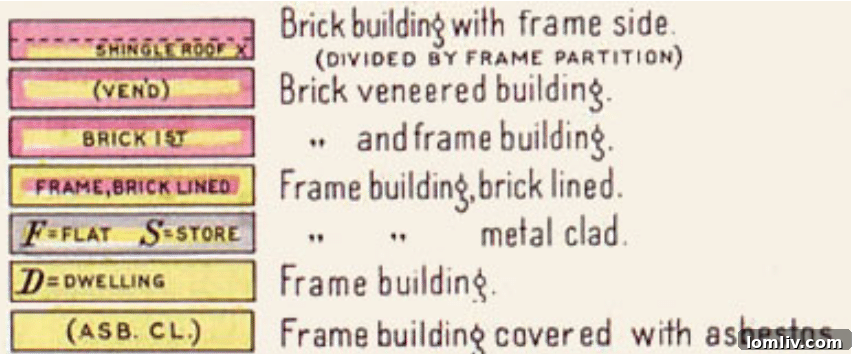
Color plays an important role in Sanborn map reading. In Example 1, we see that brick and tile are represented with a reddish/pink color. Several advantages demonstrate themselves when using color: a) the mapmaker can easily and quickly convey information; b) space formerly used to convey this information can now be used to convey more detailed information; and c) uniformity across all the maps is achieved and maintained.
The use of yellow indicates frame, or wood, structures. Example 2 shows the use of framing on the inside as well as outside of buildings. Along with the color indicators, the map uses basic abbreviations to convey other information. S = store, D = dwelling, and ASB. CL. = asbestos clapboards.
Library of Congress
The ingenuity of the Sanborn system lies in its consistent use of color-coding and abbreviations. Red typically signifies brick or tile construction, indicating a lower fire risk. Yellow, as mentioned, denotes wood-frame structures, which were considered a higher fire risk. Other colors might represent stone, concrete, or metal construction. Beyond colors, a plethora of abbreviations provide additional detail: “D” for dwelling, “S” for store, “Off.” for office, “Mfg.” for manufacturing, and specific notations for types of roofs (e.g., “Tin,” “Comp.” for composition). Arrows might indicate the direction of slopes, and various symbols could mark firewalls, skylights, elevators, or even hazardous materials storage. Learning these conventions allows you to extract a wealth of information at a glance, painting a vivid picture of what stood on a particular site and how it functioned.
My Personal Quest: Uncovering My Home’s Original Features
You can readily see how this detailed mapping system directly benefits any owner of a historic property concerned with accurate restoration and understanding their home’s true heritage. For instance, my own 1927 home features a charming bay window that, from my initial research, I suspect is not original to the property. This holiday season, one of my personal missions is to embark on a deeper dive into the Sanborn Maps specific to my address. My goal is to precisely identify what type of window or architectural feature originally graced that part of my home. Was it a flat window? A different style of bay? Or perhaps something entirely different, like a door or a blank wall?
By examining Sanborn Maps from different periods—perhaps an edition from 1927 or shortly after, and then subsequent updates—I anticipate being able to clearly see the original configuration. This information will be instrumental if I ever decide to restore that section of my house to its initial design, ensuring that any work undertaken respects the period architecture and authenticity. This hands-on application demonstrates the incredible practical value these maps hold, transforming abstract historical data into tangible insights for homeowners.
Accessing Sanborn Maps: Your Gateway to Historical Discovery
The good news is that these invaluable resources are more accessible than ever before, thanks to extensive digitization efforts. While physical copies reside in numerous archives, many collections are now available online, allowing you to conduct your research from the comfort of your home. Here are some primary avenues for accessing Sanborn Maps:
Local Public Libraries: Many public library systems, like the Dallas Public Library, offer online access to digitized Sanborn Maps specific to their region, often requiring just a library card for login. They may also have physical microfilm or microfiche copies.
University Archives: Major universities, especially those with strong history or geography departments, often host extensive online collections. A notable example for Texans is the University of Texas Portal to Texas History, which provides comprehensive access to Sanborn Maps covering various Texas cities and towns. This portal is an outstanding resource, offering high-resolution scans and user-friendly interfaces for browsing historical maps.
The Library of Congress: As the national library, The Library of Congress boasts the most extensive collection of Sanborn Maps globally, encompassing virtually every map created by the Sanborn Map Company. Their online collection, accessible at The Library of Congress Sanborn Maps Collection, is a treasure trove for national research. It provides digitized maps for cities across the United States, offering detailed information and context for researchers worldwide.
When searching online, be sure to utilize specific keywords like “Sanborn Maps [Your City/State]” to narrow down your results. Exploring different editions for your property’s address is key to tracing its full architectural timeline. Prepare to be amazed by the depth of information you can uncover!
Happy hunting for your home’s historical secrets. May your research journey be filled with exciting discoveries and a deeper connection to the past embodied in your beloved historic property!