Interest Rate Hikes Reshaping the Housing Landscape: A Deep Dive into Single-Family and Multifamily Trends
The current economic climate, particularly the rapid succession of interest rate increases, is sending ripples far beyond the immediate concerns of potential homebuyers. Its profound impact is being felt across the entire housing sector, affecting not only the ability of families to secure a single-family home but also the viability of constructing their long-envisioned dream residences. The confluence of escalating labor costs, soaring material prices, and the swift climb in borrowing costs presents a formidable barrier for many aspiring homeowners and builders alike. This challenging environment is clearly reflected in recent national housing statistics.
According to comprehensive data from the National Association of Home Builders (NAHB), single-family housing permits experienced a significant downturn in November 2022, dropping by an alarming 10.5 percent year-over-year. This metric serves as a critical indicator of future construction activity and underscores the growing cautiousness in the market. The implications of this shift are far-reaching, influencing everything from local economic health to the long-term prospects of homeownership for millions.
The Growing Affordability Gap: Interest Rates and Purchasing Power
The relationship between interest rates and home affordability is direct and dramatic. As Phil Crone, the esteemed executive officer of the Dallas Builders Association, aptly illustrates, “At 3 percent interest rates, a family could afford a $500,000 home. At 7 percent, their buying power only opens the door to a $362,000 one.” This stark contrast highlights how even a few percentage points can drastically reduce a buyer’s potential budget, effectively pricing out a substantial segment of the market. For many, this isn’t just a matter of adjusting expectations; it’s a complete reevaluation of their homeownership timeline or even their aspirations.
The situation is further complicated by the existing mortgage landscape. A staggering 90 percent of current homeowners benefit from mortgage interest rates below 5 percent. This creates a challenging dynamic, where those who bought or refinanced before the rate hikes enjoy significantly lower monthly payments compared to prospective buyers today. Crone succinctly summarizes this as “an unfortunate situation of haves and have-nots,” emphasizing the widening disparity between existing homeowners with locked-in low rates and new entrants facing drastically higher borrowing costs. This divide impacts housing inventory, as homeowners with low rates are less incentivized to sell and enter a new mortgage at much higher rates, contributing to a tighter supply.
North Texas Defies National Trends: A Hub of Single-Family Construction
Despite the prevailing national headwinds, certain regions continue to demonstrate remarkable resilience in the single-family residential construction sector. North Texas stands out as a prime example. According to NAHB’s Eye on Housing report, two metropolitan statistical areas (MSAs) in Texas lead the nation in the volume of single-family permits issued: Houston-The Woodlands-Sugar Land and Dallas-Fort Worth-Arlington. For the 12-month period ending in November 2022, the greater Houston MSA recorded 45,584 permits, closely followed by the Dallas-Fort Worth area with an impressive 41,275 permits. These figures underscore the robust and dynamic nature of the Texas housing market, even amidst broader national deceleration.
Phil Crone attributes North Texas’s sustained growth to fundamental advantages. “We have geography and demographics on our side here in D-FW,” he states. The region is projected to create over 400,000 new jobs within the next five years, a powerful magnet for population growth. As Crone aptly puts it, “Homes are where the jobs sleep at night, which is why housing will still be in demand.” This symbiotic relationship between job creation and housing demand ensures a continuous influx of residents seeking stable and attractive living environments. Furthermore, D-FW is experiencing the largest cohort of the Millennial population entering their prime home-buying years. With only 40 percent of those aged 27-35 currently listed as ‘head of household,’ there remains an enormous untapped demand for homeownership. While the market is undoubtedly “normalizing after two years of COVID-induced absurdity,” Crone cautions that the Federal Reserve’s monetary policies are effectively “closing the door on millions of families who still aspire to be homeowners,” even in a booming region like D-FW.
The sustained appeal of North Texas isn’t solely due to job growth; it also stems from its favorable business environment, lower cost of living compared to coastal cities, and a diverse economic base. These factors collectively contribute to a persistent migration trend, which, in turn, fuels the demand for both new and existing homes. Builders in the region, while facing cost challenges, are often more optimistic about future demand than their counterparts in other parts of the country, thanks to this underlying demographic and economic strength.
The Shifting Sands: Single-Family Permits vs. Multifamily Permits
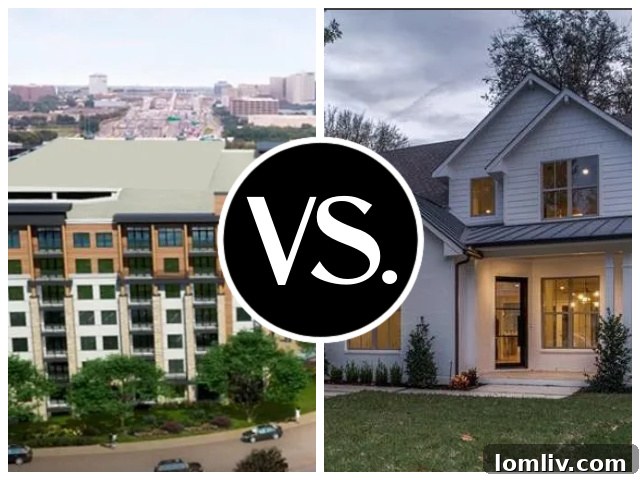
While the single-family sector grapples with affordability challenges and declining permits nationally, another segment of the housing market is experiencing a fervent surge. The multifamily sector is pulling permits at an unprecedented rate, signaling a significant shift in housing development priorities and consumer preferences.
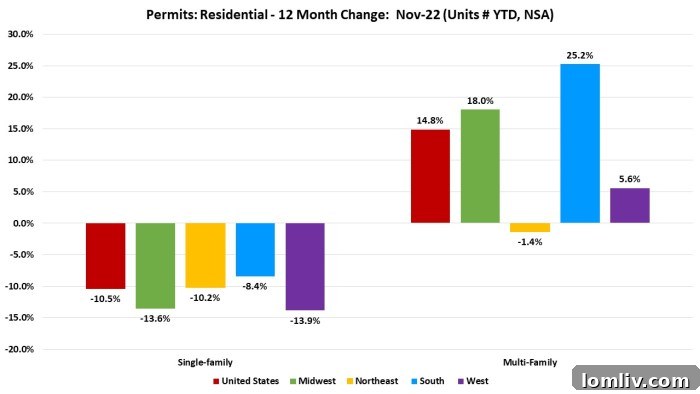
NAHB statistics reveal a compelling contrast: while single-family residential building permits have seen a consistent decline, multifamily permits are steadily creeping skyward. This divergence underscores a broader market adjustment, where the emphasis is shifting towards denser, often more affordable, living options.
During the 12-month period ending in November 2022, single-family permits decreased across all four major regions of the United States. In stark contrast, multifamily permits posted increases in all but one region – the Northeast, which saw a modest dip of 1.4 percent. The national total for multifamily permits reached an impressive 624,128, marking a substantial 14.8 percent increase over the November 2021 level of 543,508. This growth was particularly pronounced in the South, where permits soared by 25.2 percent, followed by the Midwest with an 18 percent increase, and the West with a 5.6 percent rise. These figures not only highlight a nationwide trend but also point to the South as a primary hotbed for multifamily development, aligning with its overall population and economic growth.
The Multifamily Boom in Urban Centers and Growing Suburbs
The surge in multifamily permits comes as no surprise to rapidly expanding urban areas like Dallas-Fort Worth. Across the metroplex, numerous communities have witnessed exponential growth in multifamily developments. This phenomenon is driven by a confluence of factors, including the increasing difficulty of affording single-family homes, a growing preference for urban amenities, and the flexibility that renting offers. As homeownership becomes less attainable for many, particularly younger demographics and those new to a city, high-quality rental properties fill a critical void.
This trend is evident not only in the bustling urban core of Dallas but also in its rapidly expanding suburbs such as Frisco, Plano, and Richardson. These areas, once primarily known for their single-family homes, are now seeing a dramatic transformation in their housing landscape. The robust demand for rental units in these coveted locations has, in turn, led to a significant upward trajectory in rent prices. Indeed, cities like Richardson have posted some of the highest average rent prices in the region, reflecting both the desirability of these communities and the intense competition for available units. Developers are responding to this demand by investing heavily in new apartment complexes, often featuring upscale amenities to attract tenants.
The multifamily boom also reflects broader demographic shifts and lifestyle choices. Many individuals and families, especially millennials and Gen Z, prioritize convenience, proximity to work and entertainment, and a lower maintenance lifestyle that apartments typically offer. Furthermore, the economic uncertainty brought on by inflation and interest rate hikes makes renting a more financially predictable option for some, allowing them to save or maintain liquidity without the significant upfront costs and ongoing responsibilities of homeownership. This makes multifamily properties attractive investments for developers, who are finding strong returns in a market where demand continues to outpace supply in many key regions.
The Road Ahead: Navigating a Dynamic Housing Market
The housing market is undeniably in a period of significant transformation, influenced heavily by the Federal Reserve’s aggressive monetary policies aimed at curbing inflation. While these policies are designed to cool the economy, their impact on housing affordability for millions of aspiring homeowners is a major side effect. The “normalization” of the market, as described by experts, isn’t simply a return to pre-pandemic conditions; it’s an adaptation to a new reality of higher borrowing costs and increased economic scrutiny.
Looking ahead, the interplay between interest rates, construction costs, and demographic shifts will continue to shape housing trends. Regions like North Texas, with strong economic fundamentals and continuous population growth, may continue to outperform national averages, even as they contend with their own affordability challenges. The ongoing strength of the multifamily sector suggests a persistent demand for rental housing, reflecting both economic necessity and evolving lifestyle preferences. As the market continues to evolve, adaptability from both consumers and developers will be key to navigating these dynamic conditions and ensuring a stable, accessible housing future.