

This column marks a significant milestone – or at least, it was intended to. What should have been my 500th published piece ended up being delayed, a testament to the unpredictable nature of deadlines and the flow of creative work. Yet, the journey itself, spanning over half a millennium of columns, has been nothing short of extraordinary, offering a unique platform to delve into the intricate worlds of architecture, design, and local urban dynamics.
My foray into regular commentary began unexpectedly in January 2015. Following a particularly exasperating HOA meeting, I found myself channeling my frustration into a passionate, albeit somewhat unhinged, critique of my homeowners’ association. This impromptu screed landed in Candy’s inbox, and true to her enterprising spirit, she immediately saw its potential, suggesting it be published. While the initial impulse was to air local grievances, a moment of reflection the next day led me to propose a more sustainable, less self-incriminating path: a regular column. Fortunately, she agreed to a trial run, a decision that would serendipitously pave the way for hundreds of articles to come.
What I only discovered much later was the considerable skepticism brewing behind the scenes. Candy, alongside executive editor Joanna England, harbored understandable reservations about an untested writer like myself. Lacking a journalism degree or any discernible formal writing experience, the question of whether I could consistently deliver quality content was very real. Over 500 columns later, I can only imagine they still occasionally ponder the wisdom of that initial leap of faith. (Editor’s note: This observation is remarkably accurate and frequently discussed over coffee.)
Despite my unconventional entry into regular publishing, writing itself was far from a new endeavor. My early experiences, though somewhat rebellious, laid the groundwork for the distinctive voice readers have come to expect. In a college writing class, for instance, we were instructed to embrace the spring weather, find a tree, and write whatever flowed. Instead, I retreated to my dorm room and penned a stark, evocative suicide letter, a dramatic act of teenage angst and creative defiance. Slipping it under the teacher’s door, I skipped the subsequent class, only to learn later that it had earned an “A” and was lauded as one of the term’s best papers. During its anonymous reading, the classroom was filled with gasps and murmurs, students wondering which of their peers might be missing. This early success, albeit born from youthful rebellion, taught me the profound power of authentic, raw expression.
Another memorable collegiate writing experience involved a review for the college paper of Tennessee Williams’ A Streetcar Named Desire. My provocative title, The Streetcar that Maimed Desire, immediately signaled my intention to challenge conventional interpretations. In the piece, I irreverently questioned whether the costume designer’s primary artistic endeavor was merely perusing a Frederick’s of Hollywood catalog, underscoring a penchant for tart, unconventional critique that has remained a hallmark of my writing.
Later, in a copywriting class, tasked with creating a brochure for the school’s English campus, I rejected the typical saccharine prose. My version began: “…is a great white elephant granting easy credits to the wealthy and academically lame.” This brutally honest, yet undeniably witty, approach earned me another “A.” It was lauded not just for its originality, but for being one of the few submissions that didn’t simply plagiarize from existing, uninspired promotional materials. These early academic forays, characterized by a willingness to challenge norms and speak uncomfortable truths, foreshadowed the critical and engaging style that would later define my columns.
My professional career, after a brief, amusing detour that included failed interviews to write copy for women’s underwear and promote Ringling Brothers, led me to a niche in internal corporate newsletters. Here, I honed my distinct voice, infusing company updates with the same tart phrasing and observational humor now familiar to my readers. The most gratifying feedback came from a secretary who confessed she had never truly cared about the company’s inner workings until my newsletter made her laugh, allowing her to absorb crucial information through a veil of entertainment. This profound compliment reinforced my belief in the power of engaging communication to transform even the driest subjects.
Even in my current “day job,” where I navigate the often-impenetrable landscape of technical documents, I persist in injecting personality. While the corporate-ese demands a certain level of formality, I still find opportunities to squeeze in a ribald remark or a wry observation, particularly when presenting to a room full of people. This consistent thread throughout my diverse writing experiences underscores a singular goal: to impart information, no matter how complex or uncomfortable, in a manner that is both effortlessly understandable and genuinely enjoyable to read.
Architecture and Design: A Lifelong Fascination
Growing up in Chicago, a city synonymous with architectural innovation, discussions about buildings and urban planning were as common as water-cooler chatter. It is, after all, the birthplace of the high-rise, a testament to pioneering engineering and bold vision. I vividly recall the thrill of experiencing architectural greatness firsthand, whether exploring the Frank Lloyd Wright home of childhood friends or standing at the base of a towering skyscraper, craning my neck upwards in awe of its structural mastery. This deeply ingrained appreciation for design and urban planning informs my series, “Why Can’t Dallas Have Nice Things.” Through this column, I endeavor to educate a city that, in my view, has strayed from the architectural grandeur of its 1980s skyline, much to the quiet chagrin of local architects and urban enthusiasts.
While my friends enjoyed the privilege of living in Frank Lloyd Wright-designed homes, my own upbringing was rooted in a middle-class, post-WWII Georgian tract home. My mother, with a distinct fondness for reproduction Early American decor, filled our home with furnishings that, by today’s standards, only lacked a spinning wheel to complete the aesthetic. Yet, even amidst this traditional backdrop, my own design sensibilities were evolving. I spent countless hours not just reading, but meticulously poring over the images in Architectural Digest and various international design magazines that circulated through my high school library. This early exposure cultivated a vision far grander than my adolescent checkbook allowed, ultimately leading me down the path of home renovation.
My first house, a decades-long college rental, was a testament to neglect, riddled with leaks and infested with cockroaches. Before I could even unpack, I spent two arduous weeks cleaning, meticulously scraping floors, painting every surface, and deploying countless bug bombs. This intensive, hands-on experience was just the beginning. The truth is, I’ve approached every home I’ve owned with the same unflinching philosophy: gut it. This isn’t merely about aesthetics; it’s about understanding a structure from its bones, reimagining its potential, and painstakingly bringing that vision to life. This deep, practical engagement with architectural spaces provides a tangible foundation for the insights I share in my columns.
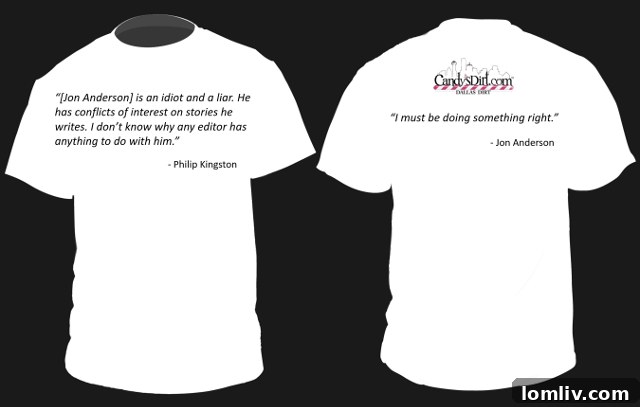
Beyond the realms of pure design, my writing has naturally expanded to encompass various development and political issues. This expansion has, on occasion, earned me a few adversaries, criticisms that I now wear with a certain pride, much like a Boy Scout displays merit badges. I firmly believe that one’s character and impact are judged not just by those who admire you, but equally by those who take issue with your stance. A particularly memorable comment came from Council Member Philip Kingston regarding a recent story, a remark so candidly hostile that it made me howl with laughter and seriously consider printing T-shirts emblazoned with his words:
“[Jon Anderson] is an idiot and a liar. He has conflicts of interest on stories he writes. I don’t know why any editor has anything to do with him.”
Such vehement disapproval, while jarring to some, only reinforces the notion that my commentary is hitting a nerve, sparking necessary conversations. Some readers have observed that I appear to harbor a particular disdain for current and past politicians. This perception, however, is a misreading of my motivations. As a non-Dallas native, I arrive without any historical baggage or pre-existing feuds. I don’t secretly blame Laura Miller for the Cowboys’ fortunes because I wasn’t here, and frankly, I hold no intrinsic bias. My judgments are solely based on what I observe during public meetings, what I uncover through diligent research, and what I read in official reports. My stance on any public figure or policy remains neutral until their actions provide me with a tangible reason to commend or critique them. I don’t love ’em or hate ’em until the facts demand a position.
What is rarely seen by the public, but provides immense validation for my work, is the private acknowledgment I frequently receive. More often than one might imagine, I hear privately from officials or insiders, “You’re right, we f-ed that up.” These candid admissions, away from the glare of public scrutiny, confirm the accuracy and impact of my reporting, reinforcing the importance of holding power accountable.
Equally engaging are the interactions with commenters who, fueled by disagreement, often attempt to discredit my writing. Yet, almost invariably, these criticisms lack the factual basis to substantiate their claims. Most often, those who label me a “liar” are simply reacting to an inconvenient truth that challenges their preconceived notions or vested interests. Conversely, when legitimate criticism arises, and someone presents compelling evidence that I am indeed wrong, I am more than happy to admit my error and issue a correction. For me, the pursuit of an accurate, well-researched story far outweighs the need to protect my ego. The integrity of the information is paramount.
This reflection might sound like a swan song, a farewell address marking the end of an era, but I assure you, it is not. My hope is to continue this column for another 500 editions, to keep sharing insights and sparking conversations. More importantly, I sincerely hope that you, my dedicated readers, will continue to be here with me. If I felt I were merely whistling into the wind, if my words ceased to resonate or provide value, I would undoubtedly cease whistling. I engage in this endeavor not just for the sheer enjoyment of it, but because I know readers find it meaningful and insightful. Like an aging porn star, I’ll know it’s time to retire when it stops being either fun for me or valuable to you.
Thank you all for your unwavering support, your engagement, and for joining me on this incredible journey. Your readership makes every column worthwhile.

A Final Note on My Focus and Achievements: My primary beat consistently revolves around the fascinating, often contentious, interplay of high-rises, homeowners’ associations (HOAs), and the transformative process of home renovation. Yet, my passion extends far beyond these specific areas to a broader appreciation for both modern and historical architecture, always viewed through the dynamic lens of urban development and the evolving YIMBY (Yes In My Backyard) movement. This comprehensive perspective allows me to explore how design, policy, and community aspirations shape our built environment.
My commitment to quality and impactful commentary has been recognized by the National Association of Real Estate Editors (NAREE). I am honored to have received three Bronze awards in 2016, 2017, and 2018 for pieces exploring disparate topics such as the evolution of housing styles (2016), the complexities of property taxes (2017), and the dramatic events of a Friday night blaze engulfing Preston Place condos (2018). Additionally, my work earned two Silver awards in 2016 and 2017 for insightful explorations into second homeownership in exotic locations, specifically “Flock to the Casbah: A Home in Marrakech” (2016) and “Second Homeownership in Bermuda Serves the Rich While Protecting Local Interests” (2017). These accolades affirm the dedication to providing well-researched, engaging, and relevant content to my readership.
Do you have a compelling story that needs telling, a unique perspective on urban development, or perhaps even an unconventional marriage proposal? I’m always eager to hear from you. Feel free to shoot me an email at [email protected]. And while you’re welcome to search for me on Facebook and Twitter, a word of caution: you won’t find me there. But by all means, you’re welcome to look.