The Unfolding Drama of 1401 Elm: Downtown Dallas’s Beleaguered Skyscraper Faces Uncertain Future
Once a beacon of architectural ambition, the iconic 1401 Elm Street skyscraper in Downtown Dallas now stands at a precarious crossroads. This towering edifice, known for its significant presence in the city’s Central Business District, faces an uncertain future as a multi-million-dollar redevelopment project crumbles, leading to imminent foreclosure. What was envisioned as a vibrant mixed-use hub now risks becoming another chapter in the saga of stalled urban revitalization efforts, leaving stakeholders and city enthusiasts on edge.
A Legacy of Grandeur and a Decade of Decline
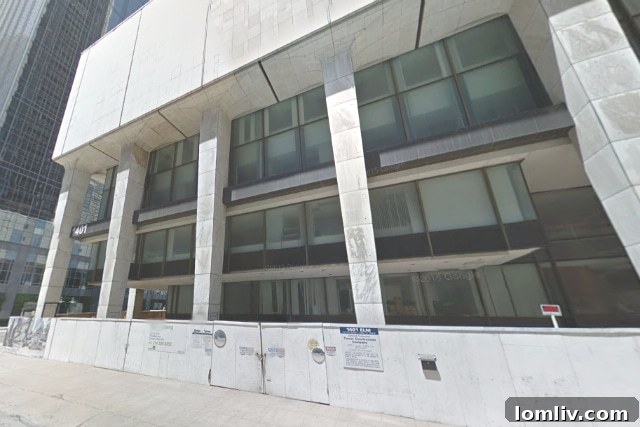
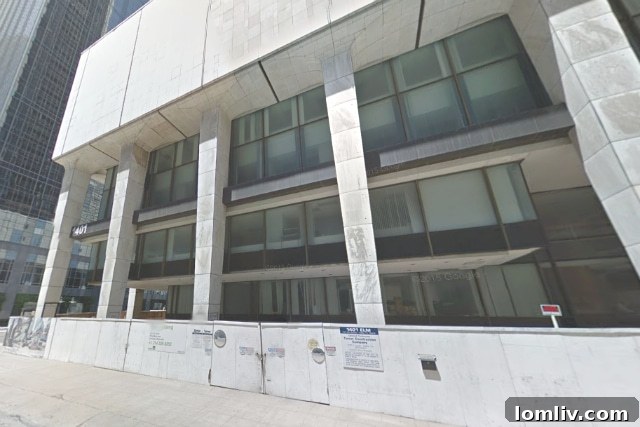
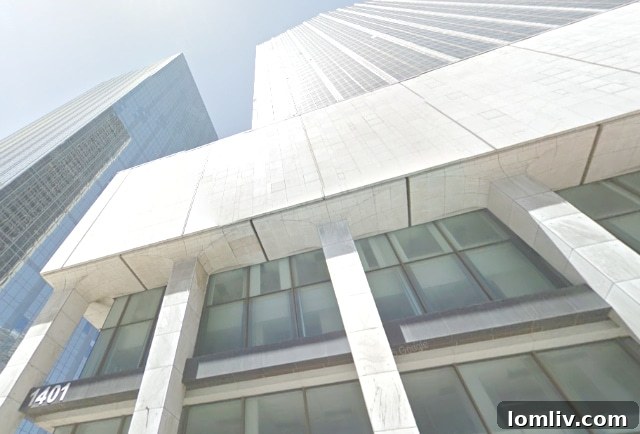
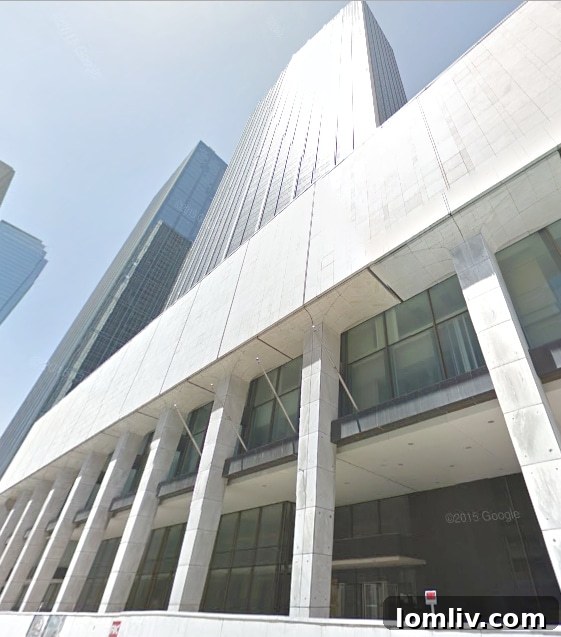
Standing majestically at 1401 Elm, this 52-story structure was once hailed as the tallest building west of the Mississippi River, boasting a colossal 1.5 million square feet of prime office space. Constructed in 1965, it proudly served as the headquarters for the First National Bank, a symbol of Dallas’s burgeoning economic power and architectural prowess. Its sleek lines and imposing height dominated the city skyline for decades, a testament to mid-century modern design and corporate might. However, this impressive legacy took a somber turn in 2010 when the building became depressingly vacant. For over a decade, the once-bustling skyscraper has been marred by plywood boards covering its windows and “keep out” signs, presenting a stark, desolate image in the heart of a rapidly growing metropolis. This long period of dormancy transformed a symbol of success into a poignant reminder of economic shifts and the challenges of urban redevelopment.
The Ambitious $240 Million Vision Unravels
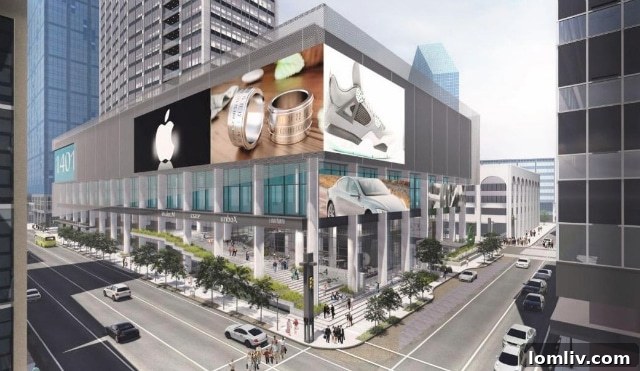
Hope for 1401 Elm’s revival soared when plans for an ambitious $240 million mixed-use redevelopment project were set in motion. This significant undertaking aimed to breathe new life into the colossal structure, transforming it into a dynamic hub featuring sophisticated commercial spaces and modern residential apartments. The sheer scale of this project underscored its importance to the city’s urban fabric; to put it into perspective, it dwarfed the next largest redevelopment project in downtown Dallas, the historic Statler Hilton Hotel, which was valued at $175 million.
The redevelopment initiative gained momentum last year when New York-based Olympic Property Partners joined forces with Dallas-based BDRC Partners to acquire the building. Their collaborative vision resonated strongly with the City of Dallas, which recognized the project’s pivotal role in revitalizing the downtown core. Consequently, the city allocated a substantial $50 million in economic incentives, signaling its strong commitment to seeing this landmark transformation come to fruition. Initial progress was swift and promising, with the two companies promptly embarking on essential environmental abatement work and necessary demolitions within the immense tower, clearing the way for the envisioned renewal. Everything appeared to be on track for a successful rehabilitation.
Developer Retreats, Foreclosure Looms
The promising trajectory of the 1401 Elm redevelopment suffered an abrupt and devastating blow recently. Olympic Property Partners, the New York-based developer leading the ambitious project, unexpectedly announced its decision to withdraw from the deal. This sudden change of heart has plunged the project into immediate peril, leading to the unfortunate consequence of 1401 Elm being slated for a foreclosure auction. This drastic measure is a direct response to the demands of lenders who had extended a substantial $53.5 million in loans to kickstart the initial redevelopment efforts. The lenders, facing the sudden cessation of the project, are now moving decisively to recover their investments, setting the stage for a critical auction next month.
Bryan Dorsey, who heads BDRC Partners, candidly expressed the challenges his firm is facing, telling the Dallas Morning News’ Steve Brown, “Obviously we are having some issues with our lender. However, we expect to resolve amicably in a short period of time.” Despite this hopeful sentiment, the “issues” have already escalated, pushing the property into foreclosure proceedings. Early lenders are demonstrating their resolve, unwilling to delay in seeking repayment of their significant $53.5 million in loans, underscoring the high stakes involved in this complex real estate deal.
A Legal Quagmire: Allegations of Fraud
Adding another complex layer to the unfolding drama at 1401 Elm, a Chicago-based real estate investor has initiated legal action against the current owners of the property. Elm Uptown Acquisition and its managing member, Scott Morgan, are at the center of a lawsuit requesting a Dallas court to compel the owners “to comply with terms of a purchase contract it signed for the building in August,” according to Steve Brown’s reporting for the Dallas Morning News. The plaintiff, Elm Uptown Acquisition, levels serious accusations against the owners’ representatives, alleging “secret discussions” with a lender it was concurrently dealing with. These discussions, the lawsuit claims, constitute “tortiously interfering in plaintiff’s purchase of the property.” This fraud charge introduces a significant legal hurdle, potentially complicating the foreclosure process and further entangling the future ownership of this crucial downtown asset. The lawsuit suggests that the current owners engaged in deceptive practices to prevent Elm Uptown Acquisition from acquiring the property, seeking to invalidate the sale and reassert their claim.
Downtown Dallas Reacts: Distress vs. Resilience
The news of the stalled 1401 Elm project has elicited strong reactions within the Downtown Dallas community. Many urban revitalization advocates view the situation with deep concern, recognizing the critical importance of this particular development. John Crawford, President and CEO of Downtown Dallas Inc., a leading advocacy group for the area, voiced his disappointment to Steve Brown, stating, “I’m disappointed this has occurred. They missed a payment and are trying to work it out…And they are looking at other forms of financing. Rather than try and work it out, the lender moved forward with the foreclosure.” Crawford emphasized the project’s strategic value, highlighting that “It is an entire city block and a huge part of rebuilding of downtown Dallas. That project represents an enormous opportunity for downtown. They have talked to a number of retailers, and the interest level is high.” His remarks underscore the sentiment that 1401 Elm is not just another building, but a linchpin for broader urban renewal and economic growth in the heart of Dallas.
However, not all reactions are steeped in distress. Ashley Stanley, a savvy real estate broker and owner of Ashley’s Apartments, an apartment locator service specializing in downtown and nearby areas, offers a more tempered perspective. She views the current predicament as more of a “hiccup” rather than an outright “catastrophe.” Stanley points to the robust growth trajectory of Dallas’s urban core, asserting, “There are ten [downtown] projects and around 3,200 units coming here over next three years—we’re in such a big growth phase right now that it’s not going to hurt us overall.” She remains optimistic about the long-term prospects for 1401 Elm, understanding the cyclical nature of large-scale commercial real estate deals. “The potential for that location is key because it is in the heart of downtown, but in commercial real estate, deals fall through seven times before they come through. It will come back around,” she confidently predicts. Her perspective offers a crucial counterpoint, suggesting that while the immediate situation is challenging, the underlying fundamentals of the Dallas market remain strong enough to eventually absorb and revive such a significant property.
The Foreclosure Auction: A New Beginning or Further Complications?
The upcoming foreclosure auction next month represents a pivotal moment for 1401 Elm. This event will likely determine the immediate future of funding for the ambitious redevelopment and clarify if, and in what fashion, the project will move forward. A successful auction could introduce new ownership, potentially bringing fresh capital and a revised vision to the table. This new developer might choose to adhere closely to the original mixed-use plans, or they might adapt them to current market demands and their own strategic priorities. The possibility also exists that the city’s previously allocated $50 million in economic incentives would need to be re-evaluated or renegotiated with any new owner.
Conversely, a failed auction could prolong the building’s vacancy, further delaying any meaningful revitalization and adding to the visual blight in Downtown Dallas. The legal battle initiated by Elm Uptown Acquisition adds another layer of complexity. Depending on the outcome of the lawsuit, the legality of any sale at auction could be contested, potentially leading to more delays and legal entanglements. Ashley Stanley’s assessment that “it will come back around” seems at least partially prescient; it is indeed unlikely that a project of this magnitude, occupying an entire city block in such a prime location, would be entirely scrapped. Instead, it might emerge in a slightly different incarnation, perhaps with a new developer, a modified scope, or a re-imagined design, but its eventual return to prominence in the Dallas skyline feels inevitable given the city’s dynamic growth.
What Lies Ahead for Downtown Dallas’s Landmark?
The saga of 1401 Elm encapsulates the inherent risks and rewards of large-scale urban development. It highlights the intricate dance between developers, lenders, city officials, and market forces that dictate the fate of such iconic structures. While the immediate future is shrouded in uncertainty, the underlying significance of 1401 Elm to Downtown Dallas remains undeniable. Its redevelopment is not merely about a single building; it symbolizes the city’s commitment to revitalizing its core, attracting new residents and businesses, and enhancing its appeal as a vibrant urban center. The resolution of the foreclosure and the ongoing legal dispute will undoubtedly shape the next chapter for this historic skyscraper. The eyes of Dallas are watching, eager to see how this landmark drama concludes and what it ultimately means for the continued evolution of their dynamic downtown. The question remains: will 1401 Elm reclaim its status as a symbol of progress, or will it remain a testament to ambitions unfulfilled? Only time will tell.