The urban landscape of Dallas is in constant flux, a dynamic tapestry woven with threads of history, community, and relentless development. Few areas encapsulate this tension as vividly as Preston Center, a highly sought-after enclave where every inch of land holds immense value and every proposed change sparks keen interest. Lately, all eyes have turned to the Diplomat condominiums, an established fixture in the venerable “Pink Wall” neighborhood, where recent activity suggests a significant transformation might be on the horizon.
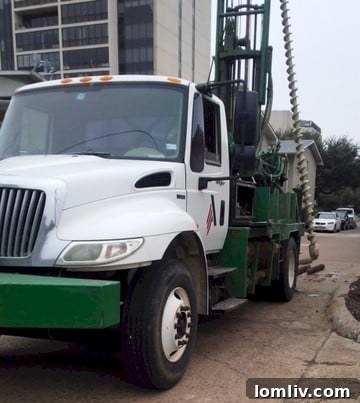
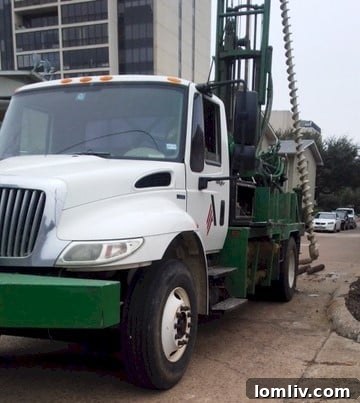
Just over a month ago, a buzz began circulating through the community when surveyors were spotted meticulously measuring the Diplomat’s premises. Such an occurrence in a mature, residential area is rarely a sign of minor adjustments. It often signals the precursor to something more substantial. Now, the speculation has intensified with the arrival of an Alpha Testing drilling rig on site, a piece of equipment typically employed for gathering core samples to evaluate foundational stability. This isn’t just a sign; it’s a strong indication that whatever the Diplomat has planned, it involves significant structural work and potentially, new construction.
While the Diplomat management has remained notably silent on these unfolding events, the presence of heavy drilling machinery speaks volumes. The community, ever vigilant, is eager to understand the implications for their cherished neighborhood. Is this an ambitious expansion, a complete redevelopment, or something else entirely? The answers lie buried not only in the soil samples but also in the intricate world of Dallas zoning and urban planning.
Unearthing Secrets: The Role of Geotechnical Drilling
The drilling rig currently operating at the Diplomat site is engaged in what is known as geotechnical drilling. This critical process is a fundamental first step in virtually any significant construction or major renovation project. Its purpose is to perform a comprehensive site investigation, gathering vital information about the subsurface conditions. Core samples of soil and rock are extracted from various depths, providing engineers with a detailed profile of the ground beneath the proposed structure.
Why is this so important? The stability and load-bearing capacity of the soil are paramount to the success and safety of any building. Geotechnical engineers analyze these samples to determine if the site can adequately support the weight and forces of a new or significantly altered structure without issues such as settling, shifting, or structural failure. They look at factors like soil composition, density, moisture content, groundwater levels, and the presence of any geological anomalies. This scientific inquiry ensures that the chosen foundation system – whether it’s shallow footings, deep piles, or a raft foundation – is appropriate for the specific ground conditions and the intended development.
For the Diplomat, this level of detailed analysis strongly implies that whatever is being contemplated goes far beyond cosmetic updates or minor repairs. It suggests a project requiring substantial additional foundational support, indicating either a significant vertical expansion, a complete rebuild, or a radical structural modification that will impose new loads on the existing ground. The very nature of this work confirms that the Diplomat is gearing up for a major undertaking, one that will undeniably reshape a portion of the Preston Center skyline.
The Diplomat’s Enigmatic Silence and Community Buzz
In the face of such clear indicators of impending change, the official silence from the Diplomat condominiums has only fueled speculation and discussion within the Preston Center community. While it’s common for developers to keep plans under wraps during initial feasibility studies – perhaps to avoid premature public opposition, maintain competitive advantage, or because plans are still fluid – this lack of communication often creates a vacuum filled with rumors and conjecture. Residents and local observers are left to piece together the puzzle from the visual evidence, drawing their own conclusions about what the drilling rig portends.
This secrecy, though strategic from a business standpoint, heightens the anticipation. The Diplomat isn’t just another building; it’s part of the fabric of the “Pink Wall,” an area cherished for its distinctive character and established community. Any significant change there inevitably raises questions about architectural preservation, neighborhood aesthetics, traffic impact, and property values. The community watches, waits, and whispers, eager for an official announcement that will shed light on the future of this prominent Preston Center landmark.
Preston Center, The Pink Wall, and PD-15: A Web of Context
Understanding the potential future of the Diplomat requires delving into the unique geographical and zoning context of its location. The building sits within the storied “Pink Wall” area of Preston Center, a designation that evokes a sense of history and specific architectural charm. This established residential enclave is highly desirable, known for its mature trees, well-maintained properties, and a strong sense of community. Any development here is scrutinized, reflecting a collective desire to preserve the area’s distinct identity while acknowledging the pressures of growth in a booming city like Dallas.
Further complicating matters is the fact that the Diplomat falls within Planned Development District 15, or PD-15. Planned Development districts are special zoning classifications established by cities to allow for more flexible and specific land use regulations than traditional zoning categories. They are often created for large or complex developments to achieve a particular vision for a site or area, sometimes allowing for deviations from standard height, density, or use restrictions. The phrase “outside city zoning” in this context implies that while PD-15 is a city designation, its specific rules supersede some of the general city ordinances, offering a unique set of parameters for what can be built.
This is where the crucial question arises: Does the geotechnical testing suggest an intent to simply double the Diplomat to four stories, aligning with the aspirations and guidelines often championed by groups like the Preston Center Task Force, which advocates for managed, contextual growth? Or, does the flexibility inherent in PD-15 pave the way for something significantly taller, a high-rise structure that could dramatically alter the existing skyline and neighborhood character? The tension between community desires for moderate growth and the potential for denser, taller developments under PD regulations is a recurring theme in urban planning debates across Dallas.
The Future Takes Shape: Potential Scenarios for the Diplomat
Given the geotechnical drilling, several scenarios for the Diplomat’s future emerge, each with distinct implications for the property, its residents, and the broader Preston Center community:
1. Vertical Expansion Within Current Footprint: One possibility is adding stories to the existing Diplomat structure. This would necessitate strengthening or entirely rebuilding the foundation, aligning perfectly with the need for extensive geotechnical analysis. An expansion might aim to increase density without significantly altering the building’s horizontal footprint, offering more residential units or expanding existing ones. This aligns somewhat with the Preston Center Task Force’s general desire for a four-story limit but could still be taller depending on PD-15 specifics.
2. Complete Redevelopment: A more dramatic scenario involves the demolition of the current structure and the construction of an entirely new building. This would undoubtedly be the case if the developers are eyeing a much taller, modern high-rise that maximizes the site’s potential, especially under the specific allowances of PD-15. Such a project would be a significant undertaking, requiring extensive planning, new foundations, and a potentially lengthy construction period, but it could offer a state-of-the-art residential tower that commands premium prices in the desirable Preston Center market.
3. Major Renovation and Reinforcement: While less likely to require the scale of drilling observed, another possibility is a profound renovation that fundamentally alters the building’s internal structure or adds new heavy features (like a rooftop amenity deck or significant additions that put new stress on the building). This would also necessitate a deep understanding of foundational capacity. However, geotechnical drilling of this nature usually points to foundational work for new construction or significant vertical additions.
Each of these possibilities carries weight for the community. An expansion or redevelopment would undoubtedly impact traffic, views, sunlight, and the overall character of the “Pink Wall.” The local residents, particularly those immediately surrounding the Diplomat, will be keenly watching for details, ready to engage in discussions about how new development integrates with or disrupts their established neighborhood. The question of whether the development will honor the area’s existing aesthetic or usher in a new, perhaps more modern, architectural style is also a point of considerable interest.
A Sip of Speculation: Egg Nog and YIMBY Debates
The author playfully suggests plying residents with egg nog – a humorous nod to the desire for information and perhaps a gentle plea for transparency during what could be a contentious period of development. This lighthearted remark underscores the community’s need for engagement and reassurance as the future of the Diplomat takes shape. Amidst the serious considerations of zoning, foundations, and urban planning, there’s always a human element – the residents who call Preston Center home and whose lives will be directly affected by these changes.
This situation at the Diplomat also touches upon the broader urban planning philosophy represented by the YIMBY movement (Yes In My Backyard). YIMBY advocates champion increased housing density and development, particularly in desirable urban centers, to address housing shortages and promote sustainability. On the other hand, traditional neighborhood associations and preservationists often express NIMBY (Not In My Backyard) concerns, focusing on preserving existing character, managing traffic, and preventing overdevelopment.
The Diplomat’s potential transformation could become a local case study in this national debate. Will the outcome prioritize increased density and modern development to meet demand in a prime location, or will it lean towards preserving the established feel and scale of the “Pink Wall” and Preston Center? The resolution of this local mystery will undoubtedly offer insights into how Dallas balances its relentless growth with its respect for community character.
The drilling continues, the silence from the Diplomat persists, and the community holds its breath. As the core samples are analyzed, the future of this corner of Preston Center slowly begins to reveal itself, promising either a measured evolution or a dramatic reinvention for one of Dallas’s most iconic neighborhoods.
Remember: High-rises, HOAs, and renovation are my beat. But I also appreciate modern and historical architecture balanced against the YIMBY movement. If you’re interested in hosting a Candysdirt.com Staff Meeting event, I’m your guy. In 2016, my writing was recognized with Bronze and Silver awards from the National Association of Real Estate Editors. Have a story to tell or a marriage proposal to make? Shoot me an email [email protected].