Navigating Dallas’s Affordable Housing Conundrum: A Deep Dive into Policy, Development, and Community Needs
In a rapidly expanding metropolis like Dallas, the sight of towering new residential complexes has become commonplace. Yet, amidst this boom, a critical question persists: where are the affordable housing units? For many residents and observers, the glaring absence of accessible housing options in Dallas and its surrounding suburbs is an undeniable reality, requiring little expert analysis to understand its profound implications on the community’s fabric.
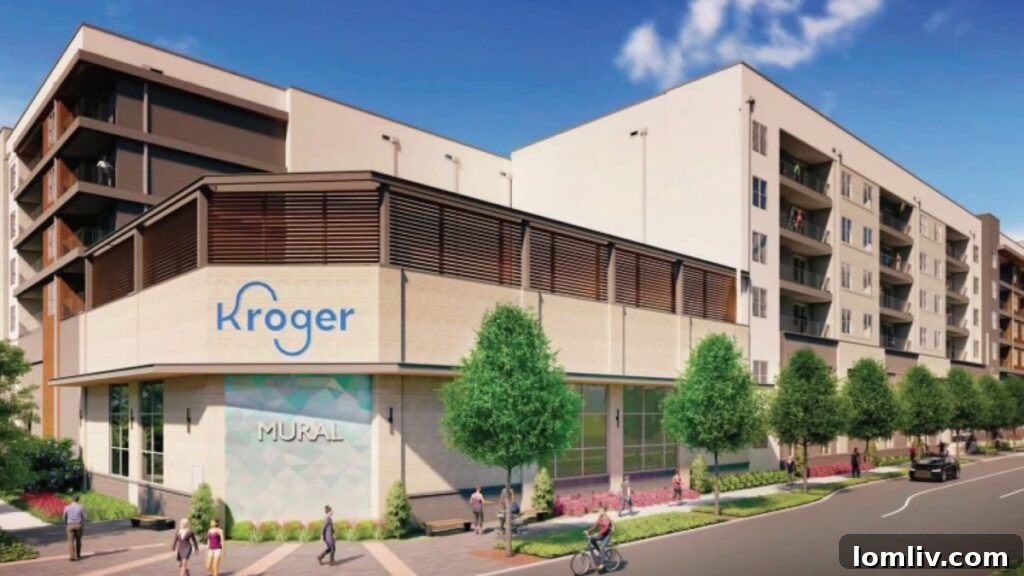
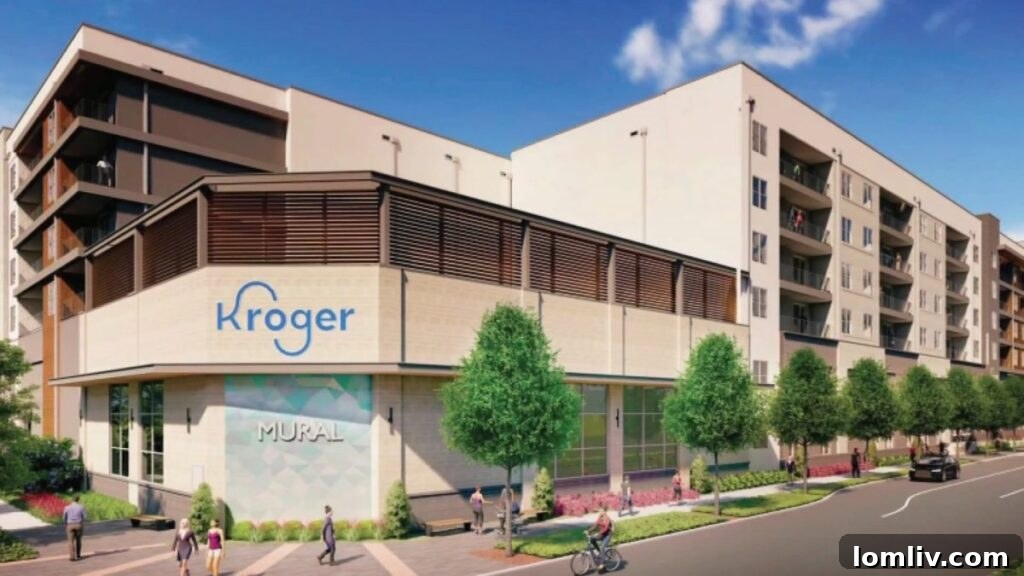
Recently, the Dallas City Council cast a pivotal vote regarding a Kroger mixed-use project, a decision that sent ripples throughout the development community and local neighborhoods. This was no ordinary approval; it was a contentious battle, marked by heated debates and strong opposition from various factions. The Kroger project, intended to integrate retail with residential spaces, quickly evolved into a textbook case study on the complexities of urban development, the challenges of incentivizing affordable housing, and the pervasive phenomenon known as NIMBYism.
The Kroger Uptown Project: A Flashpoint for Development Debates
The Kroger mixed-use development in Uptown Dallas represents more than just another construction endeavor; it’s a microcosm of the larger struggle to balance growth with equitable housing. Mixed-use projects, by their very nature, aim to foster vibrant, walkable communities by combining commercial, residential, and often public spaces within a single development. When successfully implemented, they can significantly enhance urban density, reduce reliance on automobiles, and create dynamic neighborhoods.
However, the path to approval for such projects in Dallas has become increasingly fraught, especially when affordable housing components are involved. The Kroger Uptown proposal highlighted the deep divisions within the city regarding how to achieve affordable housing goals while simultaneously addressing concerns about neighborhood character, traffic congestion, and infrastructure strain. The rigorous scrutiny and intense pushback it faced underscored a fundamental tension: the desire for progress versus the resistance to change, often encapsulated by the “Not In My Backyard” (NIMBY) sentiment.
Understanding NIMBYism: “Not In My Backyard” and Its Impact
NIMBYism is a powerful socio-political force that frequently obstructs critical urban development initiatives, particularly those related to affordable housing. It describes the opposition by local residents to proposed developments in their vicinity, despite acknowledging the broader societal need for such projects. While often rooted in legitimate concerns about increased traffic, noise, or strain on public services, NIMBYism can also manifest as resistance to demographic change or perceived declines in property values.
In the context of the Kroger project and other affordable housing proposals in Dallas, NIMBY sentiments often play a significant role. Residents, particularly those in affluent areas, may voice strong objections to affordable units, fearing they could alter the community’s character, introduce undesirable elements, or reduce their quality of life. This resistance creates a formidable barrier for developers and city planners striving to address the pressing housing needs of a diverse population. Overcoming NIMBYism requires extensive community engagement, transparent communication, and policies that clearly demonstrate the benefits of inclusive development for all residents.
Dallas’s Evolving Housing Policy: From Simplicity to Scrutiny
Not long ago, Dallas’s approach to incorporating affordable housing into new developments seemed relatively straightforward. If a developer sought financial support or incentives from the city for a project, a key question was posed: would the development include affordable units? For many years, a common requirement stipulated that developers allocate 20 percent of their units at 80 percent of the Area Median Income (AMI) if they received city assistance.
The U.S. Department of Housing and Urban Development (HUD) plays a crucial role in establishing these guidelines, pushing cities nationwide to implement affordable housing requirements. HUD calculates and publishes AMI figures annually, reflecting the median income for a particular metropolitan area, which then dictates what qualifies as “affordable” at various income percentages (e.g., 80% AMI, 120% AMI). This 80% AMI threshold is widely recognized as the definition for “low-income” housing, designed to serve individuals and families who earn significantly less than the area’s average. While other tools exist to address affordability, such as Low-Income Housing Tax Credits (LIHTC), the direct incentive-based requirement was a primary mechanism in Dallas.
However, this seemingly simple framework began to shift several years ago, particularly around the time City Manager T.C. Broadnax joined Dallas City Hall. The ensuing policy changes dramatically altered the landscape for developers and, inadvertently, exacerbated the very problem they aimed to solve.
The Voucher Dilemma: Unpacking the “10-10 System”
Under the new leadership, members of the Dallas City Council expressed concerns that the existing 20 percent at 80 percent AMI policy, though a step in the right direction, was insufficient. They believed developers receiving economic development incentives should contribute more significantly to addressing the city’s deepest affordability needs. Consequently, an additional caveat was introduced: 10 percent of the required affordable units (meaning 10 percent of the original 20 percent, or 2 percent of the total units) would explicitly require housing vouchers, formerly known as Section 8.
Housing vouchers in Dallas are administered by the Dallas Housing Authority (DHA), which manages federal funds allocated by HUD. The rules governing these vouchers are notoriously complex and can vary significantly. Crucially, the monetary value of a voucher is not uniform across the city; it is determined by factors such as the ZIP code of the property and the number of bedrooms. For instance, a two-bedroom unit in a high-demand ZIP code like 75001 might command a voucher amount of $1,730 per month, while a similar unit in a different area, say 75042, might only receive $1,130. This variability creates a patchwork of financial feasibility across the city, making it challenging for developers to consistently integrate voucher-based units.
This decision to mandate vouchers had a profound and immediate impact on the housing development pipeline. As someone privy to the discussions at Dallas City Hall during that period, it became clear that the policy, developed by the new city manager’s staff, inadvertently stifled almost all new housing projects that sought city incentives. The additional requirement for housing vouchers introduced a level of financial uncertainty and administrative burden that proved insurmountable for many developers, effectively bringing new affordable housing construction to a grinding halt.
Financial Realities: How Housing Vouchers Derail Development
To understand the devastating impact of the voucher mandate, it’s essential to grasp the delicate financial balance developers navigate. When developers receive incentives—such as tax abatements, density bonuses, or direct financial assistance—from the Economic Development Department, they typically structure their projects to ensure financial viability. A common strategy involves increasing rents on the market-rate units (those not bound by affordability restrictions) to 120 percent, 140 percent, or even higher percentages of the AMI, thereby cross-subsidizing the affordable units.
Consider a 150-unit development. Under the old 20% rule, 30 units would be designated as affordable at 80% AMI. If a typical market-rate unit rents for $1,500, then an 80% AMI unit might be set at $1,200. Developers could absorb this difference by adjusting pricing on the remaining 120 market-rate units. However, under the new “10-10 system,” 15 of those 30 affordable units would need to accept housing vouchers. The crucial problem arises when the voucher amount for a given ZIP code is significantly lower than the calculated 80% AMI rent. If the 80% AMI rent is $1,200 but the voucher for that specific location is only $900, the developer faces a $300 deficit per unit per month. This gap severely undermines the project’s financial model.
This challenge is compounded by the fact that developers then need to make up this loss by further increasing the rents on the remaining 135 market-rate units (now priced at 140% or 160% AMI), making them even less accessible. Furthermore, the stigma associated with voucher-based housing, often fueled by NIMBY sentiments, can make it difficult to market the market-rate units to prospective renters who may be hesitant about living alongside voucher users. This “NIMBY” factor extends beyond just financial calculations, adding another layer of complexity and risk to project viability.
The Stalled Pipeline: Consequences of Disincentivized Development
The “10-10 system” was effectively forced upon developers, few of whom were eager to incorporate housing vouchers due to the aforementioned financial and social complexities. Without a city-wide mandate requiring *all* apartment owners to accept vouchers, the policy simply served to deter new construction that sought city incentives. This resulted in a dramatic slowdown, if not outright halt, of new affordable housing projects in Dallas.
The consequences of this stalled pipeline are dire. When the housing policy was initially presented to the council, estimates suggested Dallas needed approximately 20,000 new affordable housing units to adequately address its growing affordability crisis. With development grinding to a near standstill for projects including affordable components, this monumental challenge remains largely unaddressed. The lack of new affordable housing intensifies gentrification pressures, displaces long-term residents, and contributes to increased homelessness. It also impacts the city’s economic health, as workers in essential services struggle to afford to live where they work, leading to longer commutes and potential labor shortages.
The current situation leaves the city council in a difficult position. While the old system of a flat 20% affordable units might not have been perfect, it demonstrably worked better than the current iteration. The “10-10 system” has proven largely ineffective, failing to produce the desired increase in voucher-accepting units and simultaneously discouraging overall affordable housing development. The policy was approved with minimal input from the very stakeholders who build these projects, leading to a disconnect between legislative intent and practical implementation.
Charting a Path Forward: Towards Collaborative and Sustainable Solutions
The complexities of Dallas’s housing landscape demand a shift from an adversarial approach to one of collaborative problem-solving. No single solution will comprehensively address all of Dallas’s affordable housing challenges, but common-ground solutions, forged through dialogue and mutual understanding, are far more effective than an inflexible “take it or leave it” stance from the City of Dallas.
To break the current impasse, all stakeholders must come to the table: developers, community advocates, city planners, and residents. This requires an open and honest assessment of what works, what doesn’t, and why. Potential solutions could include a re-evaluation of incentive structures, offering more flexible programs that don’t disproportionately burden developers, or providing direct subsidies to offset the financial gaps created by housing vouchers. Exploring diverse models, such as community land trusts, expedited permitting for affordable projects, or innovative public-private partnerships, could also yield positive results.
Furthermore, a comprehensive housing strategy should consider regional dynamics, recognizing that housing affordability is a challenge extending beyond municipal borders. Data-driven decision-making, coupled with a willingness to adapt policies based on real-world outcomes, will be critical. Ultimately, building a more equitable and sustainable Dallas requires a unified vision that prioritizes the housing needs of all its residents, fostering an environment where growth and affordability can coexist.
Dallas stands at a crossroads, facing a profound housing affordability crisis that impacts every facet of urban life. The contentious debates surrounding projects like the Kroger mixed-use development underscore the urgency of reforming existing policies and fostering a more collaborative environment. By engaging all stakeholders and adopting flexible, data-informed approaches, Dallas can move beyond the current deadlock and build a future where every resident has access to safe, stable, and affordable housing. The time for unified action and pragmatic solutions is now.