Dallas Redefined: A Visionary High-Rise Project at 1899 McKinney
The urban landscape of Dallas is on the cusp of a transformative change, promising to elevate its architectural prestige and redefine luxury living. For years, the question lingered: Can Dallas truly embrace groundbreaking design and innovative urban development? If the proposed residential tower at 1899 McKinney comes to fruition, the emphatic answer is yes, absolutely.
This article delves into the ambitious project spearheaded by investor and developer Ari Rastegar of Rastegar Property Company, marking his inaugural new-build venture in Dallas. Designed by the esteemed Chicago-based SCB Architecture, this tower is not just another building; it’s a statement. Its striking design, particularly the verdant, green-walled platforms that punctuate its facade, immediately captures the imagination. During discussions with Rastegar and SCB principal Clara Wineberg, it became clear that this development is set to create an exclusive living experience, one where residents might proudly state, “I live in the building you’re on the waiting list for.”
Unpacking the Architectural Vision: A Glimpse into 1899 McKinney
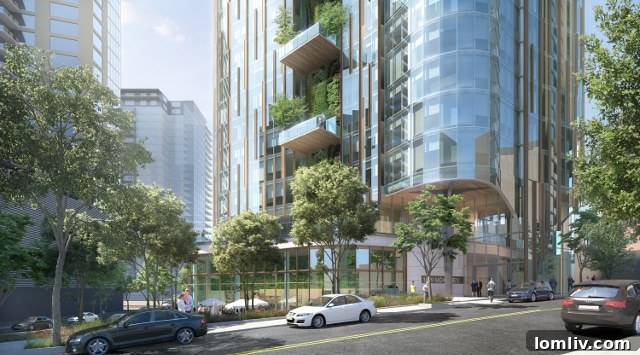
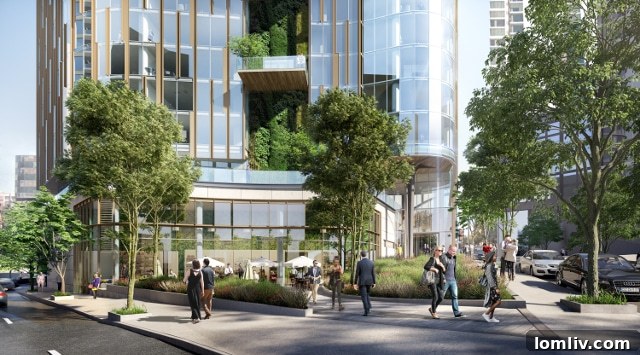
The initial rendering offers a tantalizing preview of what awaits. At street level, strategically placed umbrellas hint at a proposed café, its patio space nestled into the natural slope of the plot. This thoughtful design leverages the topographical contours, creating an intimate, secluded atmosphere for the café while seamlessly integrating it into the extensively landscaped pedestrian areas. This approach exemplifies a commitment to enhancing the public realm and fostering vibrant street life, a critical component of modern urban planning.
The Signature Green Amenity Platforms: A New Standard for Urban Living
Rising subtly above the ground plane, the building’s distinctive green elements begin to emerge. These aren’t merely decorative balconies; they are expansive 17-foot deep amenity platforms, meticulously integrated every three floors. Each platform will boast lush greenery cascading down its back walls, transforming concrete into living landscapes. Envision these spaces as vibrant communal hubs, perfect for gathering, featuring comfortable seating arrangements, and potentially even outdoor kitchens – a suggestion that promises to further enrich the resident experience. The sheer depth of these platforms means occupants will stand a considerable distance cantilevered from the building’s core, offering truly breathtaking, unobstructed views of the Dallas skyline.
Beyond their aesthetic appeal, these verdant spaces serve a practical purpose. The irregular surfaces of the dense foliage are engineered to mitigate urban noise, creating a tranquil oasis amidst the city’s hustle and bustle. In stark contrast, a simple glass-walled balcony, while offering views, would invariably create an echo chamber, diminishing the sense of peace and privacy. This thoughtful integration of nature underscores SCB Architecture’s commitment to holistic design, prioritizing both beauty and functionality.
Dynamic Curves and Rooftop Splendor: Elevating the Dallas Skyline
Another compelling design feature is the gracefully curved bump-out on the corner of the building, strategically oriented to face down Akard Street towards the burgeoning Klyde Warren Park extension. This architectural gesture promises to create a dramatic visual anchor for the property.
Recalling the architectural nuances of past Dallas developments, particularly the Mayfair condos, where tight turrets sometimes resulted in functionally limited interior spaces, a specific inquiry was made regarding the radius of these curves. SCB Architecture’s design employs a looser, more generous curve, ensuring that interior spaces remain eminently usable for furniture placement while still delivering the captivating drama of a curved glass wall. This careful balance between aesthetic flair and practical utility is a hallmark of superior architectural design.
The complete vision of the tower further reveals the profound impact of these design elements. The green amenity platforms are undeniably a signature component, alongside the distinctive rounded tip, reminiscent of an arrow, precisely oriented towards downtown Dallas and Klyde Warren Park. Vertical decorative “stripes” elegantly draw the eye upward, accentuating the building’s height and sleek profile, hinting at the unseen grandeur above.
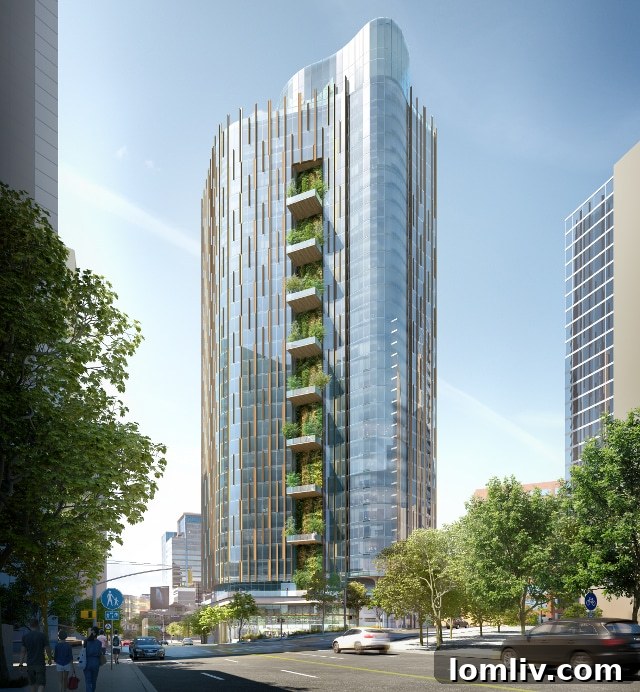
One of the most refreshing aspects of this project is its approach to rooftop amenities. Unlike many contemporary developments that feature multi-story podium “skirts” to house parking and amenity decks – creating a disconnect from the street level – 1899 McKinney bravely eschews this trend. All parking is meticulously tucked away underground. This allows for the building’s pool to grace the rooftop, fulfilling its ideal placement and offering unparalleled panoramic views. This decision is reminiscent of the revered Sky Club at the Mayfair, widely considered the best resident lounge in Dallas, and signifies a return to a more integrated, luxurious amenity experience.
The Triangular Advantage: How a Unique Lot Fuels Innovation
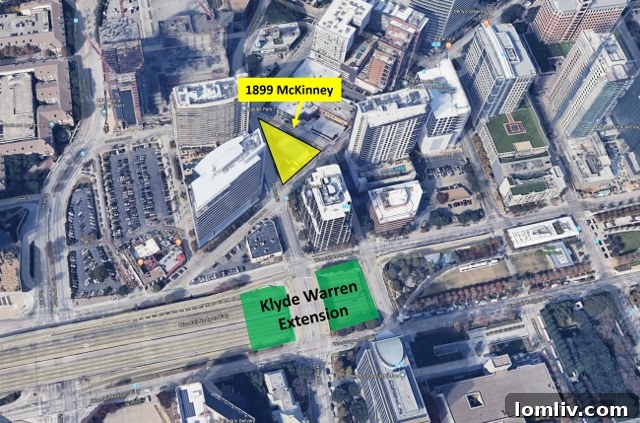
The driving force behind this departure from typical Dallas “cookie-cutter” architecture lies in the property itself. The lot at 1899 McKinney is uniquely challenging: a triangular parcel spanning 19,456 square feet (approximately 0.45 acres), characterized by a distinct slope. Far from being a hindrance, this irregular shape has been embraced as an opportunity for innovation. A triangular lot, by its very nature, allows for the strategic capture of views up and down intersecting streets from diverse angles, fostering a more dynamic and engaging architectural response.
This inherent uniqueness positions the project for iconic status, potentially inspiring future developments. The notion that an opposing triangular lot on the southern edge could, at some point, form a complementary “bookend” to this tower, creating an “hourglass” effect, speaks to the project’s potential to shape the wider urban fabric of Dallas.
Strategic Location: Connecting Residents to the Heart of Dallas
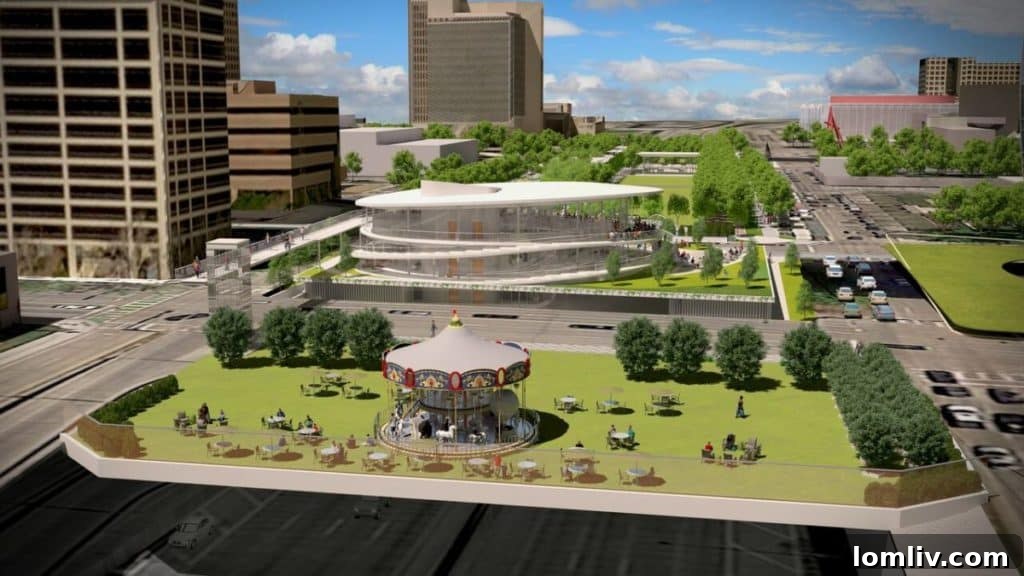
Beyond its architectural brilliance, 1899 McKinney benefits immensely from its prime location. A significant draw is its proximity to the Klyde Warren Park extension. As depicted in the rendering, with Akard Street running left to right, the proposed property sits just out of frame to the left, boasting what will effectively be an “amazing front yard.” This direct access to green space not only enhances residents’ quality of life but also acts as a natural sound buffer, significantly dampening traffic noise from Woodall Rodgers Freeway.
Extending just a few blocks from the tower, residents will find themselves within comfortable walking distance of Dallas’s most vibrant cultural and entertainment hubs. The Arts District, with its world-class museums and performance venues, Victory Park, and the American Airlines Center, are all easily accessible. Furthermore, those employed in the bustling Uptown or Downtown districts will appreciate the convenience of a pedestrian commute, further underscoring the project’s appeal for urban professionals seeking a seamless live-work-play environment.
Fostering Urban Interaction: The Power of Ground-Level Engagement
The ground-level café at 1899 McKinney is more than just a place to grab coffee; it represents a “green doorstep” that symbolically extends Klyde Warren Park northward. This thoughtful integration of public-facing amenities at the base of the tower is crucial for fostering a vibrant, pedestrian-friendly environment. While many neighboring parcels in the area are already developed, it is hoped that the success of Klyde Warren Park and the sheer architectural ambition of this building will inspire adjacent property owners to rethink their own streetscapes, encouraging a continuation of this “green” philosophy – an urban version of paying it forward.
During my conversation with SCB’s Clara Wineberg, I articulated a long-held belief: there is an inherent drama and architectural honesty when a high-rise meets the ground directly, unencumbered by a massive parking podium. This design choice dramatically increases interaction between the building and pedestrians, creating a more “permeable” and inviting urban experience that a blank wall of a masked parking garage simply cannot replicate. Wineberg wholeheartedly agreed, reinforcing the project’s commitment to human-centric design. Moreover, after years of hearing developers lament the prohibitive cost of underground parking, it was a pleasant surprise to learn that the cost differential, according to Wineberg, “wasn’t that big.” Developer Rastegar echoed this sentiment, lamenting how some “cookie-cutter” developers prioritize squeezing every last penny out of a deal to inflate investor margins, often at the expense of good architecture and urban aesthetics. It’s a testament to Rastegar Property Company’s vision that they are willing to invest in superior design elements that benefit both residents and the wider community.
It’s safe to assume that Rastegar and Wineberg might not receive an invitation to the annual developers’ “Podium Parking Party and Barn Dance” this year. However, their stance has certainly put me on high alert, compelling me to critically examine developments that feature unsightly above-ground parking garages and massive podiums. Their project powerfully demonstrates that an investment in underground parking pays handsome dividends, not just in aesthetics but in fostering a more livable and enjoyable urban environment.
Anticipating the Future: Details and Community Impact
While the initial renderings are incredibly promising, certain critical details are yet to be publicly shared. These include specifics regarding garage entrances, loading zones, and the precise zoning changes required to move this ambitious project forward. All these crucial elements will undoubtedly come to light when the proposal is presented to the Oak Lawn Committee on July 9th.
Considering the lot’s history, which once housed the notorious Glass Lounge nightclub in 2012 – a venue scorned by Foursquare reviewers as “TERRIBLE PLACE!!!” and “Booorrriiiinnnggg” – it is abundantly clear that this proposed project will be anything but. It represents a profound transformation, turning a neglected parcel into a vibrant, architecturally significant landmark that promises to redefine luxury living and urban connectivity in Dallas.

Remember: My expertise lies in high-rises, HOAs, and renovation trends, alongside a keen appreciation for modern and historical architecture balanced against the principles of the YIMBY (Yes In My Backyard) movement. My commitment to insightful real estate journalism has been recognized by the National Association of Real Estate Editors, with three Bronze awards in 2016, 2017, and 2018, as well as two Silver awards in 2016 and 2017. Should you have a compelling story to share, a development to highlight, or even a unique marriage proposal, please feel free to reach out via email at [email protected]. While I encourage you to look for me on Facebook and Twitter for more urban development insights, be warned, you won’t find me there, but your effort is certainly appreciated.