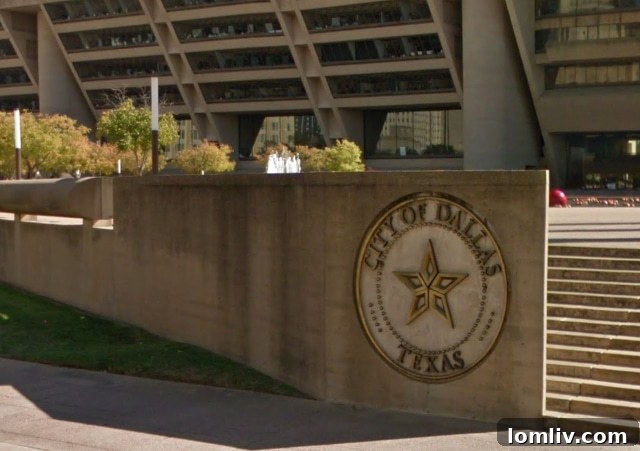
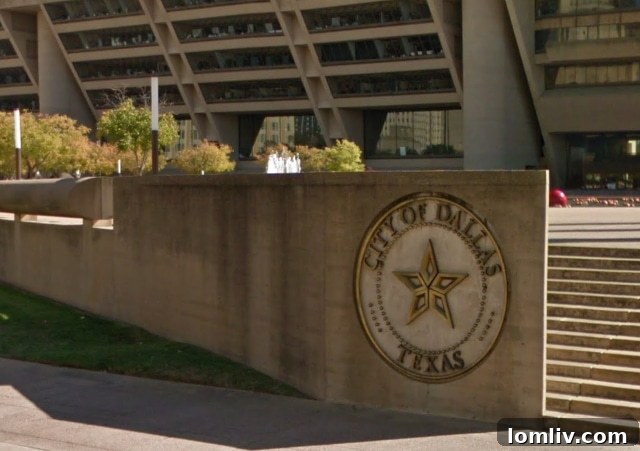
Dallas City Hall’s Stance: Unpacking the Reverchon Park Lawsuit Response
In 1964, Leslie Gore’s anthem “You Don’t Own Me” resonated deeply, its lyrics proclaiming, “I’m free and I love to be free, To live my life the way I want, To say and do whatever I please.” This spirit of fierce independence, bordering on defiance, appears to encapsulate the City of Dallas’s preliminary response to the Reverchon Park lawsuit, which was filed last month by neighboring residents Charlotte and Robert Barner. The lawsuit challenges the city council’s approval of a significant deal concerning the future of Reverchon Park, a vital green space within the community. This article aims to meticulously dissect the city’s legal strategy, examining the foundational arguments presented and their broader implications for urban development and citizen engagement in Dallas.
The City of Dallas submitted its official response to the lawsuit on March 6th. This initial filing offers a revealing glimpse into the city’s strategy, which appears designed to shut down the proceedings before the merits of the case can even be discussed. It’s a strategic move common in legal disputes, aiming to dismiss a case based on procedural or jurisdictional grounds rather than engaging with the substantive allegations.
The four-page reply, though concise, delivers a powerful opening salvo, immediately asserting its primary defense with unequivocal language:
A. Plaintiffs lack standing.
Neither Plaintiff has standing to bring this action. Neither has suffered an injury in fact or other injury distinct from the public. Neither Plaintiff has statutory standing to bring any of the claims. Neither Plaintiff has a private right of action to bring any of the claims. The Court lacks jurisdiction and all, or alternatively part, of the claims should be dismissed.
This section is packed with legal terminology, but its core message is clear: the plaintiffs, Charlotte and Robert Barner, have no legal right to bring this case to court. Let’s break down each element of this significant claim, as it forms the bedrock of the city’s defensive posture.
Deconstructing “Lack of Standing”: The City’s Primary Defense
The concept of “standing” is a fundamental principle in law, requiring that a party bringing a lawsuit must have a sufficient connection to and harm from the action or law being challenged. The city’s argument hinges on several facets of this principle:
No “Injury in Fact”
The city contends that since the proposed Reverchon Park redevelopment project has not yet been constructed or implemented, the Barners have “suffered no injury in fact.” This argument suggests that any potential harm is speculative or future-oriented, and therefore, not ripe for judicial review. From the city’s perspective, the lawsuit is preemptive, seeking to prevent an action before it has demonstrably caused harm. This legal stance forces plaintiffs into a difficult position, essentially asking them to wait until damage occurs before seeking redress, even if the proposed project could irrevocably alter their living environment or property values. The question arises: how long should residents wait to protect their interests when a municipal decision promises significant changes?
“Injury Distinct from the Public”
Another crucial element of standing is that the harm suffered by the plaintiffs must be distinct from that experienced by the general public. If an issue affects everyone equally, it is typically considered a public grievance, best addressed through political processes rather than individual litigation. The city is arguing that any impact from the Reverchon Park deal would be a general public concern, not specific to the Barners in a way that grants them unique standing to sue. This argument challenges the very notion of individual residents bringing suit against city-wide or park-specific development decisions.
Lack of “Statutory Standing” and “Private Right of Action”
The city further asserts that the Barners lack “statutory standing” and a “private right of action” to pursue their claims. This often relates to specific laws or ordinances that might grant certain individuals or entities the explicit right to sue in particular circumstances. In the context of zoning or land-use disputes, for instance, many regulations might recognize a Homeowners Association (HOA) as a collective entity with standing to challenge decisions affecting its members’ shared interests, but not necessarily individual condo owners. The city’s reply suggests that Dallas ordinances may not provide individual residents with the specific legal authority to bring these types of claims independently, especially when an HOA structure is in place.
“Court Lacks Jurisdiction”
Finally, the city’s reply culminates with the assertion that the court itself “lacks jurisdiction” to hear the case, and that “all, or alternatively part, of the claims should be dismissed.” This is a blanket challenge to the court’s authority, suggesting that the dispute falls outside the scope of issues that the judicial branch can legitimately resolve, or that there’s a procedural flaw preventing the court from hearing the case. This formidable legal maneuver aims to completely derail the lawsuit from its inception, preventing any substantive discussion of the Reverchon Park deal’s legality or impact.
The Shield of Sovereignty: Governmental Immunity
Beyond the arguments concerning standing, the city’s response immediately invokes a powerful and frequently used defense:
B. Governmental immunity, official immunity, and legislative immunity
This is essentially the sovereignty argument, positing that the government—in this case, the City of Dallas—is generally immune from lawsuits unless it has explicitly waived that immunity. Governmental immunity protects municipal entities from liability for certain acts, particularly those carried out in their governmental capacity, such as making zoning decisions or managing public parks. Many legal commentators anticipated the city would invoke this defense, as it’s a common and potent shield against legal challenges to municipal actions. This immunity concept is rooted in the idea that the government must be free to govern without constant fear of litigation, though its application can often leave citizens feeling powerless against official decisions.
Related to governmental immunity are “official immunity,” which protects individual government officials from liability for discretionary acts performed within the scope of their duties, and “legislative immunity,” which shields lawmakers from suits related to their legislative acts. These immunities collectively work to create a significant barrier for citizens seeking to challenge government actions, reinforcing the notion that the government operates above certain forms of legal challenge.
The Backup Plan: General Denial and Affirmative Defenses
BUT, if the court were to determine that the City of Dallas is not immune and that the plaintiffs do indeed have standing, the city has a fallback position. This demonstrates a comprehensive legal strategy, preparing for multiple eventualities:
General Denial
The city issues a “General Denial” of all the plaintiffs’ allegations, demanding “strict proof thereof, by a preponderance of the credible evidence.” This means that should the case proceed, the city will not concede any factual claims made by the Barners and will require them to meticulously prove every assertion with compelling evidence. This raises the evidentiary bar significantly for the plaintiffs, placing the full burden of proof on their shoulders.
Affirmative Defenses
The “Affirmative Defenses” section then reiterates (and potentially expands upon) the city’s key arguments:
- The city again claims sovereign immunity, reinforcing its primary shield.
- It reiterates that the plaintiffs lack standing to bring suit, pressing the point about “injury in fact” and “distinct from the public.”
- It adds that the city was not given proper notice, a procedural requirement that can be a basis for dismissal if not met correctly.
- And crucially, it restates, “Plaintiffs lack capacity to assert the claims alleged.”
This last point circles back to the contentious issue of individual vs. HOA standing. The city is firmly asserting that because the Barners are members of an HOA, only the HOA, as the collective legal entity, possesses the “capacity” or the right to sue—not individual owners. This is a recurring and often problematic legal hurdle faced by residents in municipal actions, particularly in zoning disputes. HOAs typically maintain a “one building, one vote” default setting in their governing documents, which, while useful for internal consensus, can inadvertently complicate individual members’ ability to take legal action against external entities like the city. While it’s often straightforward for HOAs to modify their bylaws to enable individual standing, this rarely happens proactively.
The HOA Dilemma and Potential Next Steps
The distinction between individual and HOA standing is particularly pertinent in cases like the Reverchon Park lawsuit. The proposed redevelopment of the ballfield within the park could have profound and varied impacts on all surrounding residents, affecting property values, increasing traffic, generating noise, altering views, and changing access to green space. These are concerns that naturally motivate individual homeowners to seek legal recourse.
If the court agrees with the City of Dallas that only the Barners’ HOA, and not the Barners individually, can sue, the immediate outcome would likely be the dismissal of the current lawsuit. However, this would not necessarily be the end of the legal challenge. It would be highly probable that the HOA, representing the collective interests of its members, would then refile the suit. Given the significant implications of the Reverchon Park deal for the entire community, an HOA would have a strong mandate to protect its members’ interests, especially if individual standing is denied.
Conversely, should the court allow the lawsuit to proceed by ruling that the Barners do possess sufficient standing, then the legal battle would shift dramatically. In such an event, residents could expect a far more detailed and substantive response from the city. This initial four-page reply, after all, strategically avoids addressing any of the specific charges or merits brought forth in the Barners’ original suit. It is purely a document crafted to quash the proceedings on procedural grounds. A detailed response would require the city to defend the legality and wisdom of the Reverchon Park deal itself, delving into the planning process, environmental impact, public consultation, and other substantive matters.
Broader Implications for Citizen Engagement in Dallas
The City of Dallas’s aggressive legal strategy in the Reverchon Park lawsuit carries significant implications beyond this specific case. It underscores the challenges faced by individual citizens and neighborhood groups when they attempt to challenge municipal decisions, especially large-scale urban development projects. By leaning heavily on arguments of lack of standing and governmental immunity, the city effectively seeks to limit avenues for judicial review of its actions, thereby concentrating power within the legislative and executive branches.
This approach can be seen as discouraging citizen participation in urban planning and governance, potentially creating a perception that city hall operates with a “don’t question me” attitude. While governments need efficiency and protection from frivolous lawsuits, an overly broad application of immunity or strict standing requirements can disempower residents who feel directly impacted by development decisions. It emphasizes the importance of robust public engagement processes *before* decisions are finalized, as challenging them post-approval through legal channels can be an uphill and costly battle for individual citizens.
Ultimately, the outcome of this preliminary legal skirmish will set a precedent for how future disputes between Dallas residents and their city government are handled. Will the courts affirm the strong boundaries of governmental immunity and strict standing requirements, or will they provide a clearer path for citizen-led challenges to municipal development decisions? The answer to this question will profoundly shape the landscape of urban governance and citizen rights in Dallas.
For those who aren’t familiar with Leslie Gore, perhaps the city’s resolute response can be more succinctly captured by Patsy Stone’s famously dismissive line from the British sitcom Absolutely Fabulous, “Don’t question me.” This sentiment, whether intentional or not, certainly seems to reflect the initial message from Dallas City Hall to the residents challenging the Reverchon Park deal.