The Dallas-Fort Worth metropolitan area, a vibrant economic powerhouse in North Texas, is currently experiencing a fascinating period of transition and growth within its real estate market. Recent data indicates a noticeable increase in housing inventory across the region, a development that signals potentially favorable conditions for prospective homebuyers. Concurrently, several cities within this dynamic metroplex are distinguishing themselves on national growth charts, underscoring the diverse and robust nature of the DFW real estate landscape. This week’s real estate roundup delves into these significant trends, highlighting key insights for anyone interested in the North Texas market.
Dallas-Fort Worth Housing Inventory Shows Promising Increases
The national housing inventory, after years of significant declines, is reaching what analysts describe as an inflection point. Realtor.com’s latest September housing report revealed a marginal 0.2 percent decrease in inventory from a year ago, accompanied by an encouraging 8 percent increase in new listings – representing the largest year-over-year jump in five years. This shift suggests a gradual rebalancing of the market, moving away from the extreme seller-dominant conditions that have characterized recent years.
Danielle Hale, Chief Economist for Realtor.com, highlighted the significance of this trend: “After years of record-breaking inventory declines, September’s almost flat inventory signals a big change in the real estate market. Would-be buyers who had been waiting for a bigger selection of homes for sale may finally see more listings materialize. But don’t expect the level to jump dramatically. Plenty of buyers in the market are scooping up homes as soon as they’re listed, which will keep national increases relatively small for the time being.” This expert perspective indicates that while more homes are becoming available, strong buyer demand is likely to prevent a sudden glut in the market or a sharp downturn in prices.
Despite the increase in inventory, housing prices continue their upward trajectory, albeit at a more tempered pace. The median home price in the U.S. stood at $295,000 in September, marking a 7 percent increase year-over-year. This growth rate, while substantial, is notably lower than the 10 percent increase observed in the preceding year, suggesting a move towards more sustainable appreciation rather than aggressive surges.
DFW Metroplex Leads the Way in Inventory Growth
The gradual increase in housing inventory is particularly pronounced in major metropolitan areas, with Dallas-Fort Worth standing out as a prime example. The DFW-Arlington Metropolitan Statistical Area (MSA) was among 22 of the 45 largest markets in September to record year-over-year inventory increases. Specifically, the DFW-Arlington MSA saw a robust 14 percent increase in active listings year-over-year and a 3 percent increase in new listings year-over-year during September. These figures significantly outpace national averages and highlight the region’s strong real estate activity.
Collectively, inventory across these 45 major markets increased by 5.6 percent year-over-year. Javier Vivas, Realtor.com’s Director of Economic Research, further elaborated on this positive trend: “Additionally, new listings are up 13 percent in these markets combined, and a new record-high 22 of the 45 largest markets have more active listings than this time last year.” This collective movement towards increased listings offers a glimmer of hope for buyers who have faced intense competition and limited choices in recent years. For the DFW market, these statistics reflect a resilient economy and a continued influx of residents, necessitating a more responsive housing supply.
McKinney Ranks Among the Top 5 Fastest-Growing Cities
This chart illustrates the geographic distribution and relative ranking of the fastest-growing cities across the United States, with specific emphasis on those excelling in key growth metrics.
North Texas continues to be a magnet for growth and development, with two of its prominent cities, McKinney and Frisco, earning significant recognition on WalletHub’s annual list of the fastest-growing cities in the nation. McKinney, in particular, made a remarkable entry into the top five, securing the 5th position overall. Frisco also demonstrated strong performance, ranking 16th nationwide, further solidifying the region’s reputation as a hub for rapid expansion.
Delving deeper into the rankings, McKinney achieved the third spot among mid-size cities with the highest growth, showcasing its balanced development across various sectors. Interestingly, when the focus shifted purely to population growth, Frisco emerged as the national leader, topping all other cities in the country for its sheer influx of new residents. These accolades are not merely statistical achievements; they underscore the vibrant economic opportunities, exceptional quality of life, and robust community infrastructure that these North Texas cities offer, attracting both individuals and businesses.
WalletHub’s Comprehensive Growth Assessment
WalletHub’s methodology for evaluating these cities is comprehensive, comparing 515 cities of varying population sizes based on two overarching criteria: sociodemographics and jobs and economy. Within these two broad categories, a detailed analysis utilized 15 specific metrics, each graded on a 100-point scale, to provide a nuanced understanding of urban growth. This rigorous approach ensures that growth is assessed holistically, considering factors beyond simple population increases.
The company detailed its analytical framework, stating: “For each metric, we analyzed data spanning from 2011 to 2017 with the exception of ‘Increase in Number of Startups’ (from 2010 to 2014), ‘Increase in Number of Businesses’ (from 2011 to 2016) and ‘Increase in Venture Capital Investment Amount (from 2010 to 2016)’.” This multi-year data analysis provides a long-term perspective on growth trends, offering insights into sustained development rather than short-term fluctuations. McKinney’s impressive overall score of 71.4 and Frisco’s strong 67.02 are direct reflections of their sustained economic vitality, job creation, and attractive demographic shifts, positioning them as exemplary models of urban growth in the United States.
Watauga Secures Third Spot on Hottest Zip Codes List
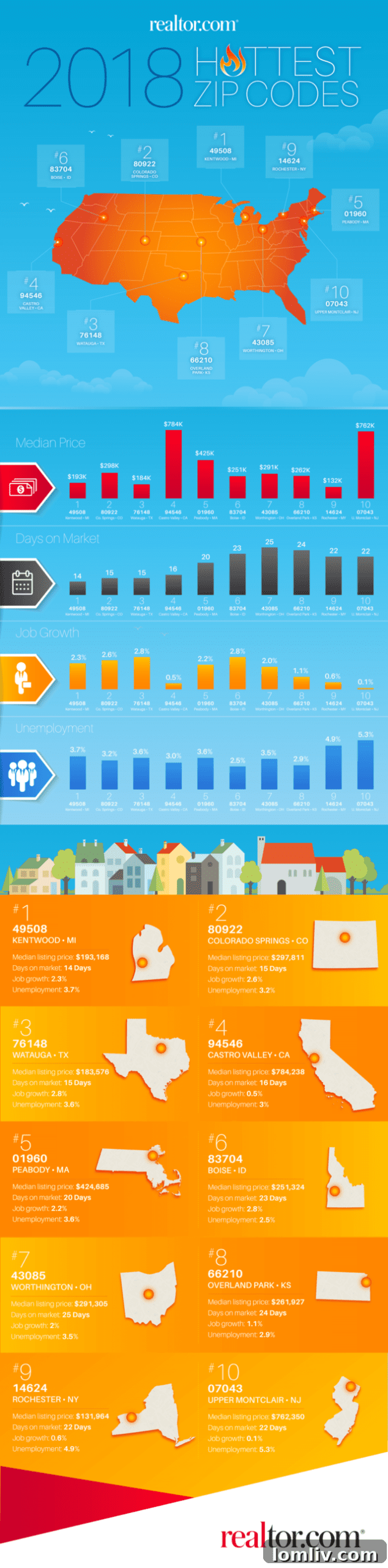
The Fort Worth suburb of Watauga has once again captured national attention, maintaining its prominent position on Realtor.com’s esteemed list of hottest zip codes for the year. While it saw a slight adjustment from its previous No. 1 ranking to the No. 3 spot, Watauga’s consistent presence among the nation’s top real estate markets underscores its enduring appeal and dynamic housing environment.
But what exactly makes a market “hot”? According to Danielle Hale, Senior Economist for Realtor.com, homes in this year’s top 10 hottest markets exhibit extraordinarily rapid sales cycles. Properties in these highly sought-after areas, including Watauga, sell in an average of just 20 days. This is a remarkable 46 days faster than the national average, 25 days quicker than their respective broader metro areas, and 18 days faster than within their own counties. Such swift turnover is a clear indicator of intense buyer demand, limited inventory, and overall market vibrancy.
Beyond rapid sales, the digital footprint of these areas further highlights their desirability. Homes located within the top 10 hottest zip codes, such as Watauga, attract significantly more online attention. Users view properties in these areas four times more frequently than homes in the rest of the country. This interest level translates to 2.3 times more views compared to their respective metro areas and 1.9 times more than other locations within their county, demonstrating a widespread and concentrated interest from prospective buyers.
The Appeal of Watauga: Affordability, Family-Friendly, and Inclusivity
Watauga has carved out a unique niche, positioning itself as a “sweet spot” for young families. It offers the invaluable advantage of convenient access to the extensive amenities and opportunities of Fort Worth, while simultaneously providing housing options that are affordable enough to deliver significant value for money. This blend of accessibility and affordability makes Watauga an attractive choice for those looking to maximize their housing budget without sacrificing quality of life.
A key draw for younger families is Watauga’s strong educational system. Grace E. Hardeman Elementary, for instance, boasts an impressive GreatSchools rating of 8/10, signaling a commitment to quality education. Beyond academics, Watauga distinguishes itself through its progressive community values. This ZIP code ranks highest in the state in the Human Rights Campaign’s Municipal Equality Index (MEI), an important metric that assesses how cities actively support their LGBT residents and workforce. This commitment to inclusivity further enhances Watauga’s appeal to a diverse demographic seeking a welcoming and supportive community.
The area’s economic stability is also bolstered by the presence of several major employers, including American Airlines, Texas Health Resources, and Lockheed Martin Aeronautics company. These corporations not only provide numerous job opportunities but also contribute to the local economy’s resilience and growth, creating a robust environment for residents.
Millennials Drive Watauga’s Housing Market
The dominant buyer segment fueling Watauga’s dynamic housing market is millennials. This demographic accounts for a significant 33 percent of new mortgages within the zip code, demonstrating their strong commitment to homeownership in the area. Notably, millennials in Watauga boast an impressive 65 percent homeownership rate, a figure substantially higher than the 42 percent observed across Tarrant County as a whole. This trend indicates Watauga’s success in attracting and retaining a younger generation eager to invest in their homes and communities.
The rapid pace of sales and robust price appreciation further underscore Watauga’s hot market status. Danielle Hale noted: “Homes in Watauga sell in 15 days, 3 percent faster than last year, with a median list price of $183,576, up 16.2 percent over last year.” This significant increase in median list price, coupled with accelerated sales, reflects strong demand and confidence among buyers. Looking ahead, the regional economic outlook remains positive, with Tarrant County projected to add 28,400 jobs this year—a healthy increase of 2.8 percent. This sustained job growth is expected to continue fueling demand and supporting property values in desirable areas like Watauga.
Conclusion: A Dynamic and Evolving DFW Real Estate Landscape
The Dallas-Fort Worth real estate market is undeniably a complex and dynamic ecosystem, currently undergoing significant evolution. The increase in housing inventory across the broader metroplex offers a welcome breath of fresh air for buyers, potentially leading to more choices and slightly less frantic competition. However, this shift is occurring within a market that continues to experience robust demand and steady price appreciation, indicating a healthy, albeit rebalancing, environment.
Concurrently, the explosive growth witnessed in cities like McKinney and Frisco, driven by strong economies, excellent amenities, and a high quality of life, solidifies North Texas’s reputation as a premier destination for relocation and investment. Areas like Watauga further exemplify the metroplex’s diverse appeal, attracting specific demographics such as millennials with its blend of affordability, strong community values, and access to major urban centers.
For buyers, understanding these localized trends is crucial. While overall inventory may be rising, specific hot spots continue to command premium prices and quick sales. For sellers, particularly in these in-demand areas, the market remains favorable for achieving strong returns. Overall, DFW’s real estate market is characterized by resilience, continuous development, and a compelling blend of opportunities for a wide range of homeowners and investors, cementing its status as a key player in the national real estate arena.