

North Texas Real Estate: Navigating the Shifting Currents of Demand and Supply
The North Texas housing market presents a fascinating paradox. As you venture through the vibrant suburbs and expanding exurbs, particularly in northern Collin County and the dynamic towns east of Dallas, a familiar sight dominates the landscape: new developments bustling with construction activity. Builders are actively creating fresh inventory, a clear indicator of robust and healthy demand for modern residences. Yet, beneath this veneer of rapid growth, a different story unfolds for the existing single-family home market – those charming residences that have long been the backbone of local communities, lacking the “new-house smell” but brimming with established character.
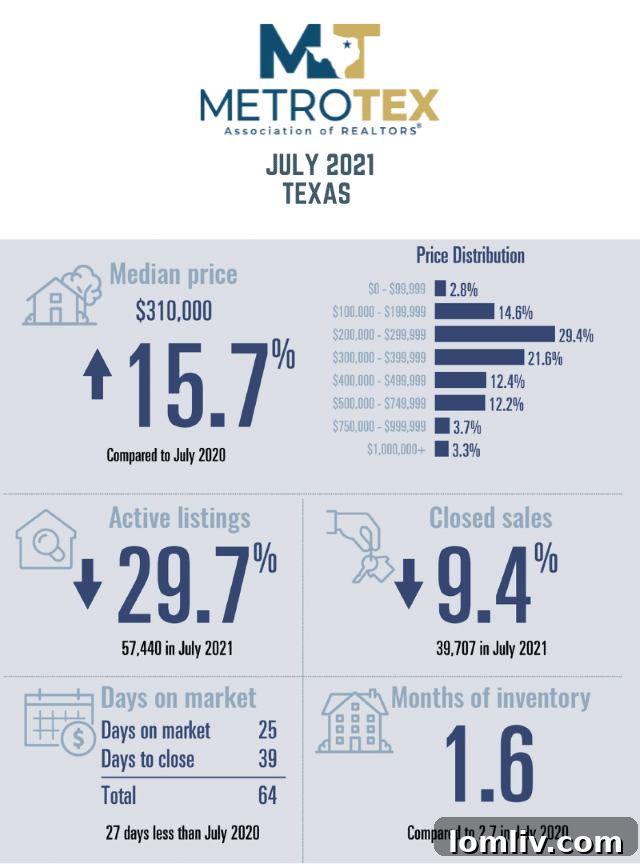
Recent data reveals a dramatic year-over-year decline in the sales of these existing homes. According to the MetroTex Association of Realtors’ comprehensive July housing report, every single one of the 14 counties within MetroTex’s purview, headquartered in Grapevine, experienced a notable decrease in sales during 2020. This trend suggests a significant shift in market dynamics that warrants closer examination for both prospective buyers and sellers in the region.
A Closer Look at Declining Sales Figures Across North Texas
The decline in existing home sales isn’t uniform but is acutely felt in several key North Texas counties. Ellis County, known for its blend of rural charm and suburban growth, witnessed a substantial drop of over 30 percent in home sales compared to the previous year. Similarly, Rockwall County, a rapidly expanding area east of Dallas, experienced a significant decrease of more than 28 percent in existing home transactions. Dallas County, the heart of the metropolitan area, saw its sales fall by 13.2 percent.
Even Tarrant County, which recorded the highest volume of sales at 2,793, was not immune to this downward trend, experiencing a 15.8 percent decline from the previous year’s figures. Collectively, the North Texas region reported a 17 percent reduction in single-family home sales in July compared to July 2020. This regional dip underscores a widespread adjustment in the market, moving away from the frenetic pace observed during the earlier stages of the pandemic.
The Driving Forces Behind Market Shifts: Inventory, Prices, and Listings
These recent sales figures are not isolated anomalies but rather a continuation of trends observed over the past few months. The underlying indicators consistently point to three primary factors shaping the current North Texas housing landscape: stubbornly low inventory levels, continuously escalating home prices, and a shrinking number of new listings entering the market. Understanding these interconnected elements is crucial for anyone attempting to navigate the complexities of real estate in the Dallas-Fort Worth metroplex.
Persistent Low Inventory: A Seller’s Fortress, A Buyer’s Challenge
The scarcity of available homes for sale has been a defining characteristic of the North Texas market for an extended period. This low inventory creates a highly competitive environment where demand consistently outstrips supply, contributing significantly to price appreciation. Many potential sellers are hesitant to list their homes, partly due to the difficulty of finding a suitable replacement property in such a tight market. The fear of being unable to secure their next home keeps existing properties off the market, perpetuating the supply shortage.
Soaring Home Prices: Equity Gains and Affordability Concerns
While low inventory fuels competition, the consistently rising home prices have become a dominant feature. These price hikes are a double-edged sword: fantastic news for existing homeowners seeing their equity grow, but a substantial hurdle for prospective buyers, particularly first-timers, struggling with affordability. The MetroTex report highlights impressive price gains across the region. In Collin County, for instance, median home prices surged by an astonishing 23.3 percent from a year earlier, reaching a record $450,000. Denton County also experienced significant appreciation, with prices increasing 21 percent to $405,900. These local trends mirror a national pattern, as the National Association of Realtors’ latest quarterly report revealed a 22.9 percent rise in the median sales price of single-family existing homes nationally, reaching $357,900. Indeed, 99 percent of the 183 metro areas tracked by NAR recorded double-digit price growth, underscoring the widespread nature of this phenomenon.
Fewer Listings: A Consequence of Market Tightness
The reduction in available listings is directly tied to the low inventory. With fewer homes being put on the market, buyers face limited choices, intensifying bidding wars and often pushing prices even higher. This trend also reflects a strategic decision by some homeowners to maximize their investment in a strong seller’s market, perhaps waiting for the opportune moment or simply enjoying the increased value of their primary asset.
The Market’s Dual Narrative: Implications for Buyers and Sellers
The current North Texas real estate environment presents distinct scenarios for those on opposite sides of the transaction:
For Buyers: Navigating a Competitive Landscape with Record-Low Rates
If you are contemplating purchasing a home in North Texas, you are entering a market characterized by historically high home values. This can be intimidating, requiring significant financial planning and often leading to quick decision-making under pressure. However, a silver lining exists in the form of historically low mortgage rates, which have helped to offset some of the impact of rising prices by making monthly payments more manageable. Buyers must be prepared for fierce competition, often encountering multiple offers and needing to act swiftly when a desirable property emerges. It is a market that demands patience, flexibility, and a strong pre-approval to stand out. Engaging with a knowledgeable local real estate agent who understands the nuances of specific neighborhoods can provide a crucial advantage.
For Sellers: Capitalizing on Unprecedented Value and Strong Demand
For existing homeowners in North Texas, the news is overwhelmingly positive. Your home’s value has likely seen substantial appreciation, translating into significant equity gains. This robust seller’s market means properties often sell quickly, frequently above asking price, and with favorable terms. Sellers benefit from strong demand, leading to multiple offers and the ability to be selective. However, the challenge for sellers often lies in their next move – finding a new home in the same competitive environment. Strategic planning is essential, perhaps involving temporary housing solutions or carefully coordinating closing dates to ensure a smooth transition. Maximizing your home’s appeal through minor upgrades and professional staging can further enhance its marketability in this advantageous climate.
Expert Outlook: From “Super Hot” to “Warm”
Lawrence Yun, the chief economist for the National Association of Realtors (NAR), offers a insightful perspective on the future trajectory of the housing market. He notes, “Home price gains and the accompanying housing wealth accumulation have been spectacular over the past year, but are unlikely to be repeated in 2022.” This statement suggests that while the market has been exceptionally strong, the pace of appreciation is expected to moderate.
Yun predicts a transition from a “super hot” market to a “warm” one, characterized by “markedly slower price gains.” This shift is anticipated due to emerging signs of more supply gradually reaching the market and some tapering of demand. Factors contributing to this moderation could include a slight rise in mortgage rates, increased construction activity finally catching up with demand, and affordability concerns prompting some potential buyers to pause. A “warm” market, however, does not signify a downturn but rather a more sustainable, less frenzied environment, where growth continues but at a more manageable pace. This transition could bring a healthier balance to the North Texas real estate landscape, offering a slight reprieve for buyers while sellers can still expect solid returns.
Navigating the Future of North Texas Real Estate
The North Texas housing market remains a dynamic and complex ecosystem, driven by a confluence of strong economic fundamentals, continued population growth, and evolving buyer and seller behaviors. While existing home sales have seen a measurable decline, the underlying strength of the region, coupled with the ongoing new construction boom, indicates a market that is adjusting rather than faltering. The transition from “super hot” to “warm” signifies a maturation, potentially leading to more stable and predictable conditions in the long term.
For all stakeholders, staying informed with the latest market intelligence is paramount. Whether you are a first-time homebuyer, an experienced investor, or considering selling your property, understanding these nuanced trends will empower you to make well-informed decisions. Professional guidance from local real estate experts who possess deep knowledge of specific North Texas submarkets can be invaluable in successfully navigating these shifting currents.
For more detailed information and the complete reports, please consult the official sources:
- Check the MetroTex report here: https://www.mymetrotex.com/market-reports/
- Also: The North Texas Real Estate Information System Summary MLS Report