Devastating Gas Explosion Rocks Plano Neighborhood, Injuring Six and Leveling Home
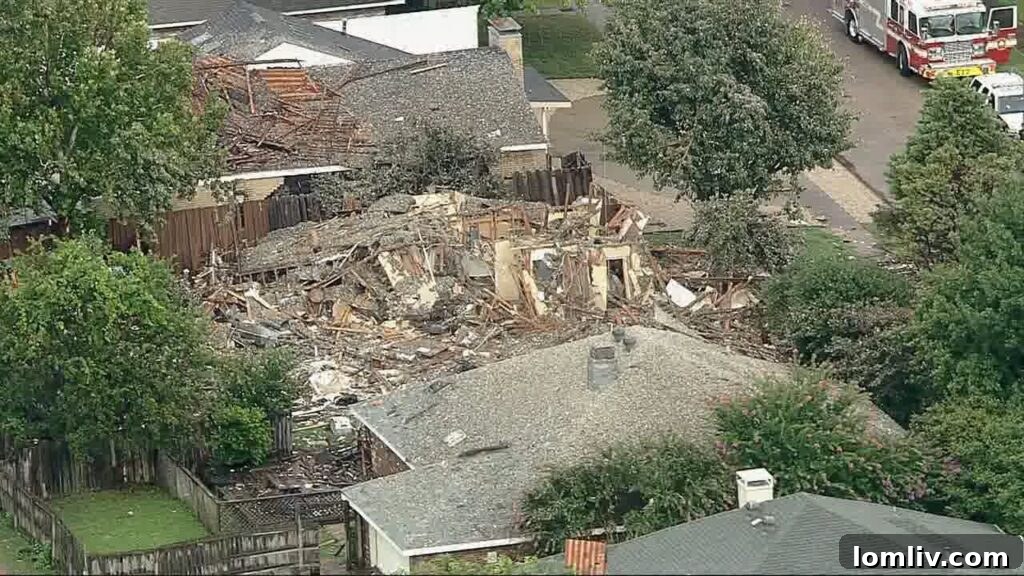
A tranquil Monday afternoon in Plano, Texas, was abruptly shattered by a violent residential explosion near the intersection of Park Blvd. and Coit Road, sending shockwaves through the community and drawing national, even international, attention. The catastrophic blast, which occurred at approximately 4:40 p.m. on Monday, left a single-story home completely leveled and inflicted significant damage on numerous neighboring properties. Initial investigations by Plano Police swiftly ruled out criminal activity as the cause, focusing instead on an isolated gas leak as the potential source of this devastating incident. The event prompted an immediate and extensive emergency response, highlighting the collaborative efforts of local authorities and utilities to manage the crisis and ensure public safety.
Immediate Aftermath: Six Residents Rushed to Hospital After Plano House Explosion
The force of the Plano house explosion had tragic immediate consequences, with six individuals sustaining injuries and requiring urgent medical attention. Inside the very home that was obliterated, located in the 4400 block of Cleveland, an adult resident was present at the moment of the blast. This individual was quickly transported by ambulance to Medical City Plano, a facility renowned for its advanced trauma care capabilities and its status as a leading medical center in North Texas.
The tragedy extended beyond the epicenter, as two adults and three children residing in the adjacent property also suffered injuries. They too were promptly taken to Medical City Plano and Children’s Medical Center Plano, ensuring specialized care for the younger victims of the residential blast. While specific details regarding the severity of the injuries have not been officially disclosed by authorities, eyewitness accounts from the scene painted a poignant picture. Reporters observed a woman being carefully wheeled away on a stretcher, suggesting significant trauma. An elementary school-aged child was reportedly transported with a bandaged hand, while a younger child was tenderly carried to an ambulance, their injuries remaining undisclosed. The critical role of Medical City Plano cannot be overstated; it stands as Collin County’s sole Level 1 trauma center, a designation on par with major facilities like Dallas Parkland, underscoring its capacity to handle the most severe medical emergencies.
The home at the center of the explosion, a 1,691-square-foot structure built in 1981, was a typical suburban residence, last listed on MLS as a lease in 2009. It was equipped with several gas-powered amenities common in homes of its era and region, including a gas-starter fireplace, a gas cooktop, and gas heating, complemented by electric central air conditioning. Understanding these features is crucial for investigators as they work to reconstruct the events leading up to the catastrophic blast, scrutinizing every potential point of failure within the home’s utility infrastructure in their pursuit of the truth behind the Plano gas explosion.
Intensive Investigation Underway: Unraveling the Cause of the Plano House Explosion
The scene of the devastating Plano house explosion quickly transformed into a complex investigative site, drawing together a myriad of specialized teams and agencies. Given the sheer scale and destructive power of the blast, standard protocol mandated the immediate deployment of Plano’s bomb squad. This elite unit, however, quickly determined that no explosive devices were involved. WFAA’s Jobin Panicker reported that the Plano Hazardous Devices Unit, utilizing a highly trained canine, conducted a thorough search for bomb materials across the debris field, yielding no positive indications. This crucial early finding helped to direct the investigation away from criminal intent and towards an accidental cause, specifically focusing on a potential gas leak in Plano.
The Plano Hazardous Materials team, a specialized 30-person unit equipped to respond to a wide array of threats including explosives, hazardous materials incidents, terrorist bombings, and weapons of mass destruction, also played a vital role. Their expertise ensures that any lingering hazards, such as residual gas or other dangerous substances, are identified and neutralized, making the site safe for further investigation and cleanup. By Monday evening, Plano Police definitively declared that the house was not a crime scene, a significant development that allowed the Plano Fire Marshal and his dedicated team of investigators to assume primary responsibility for determining the explosion’s precise origin.
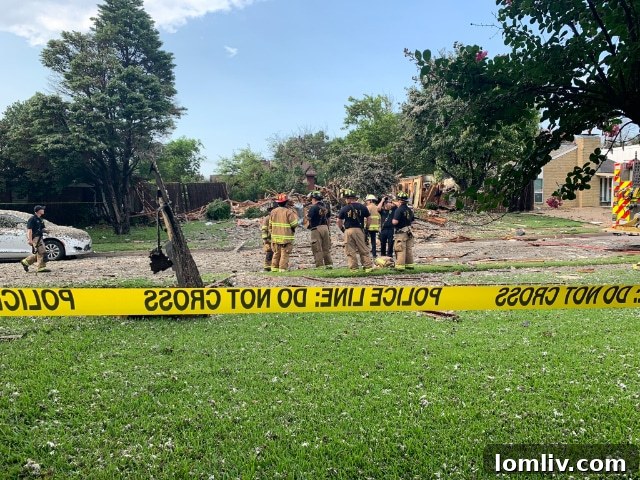
The collaborative nature of such an intricate investigation became evident with the presence of multiple key stakeholders at the scene. Investigators from Plano Fire-Rescue worked alongside representatives from utility providers, including TXU Energy and Oncor, to meticulously examine the area. Their combined efforts aimed to identify the exact cause of the explosion, focusing primarily on the possibility of a gas leak. Photos from the scene also confirmed the presence of at least one official from the Bureau of Alcohol, Tobacco, Firearms and Explosives (ATF), an agency often involved in large-scale explosion investigations, particularly when the cause is initially undetermined or complex.
As a precautionary measure and standard operating procedure following a significant incident like this residential blast, crews swiftly moved to shut off electricity and gas services to the entire block. This immediate action prevents further potential hazards, such as secondary explosions or electrical fires, ensuring the safety of emergency responders and nearby residents. Plano Fire-Rescue officials, committed to a thorough and unbiased investigation, issued a statement emphasizing their position: “At this point, they do not know the cause and do not want to speculate.” They proactively addressed online speculation, particularly on platforms like Twitter, where some users suggested illicit activities were to blame, firmly asking the public to refrain from unfounded conjectures and allow the investigative process to unfold based on evidence regarding the Plano gas explosion.
Shockwaves and Debris: The Far-Reaching Impact of the Plano Gas Explosion
The force of the gas explosion in the 4400 block of Cleveland was so immense that its impact transcended the immediate vicinity, rippling through a significant portion of West Plano. Multiple residents reported feeling the powerful blast at distances of at least a mile away, while the distinct, concussive sound was heard from as far as two miles out. The sheer scale of the event was underscored by reports from residents located even further afield, with one individual south of President George Bush Turnpike and Frankford confirming they felt the tremor. This reporter, residing just an intersection away, personally experienced a loud boom that was distinctly unlike thunder, accompanied by a noticeable shaking of their own house at the moment of the explosion.
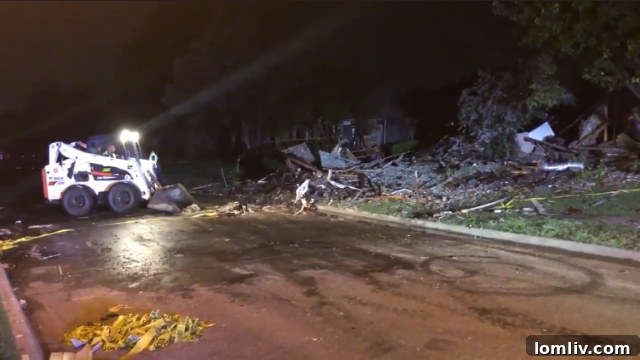
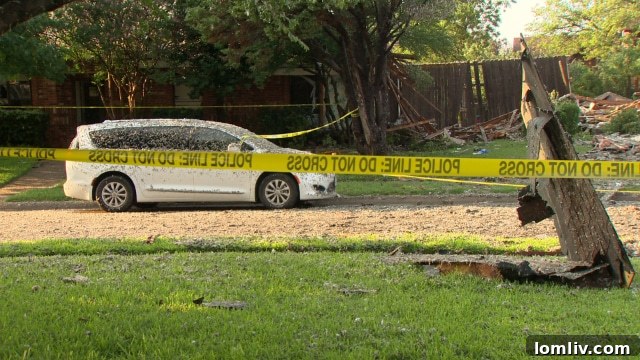
The physical manifestation of this destructive energy was evident across the West Plano neighborhood. Debris, ranging from small fragments to substantial pieces of wood, was scattered widely, creating a scene of widespread disarray. The impact on adjacent and nearby homes was profound. Properties directly across the street suffered shattered windows, a testament to the powerful shockwave generated by the blast. Homes situated on either side of the now-leveled brick residence sustained considerable structural damage, necessitating thorough assessments by engineers to ensure their continued safety and habitability. Cleanup crews worked tirelessly into the night, battling against the clock and the emotional weight of the situation to clear the extensive debris and begin the arduous process of restoring order.
Further demonstrating the widespread nature of the damage, Jeffrey Blackwell, a resident a few streets over on Denver Drive, shared his harrowing experience on NextDoor. His home not only suffered broken windows but also experienced what he described as a significant shift in its “whole roof/ceiling,” indicating potential foundational or structural compromise. Such accounts underscore the pervasive nature of the blast’s energy and the extensive property damage that can result from a residential gas explosion of this magnitude. The community grappled with the immediate aftermath, facing the daunting task of assessing damages, ensuring safety, and beginning the long road to recovery from this unprecedented event in Plano.
Eyewitness Accounts and Conflicting Narratives Surround Plano Home Explosion
In the wake of a sudden and cataclysmic event like the Plano home explosion, eyewitness accounts often provide crucial, albeit sometimes conflicting, initial insights. The varying perspectives from residents highlight the chaotic nature of the immediate aftermath and the different ways individuals perceive and process a traumatic incident. Taylor Reddick, a nearby resident, offered a dramatic account, stating he witnessed lightning strike the home just before the blast. “I was looking out the window right as the lightning hit followed by a big black plume of smoke and debris shooting in the sky,” he recounted on NextDoor, suggesting a direct natural cause for the ignition of the gas leak.
However, technological evidence from home surveillance systems offered a different perspective. A Ring camera positioned down the street from the affected residence captured footage revealing a rolling white cloud of dust moments *after* the blast, indicating the explosion occurred before the dust cloud formed, not simultaneously with a lightning strike. Further corroborating the sheer force of the event, a Nest camera located behind the home was found to have been violently blown off its mount, offering a visceral testament to the concussive energy. While thunderstorms were active and present in the area at the time of the explosion, the reporter’s own observations noted waning rain and what appeared to be lighter lightning activity from their location, adding to the complexity of reconciling the lightning strike theory with other observations regarding the Plano residential blast.
Further reinforcing the widespread impact, other residents shared their experiences via social media. One resident, several streets away, reported on Twitter that their windows were shattered and doors blew open, illustrating the extensive reach of the shockwave. Another Twitter user posted a home surveillance video capturing their screen door handle shaking violently at the precise moment of the explosion, providing a timestamped visual record of the event’s instantaneous force. A common thread emerged from comments on NextDoor, where a consensus of residents initially believed a tree had fallen on their roof or that a car had crashed into their home, underscoring the disorienting and unexpected nature of the sound and impact.
These varied accounts underscore the challenge for investigators in piecing together a definitive timeline and cause. While personal observations offer valuable snippets, they often require careful corroboration with forensic evidence and technical data. The contrast between perceived causes (like lightning) and the physical evidence (like the camera footage showing *aftermath* or the sheer mechanical force) highlights the critical need for a meticulous, evidence-based investigation to determine the truth behind this devastating residential explosion in Plano.

The Home’s History: A Glimpse into the Property Before the Plano Blast
The house that was tragically leveled in the Plano gas explosion held a history common to many suburban homes in the area, offering a poignant contrast to its current state of destruction. Built in 1981, the single-story residence was a fixture in the West Plano community for decades. While the original article noted its general characteristics, a past listing provides a more detailed insight into the property’s features and updates, painting a picture of a well-maintained and desirable home before the devastating incident. The information from a previous real estate listing (presumably from 2009 when it was last listed for lease) reads as follows:
“Fantastic single story house located in West Plano area. Great location close to Preston, shopping center, Highway 190 & toll way. Updated include Kitchen, Granite countertops, under mount sink, double ovens, Roll-out trays in the cabinet, bathrooms, mirror, decorative lighting, back splash, double oven. Large living room with bricks fireplace. Designed painting, newly installed Energy efficient Windows. Wood flooring throughout, Vaulted beamed ceiling. Fruits trees, a Pergola in back yard. Build in refrigerator, Microwave with the property.”
This description reveals a home that had undergone significant updates to enhance its appeal and functionality. The kitchen, often the heart of a home, featured modern amenities like granite countertops, an under-mount sink, and double ovens, along with thoughtful touches like roll-out trays in the cabinetry. Bathrooms had also received upgrades, including new mirrors and decorative lighting, suggesting a commitment to contemporary aesthetics. The presence of a brick fireplace in the large living room speaks to comfort and classic charm, while “designed painting” hints at personalized interior decor. Crucially, the mention of “newly installed Energy efficient Windows” indicates efforts to modernize the home’s energy performance, a common upgrade for properties built in the early 80s.
Further appealing features included wood flooring throughout, which adds warmth and elegance, and a vaulted beamed ceiling, contributing to a sense of spaciousness. The backyard was described as an inviting outdoor space, complete with fruit trees and a pergola, ideal for relaxation and entertaining. Practical inclusions such as a built-in refrigerator and microwave underscored the property’s readiness for its occupants. This detailed look at the home’s amenities prior to the explosion serves as a stark reminder of the rapid and complete devastation wrought by the blast, transforming a beloved and updated residence into a pile of rubble in a matter of seconds. The loss extends beyond the structure itself to the memories and life it once held, forever altered by the Plano gas explosion.
Ongoing Investigation Takes a Grave Turn: Possible Intentional Act in Plano Explosion
Update: Site of Plano Home Gas Explosion Finally Cleared, Officials Say Blast May Have Been Intentional
As the painstaking investigation into the Plano house explosion continues, new information has emerged that significantly alters the potential narrative surrounding the devastating event. While initial assessments by Plano Police quickly dismissed criminal activity and focused on an accidental gas leak, subsequent developments suggest a far more complex and troubling possibility. An update linked in this article indicates a dramatic shift in the investigative focus, with officials now openly stating that the blast “may have been intentional.”
This revelation introduces a grave new dimension to the tragedy. If confirmed as an intentional act, the incident would transition from a devastating accident to a potential criminal investigation, with profound implications for all involved. Such a determination would require investigators to revisit every piece of evidence, potentially re-interview witnesses, and bring in additional forensic expertise to explore motives and methods. The transition from an “isolated gas leak” to a “may have been intentional” scenario highlights the evolving nature of complex investigations and the dedication of authorities to uncover the full truth, no matter how difficult or unexpected.
The update also mentions that the “Site of Plano Home Gas Explosion Finally Cleared.” Clearing the site is a critical step in the investigative process, signifying that emergency responders and cleanup crews have removed the bulk of the debris, making the area safer and allowing forensic teams to access foundational elements and collect more precise evidence. However, “cleared” does not mean the investigation is over; rather, it marks a transition to a new phase where collected materials are analyzed off-site, and the focus shifts to understanding the human element behind a potentially deliberate act. This ongoing development underscores the profound impact of the Plano gas explosion and the community’s continued wait for definitive answers regarding what truly happened on that fateful Monday afternoon.