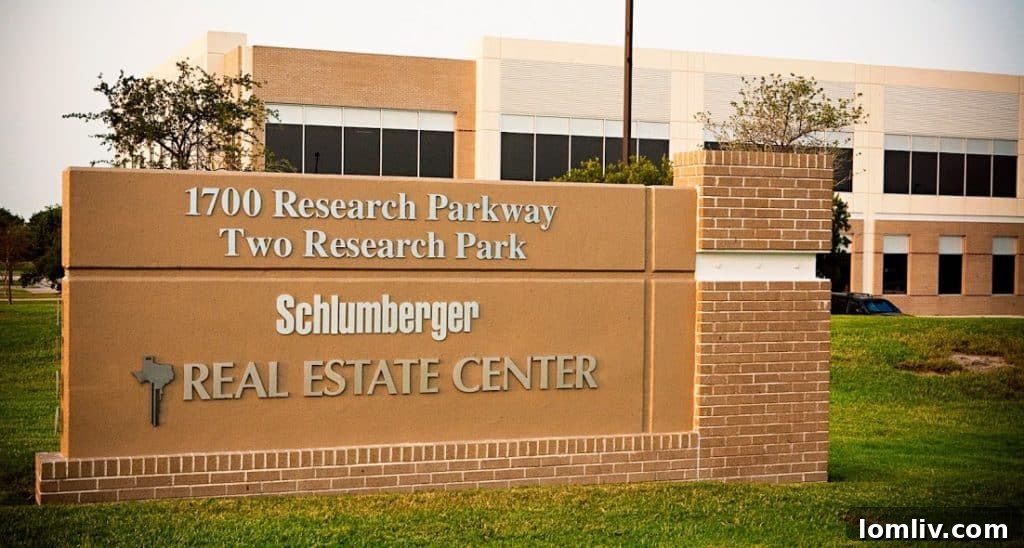
In the dynamic world of academia and industry, names carry significant weight, encapsulating identity, mission, and historical legacy. For an institution as impactful as the Real Estate Center at Texas A&M University, the decision to revisit its nomenclature is more than a mere administrative formality; it’s a powerful reaffirmation of its core purpose and a strategic move to enhance its future relevance. Effective January 1, 2021, the center proudly embraces its original, legislatively mandated designation, returning to its esteemed identity as the Texas Real Estate Research Center. This transition marks a pivotal moment, signaling a renewed commitment to its founding principles and an amplified focus on its distinctive contributions to the Texas real estate landscape.
“We are reassuming and reasserting our claim to our official name,” states Gary Maler, the center’s executive director, underscoring the profound significance of this strategic rebranding. This move isn’t just about restoring a title; it’s about reclaiming a legacy that began five decades ago. The year 2021 also coincides with the center’s momentous 50th anniversary, making the name revival a fitting tribute to half a century of unparalleled dedication to real estate education, data, and policy insights across the Lone Star State. This golden jubilee provides a unique opportunity to reflect on past achievements while simultaneously charting an ambitious course for the future, firmly rooted in its research-driven mission.

Beyond the symbolic significance, the restoration of “Research” to the center’s name offers substantial practical advantages, particularly in an increasingly digital and information-driven era. In an environment saturated with online content, clarity and precise identification are paramount. Maler explains, “The operating environment has changed over the years. We are no longer the best-kept secret in Texas. Omitting the word ‘research’ from our name has spawned imitators and caused confusion.” This sentiment highlights a critical challenge faced by many organizations with generic branding. For years, simply being known as the “Real Estate Center” proved to be a double-edged sword. While it was concise, its universality led to a significant dilution of its online presence, competing with billions of search results. Adding “Research” back into the name provides immediate distinction, unequivocally communicating the center’s specialized focus and academic rigor. This is not merely a branding exercise; it’s a calculated strategy for enhanced search engine optimization (SEO), ensuring that when industry professionals, academics, policymakers, or the general public search for authoritative Texas real estate insights, they are directed to the definitive source.
The origins of the Texas Real Estate Research Center are deeply intertwined with the legislative foresight of the state of Texas. Established by an act of the state legislature in 1971, its creation was a direct response to a burgeoning need for a dedicated entity that could serve the diverse requirements of a rapidly growing real estate sector. From its inception, the center was mandated to cater to multiple vital audiences: the real estate industry, requiring robust market data and economic forecasts; instructors, needing up-to-date educational materials and pedagogical support; researchers, seeking a platform for rigorous academic inquiry; and the broader public, benefiting from transparent information and objective analysis. For 50 years, this commitment has formed the bedrock of its operations, cementing its role as an indispensable resource. This legislative mandate firmly establishes the center as a unique public service institution, differentiating it from private entities or less formally structured initiatives.
Interestingly, the decision to unofficially shorten the name in 1986, while made with good intentions for marketing simplification, eventually proved to be a hurdle. In an earlier era, a shorter, catchier name might have facilitated easier recall and brand recognition. However, as the digital landscape evolved and the volume of online information exploded, the generic “Real Estate Center” became lost in a sea of similar-sounding organizations and search results. This dilution not only made it harder for genuine stakeholders to locate the center but also opened the door for confusion, as other entities, sometimes with less comprehensive missions or fewer resources, could be mistaken for the pioneering Texas A&M institution. Reinstating “Research” explicitly articulates the intellectual capital and investigative depth that define the center’s work, providing a clear and unmistakable identifier for its unparalleled contributions to the field.
The core mission of the Texas Real Estate Research Center revolves around generating and disseminating credible, unbiased information that influences every facet of the state’s real estate ecosystem. This encompasses a vast array of topics, including economic outlooks, housing market trends, commercial real estate analyses, land valuation, demographic shifts, and the impact of public policy on property rights and development. Through its extensive publications, data analytics, educational programs, and public presentations, the center serves as a critical bridge between academic research and practical application. Its insights are invaluable to real estate brokers, developers, investors, urban planners, government officials, and individual homeowners alike, empowering them to make informed decisions that shape communities and economies across Texas.
Being an integral part of the esteemed Mays Business School at Texas A&M University in College Station further amplifies the center’s capabilities and credibility. This affiliation provides access to world-class academic talent, state-of-the-art facilities, and a collaborative environment that fosters innovation and excellence. The Mays Business School is renowned for its commitment to producing impactful research and developing future business leaders, and the Texas Real Estate Research Center benefits immensely from this synergistic relationship. It allows for interdisciplinary collaborations, attracting top-tier researchers and ensuring that its findings are not only academically sound but also relevant and actionable for the real-world challenges faced by the Texas real estate market. This institutional backing ensures a continuous pipeline of talent and resources, reinforcing the center’s position as a national leader in real estate research.
Looking forward, the newly revitalized Texas Real Estate Research Center is poised to build upon its rich legacy and embark on its next 50 years with renewed vigor and clarity. The name change is more than just a nod to history; it’s a powerful declaration of its future intent: to remain the preeminent source for reliable, data-driven real estate research and information in Texas. By unequivocally emphasizing “Research,” the center reinforces its commitment to scientific inquiry, objective analysis, and the continuous pursuit of knowledge that empowers stakeholders across the state. This strategic move ensures that the center will not only continue to meet the evolving needs of the real estate industry and the public but will also solidify its standing as a critical resource for understanding, navigating, and shaping the future of real estate in one of the nation’s most dynamic states.
The reinstatement of its founding name marks a triumphant return to an identity that truly reflects the breadth and depth of its contributions. As the Texas Real Estate Research Center, it stands ready to continue its tradition of excellence, providing the essential insights and expertise that drive growth, foster stability, and enhance opportunities within the Texas real estate landscape for generations to come. Stakeholders can look forward to even more focused research, more accessible information, and a clearer pathway to engaging with the unparalleled resources offered by this cornerstone institution.