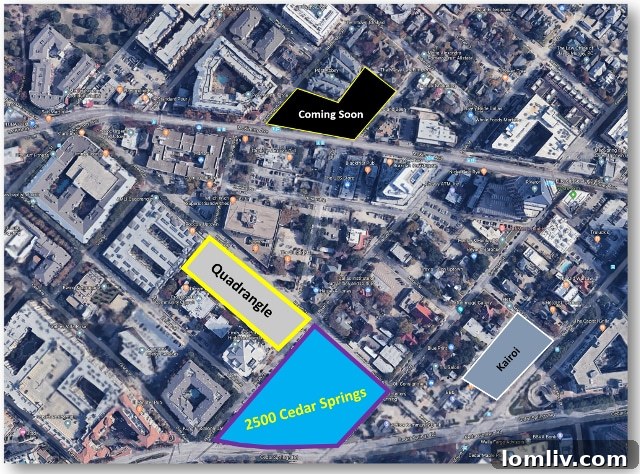
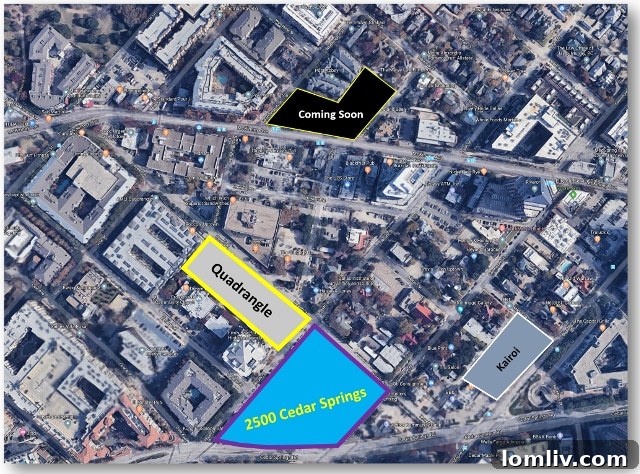
The urban landscape of Uptown Dallas and the vibrant Oak Lawn district is currently experiencing an unprecedented surge in development, transforming its skyline and community fabric at a rapid pace. After a period of relative calm with singular project proposals, a recent Oak Lawn Committee (OLC) meeting illuminated a flurry of ambitious new high-rise developments poised to reshape these crucial neighborhoods. This wave of construction includes multiple high-rises situated within blocks of each other, signaling a new era of growth and density for one of Dallas’s most sought-after areas.
The meeting showcased four significant projects, with a fifth high-rise presentation strategically postponed, and whispers of a potential sixth project on the horizon, all promising to add significant verticality and functionality to the area. The four projects presented comprised two distinct developments: a pair of innovative office buildings, a modern apartment complex, and another hotel, bringing the total count of hotels in various stages of development across the district to five. This diverse portfolio underscores a broader trend towards mixed-use developments that cater to the evolving needs of residents and businesses alike. Furthermore, the committee also reviewed a refined, shortened version of StreetLights Residential’s project on Oak Lawn and Lemmon Avenue, indicating ongoing design optimization in response to community feedback and urban planning considerations.
The evening was particularly eventful, not only due to the sheer volume of development proposals but also because of the inaugural appearance of newly elected council member David Blewett. His participation added a layer of political discourse and public engagement to the proceedings. Amidst the customary political rhetoric of “supporting constituents,” Blewett’s responses to audience questions sparked a series of double-takes, revealing some perspectives that diverged sharply from conventional urban planning discourse and local community expectations.
The first public inquiry directed at Council Member Blewett sought his insights on the critical issue of affordable housing – a topic that remains at the forefront of urban development debates in rapidly gentrifying areas like Oak Lawn. His response proved rather surprising for many attendees. Blewett stated that in areas where land values are exceedingly high, such as Oak Lawn, the cost of dirt inherently makes affordable housing projects economically challenging. He suggested that affordable housing initiatives should ideally be concentrated in areas where land is less expensive. This stance presented a stark contrast to the commitments made by nearly every residential project presented at the very same meeting, which each included provisions for affordable housing within their proposals. While Blewett echoed a widely accepted economic principle that a lack of housing supply contributes to a lack of affordability, his subsequent comments raised questions about the practical implications for the local workforce. The informed opinion generally holds that all neighborhoods, including affluent ones, require a spectrum of affordable housing options to accommodate essential local workers. However, it remained ambiguous how far Blewett believed these vital workers should be expected to commute to their jobs, sparking concern among advocates for equitable urban development.
The conversation then shifted to urban mobility, specifically bicycle lanes – another hot-button issue in contemporary city planning. Council Member Blewett acknowledged the growing trend towards less impactful modes of transportation, playfully attributing this shift to “avocado toast Millennials.” Yet, despite recognizing the broader movement, he expressed a personal disinclination towards rental scooters and bicycles. Curiously, he also voiced support for “safe” scooters, albeit without providing a clear explanation of what constitutes a “safe” scooter or how such safety measures would be enforced. As an observer, I share a similar sentiment regarding rental scooters and bicycles; my primary grievance isn’t with the modes of transport themselves, but rather with the pervasive issue of them being haphazardly scattered across public spaces. This contrasts sharply with the organized and dedicated docking systems seen in many other civilized urban centers, where infrastructure supports convenient and respectful use.
Finally, Blewett disclosed his plans to meet with Angela Hunt, a former council member who has since transitioned into a role as a developer representative, as well as Leland Burk, whose single-year tenure on the OLC board was contentious at best. This announcement immediately signaled a potential resurgence of a familiar development battle. Given that Lincoln Property Company is a known donor to Blewett’s campaign, the author immediately surmised that their ambitious Katy Trail project, which has faced significant opposition in the past, would likely be resurrected and aggressively pushed forward once more. This foreshadows another contentious period of debate and advocacy over urban green spaces and development density.
But enough with the political machinations for now. Let us delve into the exciting architectural and urban planning developments themselves.
The Quadrangle: A Vision of Modern Urban Revitalization
We begin our architectural exploration with what might be considered the “small” new project, yet one with profound implications for urban renewal: the redevelopment of The Quadrangle. This iconic locale is known by virtually everyone in Dallas but, paradoxically, is rarely visited or fully engaged with by the wider community in its current form. Stream Realty Partners, the current owners, have unveiled ambitious plans to revitalize this property, intending to meticulously divide the site into two distinct halves. On one section, they propose the construction of a striking new office building, intelligently fronted by a series of five intimate, small retail spaces – which, in all likelihood, will primarily host a vibrant array of restaurants, aiming to draw visitors in. For those familiar with the existing layout of The Quadrangle, this transformative development is planned for the side situated between the popular BBC and Siegel’s establishments, along Howell Street. Crucially, the existing 1980s office building and the charming low-rise structures on the other half of the property are slated to remain, fostering a blend of the old and new within the revitalized complex.
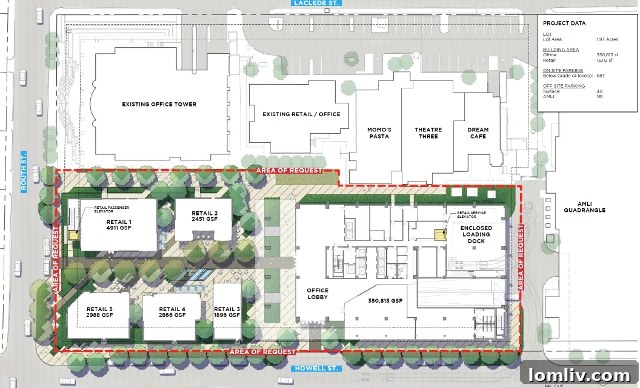
As depicted in the rendering above, the lower half of the revamped Quadrangle promises to be a significantly greener and more inviting space. The left side of the visual prominently features a small “village” of, what are anticipated to be, restaurants. These charming low-rise structures are designed to act as a welcoming front yard, leading gracefully towards the high-rise office building positioned on the right. The design thoughtfully integrates these elements, creating a pedestrian-friendly environment. Routh Street, running along the left, serves as a natural demarcation, neatly separating this project from an adjacent, equally exciting development, which will be detailed in a forthcoming article. This careful planning ensures that each project contributes uniquely to the urban fabric while maintaining its own distinct identity.
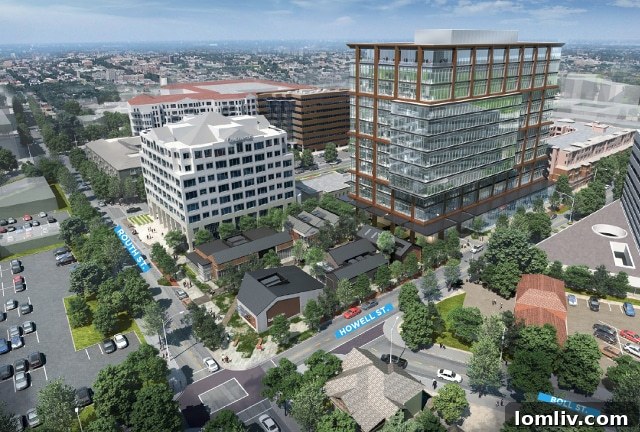
There are numerous commendable aspects to this particular project that merit detailed appreciation. From the “front,” the skillful integration of the new low-rise buildings is immediately apparent. Their proportions harmonize exceptionally well with the existing, older residential homes situated directly across the street, creating a visual continuity that respects the historical context of the neighborhood. The architectural grouping has an almost charming, rustic appeal, though to call it a “fishing village” would be a stretch given its modern urban setting. Beyond the structural harmony, the extensive incorporation of greenery along Howell Street is a transformative element. This thoughtful landscaping significantly enhances the human-scale appeal of the streetscape, making it feel far more inviting and walkable compared to its current state, which often evokes the less desirable aesthetics of a traditional strip mall. This emphasis on green spaces and pedestrian paths is a key component in fostering a more vibrant, community-oriented urban environment.
The high-rise office building itself stands out as a particularly likable and well-conceived structure. Its aesthetic evokes a sense of timeless industrial elegance, reminiscent of century-old factory buildings that masterfully combined generous expanses of light-admitting glass with robust, dark steel-framed windows. This design choice imparts an almost industrial yet sophisticated character to the building, a nod to architectural heritage while embracing contemporary functionality. The interplay of glass and steel promises abundant natural light for interior spaces, contributing to a modern, productive work environment, while the exterior presents a striking and unique profile against the Dallas skyline, eschewing the typical glass box for something with more depth and character.
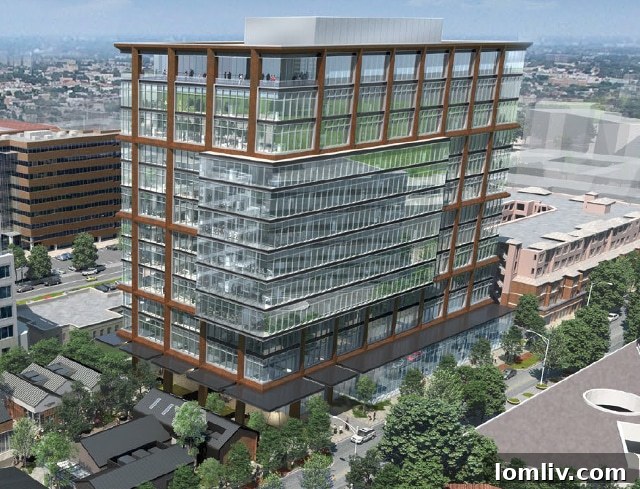
Upon closer examination, one of the most distinctive and visually engaging elements of this building becomes apparent. The architects have ingeniously introduced a dynamic feature by pulling a specific section of the facade outward, effectively breaking free from the building’s otherwise flat plane. This deliberate “yank,” extending approximately five feet, creates a compelling sense of depth and architectural interest. Further distinguishing this protrusion, it features different, less mullioned windows, allowing for more expansive views and an abundance of natural light. The presence of internal structural columns within this section further emphasizes its unique character, creating a striking visual contrast. The overall effect is a pronounced, clear “cube” protrusion that adds a layer of sophistication and playfulness to the design, making the building truly stand out as “spiffy” and innovative.
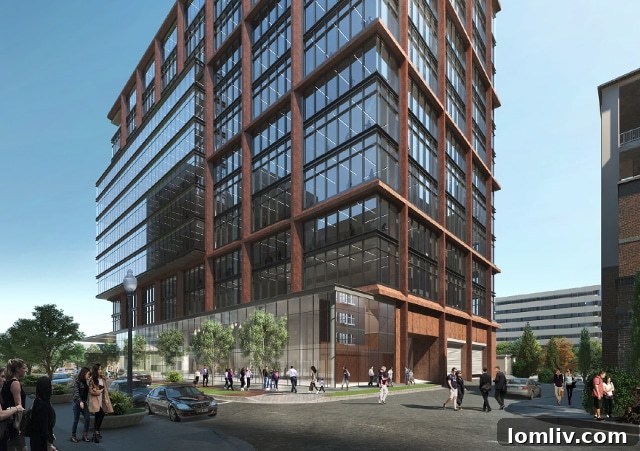
Viewing the building from its backside reveals another subtle yet powerful design choice: the structural grid extends elegantly beyond the building’s outer skin. This intentional extension adds a significant layer of depth and visual texture to the facade, preventing it from appearing as a monolithic, flat surface. This structural expression is not merely aesthetic; it promises to create very interesting and dynamic shading patterns throughout the day as sunlight interacts with the extended grid. Furthermore, this design feature particularly accentuates the building’s striking redness, making its chosen material even more prominent and captivating. Initially, one might assume this vibrant hue is achieved with a specific type of brick, but the reality is something far more distinct and technologically advanced.
Both the developer, Stream Realty Partners, and the author believe this architectural gem may represent a pioneering use of weathering steel in Dallas, more universally recognized by its trade name, Corten. Developed by US Steel in 1933, Corten is engineered to rust on purpose. This controlled oxidation process forms a stable, protective crust over the steel’s surface, which paradoxically enhances its structural strength and, crucially, limits further corrosion. It’s an intriguing paradox: the rusting actively safeguards the steel beneath, a characteristic that is as aesthetically unique as it is functionally brilliant.
However, the application of Corten steel is not without its challenges. There are documented instances where the rusting process fails to stabilize, particularly in environments characterized by excessive humidity or high salinity. A prominent example is Atlanta’s Omni Coliseum, which, after merely 25 years, had to be torn down largely because its Corten steel continually rusted without forming the intended protective layer. For these environmental considerations, among others, Stream Realty has not yet made an absolute commitment to using Corten for the entire building. Nevertheless, there is a strong hope that the specific climatic conditions of Dallas will prove suitable for this remarkable material. Should it proceed, the distinctive, eye-catching red hue and unique texture of Corten steel would undoubtedly imbue The Quadrangle building with an unparalleled identity, making it a landmark of architectural innovation in the city.
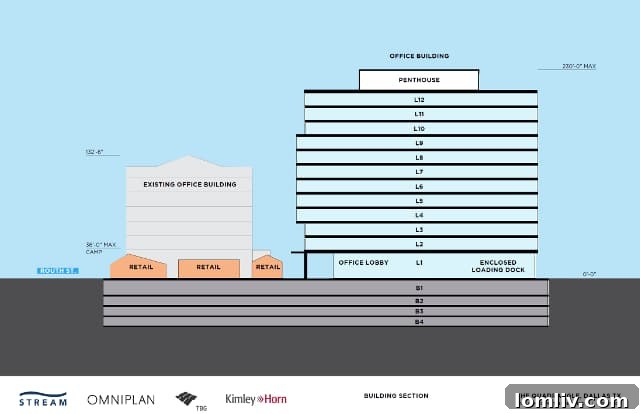
Beyond its exterior material, another contributing factor to the building’s impressive sense of openness and the generous appearance of its glass facades is the remarkable ceiling heights. Standing at a substantial 230 feet, the building will gracefully accommodate just 13 stories, a testament to the spaciousness planned for each level. This design choice provides an abundance of vertical space that allows for larger windows and, consequently, an influx of natural light, enhancing the internal environment significantly. One of the developer’s key requests, essential for the optimal execution of this vision, involves both a transfer of height and the shuffling of existing height allocations. Specifically, the smaller, adjacent buildings are currently zoned for a maximum height of 120 feet. Stream Realty seeks to legally transfer a portion of this unused height entitlement to the new high-rise tower, allowing for its current proposed scale. Furthermore, they are also requesting straight-up added height beyond what can be transferred. The back end of the property, where the high-rise is strategically positioned, falls within the PD-9 zoning district. Even though this particular area neighbors several existing higher buildings, modifications to the current zoning would still be necessary to accommodate the proposed height and density, highlighting the intricate dance between innovative architectural vision and the existing regulatory framework.
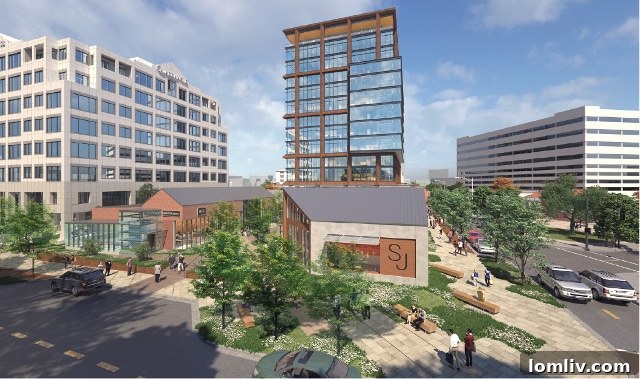
Viewed from the bustling corner of Routh and Howell, the proposed streetscape for The Quadrangle project is designed to be profoundly inviting and pedestrian-friendly. A significant factor contributing to this welcoming ambiance is the strategic decision to place all parking underground. This crucial design choice liberates approximately an entire acre of valuable open space, commencing directly at this prominent corner. The creation of this expansive public realm is pivotal, as it lays the foundation for a vibrant “village effect.” This intentional design aims to draw in nearby office workers, local residents, and visitors into The Quadrangle in a manner that simply doesn’t occur with the current configuration. By prioritizing human interaction and open spaces over surface parking, the project seeks to transform the area into a lively hub, fostering community engagement and enhancing urban walkability.
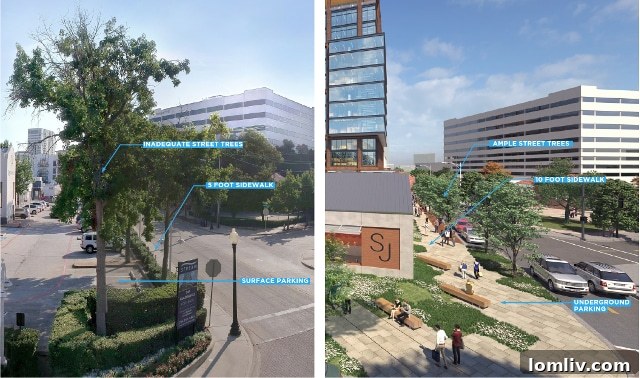
Along Howell Street, the positive impact of these design interventions is particularly noticeable and transformative. The plan involves replacing what are currently four separate driveways with a single, streamlined entry point, dramatically improving traffic flow and pedestrian safety. More significantly, this reconfiguration allows for the removal of the often unsightly and sprawling strip mall parking areas that currently define the streetscape. In their place, a continuous and generously proportioned sidewalk will be established, creating an unimpeded, walkable entry experience into The Quadrangle. This change not only enhances the aesthetic appeal of Howell Street but also fundamentally reorients the space towards the pedestrian, making it far more accessible and enjoyable for everyone.
In summation, the author found very little to fault with this thoughtfully designed and ambitious project. The only minor criticism leveled at Stream Realty Partners concerned the corner low-rise building. From a purely design perspective, it didn’t quite achieve the desired urban integration, leaning perhaps a bit too much towards a rural aesthetic than would be ideal for its prominent city location. Nevertheless, this is a minor quibble in an otherwise exemplary plan for urban revitalization.
StreetLights Residential: Oak Lawn and Lemmon Avenues – Evolving Designs for Urban Living
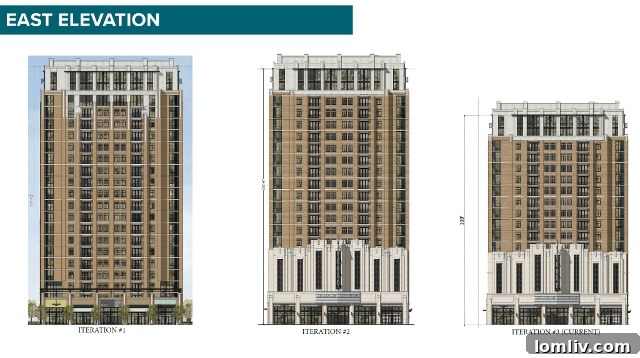
Let’s now shift our focus to the StreetLights Residential project, strategically located on the prominent corner of Oak Lawn and Lemmon Avenues. This particular development has become a familiar presence at the Oak Lawn Committee meetings, marking its fourth visit for review and feedback. The iterative process highlights the complex challenges and extensive collaboration required to bring large-scale urban residential projects to fruition. One of the most immediate and striking changes in this latest iteration is a significant reduction in height; the building has been scaled down by 41 feet, bringing its new proposed height to 199 feet. This adjustment is a welcome modification, as it brings the building into greater alignment with the existing architectural context and the scale of neighboring structures across Oak Lawn Avenue, enhancing visual harmony within the district. From multiple perspectives, this reduction improves the building’s integration into the surrounding urban fabric.
However, this reduction in height comes with a notable trade-off. StreetLights Residential is not proposing a decrease in the overall number of units from the previously presented 297 apartments. Instead, to maintain the project’s density and unit count, the original “T-shaped” building design has been strategically modified. It now incorporates a significant “bump-out,” transforming into a more expansive “C-shape.” The consequence of this design evolution is a visually bulkier building. This change prompts critical questions regarding its aesthetic impact, particularly on Lemmon Avenue. The author has specifically requested additional renderings to better visualize how this increased bulk translates into the street-level experience and the building’s overall massing from this crucial thoroughfare. Similarly, the design retains its above-ground parking podium, an element that has remained unchanged through previous revisions. The combination of the newly expanded “C-shape” and the substantial parking podium raises concerns about the potential for a rather unappealing “big butt” effect when viewed by those traveling down Lemmon Avenue towards the picturesque Turtle Creek area. This visual impact could detract from the otherwise modern aesthetic of the residential component.
During a conversation with StreetLights earlier in the week, the author vehemently stressed the importance of articulating the rear of the building. The goal was to mitigate the potential for a monolithic “visual brick-ness” on the backside, a common pitfall in large-scale developments. With the addition of more apartments above the podium, particularly within the newly configured “C-shape” bottom, the imperative to design this rear facade with exceptional thoughtfulness and detail has only intensified. A well-articulated rear not only enhances the building’s overall aesthetic appeal but also contributes positively to the visual quality of the streetscape for all passersby.
Intriguing insights also emerged from the traffic analysis presented for the project. Surprisingly, the study indicated that the existing operations on the site – a Pizza Hut restaurant and a gas station – actually generate a higher volume of vehicular trips than the proposed residential building. This finding challenges conventional assumptions about development and traffic generation, suggesting that replacing older, more intensive commercial uses with residential high-rises can sometimes lead to a net reduction in traffic. What proved even more interesting was the revelation of specific traffic patterns: the existing Pizza Hut experiences a significant spike in traffic during the evening rush hour. This means that not only will the overall daily trips be fewer with the new development, but specifically, the evening rush hour traffic, a major point of congestion, is projected to produce fewer trips than the current land uses. Who would have thought that a high-density residential development could, in this particular instance, lead to a more favorable traffic situation? This highlights the nuanced and often counter-intuitive findings that detailed urban planning studies can reveal, underscoring the importance of data-driven decisions in sustainable urban development.
Stay Tuned for More Uptown Dallas Development Insights
To avoid overwhelming readers with an excessively lengthy treatise on this single, packed Oak Lawn Committee meeting, the projects reviewed have been thoughtfully separated into two distinct discussions. This approach allows for a more focused and digestible analysis of each significant development. Frankly, the highly anticipated and expansive triple high-rise project by Ryan, situated at the prominent address of 2500 Cedar Springs Road (on the block currently occupied by the Kung-Fu Saloon), certainly warrants its own dedicated column, replete with a comprehensive array of visual renderings and in-depth commentary. This forthcoming piece will delve into the architectural nuances, urban planning implications, and community impact of what is expected to be another transformative development for Uptown Dallas. Stay tuned for that detailed analysis, as the story of Dallas’s evolving urban landscape continues to unfold.

Remember: My primary focus, my beat, encompasses the intricate world of high-rises, the dynamic governance of Homeowners Associations (HOAs), and the complexities of urban renovation projects. However, my passion extends beyond these specific areas. I also hold a deep appreciation for the delicate balance between cutting-edge modern architecture and the preservation of historical structures, all viewed through the critical lens of the YIMBY (Yes In My Backyard) movement – an advocacy for increased housing density and more inclusive urban development. My commitment to insightful and impactful real estate journalism has been recognized by the National Association of Real Estate Editors (NAREE), which honored my writing with three Bronze awards in 2016, 2017, and 2018, alongside two distinguished Silver awards in 2016 and 2017. If you have a compelling story to share, a development project to discuss, or perhaps even a unique marriage proposal to make (I’m all ears for creativity!), please feel free to shoot me an email at [email protected]. Be sure to look for me on Facebook and Twitter; while my online presence there is elusive, your earnest search is always welcome and appreciated.