The Dark Store Strategy: How Big-Box Retailers Skirt Property Taxes and Burden Homeowners
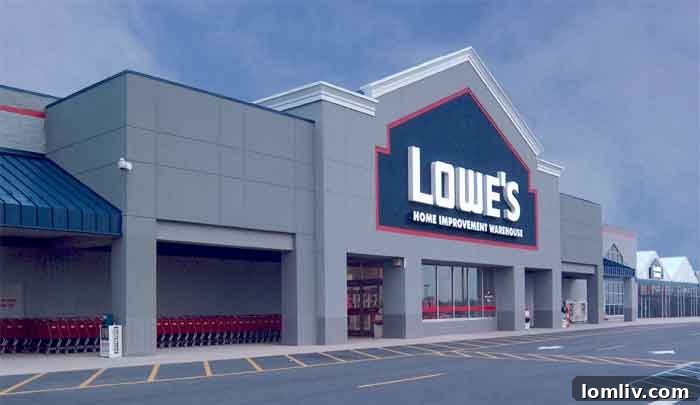
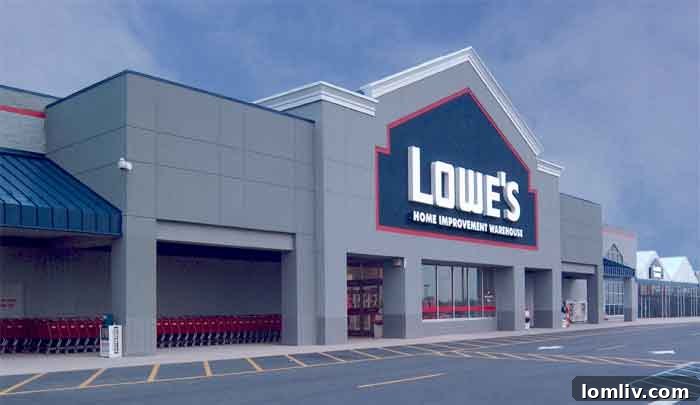
Imagine walking into a bustling Lowe’s store, shelves stocked, cash registers ringing, and dozens of employees assisting customers. Now, imagine that for property tax purposes, this very same, active building is being valued as if it were a vacant, abandoned shell. This perplexing scenario is at the heart of the “dark-store strategy,” a controversial tactic increasingly employed by major big-box retailers to drastically reduce their property tax obligations, often shifting the financial burden onto residential taxpayers.
This aggressive new strategy is sending ripples through local communities and appraisal districts across the nation. What started as a niche commercial real estate term is now a potent weapon in the hands of corporate giants, challenging the fundamental principles of fair property valuation and threatening essential local services.
Understanding the “Dark Store” Tax Loophole
The term “dark store” traditionally refers to a commercial property that is truly vacant, unoccupied, and often no longer in use, hence “gone dark.” These empty buildings naturally have a lower market value compared to thriving, operational businesses. The dark-store strategy, however, twists this concept by arguing that active, open big-box stores should be appraised using the valuation metrics of these genuinely dark and abandoned properties.
As originally highlighted by the Dallas News, this strategy has already seen successful implementation by some retailers in states like Michigan, allowing them to significantly slash their local property tax bills. The core argument rests on the premise that these large, specialized buildings, often exceeding 100,000 square feet, would be incredibly difficult to sell or lease if they were to become truly vacant. Furthermore, deed restrictions frequently limit their future uses, supposedly diminishing their inherent market value.
Appraisal districts, however, vehemently disagree. They argue that a building actively generating revenue and contributing to a local economy should not be valued as if it were an idle, non-earning asset. The “highest and best use” principle, a cornerstone of property appraisal, dictates that properties should be valued based on their most profitable potential, which for an open store, is clearly its current retail operation.
Texas: The New Battleground for Property Tax Fairness
The dark-store strategy has now made its way to Texas, a state already grappling with escalating property tax debates. At least four Texas counties – Bexar, Harris, Hunt, and Taylor – have found themselves targeted by Lowe’s home improvement stores challenging their existing tax bills. The core of Lowe’s argument is straightforward: their properties should be valued as if the buildings were empty, even though these very stores are wide open, fully operational, and serving thousands of customers daily.
This tactic is seen by many as a form of corporate bullying, leveraging the sheer size and financial might of large corporations against often underfunded local appraisal districts. The message from these retailers seems clear: “This building is immense, and it would be a substantial challenge to fill if we ever left. So, if you want us to stay and continue contributing to the local economy, you should significantly lower our property taxes.”
“This is definitely something that needs close monitoring,” warns Tax Doctor Rob Wheelock. His concern is echoed across the state, especially as property taxes are slated to be a major legislative topic in Texas for 2017.
“Next year, Texas lawmakers, under the leadership of State Senator Paul Bettencourt, will be addressing property tax reform with the aim of closing some of the existing loopholes,” Rob explains. He adds, “While I can’t fault any property owner, be it residential or commercial, for diligently watching their valuations and protesting if they genuinely believe them to be too high, this particular strategy goes beyond typical challenges.”
The concern intensifies when behemoths like Lowe’s and Home Depot actively seek to shirk what many perceive as their fair share of tax responsibilities. This aggressive stance by major retailers directly impacts local budgets that fund schools, roads, public safety, and other vital community services.
Case Studies: Texas Counties Fight Back
Traditionally, at the beginning of each year, Texas counties appraise retailers based on their “highest and best use,” recognizing their value as active businesses. The dark-store strategy fundamentally attempts to subvert this established method, seeking to redefine appraisal calculations through court challenges, essentially asking the judiciary to dictate new appraisal law.
A significant lawsuit currently pending in Harris County District Court in Houston, filed by North Carolina-based Lowe’s Cos. against the Harris County Appraisal District, is being closely watched across the entire state. This lawsuit targets five specific Lowe’s stores, aiming to drastically reduce their assessed property values.
Lowe’s has also initiated a separate legal action in San Antonio, employing the dark-store argument, though it is not as far along in the legal process, currently in arbitration. Mary Kieki, Bexar County deputy chief appraiser, revealed that Lowe’s is challenging the assigned property values of ten operational stores in the county for each of the last three years. These stores are currently valued at approximately $82 per square foot. Lowe’s, astonishingly, is requesting that this valuation be reduced to a mere $20 per square foot.
“The implications of this could be enormous,” Kieki warned. “It certainly wouldn’t stop with just big-box stores like Sam’s Club, Lowe’s, and Home Depot. We could easily see this trend continue with retailers like Kohl’s and CVS. Where does it end?”
Kieki’s question highlights the domino effect this strategy could trigger. With 141 stores, Texas represents Lowe’s largest concentration nationwide. Similarly, Walmart boasts over 600 stores in the state. The potential for a statewide crisis is immense if these and other major retailers succeed in paying taxes based on the valuation of vacant buildings, while their actual stores operate at full capacity.
The Retailers’ Rationale and the Appraisers’ Rebuttal
The core of the big-box retailers’ argument is that a store’s market value should be determined by the sale price of a similar-sized building that is truly vacant. They contend that their large, custom-built facilities, often well over 100,000 square feet, would be exceptionally difficult to sell if empty. Furthermore, many of these properties come with deed restrictions that limit future uses, supposedly depressing their market value.
However, appraisers steadfastly maintain that this argument holds weight only if a store is genuinely closed, the building remains empty, and there are no realistic prospects of a new tenant moving in. Even in such rare cases, appraisers contend that it’s not a solid argument for such dramatic valuation reductions, especially not for thriving businesses.
Bo Daffin, Collin County’s chief appraiser, described the idea of valuing an active store as if it were empty as “crazy.” He affirmed that assessing a truly empty store would be handled on a case-by-case basis, acknowledging the unique challenges. While no retailer had tested the dark-store strategy in Collin County thus far, Daffin issued a stark warning: “Get ready; the strategy is coming north.” This indicates a growing awareness and concern among appraisal professionals about the impending widespread adoption of this controversial tactic.
The Financial Strain on Local Governments
One of the most insidious aspects of the dark-store strategy is its impact on the often-limited resources of local appraisal districts. Unlike multi-billion dollar corporations, these districts typically do not have extensive litigation budgets, making them vulnerable to aggressive legal challenges from big businesses. This imbalance creates a powerful incentive for districts to settle rather than engage in lengthy and costly court battles.
Nearby Hunt County provides a clear example of this predicament. The county settled with Lowe’s over the 2014 valuation of a store in Greenville, which resulted in Lowe’s taxes being lowered by $23,000 per year. “They used the dark-store strategy, but we didn’t go to trial,” explained Brent South, Hunt County’s chief appraiser.
South elaborated on the decision, stating that the legal costs associated with taking the case to court would have been prohibitively high for a county with an annual litigation budget of only $50,000. “We simply didn’t have the resources to go to trial and fight a large corporation like Lowe’s,” he lamented, underscoring the formidable challenge faced by local authorities.
The stakes are even higher for counties that choose to fight and lose in court. Not only would they be forced to refund the disputed taxes, but they would also be liable for the retailer’s attorney fees and an additional 9.5 percent interest on the refunded amounts. This punitive structure often compels smaller districts to concede, even when they believe their original appraisals are fair and just.
The Shifting Burden: Homeowners Pay the Price
When big-box retailers successfully lower their property tax bills, the deficit doesn’t simply disappear. Instead, the burden of funding local services is invariably shifted to other taxpayers – predominantly homeowners. Unlike large corporations with dedicated legal teams and lobbyists, homeowners typically have no organized unions or powerful advocates safeguarding their interests in these complex tax disputes.
Lowe’s, predictably, defends its actions by stating they are merely protesting taxes, much like homeowners do.
“Just like homeowners, we want to be taxed fairly on the value of our buildings and land,” stated Lowe’s spokeswoman Karen Cobb. She added that Lowe’s stores generate jobs, contribute state and local income tax, sales tax, and property tax. According to Cobb, the company routinely reviews property values assigned by county tax assessors for all 1,725 Lowe’s stores nationwide each year, implying their challenges are standard practice.
However, the scale and impact of the dark-store strategy are far from typical homeowner protests. Homeowners rarely argue their active, occupied homes should be valued as if they were abandoned lots. The disparity in power and resources between a homeowner and a corporate giant attempting to reduce its taxes by 75% on an active store is stark.
Michigan’s Cautionary Tale: A Glimpse into the Future?
The most alarming precedent for the dark-store strategy comes from Michigan, where the practice has been in full swing for years, delivering severe blows to local government finances. Michigan counties have been particularly hard-hit, with some major retailers snagging tax cuts as substantial as 50%.
According to the National Association of Counties, local governments stand to lose millions, if not billions, of dollars if the dark-store method of assessing big-box stores continues to proliferate. A report cited by the county group revealed that in Michigan alone, store assessments have been reduced by a staggering $75 million. The dark-store strategy has also been successfully deployed in other states, including Indiana, Florida, North Carolina, and Alabama, indicating its widespread and growing threat.
Detroit, Michigan’s largest city, filed for Chapter 9 bankruptcy protection in 2013, becoming the largest municipal bankruptcy in U.S. history. While many factors contributed to Detroit’s financial collapse, one cannot help but ponder how many nails this big-box store tax strategy might have hammered into that city’s financial coffin, further eroding its tax base and crippling its ability to recover. The experience of Michigan serves as a powerful warning to other states and communities facing these same challenges.
The Road Ahead: Protecting Taxpayers and Fair Valuation
The dark-store strategy represents a significant threat to the financial stability of local governments and the fairness of property taxation. It’s a cunning tactic that exploits legal ambiguities and leverages corporate power to externalize costs onto unsuspecting communities and homeowners. As more retailers adopt this approach, the cumulative impact could be devastating, leading to cuts in essential public services or ever-increasing tax burdens for residential properties.
Protecting taxpayers and ensuring fair valuation will require vigilance from appraisal districts, strong legislative action to close these loopholes, and increased public awareness. Without robust reforms, the “dark store” strategy risks dimming the lights on vital community services and placing an unfair burden squarely on the shoulders of ordinary citizens.