

Navigating Parisian Dreams: Your Comprehensive Guide to Paris Real Estate with Adrian Leeds
For anyone captivated by the allure of the City of Light, the dream of owning a piece of Paris is a potent one. Yet, turning that dream into a reality can be a complex journey, especially for international buyers. This is where Adrian Leeds, the familiar beret-wearing expert from HGTV’sHouse Hunters International, becomes an invaluable guide. She has made a career out of helping “sticker-shocked” expats translate their romanticized Parisian visions into practical, attainable goals, focusing on the true essentials of French property ownership. More than just an agent, Leeds is a cultural interpreter, ensuring her clients navigate the unique nuances of the French real estate landscape with confidence and clarity. Join us as we explore the insights Adrian Leeds shared during a recent meeting in Paris, unveiling the secrets to successfully acquiring property in one of the world’s most desirable cities.
The Face of Parisian Real Estate: Adrian Leeds’ Journey to HGTV Stardom
Adrian Leeds’ journey from her New Orleans roots to becoming the go-to real estate authority in Paris is as fascinating as the city itself. Having lived the Parisian dream for over two decades, her distinctive American accent combined with an intimate understanding of French culture offers a unique perspective to her international clientele. Beyond her captivating on-screen presence, Leeds boasts an impressive professional background in marketing and public relations. Her expertise spans corporate communications, television, and print media, equipping her with an exceptional ability to understand client needs, communicate complex information, and strategically position properties. These skills are invaluable in the real estate world, making her much more than a typical agent – she’s a strategic advisor.
From New Orleans to the City of Light: A Paris Dream Realized
Adrian Leeds’ personal story resonates deeply with many aspiring expats. Her decision to move to Paris over 21 years ago was not just a relocation; it was an embrace of a lifestyle and a profound career pivot that ultimately led her to become a pivotal figure in the French real estate scene. Her deep connection to Paris is evident in her work, making her advice not just professional, but passionately informed. With family ties extending to Dallas, she bridges American sensibility with French practicality, making her approachable and relatable to American buyers.
Becoming an HGTV Staple: The “House Hunters International” Phenomenon
Many might imagine an elaborate narrative behind Leeds’ frequent appearances on HGTV’s House Hunters International. Yet, her entry into the show was surprisingly straightforward. The producers first reached out in 2006 for her initial episode. While there was a short hiatus, her expertise and charismatic approach quickly cemented her as a recurrent fixture. With over 20 episodes under her belt and new ones continually being filmed, Leeds has become synonymous with buying property in Paris for a global audience. Her strategic marketing acumen, honed through years in PR, shines brightly here. Unlike many agents featured on the show who are difficult to trace post-broadcast, Leeds has ensured her visibility. A simple online search for “HGTV House Hunters Paris” immediately brings up her comprehensive resources, a testament to her intelligent leveraging of media exposure. This widespread recognition through HGTV has proven to be her most powerful client acquisition tool, reinforcing her position as a trusted and accessible expert in Parisian real estate.

Unlocking Parisian Property: Essential Insights for Expats
The Parisian real estate market is notoriously distinct from what many international buyers, particularly Americans, are accustomed to. Understanding these fundamental differences is paramount to a successful property search and acquisition. Adrian Leeds emphasizes that while the cultural richness of Paris is boundless, the physical spaces and transactional processes are often far more intricate and regulated than one might expect.
Navigating the Unique French Real Estate Market: Beyond the MLS
One of the most significant challenges for foreign buyers in France is the absence of a centralized Multiple Listing Service (MLS), a system common in countries like the United States that aggregates all available properties. In France, listings are fragmented, held exclusively by individual agencies. This means buyers often find themselves on a laborious quest, needing to visit numerous brokers’ offices—both physically and virtually—to view their distinct portfolios. Furthermore, French agents are traditionally reluctant to split commissions, which fundamentally alters the role and effectiveness of a traditional “buyer’s agent” as understood in many Anglo-Saxon markets. According to Leeds, attempting to engage a buyer’s agent who expects a commission split typically leads to being shown only the least desirable properties or those with significantly less commission potential. The most effective approach for a buyer is to engage an independent consultant, who operates similarly to an American buyer’s agent but is compensated directly by the buyer for their time, expertise, and diligent legwork, irrespective of whether a property is ultimately purchased. This model ensures the consultant is solely advocating for the buyer’s interests, navigating negotiations and the complex legal framework on their behalf.
Legal Labyrinths and Cultural Nuances: Protecting Your Investment
While some intrepid buyers might consider purchasing French real estate independently, Adrian Leeds strongly advises against it. The French legal code concerning property transactions is replete with intricacies unfamiliar to foreign buyers. These “vagaries” can range from specific pre-emption rights to unique conditions within the *compromis de vente* (preliminary sales agreement) that can have significant financial and temporal implications. Crucially, the selling agent in France represents the seller and is inherently motivated to secure the highest possible price, not necessarily to disclose every potential pitfall to the buyer. This disparity can lead to unforeseen complications and additional costs, often discovered too late in the process. Leeds likens this experience to purchasing real estate in the 1920s in America – a testament to the need for expert guidance through what can feel like an archaic system.
Another striking cultural difference revolves around price negotiation. In Paris, listed prices are generally established with a high degree of precision and are not subject to extensive bargaining. There’s typically only a small percentage of wiggle room, if any. The idea of a “bidding war” to drive prices above the list price, common in hot markets elsewhere, is virtually unheard of and even considered culturally inappropriate. Leeds explains that in France, if a seller receives a full-price offer, it is considered an matter of honor to accept it, without pursuing further bids – a stark contrast to more aggressive markets. Discussions about money are often deemed vulgar, which further dampens fervent negotiation. “Low-balling” an offer is not only unproductive but can be seen as disrespectful, potentially jeopardizing any chance of a deal. This cultural sensitivity demands a nuanced approach to offers.
Understanding the Costs: Taxes and Dues in Paris
Despite the high cost of property, certain ongoing expenses in Paris can be surprisingly affordable compared to major American cities. Property and habitation taxes, for instance, are quite reasonable by Dallas standards. For a €1 million apartment, annual taxes might approximate $1,500. Homeowner Association (HOA) dues, known as *charges de copropriété* in France, naturally vary significantly depending on the building’s age, amenities, and maintenance requirements, but they are transparently communicated and are a standard part of Parisian apartment ownership.

Investing in Paris: Short-Term Rentals and Property Types
Paris offers diverse investment opportunities, but understanding the nuances of different property types and evolving rental regulations is crucial for maximizing returns and avoiding pitfalls.
The Evolving Landscape of Parisian Investment Properties
The landscape for purchasing homes for short-term rental purposes in Paris has become notably challenging. Recent governmental initiatives have resurrected and reinforced older statutes, creating a stricter regulatory environment detrimental to investors and second-home buyers looking to rent their properties for periods less than a year. This complex and highly regulated area requires specialized knowledge and is best navigated with the guidance of a seasoned professional like Adrian Leeds, who can provide up-to-date advice on compliance and potential risks.
The Parisian Home Aesthetic: Embracing Smaller Spaces
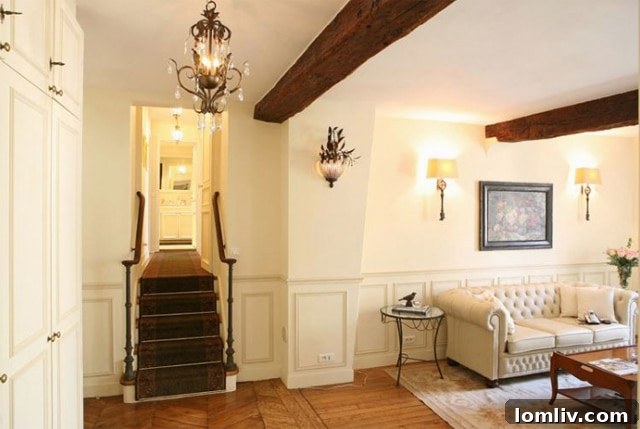
Prospective buyers from countries accustomed to spacious homes often face an adjustment period in Paris. Unless one is prepared for a significant budget, only the most affluent will find properties comparable in size to their North American residences, save perhaps for those previously inhabiting a compact New York City apartment. This cultural difference extends to interior layouts. A peculiar French characteristic, even in modern constructions, is the often-separated bathroom and toilet room. This design choice, rooted in historical efficiency and privacy, aimed to allow concurrent usage of toilet and bathing facilities, and to keep guests out of the more private bathing area. For Americans accustomed to multiple, integrated bathrooms, this can be an unexpected quirk. Furthermore, European kitchens are typically much smaller than their American counterparts. This design reflects a cultural preference for frequent grocery shopping, emphasizing fresh, local ingredients over bulk storage, perfectly suited to Paris’s abundant green grocers and vibrant farmers’ markets.
Vintage Charm vs. Modern Comfort: Choosing Your Parisian Abode
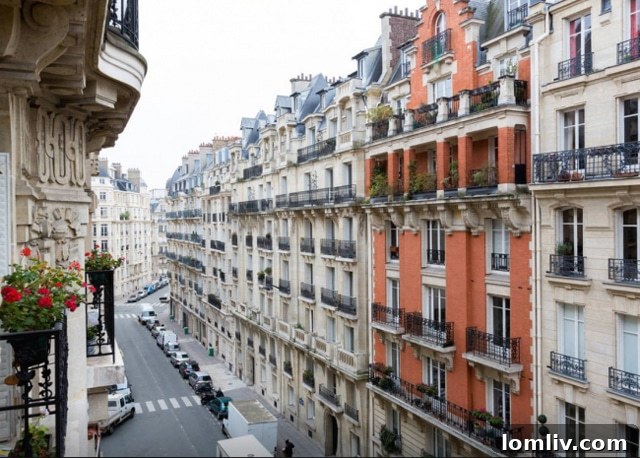
When envisioning a home in Paris, most buyers are drawn to the iconic architecture that defines the city’s character. This typically means a property housed within a Haussmann-era building or an even older structure. These vintage properties, while exuding unparalleled charm, can sometimes feature more compact layouts, often due to historical subdivisions of grander apartments. Conversely, newer constructions, largely consisting of infill developments, offer all the contemporary conveniences and amenities. The choice often boils down to a fundamental preference: immersing oneself in Parisian history or embracing modernity with breathtaking panoramas of the city’s artistic skyline.
Adrian Leeds provides insightful guidance on this dilemma, particularly from an investment perspective. She advises that modern structures, while comfortable, are less likely to appreciate as robustly as well-maintained vintage buildings. Moreover, the desirability of a vintage property can be diminished if its views are obstructed by modern construction. Her ultimate recommendation: it’s better to be *inside* a new structure than to be *looking at* one from a less desirable vantage point. However, the quintessential Parisian experience and optimal investment, in her view, lie in a vintage building offering classic Parisian views.
For buyers who desire a modern interior but are drawn to the charm of a vintage building, renovation in Paris is a viable option and often no more daunting than elsewhere. A significant advantage in France is that only exterior alterations to listed historical buildings require governmental approval; interior work generally falls under less stringent regulations. Within apartment buildings, homeowners’ association rules for renovations can vary greatly, from highly welcoming to more restrictive. Therefore, prospective buyers must undertake thorough due diligence regarding specific building regulations and HOA policies to ensure their renovation plans are feasible.
Strategic Property Acquisition: When and How to Buy in Paris
The timing and method of purchasing real estate in central Paris are crucial considerations that can significantly impact a buyer’s investment and overall experience.
Is Now the Right Time to Buy in Paris? Market Dynamics
Is there ever a “bad time” to acquire prime real estate in central Paris? According to Adrian Leeds, while market fluctuations exist, the current climate presents a nuanced opportunity. The French real estate market displayed remarkable resilience during global economic downturns, largely due to stringent mortgage qualification standards and substantial down payment requirements. This created a robust and stable pool of property owners, less susceptible to temporary economic pressures. Leeds notes that prices in Paris are currently experiencing a slight downturn – less than two percent, but in an exceptionally tight and desirable market, any decline is considered a noteworthy opportunity for astute buyers to act strategically. This stability, coupled with minor price adjustments, makes the present a compelling moment for serious investors to consider entering the market.
The French “Reverse Mortgage”: Understanding Viager Properties
A unique and intriguing aspect of the French real estate market is “Viager” – a practice that can be likened to a reverse mortgage without direct bank involvement. In a Viager sale, an elderly homeowner sells their property to a buyer but retains the right to occupy it until their death. The seller, referred to as the “credirentier,” receives either a lump sum (a “bouquet”), periodic payments (an “allowance”), or, most commonly, a combination of both. The buyer, known as the “débirentier,” gains full possession only upon the seller’s passing.
Consider a hypothetical scenario: a property valued at €1 million, owned by a 70-year-old. Due to the seller’s continued occupancy, the property’s “occupied value” might be legally assessed at 60% of its market value, or €600,000 in this instance. The sale could then involve a “bouquet” of 30% of this occupied value (€180,000), followed by an annual payment of approximately €26,000, calculated based on the seller’s life expectancy. If the seller lives for another 15 years (until age 85), the buyer would pay a total of €570,000 (€180,000 bouquet + 15 years x €26,000 annual payments). This means the buyer could acquire a property potentially worth €1.1 million (due to appreciation) for a significantly reduced total outlay. However, there’s an inherent gamble: if the seller lives to an exceptionally advanced age, the buyer’s total payments could exceed the market value of the property, negating any potential deal. It’s a calculated risk with both potential for significant gain and loss.
Crucially, Viager contracts are legally binding, providing robust protection for both parties and preventing complications from heirs after the seller’s death. Furthermore, to safeguard against potential abuses, all Viager agreements are meticulously monitored by the French Ministry of Economics and Finance (Comité Répressif des Abus de Droits). Adrian Leeds herself has experience with purchasing a Viager apartment, a complex and ultimately poignant story she is now chronicling in a book, highlighting the deeply personal and sometimes unpredictable nature of these unique transactions.
Rental Market Realities: Challenges for Tenants and Short-Term Stays
Beyond property ownership, understanding the rental market in Paris is equally vital for expats, whether they plan to lease long-term or consider short-term options.
The Highly Competitive Paris Rental Market
Securing a long-term rental in Paris can be an arduous undertaking, often described as “next to impossible” due to the city’s immense popularity and recent legislative changes. Leeds highlights the fierce competition, advising prospective renters to be prepared to present a full year’s rent upfront and to make instantaneous decisions. Properties, particularly desirable ones, often come and go within seconds of being listed, demanding unparalleled readiness and swift action from applicants.
The Short-Term Rental Debate: Airbnb and Local Regulations
The rise of platforms like Airbnb has significantly impacted the short-term rental market in Paris, leading to a period of intense scrutiny and regulation. While Airbnb has brought new opportunities, it has also faced a concerted crackdown by the French government. Authorities have actively encouraged a culture of vigilance, even fostering an environment where neighbors are encouraged to report suspicious short-term rental activities. This situation has created a complex and sometimes precarious environment for those seeking or offering short-term accommodations. Navigating these intricate regulations and understanding the local sentiment requires the insights of an expert like Adrian Leeds, who can provide clarity on what is permissible and what risks exist in this evolving segment of the Parisian market.
Want to Hear More of Leeds’ Pearls? Exclusive Insights Await!
Adrian Leeds’ unparalleled knowledge of French real estate extends far beyond the snippets seen on television. Her deep understanding of the market, legal intricacies, and cultural nuances offers invaluable guidance for anyone considering a move or investment in Paris. For those eager to delve deeper into the fascinating world of Parisian property, Leeds is a treasure trove of information.
On June 9, 2016, Candysdirt.com will be hosting a very special Staff Meeting event featuring Adrian Leeds. Her hour-long program will include all the ins and outs of purchasing French real estate, providing a detailed roadmap for potential buyers. Stay tuned for more details regarding this unique opportunity! Investors and real estate agents with clientele interested in French property are especially welcome, though space will indeed be very limited, underscoring the exclusivity and demand for her expertise. If you can’t wait, be sure to sign up for any (or all) of her three insightful newsletters here. Her comprehensive website is also brimming with essential information and resources to kickstart your Parisian real estate journey.
Remember: Do you have an intriguing HOA story to share? Perhaps a fascinating high-rise history? Realtors, interested in featuring a listing in need of renovation or showcasing a perfectly executed project? How about hosting a Candy’s Dirt Staff Meeting? We’d love to hear from you! Shoot Jon an email with your proposals – marriage proposals accepted (they’re legal)! Reach us at [email protected].