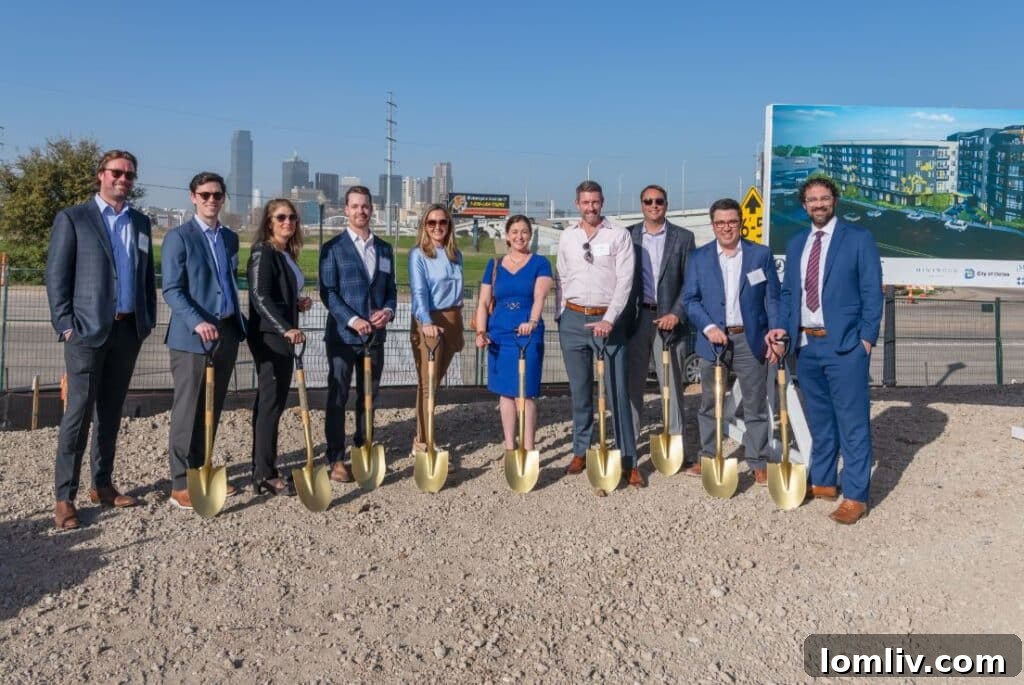
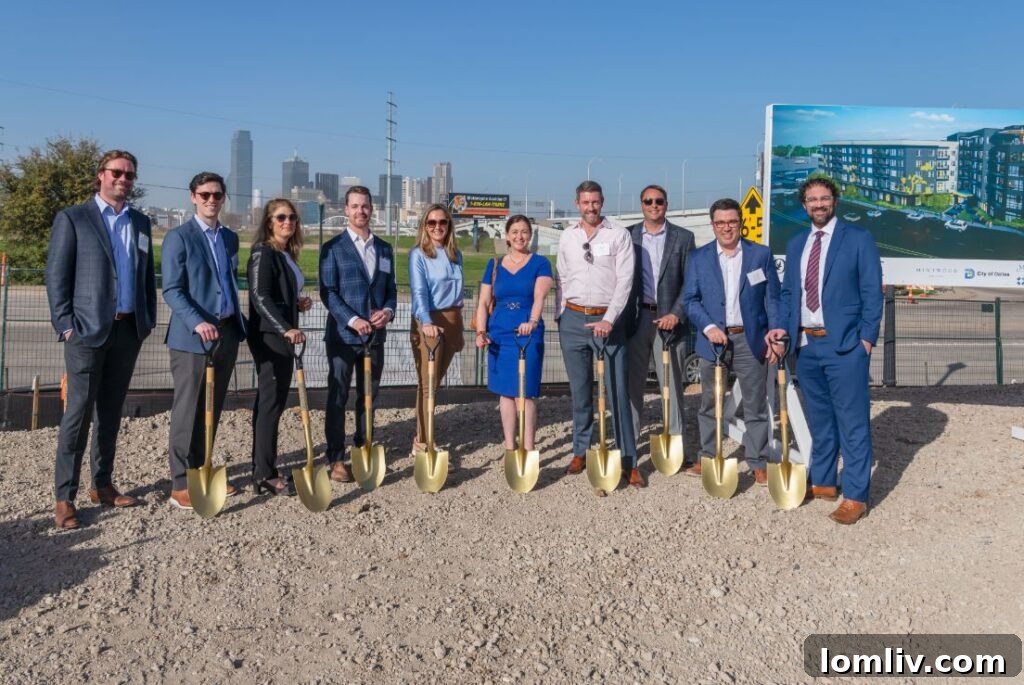
Dallas, Texas – In a significant step towards addressing the city’s pressing housing needs, Mintwood Real Estate officially broke ground Monday afternoon on the transformative Oakhouse development. This 219-unit multi-family project, located at 900 E. Colorado Blvd., is set to deliver a vital mix of affordable and market-rate housing options to Dallas residents by 2024. The Oakhouse represents a pioneering effort, being the first among over a dozen projects recently approved by the Dallas City Council under the innovative Public Facility Corporation (PFC) financing structure to commence construction.
The groundbreaking ceremony marked not just the start of a new building but the tangible manifestation of a strategic commitment to urban development and housing accessibility. As Dallas continues its rapid expansion, the demand for diverse housing solutions, particularly those that cater to varying income levels, has become a critical challenge. The Oakhouse development stands as a testament to collaborative efforts between private developers and city leadership to meet these evolving demographic and economic requirements.
While the term “controversial” is sometimes loosely applied to PFC projects, it’s worth noting that dissenting votes on the City Council have been rare, with District 12’s Cara Mendelsohn being the most consistent opposition. The broader conversation surrounding these initiatives often involves balancing the urgent need for affordable housing against concerns about potential impacts on the city’s general fund. However, the Oakhouse project, uniquely positioned and carefully planned, appears to have garnered strong community support, notably without any organized opposition from local residents.

At the heart of the Public Facility Corporation (PFC) financing model lies a compelling value proposition. These projects typically operate under a 75-year lease agreement, during which the developer benefits from a 100 percent exemption on property taxes. In return, the City of Dallas gains a substantial number of critically needed affordable housing units. This structure allows developers to maintain profitability while contributing significantly to the public good, a balance often elusive in traditional development models. Furthermore, the long-term lease can be renegotiated periodically, ensuring the city generates additional revenue through annual lease payments, thus creating a sustainable and mutually beneficial partnership.
Councilman Chad West, representing the North Oak Cliff district where the Oakhouse development is situated, has been a vocal proponent of PFC projects. His staunch support underscores a pragmatic approach to the city’s housing crisis. During a December council meeting, West challenged prevailing skepticism by asking, “Is there any other way we’re getting affordable housing? Are developers building it for free?” Kyle Hines, Assistant Director of Housing and Neighborhood Revitalization, offered a concise and unequivocal response: “No.” This exchange highlights the stark reality that without innovative financing mechanisms like the PFC, the provision of affordable housing in a rapidly growing, high-cost market like Dallas would be significantly more challenging, if not impossible.
The PFC model is designed to bridge the financial gap that often makes affordable housing projects unfeasible for developers. By reducing a major operational cost—property taxes—the city enables projects to set aside a portion of units at lower-than-market rates. This mechanism not only catalyzes development in areas that desperately need it but also fosters diverse, mixed-income communities, which are essential for robust urban environments. The long-term commitment of 75 years ensures that the affordability component of these developments remains active for generations, preventing displacement and promoting stability in transforming neighborhoods.

The Oakhouse Development: A Model for Inclusivity
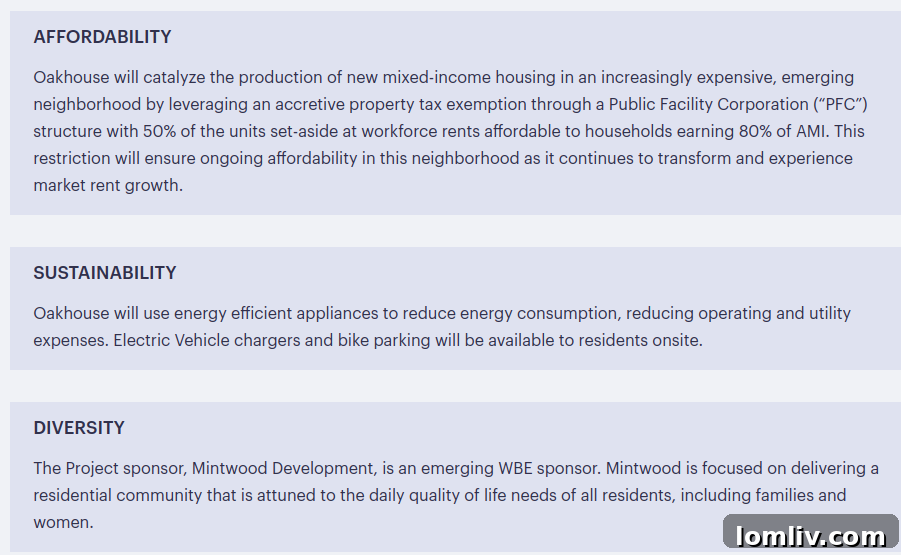
The Oakhouse development is a standout project not only for its scale but also for its commitment to inclusive living. Mintwood Real Estate, a dynamic female-owned firm, is spearheading this venture. According to Erin Thomas, a spokesperson for the developer, 110 of the 219 units are specifically designated as affordable, catering to individuals and families earning 80 percent of the Area Median Income (AMI). This dedication to providing accessible housing options for a diverse segment of the population is central to the project’s mission.
Investing heavily in this vision is MSquared, another prominent female-owned company. On their dedicated webpage for the Oakhouse project, MSquared emphasizes, “The PFC structure will ensure ongoing affordability in the neighborhood as it continues to transform and experience market rent growth.” This statement underscores the strategic foresight behind utilizing the PFC model to embed long-term affordability into the fabric of a rapidly gentrifying area, protecting residents from the full brunt of escalating market rents.
The location of the Oakhouse development further enhances its appeal. Situated at 900 E. Colorado Blvd., the property is strategically positioned in a vibrant and trendy area of Dallas. Although accessibility might be temporarily impacted during the construction phase, its proximity to key urban hubs promises unparalleled convenience for future residents. “The property is a five-minute drive from the Bishop Arts neighborhood, which will give residents fast and easy access to jobs and schools,” Thomas explained. The Bishop Arts District is renowned for its eclectic mix of boutiques, art galleries, restaurants, and entertainment venues, offering a rich cultural and social experience right on the doorstep of Oakhouse residents.
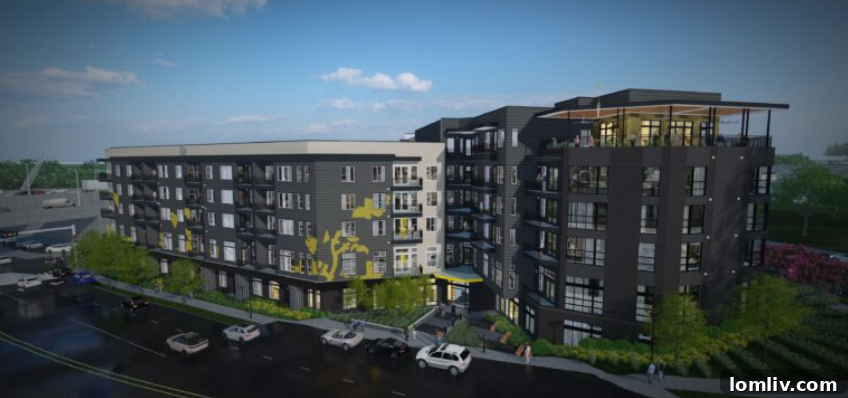
Beyond its strategic location and commitment to affordability, Oakhouse is designed to offer a luxurious and modern living experience. The development boasts an impressive array of amenities tailored to contemporary lifestyles. Residents will enjoy access to a refreshing pool, a dedicated dog park for their furry companions, state-of-the-art workspaces ideal for remote professionals, and a unique children’s lounge thoughtfully integrated with the fitness center. These features are designed to foster a sense of community, promote well-being, and provide convenience within the comfort of home.
Elevating the resident experience even further, plans for Oakhouse include a spectacular Sky Lounge on the top floor. This exclusive space will offer “amazing views of the downtown skyline,” providing a breathtaking backdrop for social gatherings, relaxation, and contemplation. Such premium amenities, often reserved for high-end market-rate properties, demonstrate Mintwood Real Estate’s commitment to delivering a high quality of life for all residents, regardless of their unit’s affordability designation.
The Oakhouse development represents more than just a housing project; it symbolizes progress in Dallas’s urban landscape. By strategically blending affordable and market-rate units, it addresses the “missing middle” challenge – the shortage of housing for middle-income residents who earn too much for subsidies but too little for market-rate housing in desirable areas. This integrated approach ensures that the neighborhood remains vibrant and diverse, preventing economic segregation and fostering social cohesion. As Dallas continues its unprecedented growth, projects like Oakhouse are crucial for maintaining the city’s dynamic character and ensuring that its prosperity is shared across all income levels.
As daltxrealestate.com embarks on the celebration of Women’s History Month in March, it’s worth mentioning that Mintwood’s primary investor, MSquared, is also a female-owned company. This confluence of female leadership in significant urban development projects highlights a positive trend towards greater diversity and inclusion within the real estate industry, bringing fresh perspectives and innovative solutions to complex urban challenges. The commitment of these companies to not only build structures but also build communities is a powerful testament to their vision.