Dallas’s Most Expensive Home Sells: The Historic Crespi Estate (Walnut Place) Acquired by Andy Beal in Record-Breaking Cash Deal
The Dallas luxury real estate market recently witnessed a monumental transaction, setting a new benchmark for high-end properties in Texas and potentially the entire Southwest. The illustrious Crespi Estate, affectionately known as Walnut Place, located on Walnut Hill Lane, has officially changed hands. This iconic property, initially listed for an astonishing $100 million, was purchased by renowned billionaire investor Andy Beal in an all-cash deal, securing its future as an intact, sprawling private sanctuary.
For weeks, speculation had swirled around Walnut Place, with insider reports hinting at Beal’s keen interest. Steve Brown at The Dallas Morning News was first to break the news of Beal’s serious consideration, a testament to the property’s allure and the intensity of the bidding process. It was rumored that Beal was weighing his options between Walnut Place and the magnificent Crow mansion at 4500 Preston Road. Ultimately, the grandeur and expansive acreage of the former Crespi Estate won him over.
The sale, orchestrated by the formidable team of Allie Beth Allman and David Nichols, closed officially, with papers signed this very morning. Allie Beth Allman confirmed the completion of the sale, noting that Beal acquired the entirety of the estate – a vast 25.25 acres – with plans to preserve its integrity. “He doesn’t plan to split it,” she revealed, easing concerns among those who feared the historic grounds might be subdivided. This decision ensures that the legacy and original vision of Walnut Place will endure for generations to come, truly a ‘Bravo Andy Beal!’ moment for Dallas.
While the exact sales price remains undisclosed, the magnitude of the transaction is undeniable. This represents the largest real estate sale in Texas history to date, surpassing any previous records in Dallas and likely across the entire Southwest U.S. Allman, a veteran agent with an unparalleled track record, expressed immense satisfaction, stating that both the sellers, the Hicks family, and the buyer were “thrilled” with the outcome. For her, every closing, regardless of price, must culminate in the sheer happiness of all parties involved. “We are talking about someone’s home and they should not just be happy but be thrilled with the entire process,” she emphasized, underscoring her commitment to client satisfaction.
The success of this sale also serves as a definitive rebuttal to skeptics who claimed a $100 million property in Dallas was unsellable. Allie Beth Allman and David Nichols achieved this monumental feat in just nine months, demonstrating the strength of the Dallas luxury market and their exceptional expertise. As for the previously considered Crow estate, it remains on the market, relisted by Allman at $46 million after a brief pause during the holidays.
A Landmark Transaction in Dallas Luxury Real Estate History
The sale of Walnut Place stands as a pivotal moment in the annals of Texas real estate. Until the Waggoner Ranch sale officially closes, this transaction represents the most significant residential property sale in the state’s history. It will undoubtedly hold the record for Dallas for many years to come, solidifying its place in local lore. Previously, the largest recorded sale in Dallas was the estate at 5323 Park Lane. This expansive property, spanning over nine acres and once owned by Joyce and Larry Lacerte, was designed by Cole Smith, impeccably decorated by Sherry Hayslip, and listed by Ralph Randall at Ebby Halliday. Originally listed for $45 million in 2008, its price was adjusted to just under $40 million as the national real estate market experienced a downturn. Ultimately, it sold for approximately $29 million to Kelcy Warren, a savvy buyer who even requested an outside appraisal. Warren’s buyer’s agent was Rosie Waters of Allie Beth Allman and Associates, who is married to football legend Charlie Waters, and at the time worked with Mr. Warren.
The Dallas real estate scene continues to captivate and impress, showcasing a vibrant market for unparalleled luxury properties. The detailed story of Walnut Place, complete with captivating photographs, offers an in-depth look at this extraordinary estate, further cementing its status as one of America’s most magnificent residences.
The Illustrious History and Meticulous Renovation of Walnut Place
To truly comprehend the essence of Walnut Place, the former Crespi Estate, is to step into a realm of unparalleled luxury and refined elegance. Acquired by Thomas O. and Cinda Hicks in 1997, this architectural masterpiece spans an impressive 35,275 square feet of living space, expanding to a colossal 67,689 square feet when including its magnificent terraces. For a fortunate few, touring this estate offers a once-in-a-lifetime experience, revealing why it commanded such attention as Dallas’s most expensive home. Prior to its recent sale, the property was expertly marketed by Allie Beth Allman and David Nichols, under the esteemed Allie Beth Allman brokerage. Its previous marketing approach, led by Doug Newby, emphasized exclusivity, keeping the estate largely out of the MLS and limiting agent access, as the expectation was that a buyer would emerge from outside Dallas, perhaps enticed by its presence in exclusive private jet publications.
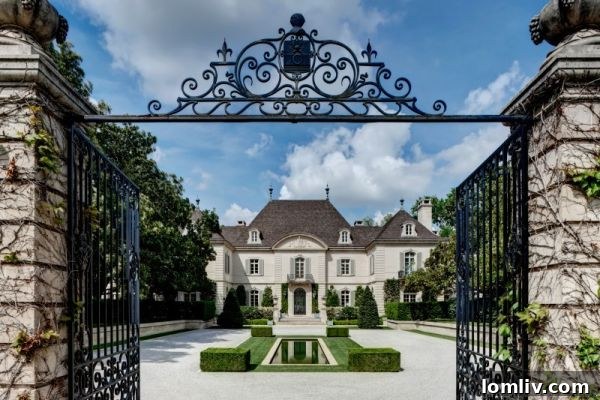
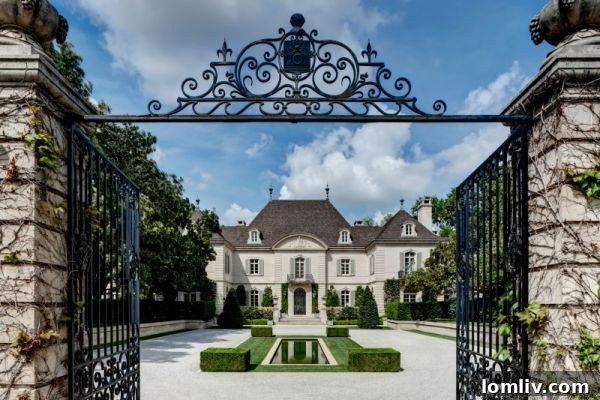
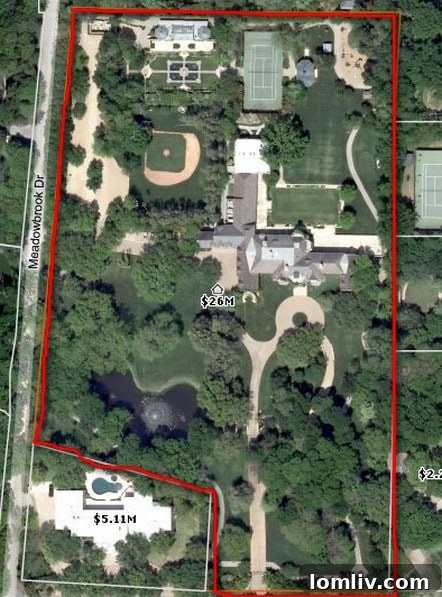
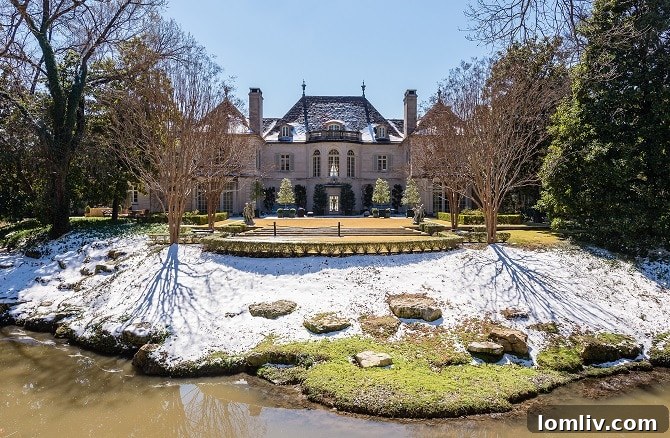
However, the strategy shifted, and the estate was finally opened to the agents of Allie Beth Allman for the very first time last Thursday, leaving all who entered absolutely breathless. The approach to Walnut Place is an experience in itself. As one turns into the graceful private gates at 10000 Hollow Way, the drive unfolds like a journey through the serene French countryside, culminating in a majestic chateau nestled deep within a verdant landscape. Despite its expansive 25.25 acres, this private oasis remains remarkably accessible, mere seconds from the Dallas North Tollway entrance and a swift seven-minute drive to downtown Dallas during minimal traffic. For those working in Preston Center, the estate is a surprising four-mile walk away, blending secluded luxury with urban convenience.
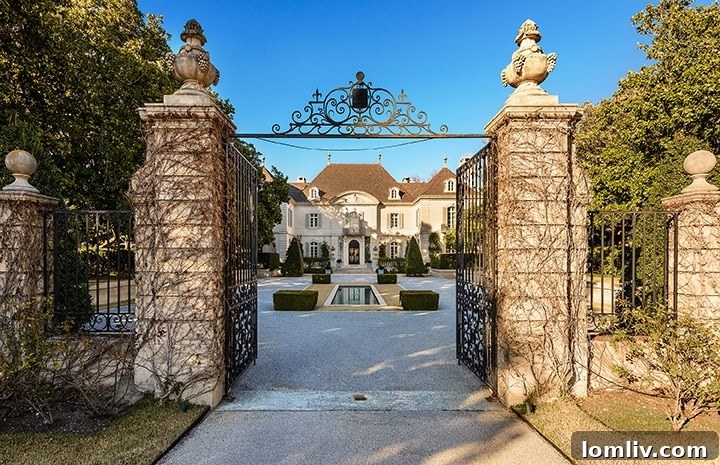
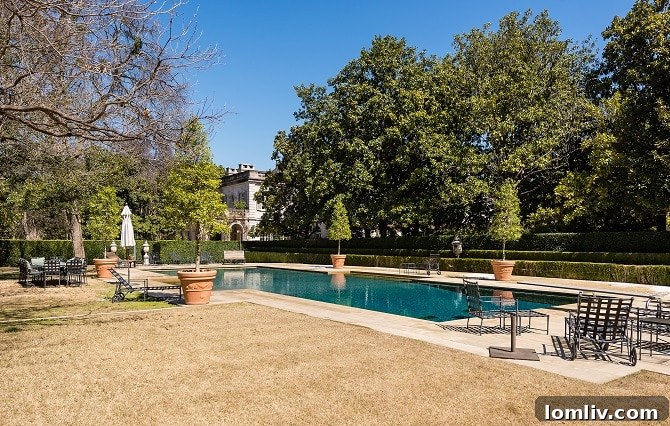
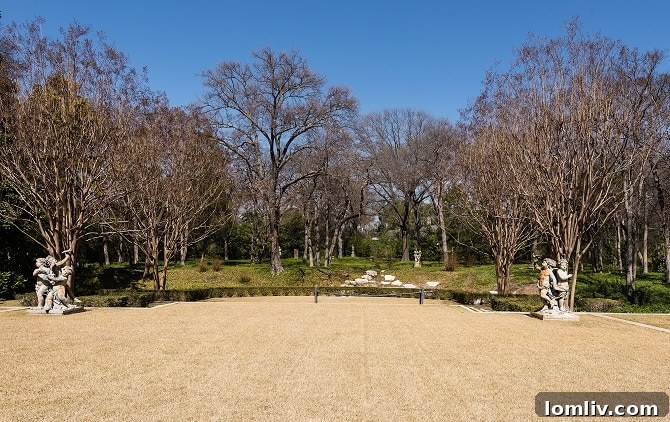
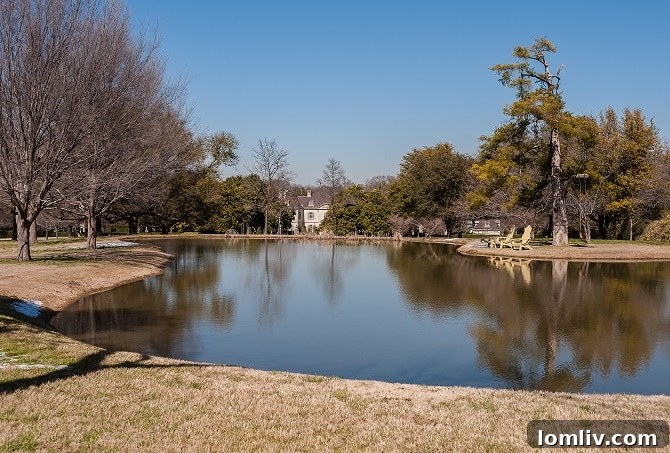
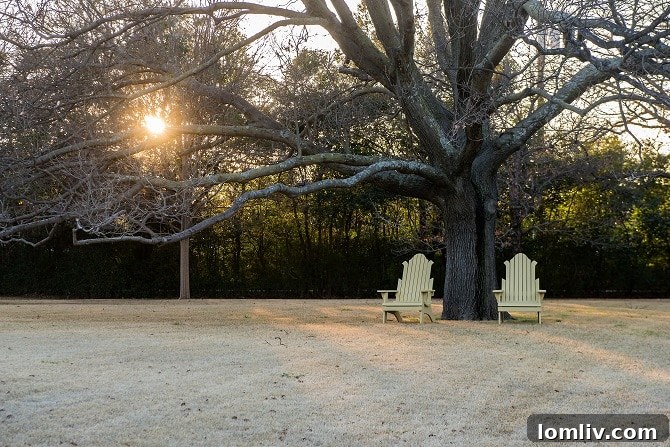
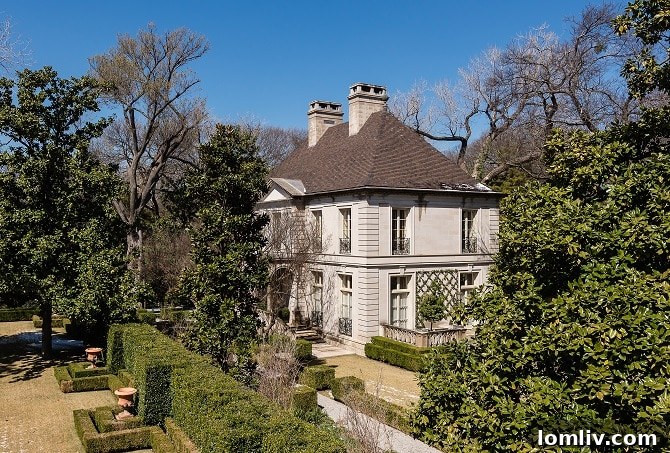
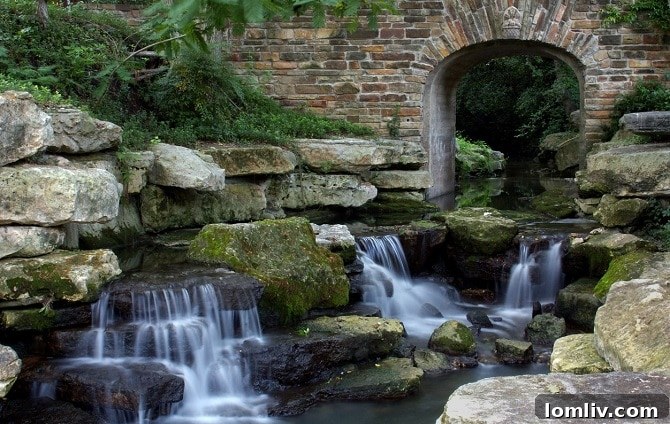
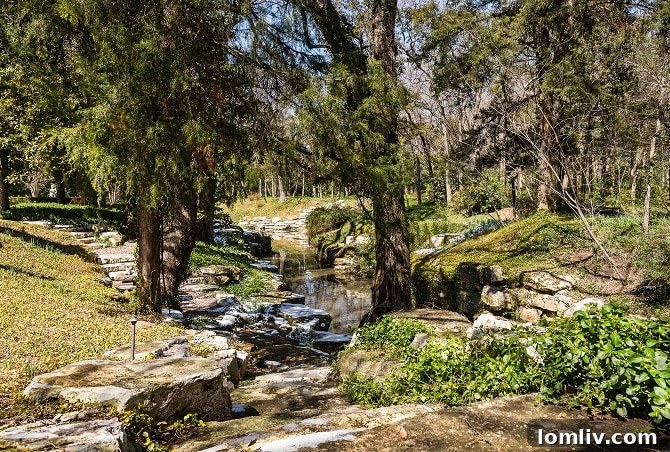
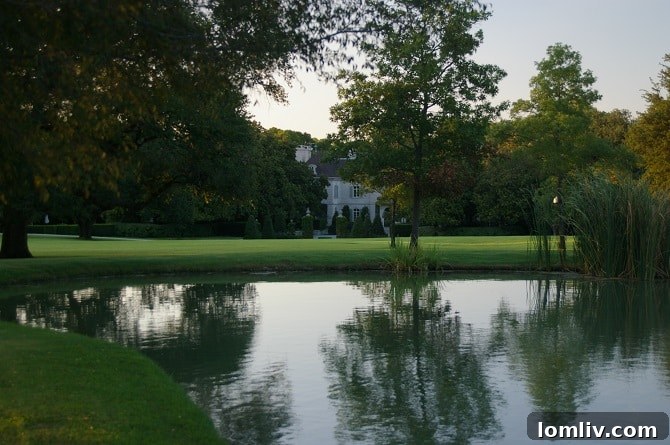
The drive itself, splitting and forking to the right and left, guides visitors to the crushed limestone auto courtyard, where the original Crespi Estate, designed by the famed Maurice Fatio, was strategically positioned in 1938 to maximize the pastoral views. The property is a natural wonderland, overlooking a dense forest of mature trees and a tranquil creek that meanders through the grounds. It features lush meadows and winding trails, a year-round pond, and even a helipad with a lighted landing pad, ingeniously covered with grass when not in use to maintain the estate’s natural aesthetic. Two courtyards, each adorned with 16 magnificent magnolia trees, flank the main residence, complemented by a serene greenhouse, a vibrant formal rose garden, and a well-lit tennis court. Sustainability is also paramount, with a 1500-foot-deep well drilled on the property, providing purified water for the extensive grounds.
The Hicks family undertook an ambitious and transformative renovation of the Crespi Estate, a project that began after Mrs. Crespi’s life estate on the property concluded. This extensive renovation, spanning from 2000 to 2003—a remarkable 33 months—saw up to 250 people working daily on the estate. The attention to detail is truly unparalleled. When adding to the exterior, the Hicks didn’t just source more limestone; they reopened the original Indiana quarry that supplied the estate in the 1930s to excavate stone from the exact same terra. This painstaking effort ensured the absolute closest match possible, with a Corian light sandblasting technique used to flawlessly blend the new Indiana limestone with the aged original, subtly erasing its “newness.” The seamless integration of John Sebastian’s addition with Maurice Fatio’s original 1938 mansion is a testament to the exceptional craftsmanship and vision behind this magnificent home.
An Exclusive Tour: Unveiling the Grandeur of the Main House
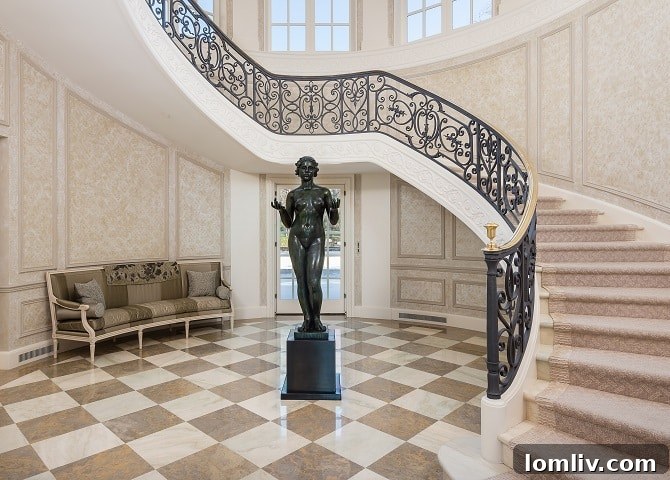
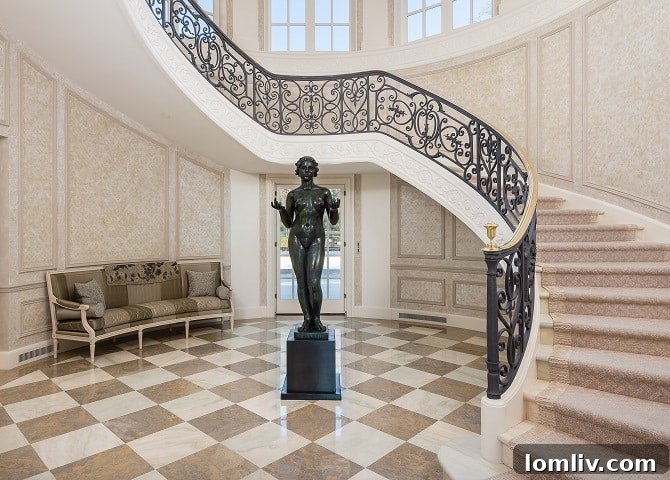
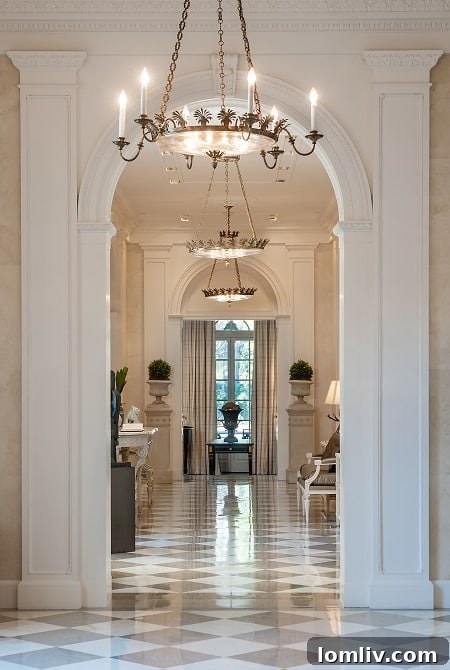
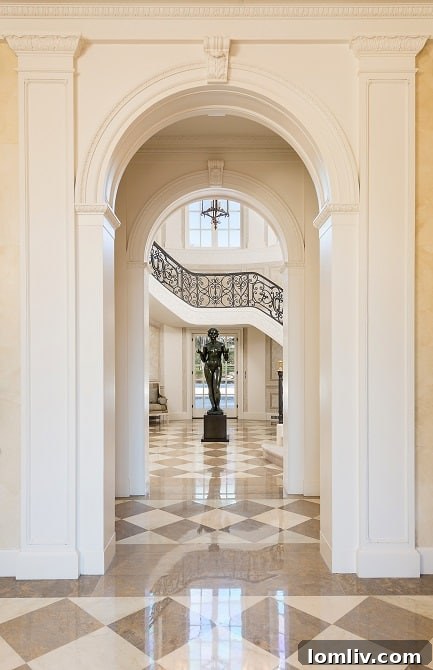
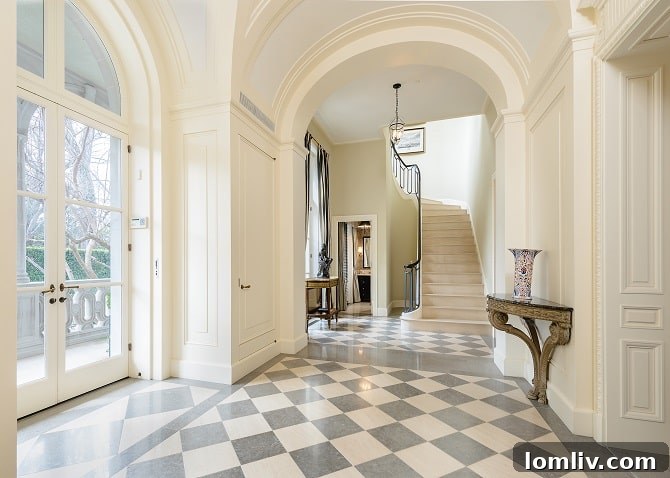
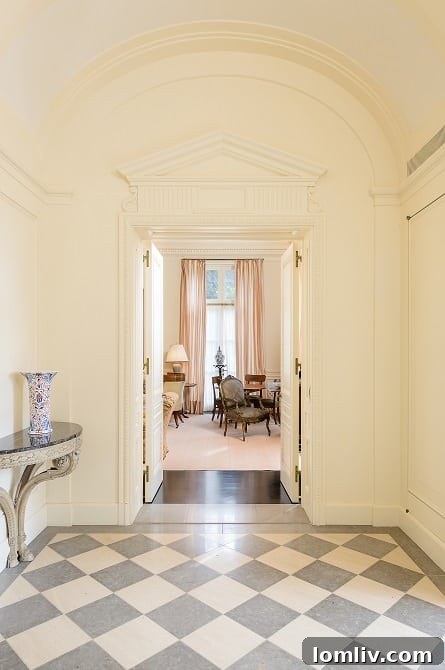
Entering the estate through an ornamental steel front door, one is immediately enveloped in an atmosphere of balanced symmetry and timeless elegance. The main house unfolds around a grand marble-floored gallery hall that stretches the entire width of the residence, serving as the central artery connecting its many breathtaking spaces.
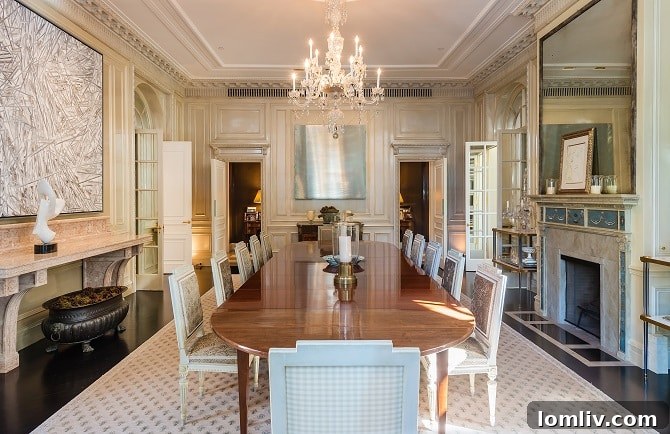
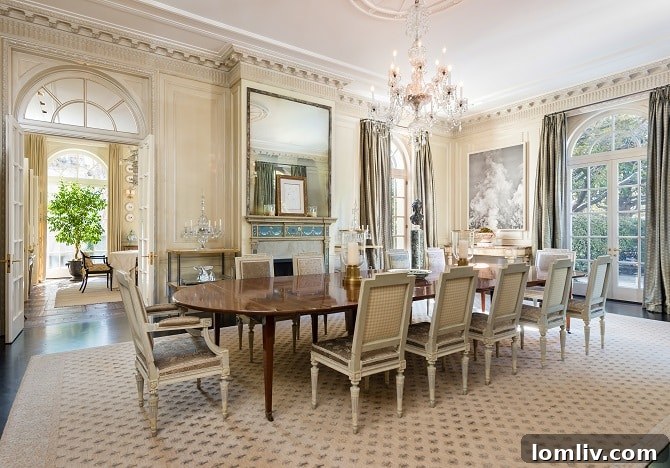
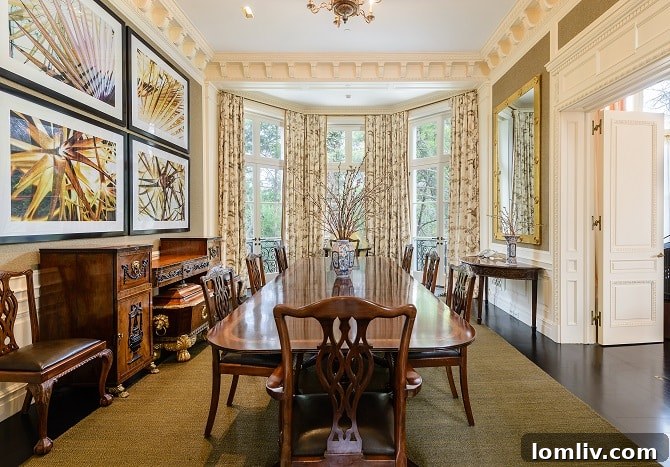
To the right of the gallery lies the formal dining room, a generously proportioned space designed for sophisticated entertaining without being overwhelming. The floors, imported from France, feature stunning Oak Chevron patterns with a rich, dark ebony finish. This room offers a striking juxtaposition of contemporary art against its classically traditional backdrop. A large dining table comfortably anchors the space, with ample room for a more intimate secondary table. The walls, finished in a high-gloss lacquer with delicate ornamental plaster accents, reflect light beautifully, creating an opulent ambiance.
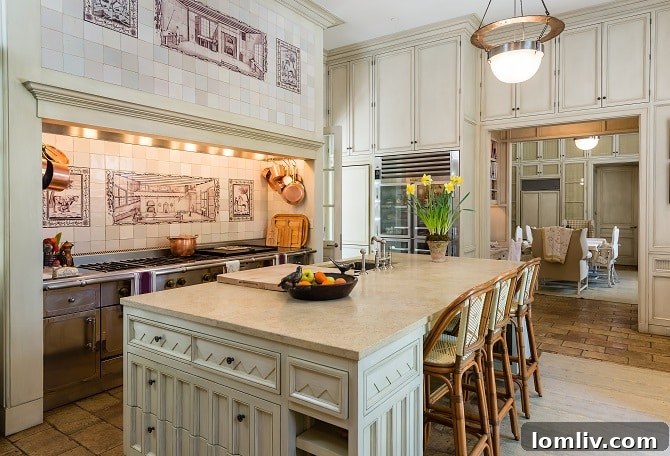
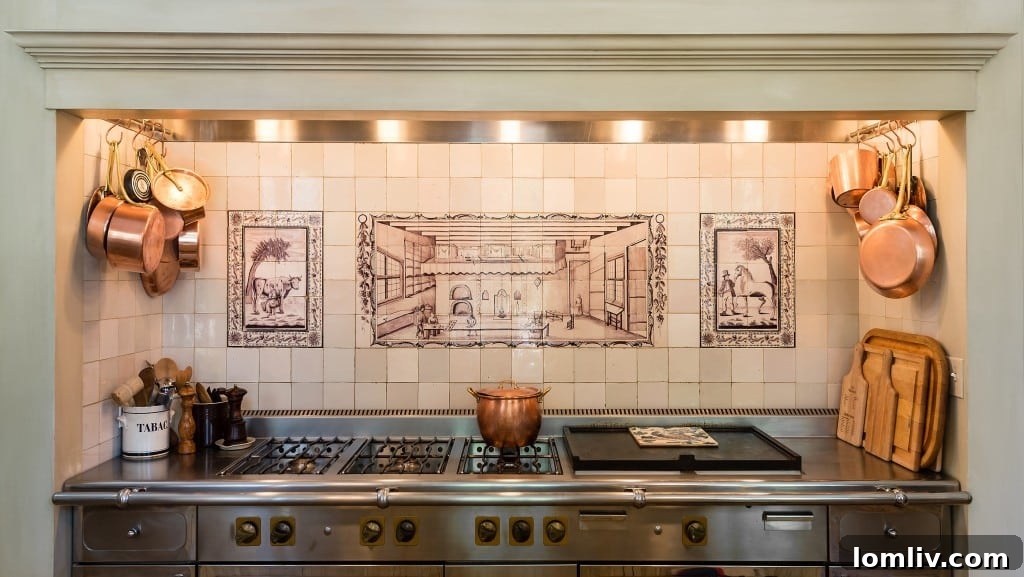
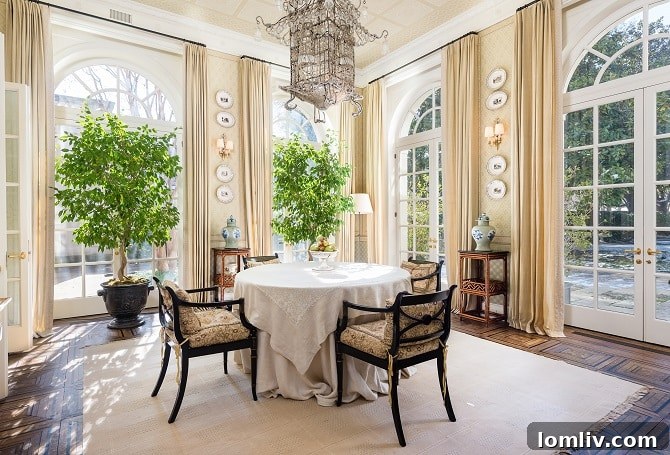
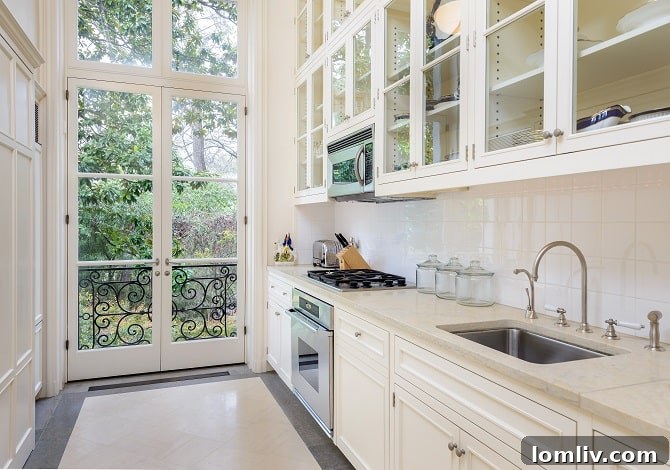
The renovation’s meticulousness is evident in every corner. Beyond the grand entertaining spaces, the breakfast room, paved with intricately patterned imported French wood, offers a more casual yet equally elegant setting. The kitchen, surprisingly cozy for a home of this scale, functions with the efficiency of a commercial gourmet kitchen. It boasts antique French terra cotta floors, 17th-century manganese backsplash tiles painstakingly collected over three years at auction, two sinks, four ovens, and a magnificent ten-foot-long La Cornue Diva range stove—a $65,000 masterpiece—equipped with commercial-grade fans and exquisite European tile backsplash. The kitchen cabinet millwork is flawless, finished with a subtle glaze, and features linen backing behind the glass doors. From the kitchen, a hallway lined with imported European limestone leads to the Conservatory.
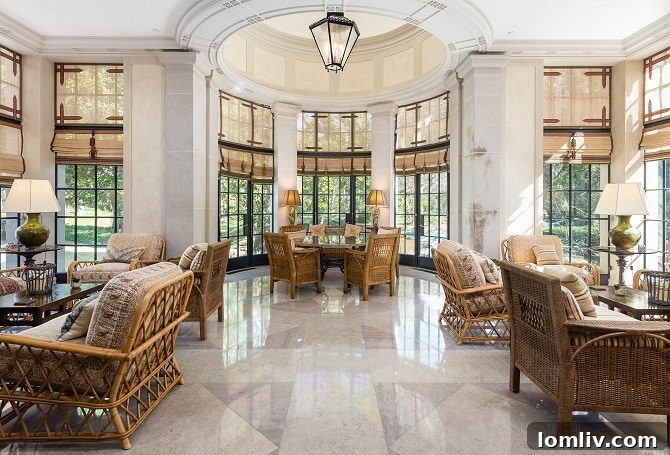
The Conservatory, a new addition during the renovation, is a bright and airy sanctuary featuring gleaming marble floors and stately limestone fireplace mantels. A luxurious touch ensures comfort year-round: the marble floors are heated by hot water tubes embedded beneath them. Adjacent to the kitchen is the butlery, a well-appointed room with a central dining table, additional counters matching the kitchen finishes, another sink, and commercial refrigeration units. Its antique French floors and hand-stenciled walls and ceilings create an inviting atmosphere, perfect for casual family meals or for staff and children.
The family room is equally warm and inviting, featuring wide oak floors with a dark ebony finish and raffia-stenciled walls. Concealed doors near the entrance, perfectly recessed, exemplify the meticulous, man-made perfection infused into every detail of this home, a hallmark evident in every room.
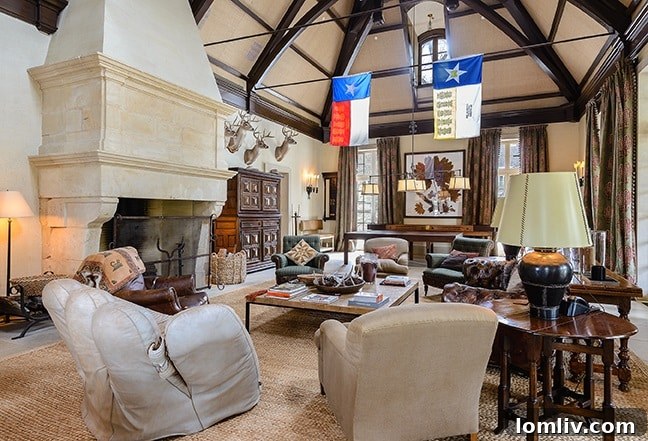
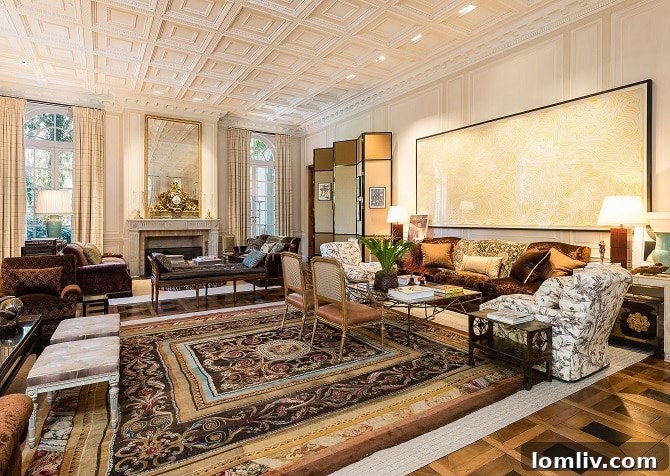
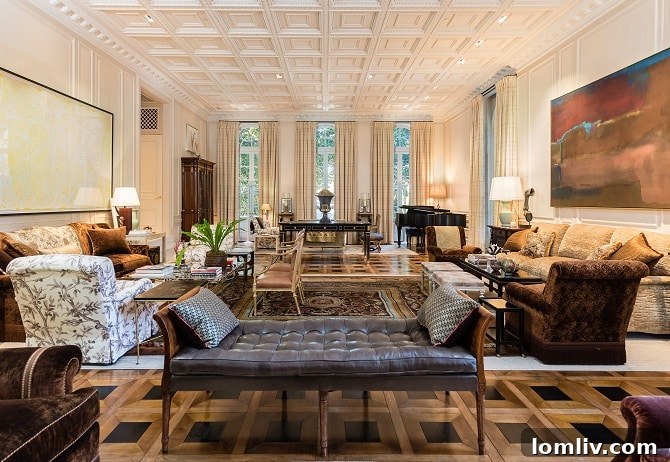
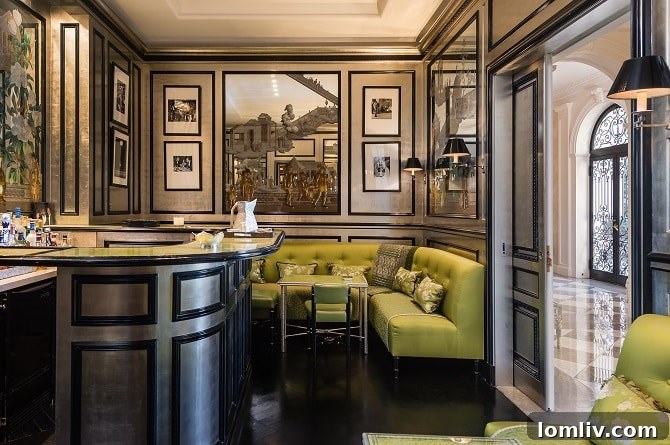
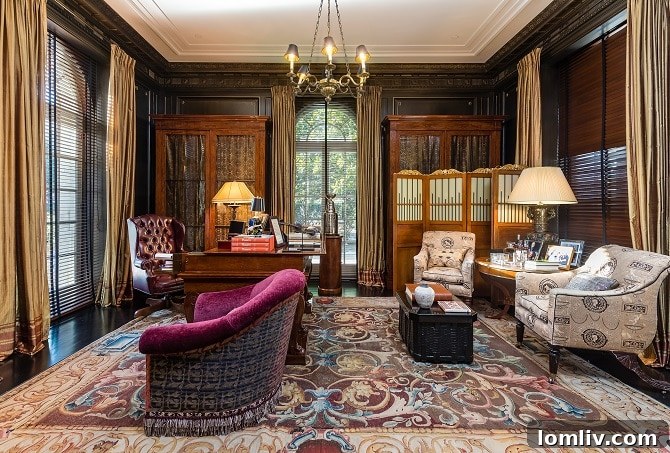
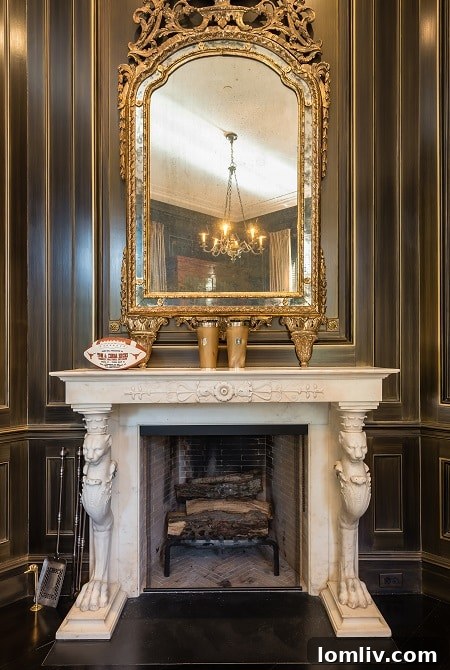
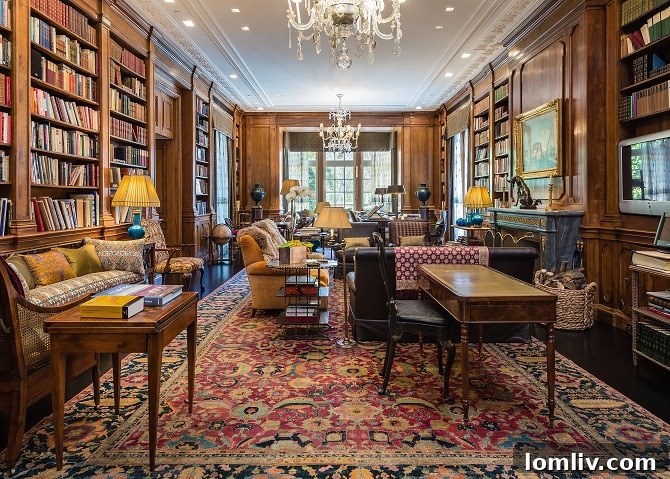
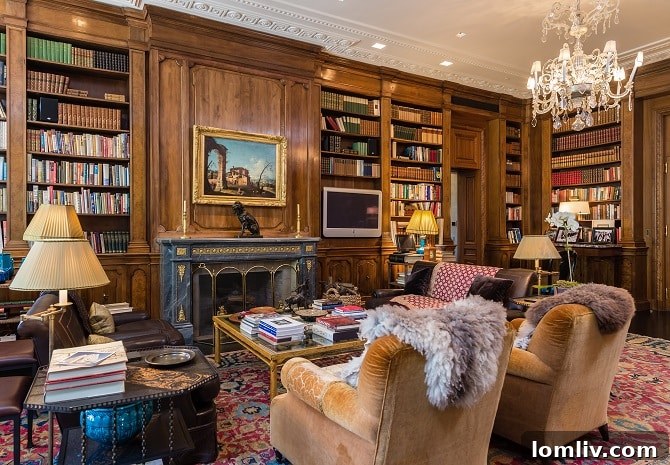
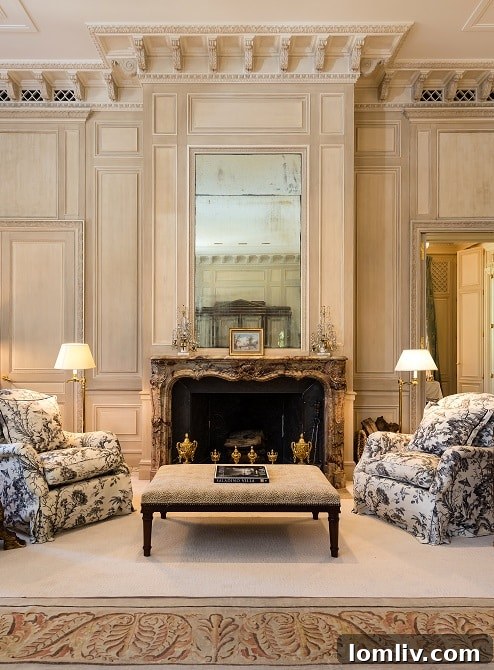
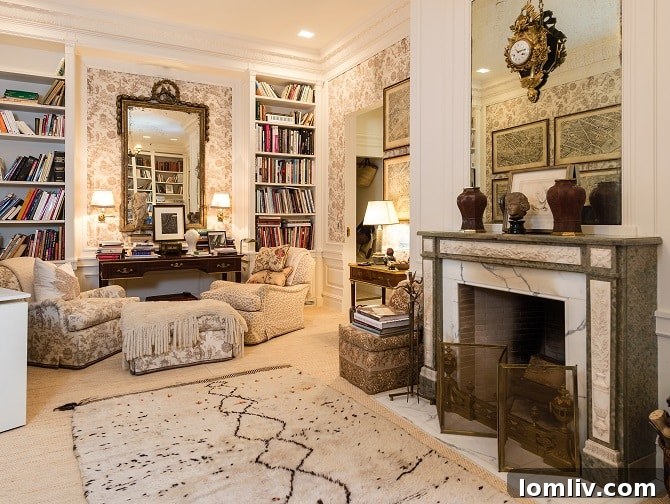
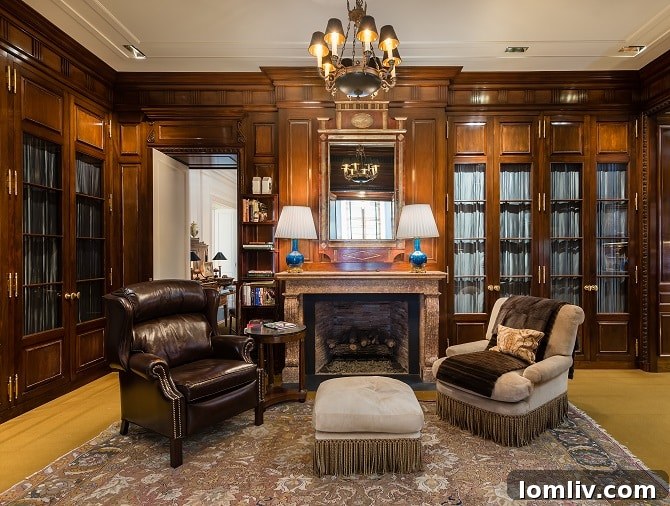
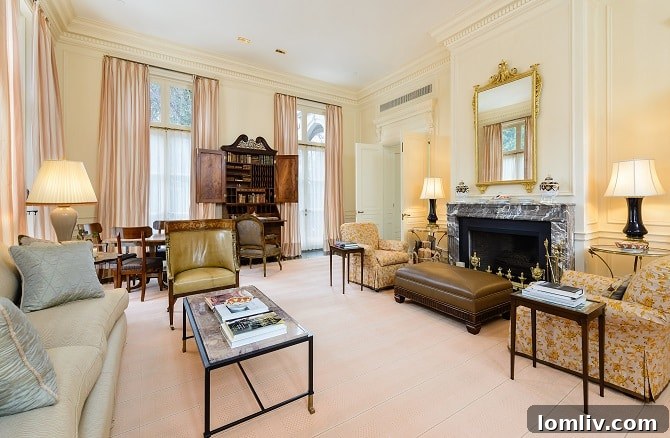
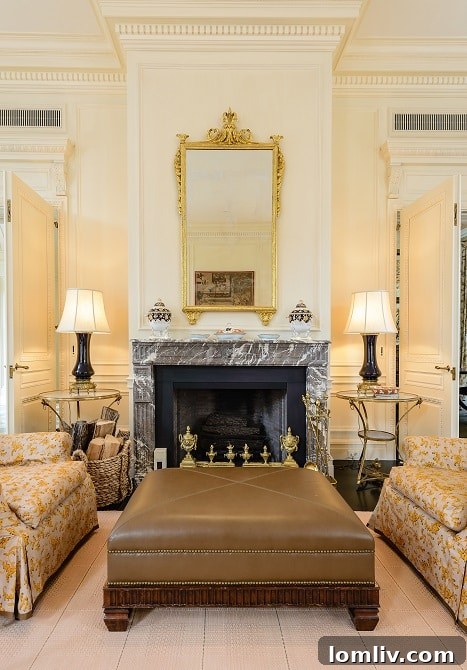
The library, with half of its structure dating back to the original estate, is a true masterpiece. It features exquisite paneling imported from France, dating back to 1820, and is considered one of Peter Marino’s crowning glories in the renovation. Throughout the home, ventilation grilles are custom-designed, with those in the library crafted from bronze, matching the intricate detailing on the fireplace. The famous green and silver bar, a completely original feature from the Crespi Estate, has been meticulously preserved, with its walls newly silver-leafed to restore its former splendor. The living room, an entirely new and exceptionally spacious addition, has played host to notable events, including a gathering for former New York Mayor Rudy Giuliani during his consideration of a presidential bid. It is floored with antique hardwoods imported from France and boasts impressive two-foot-thick walls, offering both structural integrity and a sense of grandeur. This elegant space overlooks a serene wooded courtyard, graced by an exquisite fountain. An original parlor was transformed into a private office for Mr. Hicks, featuring dual televisions seamlessly integrated into the metal frames of the walls, showcasing a blend of classic design and modern functionality.
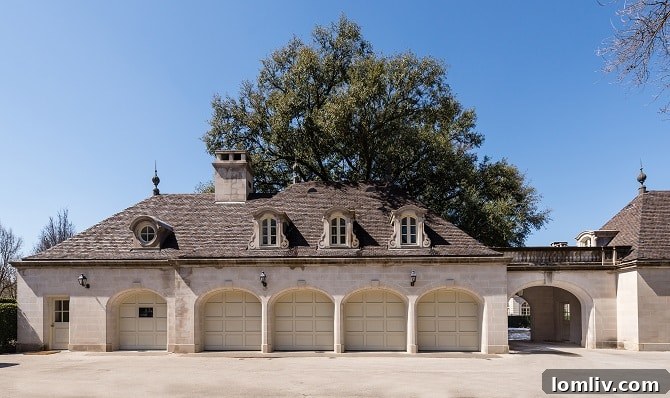
The first floor is thoughtfully designed to include essential service and utility areas, ensuring practical living within a luxurious setting. It houses a convenient butler’s pantry, a full laundry room, a dedicated flower room for floral arrangements, a spacious loggia for outdoor relaxation, and two garages. In total, the estate offers eight garage spaces, seven of which are fully functional for vehicles, with the eighth space configured as a dedicated motorcycle bay. Additionally, a well-equipped woodshop caters to hobbies and maintenance needs.
Upper Levels: Private Sanctuaries and Bespoke Amenities
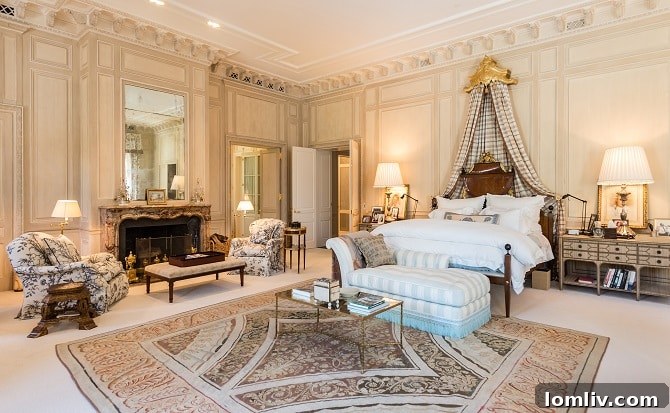
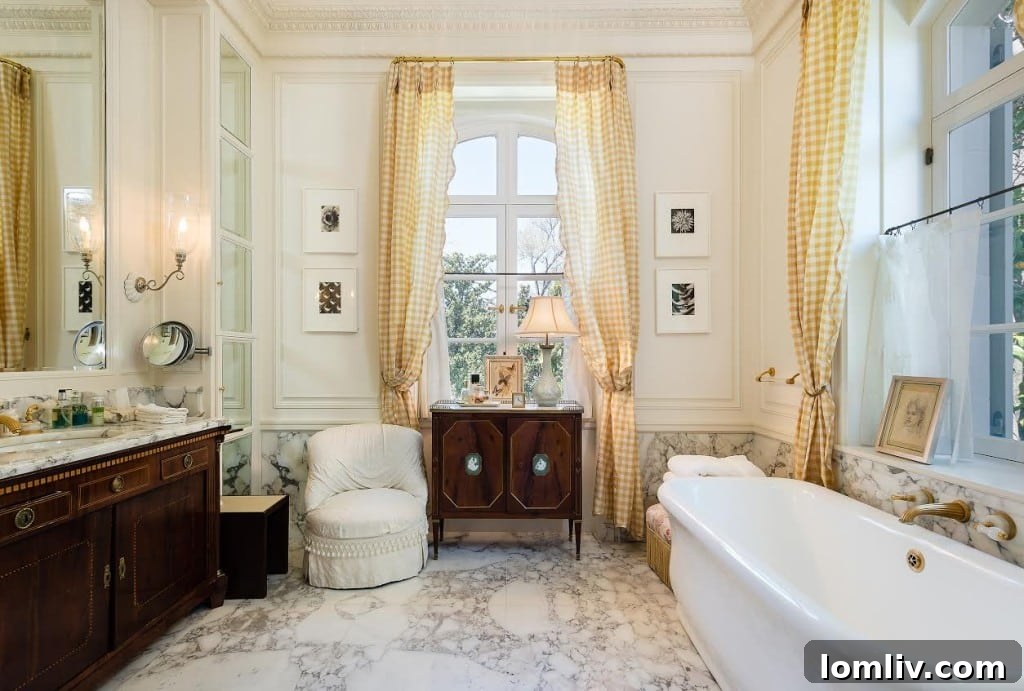
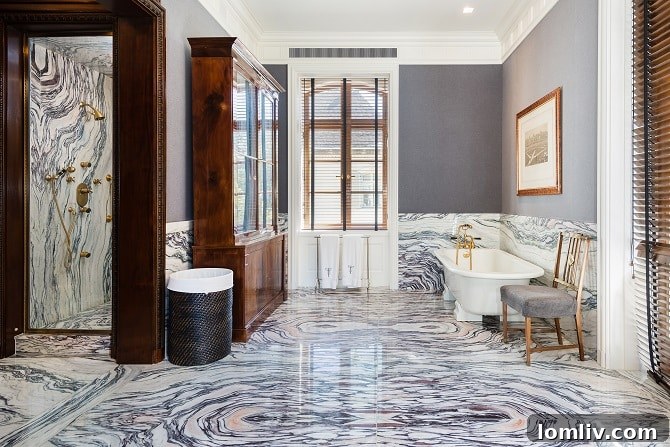
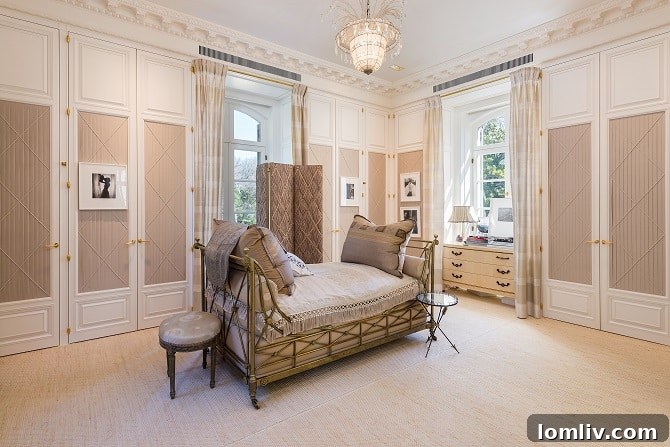
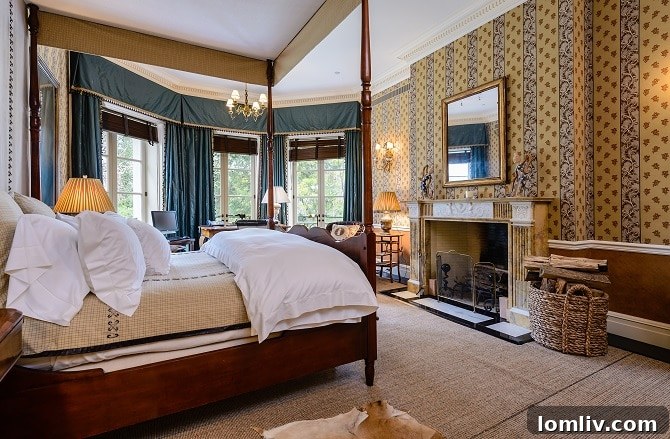
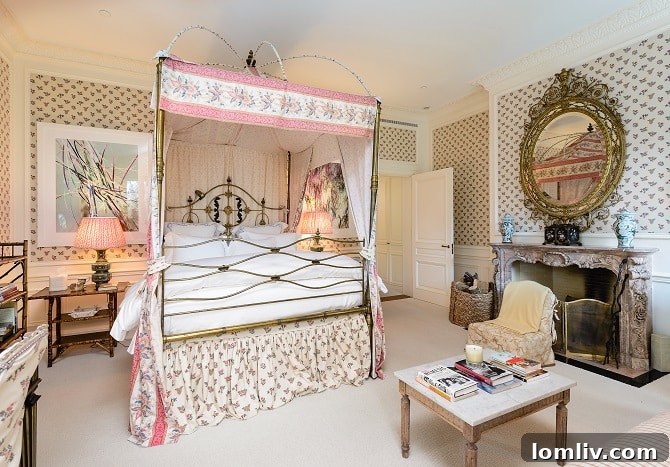
Ascending to the second floor reveals the true pinnacle of private luxury: the magnificent 3,000-square-foot master bedroom wing. This expansive sanctuary is introduced by an elegant entry vestibule, adorned with the Crespi Estate’s distinctive ribbon design on its doors. The master bedroom itself is a haven of tranquility, featuring an antique fireplace surrounded by slate, adding a touch of historic charm. The wing boasts separate his-and-hers bathrooms and dressing rooms, each meticulously appointed. The lady’s bath is resplendent with fixtures by Sherle Wagner, embodying timeless luxury, while the gentleman’s bath showcases breathtaking book-matched marble, a testament to exquisite craftsmanship. Each partner also enjoys two distinct dressing areas. “Her’s” is a vision of elegance with mercury glass panels and pleated fabric closet doors designed to protect clothing, complemented by a personal lady’s study featuring an antique honed-cut marble fireplace. “His” offers a “Spogliatoio”—a sophisticated combination formal dressing and casual sports room—crafted from rich Honduran mahogany paneling, hand-waxed to a brilliant French polish. The master suite further extends its comfort with a dedicated sitting area and a private terrace, offering secluded outdoor access.
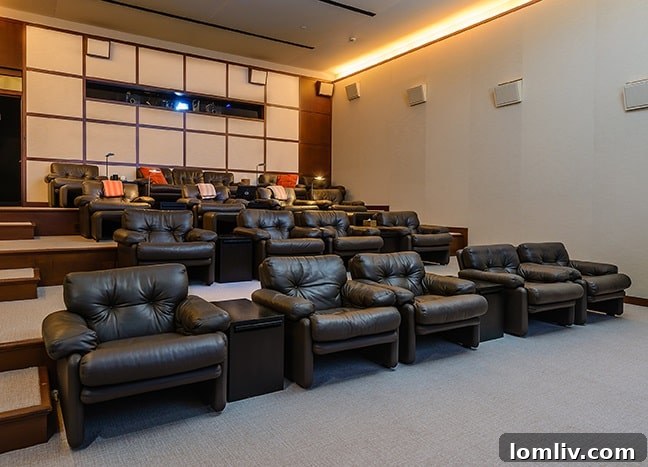
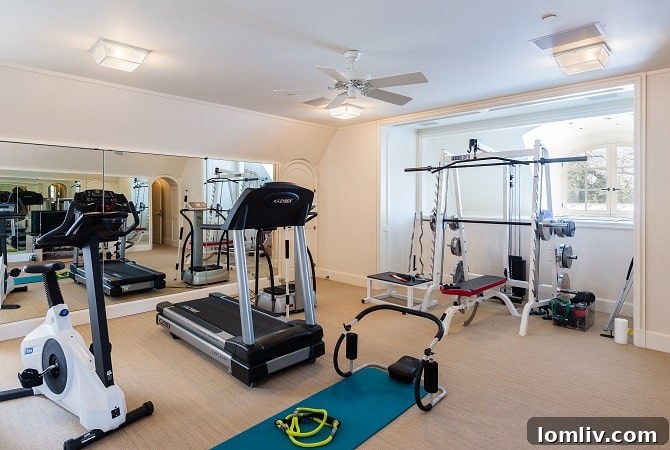
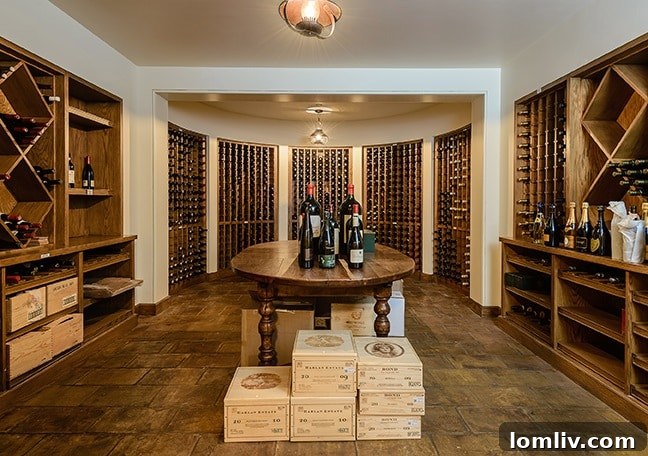
Beyond the master wing, the second floor features four additional en suite bedrooms, each thoughtfully designed with its own bath and dressing room, ensuring privacy and comfort for family and guests. Another conveniently located laundry room serves this floor. The third floor further expands the estate’s offerings, housing a well-equipped exercise room and a dedicated massage room complete with a luxurious bath and steam shower. Two more en suite bedrooms provide additional accommodation, alongside a impressive trophy room and three distinct terraces, offering varied views and outdoor living spaces. The basement level, extending beneath the main house and motor court, is dedicated to essential maintenance and storage. It includes a stylish wet bar, a private movie theater (distinct from the larger cinema in the Recreation Complex), a mechanical room, and an impressive wine storage room with a 500-bottle capacity. This climate-controlled sanctuary is meticulously maintained at a constant 55-degree Fahrenheit, with an alarm system to alert to any temperature deviation, ensuring the perfect preservation of fine wines, alongside a separate case wine storage room. The basement also incorporates a two-story, two-bedroom staff wing (Staff Wing One), complete with a sitting area, security station, separate laundry room, and a large common room with a kitchen. An additional staff wing (Staff Wing Two) offers another bedroom and a common area with a kitchen, underscoring the estate’s capacity for comprehensive service and privacy.
Beyond the Main Residence: Auxiliary Structures and Luxurious Grounds
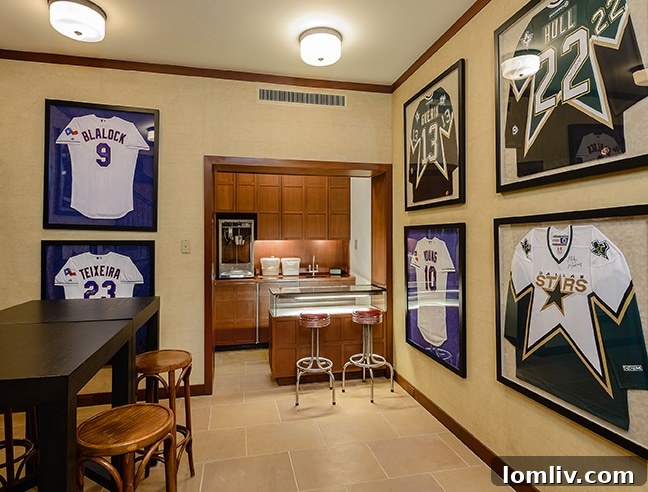
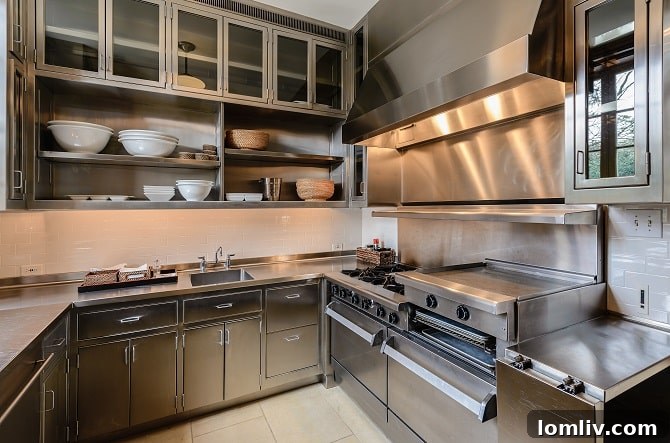
The Crespi Estate is more than just a main house; it is a meticulously planned compound featuring several ancillary buildings that enhance its luxurious and functional appeal. The most prominent of these is the expansive Recreational Complex, designed for ultimate leisure and entertainment. This complex houses a grand 24 by 47-foot great room, distinguished by massive beams whose ceiling was artfully fabricated in Austin, and floors crafted from pure Texas limestone. A commercial-grade stainless steel kitchen ensures seamless catering for events of any scale. Given its function, the complex includes well-appointed men’s and women’s changing rooms, complete with lockers and showers, servicing the country-club sized 25 by 35-foot pool. Upstairs within the Recreation Complex, there’s a comfortable guest bedroom and bath, providing a private retreat. On the lower level, a truly impressive cinema awaits, nearly the size of a commercial theater at Highland Park Village. Measuring 25 by 36 feet, it accommodates 19 seats, features a professional reel projection room, and a concession counter stocked for candy and popcorn. Framed jerseys adorning the walls serve as a nostalgic reminder of the Hicks’ ownership of the Texas Rangers, Dallas Stars, the Mesquite Championship Rodeo, and Liverpool F.C. This level also includes another changing room and a laundry facility. One of the complex’s most ingenious features is its sound engineering; the cinema’s soundtrack can reach sonic boom levels without disturbing anyone outside, thanks to advanced acoustic design. In total, the Recreational Complex boasts three full bathrooms and two half baths.
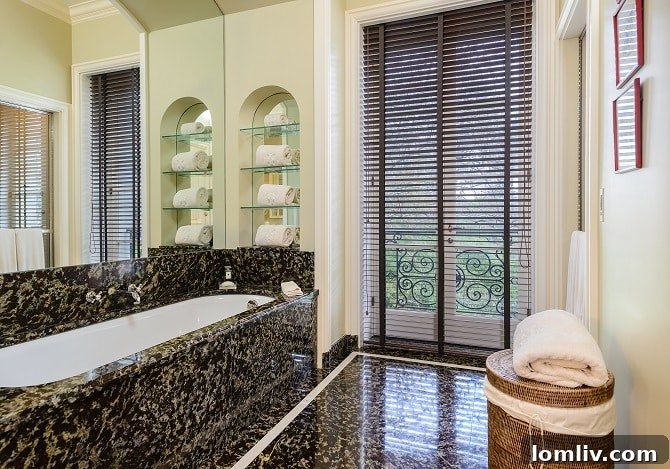
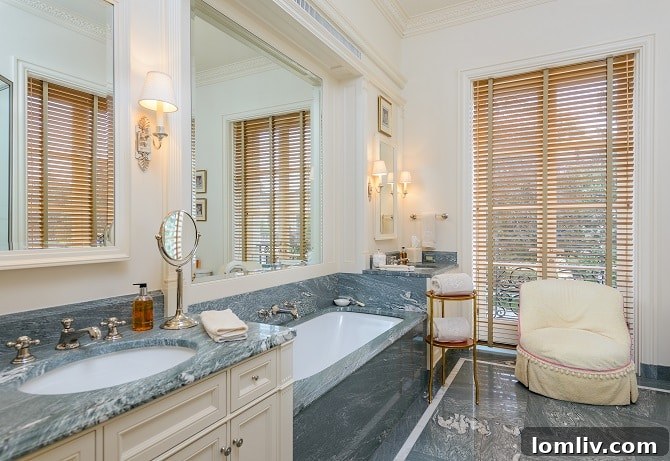
The estate also features a versatile Guest House, which can serve dual purposes as a sophisticated “business house” or a comfortable retreat for visitors. It includes a spacious living room, a formal dining room, a dedicated secretary support room or office, a full kitchen, and a charming loggia. The second story offers two luxurious bedrooms, each with expansive full bathrooms crafted from rare granites and marbles, with patterns perfectly matched, alongside generous dressing rooms and ample storage. For larger family needs or additional staff, a Family House is strategically located near the property’s second gated entrance. This residence comprises four bedrooms, four full baths, a half bath, a fully equipped kitchen, and a bar. Complementing this, a separate one-bedroom apartment is situated above the two-car garage, offering further private accommodation.
The Unparalleled Craftsmanship and Modern Systems
The restoration of the Crespi Estate was an endeavor of immense scale, characterized by its lengthy, arduous, and painstaking nature. The journey began with a simple napkin sketch, followed by three years of meticulous planning after the home’s acquisition on August 15, 1997. To ensure the highest standards, experts were flown in from around the globe for consultation and the execution of the intricate work. The estate’s original core—the outside frame, central corridors, and grand front staircase—all designed by the famed Swiss architect Maurice Fatio and built in 1938, were carefully preserved. The remainder of the main house and its extensive complexes were designed and constructed from the ground up under the visionary guidance of New York-based architect and interior designer, Peter Marino. Dallas builder John Sebastian served as the general contractor, overseeing a rebuild that, at times, involved more than 250 people working seven days a week, supported by three project managers and five superintendents, each dedicated to a specific floor. The masonry work was handled by commercial-grade professionals, while four specialty artists were brought in from New York City and France to apply their unique skills. Local painters J.C. Martin, Phillip Minton, and Tim Baxter, complemented by a team of artisans from France, completed the extensive and intricate paint finishes. Lighting design was expertly handled by Craig Roberts, and the Hicks brought in London-based garden designer Arabella Lennox-Boyd as the head landscape architect, with Warren Johnson contributing as an associate architect.
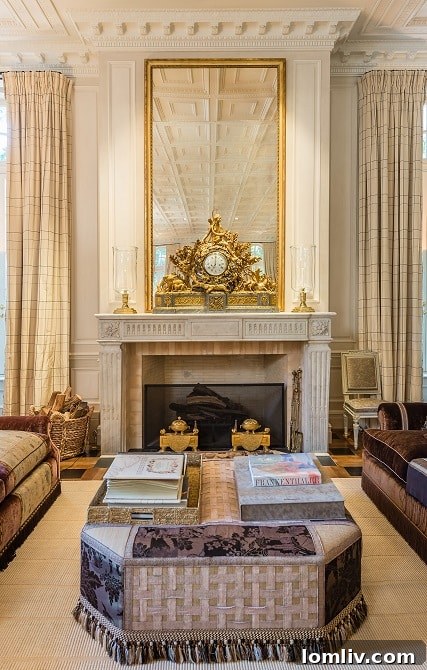
The estate’s features are a further testament to the extraordinary details that make it so incredibly special. All doors and windows are American-made Zeluck windows, crafted from rot-free mahogany wood, or Crittall metal windows, all featuring UV-protected glass. Each of the numerous fireplaces throughout the home is equipped with a sophisticated motor system, custom-designed by an Oregon specialist, guaranteeing a perfect draw every time. The main house boasts a commercial elevator, providing seamless access to all three floors and the basements. Indoor and outdoor lighting systems are controlled by Lutron, offering unparalleled ambiance management. The home’s sound engineering is exemplary: acoustic experts meticulously suspended ceilings to prevent noise transference between floors, all mechanical equipment is isolated to mask any potential noise, and speakers throughout the house are cleverly hidden behind plastic veneer, allowing music to be heard perfectly without any visible distraction.
Modern luxury extends to the estate’s utility systems. The home features commercial-grade air conditioning, including a sophisticated four-pipe system, a cooling tower, and 35 individual air handlers, each with a custom-crafted grill, ensuring optimal climate control. A robust, full-house generator can power the entire property for approximately 10 to 12 hours, guaranteeing uninterrupted comfort. A state-of-the-art security system provides comprehensive protection, and for ultimate safety, the home is fully equipped with fire sprinklers, featuring concealed heads seamlessly integrated into the towering 14-foot ceilings.
The monumental sale of Walnut Place, with its $100 million asking price, firmly established it as the most expensive home for sale in Dallas and among the nation’s elite luxury properties. Allie Beth Allman shed light on two pressing questions: the availability of the Hicks’ art collection and their future residential plans. The impressive art collection, she confirmed, was definitively not for sale. Regarding the Hicks family, Allie Beth noted, “The Hicks children are grown and have their own homes. They also spend time at their home in La Jolla but will always maintain a residence in Dallas.” This ensures that despite the grand sale, their ties to the vibrant Dallas community remain strong, marking the end of one remarkable chapter and the beginning of another for this iconic estate.
Photos of the Main House interiors:
Photos of the Guest House interiors:
Photos of the Recreation Complex: