The Hidden Dangers of DIY Electrical Work: Why You Should Always Call a Pro
Every week, the detail-oriented folks at Green Scene Home Inspections will give Daltxrealestate.com readers an education in inspection. Want to see what they see? Tune in for “Upon Closer Inspection.”
In the age of online tutorials and readily available information, the allure of do-it-yourself (DIY) home improvement projects is stronger than ever. From minor fixes to major renovations, countless guides promise to empower homeowners to tackle tasks themselves. While this spirit of self-reliance can be commendable for many projects, there are certain areas of home maintenance where professional expertise is not just recommended, but absolutely critical for safety and compliance. At the top of that list, without a doubt, is electrical work.
Tinkering with your home’s electrical system, even for seemingly simple tasks, carries significant risks. It’s not merely about getting the lights to turn on; it’s about ensuring the safety of your property, your family, and adhering to strict building codes designed to prevent catastrophic failures. As home inspectors, we routinely encounter the aftermath of well-intentioned but ill-advised DIY electrical attempts, and the findings are often alarming. These instances frequently highlight why electricity should never be a DIY project.
Why Electrical Work Isn’t a DIY Project
The dangers associated with amateur electrical work are multifaceted and severe. Unlike a leaky faucet or a fresh coat of paint, improper electrical installations can have devastating consequences that aren’t immediately apparent. The risks extend far beyond a flickering light bulb:
- Risk of Electrocution and Injury: Live wires can deliver fatal shocks. Even non-fatal shocks can cause severe burns, heart problems, or falls.
- Fire Hazards: Faulty wiring, loose connections, overloaded circuits, and incorrect wire gauges are leading causes of residential fires. These fires can start subtly, smoldering within walls before erupting into a full-blown blaze.
- Damage to Appliances and Electronics: Incorrect voltage or unstable power supplies due to shoddy wiring can permanently damage expensive appliances and sensitive electronics.
- Code Violations and Insurance Issues: Most electrical work requires permits and must comply with national and local electrical codes. Non-compliant work can lead to fines, difficulties selling your home, and may even void your home insurance policy in the event of an electrical fire or incident.
- Hidden Dangers: Unlike plumbing issues that might announce themselves with a visible leak, electrical problems often remain concealed behind walls, in attics, or within service panels, silently posing a threat until it’s too late.
At Green Scene Home Inspections, our role is to meticulously examine every component of a home, and the electrical system is a top priority. Time and again, our inspections reveal clear signs of amateur intervention, ranging from minor code violations to truly dangerous installations. Here are a few examples that stand out, demonstrating the critical need for professional electrical services.
Spotting the Signs of Amateur Electrical Work
“You Gotta Grab It to Plug It In…” – The Case of the Compromised Outlet
One common indicator of a DIY gone wrong is a poorly installed or damaged electrical receptacle. We often encounter outlets that are loose within the wall, barely held in place, or even missing their cover plates entirely. This particular phrase, “You gotta grab it to plug it in,” perfectly encapsulates a scenario where an outlet is so precariously installed that plugging anything into it requires holding the entire assembly in place to prevent it from receding into the wall or pulling away from its wiring. This isn’t just an inconvenience; it’s a significant safety hazard.
A loose outlet often means that the wiring behind it is also compromised. Connections can become frayed, wires can come loose, and there’s a heightened risk of exposed live wires. Touching these exposed wires can lead to electric shock, and loose connections can generate heat, increasing the risk of fire. A professional electrician ensures that all outlets are securely mounted, properly wired, and safely covered, meeting all applicable electrical codes to prevent such preventable accidents.
Extension Cords as Permanent Connections: A Recipe for Disaster
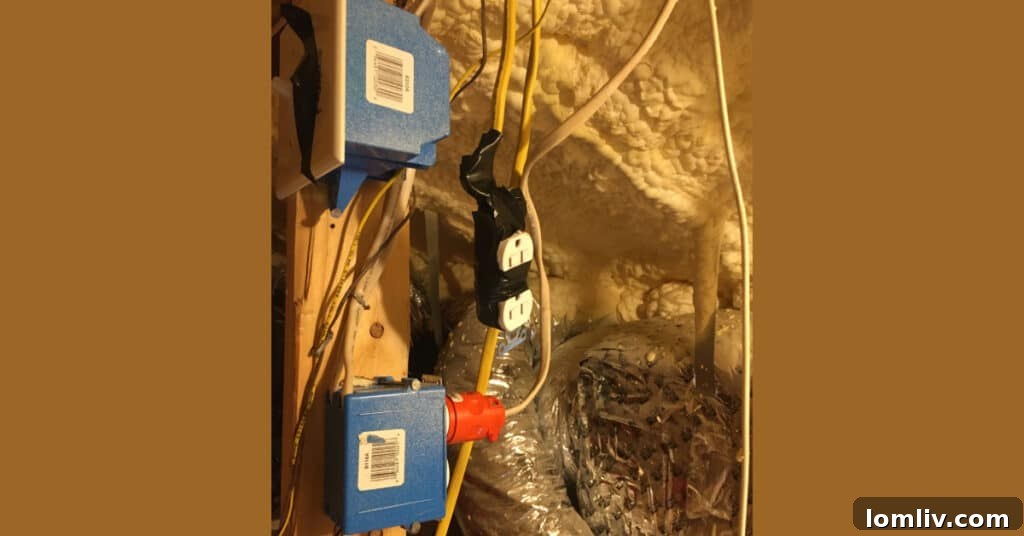
Perhaps one of the most egregious and frequently observed DIY electrical errors is the misuse of extension cords. They are designed for temporary power solutions, not as substitutes for permanent wiring. Yet, we regularly discover scenarios where extension cords are haphazardly routed through walls, ceilings, attics, or under carpets, serving as the sole power source for fixed appliances or entire sections of a room.
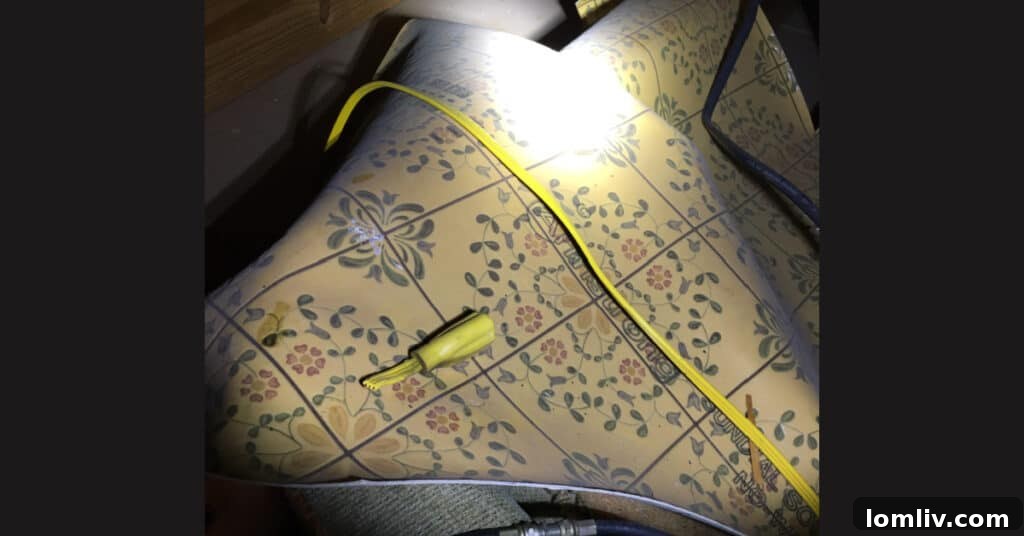
Consider this telling example we’ve encountered: a yellow extension cord running underneath a pile of unused flooring in an attic, snaking through the ceiling, and ultimately reaching the garage to provide a receptacle for the garage door opener. This is a glaring violation of electrical safety standards and a significant fire hazard. Extension cords are not built to withstand the same wear and tear as permanent wiring. Their insulation is thinner, they are not designed for continuous high loads, and they can easily overheat, especially when hidden or covered, leading to fires.
Furthermore, extension cords typically lack proper grounding and surge protection compared to a permanently wired circuit. This practice demonstrates a fundamental misunderstanding of electrical principles and puts the entire home at risk. A qualified electrician would install proper conduit, permanent wiring, and dedicated circuits for such applications, ensuring safety and compliance.
Using the Wrong Materials in the Electrical Panel Box
The electrical panel, often called the breaker box or service panel, is the heart of your home’s electrical system. It distributes power safely to all circuits and contains circuit breakers that trip to prevent overloading and short circuits. Tampering with this crucial component without proper knowledge and tools is incredibly dangerous.
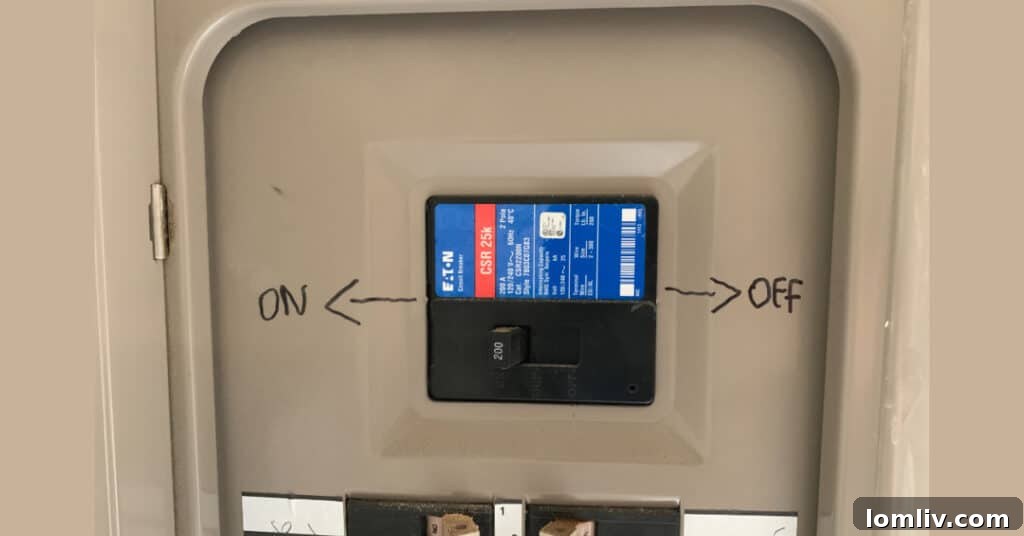
We’ve observed instances where homeowners, attempting to save money, use incorrect materials or methods within the panel. This could include using improper gauge wires for a circuit, substituting fuses with incorrect ratings, or even bypassing safety mechanisms. Another common issue is the use of non-compatible breakers or the installation of “double-tapped” wires (two wires under one screw terminal when the breaker is only designed for one), which can lead to loose connections and overheating.
The image above depicts a situation where the wrong materials are clearly evident. These types of errors compromise the panel’s ability to protect your home, making it vulnerable to surges, overloads, and, critically, fire. A qualified electrician understands the intricate workings of electrical panels, ensuring that all components are correctly sized, properly installed, and compliant with the latest electrical codes. They know which materials are rated for specific applications and how to ensure the panel operates safely and efficiently.
Visual Evidence: An Electrical Panel Fail Caught on Camera
This video provides a stark visual demonstration of what can go wrong when an electrical panel is handled by someone without the necessary expertise. It showcases specific deficiencies that home inspectors look for and the severe risks they represent. Such videos serve as powerful reminders that while online resources can be educational, they cannot replace the hands-on training, certification, and experience required for safe electrical work.
The Unseen Value of Professional Electrical Services
Hiring a licensed electrician isn’t an expense; it’s an investment in the safety, integrity, and long-term value of your home. Professional electricians undergo rigorous training, licensing, and continuous education to stay abreast of evolving electrical codes and best practices. Their expertise encompasses:
- Code Compliance: Ensuring all work meets national and local electrical codes (e.g., National Electrical Code – NEC), which are designed for safety.
- Proper Sizing and Load Calculation: Accurately determining the correct wire gauges, breaker sizes, and panel capacity for your home’s needs.
- Safe Installation Practices: Using insulated tools, proper grounding techniques, and secure connections to minimize risks.
- Troubleshooting Expertise: Diagnosing complex electrical issues safely and efficiently, which an amateur simply cannot do.
- Permits and Inspections: Knowing when permits are required and coordinating with local authorities for necessary inspections to validate the work.
- Warranty and Insurance: Licensed electricians typically provide warranties for their work, and their services are covered by liability insurance, offering peace of mind.
Even if you find an excellent video tutorial or have a well-meaning friend who “does his own electrical,” the potential for catastrophic error when dealing with live electricity is too high to justify the risk. Electricity is invisible, silent, and incredibly dangerous when mishandled. There’s no room for guesswork or improvisation.
Conclusion: Safety First, Always Call a Licensed Professional
In summary, while the desire to save money or gain a sense of accomplishment through DIY projects is understandable, some tasks demand the unequivocal expertise of a licensed professional. Electrical work unequivocally falls into this category. The examples we’ve shared from Green Scene Home Inspections are just a few of the many dangerous DIY scenarios we uncover, each carrying the potential for severe injury, property damage, or worse.
Your home’s electrical system is too critical to entrust to anyone other than a qualified and licensed electrician. When it comes to any electrical task in your house—whether it’s installing a new fixture, upgrading your panel, or troubleshooting a problem—make sure you talk to a licensed professional. Prioritizing safety by investing in expert electrical services protects your property, ensures the well-being of your loved ones, and provides invaluable peace of mind. Don’t let a DIY ambition turn into a costly and dangerous regret.