
Navigating Your Dallas Property Appraisal Notice: Essential Insights into DCAD Valuations

For many property owners in Dallas, May 1st marks an annual moment of anticipation – often accompanied by a tinge of apprehension. This is the day the Dallas Central Appraisal District (DCAD) dispatches its annual valuation change notices, which swiftly make their way into mailboxes across the county. These notices are more than just paperwork; they are a direct reflection of your property’s assessed value, a figure that critically impacts your upcoming property tax bill. If you’ve recently received your notice and found your property’s value, and consequently your projected taxes, have seen an unwelcome increase, you’re certainly not alone. The frustration is palpable, and understanding your options is the first step towards managing this significant financial impact.
Have your property taxes escalated unexpectedly? Are you seeking a platform to share your experiences or gather advice from fellow Dallas residents? We at Candy’sDirt.com are eager to hear your stories and provide a community space for discussion around these vital local issues.
Understanding Your DCAD Valuation Notice
The Dallas Central Appraisal District, or DCAD, is responsible for appraising all taxable property within Dallas County. Its core mission is to determine the market value of properties as fairly and uniformly as possible, providing the foundation upon which local taxing units (cities, school districts, counties) levy their property taxes. Every year, around May 1st, DCAD diligently mails out these valuation notices, a process confirmed by Cheryl Jordan from DCAD, ensuring property owners are informed of their updated assessments.
What Does Your Valuation Notice Mean?
When your DCAD notice arrives, it contains crucial information: your property’s market value, its appraised value, and any applicable exemptions. The market value represents what DCAD believes your property would sell for on the open market as of January 1st of the current year. This figure is the primary driver of your property tax liability. An increase in this valuation directly translates to a higher tax bill, unless mitigated by exemptions or a successful protest.
Accessing Your Property Value Online
While waiting for the physical mail, or simply for quick access, DCAD offers a convenient online portal to check your property’s valuation. By visiting the official DCAD website, you can easily look up your current and past appraisal values, providing immediate insight into your assessment. This digital access empowers property owners to stay informed and react promptly to any changes.
You can check your property values online here.
Dallas Property Value Trends: Residential vs. Commercial
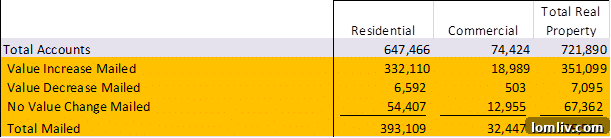
Recent trends in Dallas County property appraisals highlight a significant disparity in value increases between residential and commercial properties. Data provided by Cheryl Jordan at the Dallas Central Appraisal District indicates that a substantial majority of residential properties – over 50% – have experienced an increase in their appraised value. This surge directly translates into higher tax burdens for homeowners. In stark contrast, only approximately 25% of commercial properties saw an increase in their valuations. This imbalance raises important questions about the equity of the tax burden distribution across different property types within Dallas County.
Here’s a snapshot of the notice statistics as supplied by Cheryl Jordan at the Dallas Central Appraisal District:
Understanding Appraisal Frequency
According to Texas law, all taxable properties must be reappraised at least once every three years. However, DCAD, like other appraisal districts, has the discretion to reappraise properties annually. This means that even if your property’s value remained stable for a year or two, you could still face an annual appraisal increase based on market conditions, property improvements, or a change in DCAD’s assessment methodology. Understanding this frequency is key to anticipating potential tax changes and preparing for them.
How DCAD Determines Your Property Value
The process by which DCAD arrives at your property’s value is comprehensive, blending various data points and methodologies. It’s not simply a glance at your home; it involves a sophisticated analysis designed to achieve fairness and accuracy.
The Appraisal Process: Beyond Just Data
DCAD utilizes a mass appraisal system, which means it appraises large groups of properties using standardized procedures. This system relies heavily on market data, including recent sales of comparable properties in your neighborhood, income data for commercial properties, and cost data for new construction. Appraisers also consider a property’s characteristics such as size, age, construction quality, number of rooms, and amenities. This combination of market analysis and property-specific details helps DCAD estimate what a willing buyer would pay for your property.
The Role of Street-Level Inspections and Digital Imaging
Beyond market data, DCAD also employs physical inspections to assess property conditions and identify any observable upgrades or repairs that might affect value. These are often conducted by “Digital Image Makers” — vehicles equipped with advanced camera systems that capture street-level images of properties. These images allow appraisers to visually verify the condition of structures, identify significant exterior improvements, or note any factors that might impact valuation without needing to physically enter your property.
For instance, an observation of a newly paved driveway, a well-maintained fence, or visible upgrades to the exterior could factor into an increased valuation. Conversely, observable deterioration or lack of maintenance might support a lower valuation. This method aims to provide a more holistic view of the property’s value beyond just square footage and basic features. We’ve seen these Digital Image Maker vehicles traversing Dallas neighborhoods, diligently collecting visual data. It’s a reminder for property owners that their home’s exterior presentation, even from the street, contributes to its assessed value.

Future Use of Appraisal Data
It’s important to note that the data and images collected by these appraisal teams aren’t always used for the immediate appraisal cycle. As reported by Jason Wheeler at WFAA-TV, photographs gathered by DCAD vehicles might be slated for use in future appraisal years. This ensures that DCAD has a rolling database of property conditions, allowing them to make more informed and accurate appraisals over time, reflecting changes that occur between full reappraisal cycles.
Challenging Your Property Appraisal: The Protest Process
Receiving a higher appraisal notice doesn’t mean you’re powerless. Property owners in Texas have the legal right to protest their property’s valuation if they believe it is incorrect. This process, while sometimes daunting, can lead to significant tax savings.
Why Protest Your Appraisal?
There are several compelling reasons to consider protesting your DCAD valuation:
- Overvaluation: You believe DCAD’s market value estimate is higher than what your property would actually sell for.
- Unequal Appraisal: Your property is appraised higher than comparable properties in your neighborhood.
- Incorrect Property Data: DCAD has incorrect information about your property (e.g., wrong square footage, number of baths, missing damages).
- Damage or Deterioration: Your property has suffered damage or significant wear and tear that impacts its value.
Steps to File a Protest
- File a Notice of Protest: You must file a written protest with DCAD by May 15th or within 30 days of receiving your notice, whichever is later. DCAD provides a simple form for this purpose.
- Gather Evidence: Collect compelling evidence to support your claim. This might include:
- Comparable sales data of similar homes in your area that sold for less than your appraised value.
- Photos of any damage or condition issues with your property.
- Estimates for repairs needed.
- An independent appraisal report.
- Any documentation showing DCAD has incorrect data about your property.
- Attend an Informal Review: Most protests begin with an informal meeting with a DCAD appraiser. This is an opportunity to present your evidence and negotiate a lower value without a formal hearing. Many protests are resolved at this stage.
- Appraisal Review Board (ARB) Hearing: If you don’t reach an agreement during the informal review, you can present your case to the Appraisal Review Board (ARB). The ARB is an independent panel that hears evidence from both the property owner and DCAD and makes a final decision on your property’s value.
Seeking Professional Help
Navigating the appraisal protest process can be complex, especially for those unfamiliar with real estate valuation or legal procedures. This is where the expertise of a property tax consultant becomes invaluable. Professionals like Rob Wheelock, our “Tax Doctor” mentioned in the original context, specialize in helping property owners protest their valuations. They have in-depth knowledge of appraisal methodologies, access to crucial market data, and experience presenting cases effectively to DCAD and the ARB. Engaging a tax consultant can significantly increase your chances of a successful protest, saving you time and potentially a substantial amount of money.
The Residential Property Owner’s Burden: A Deeper Look
The observation that residential property owners in Dallas bear a disproportionately higher share of the tax burden compared to commercial property owners is a critical point that warrants further discussion. This disparity is not unique to Dallas but is a common concern in many metropolitan areas. Several factors could contribute to this trend:
- Resource Disparity: Commercial property owners often have greater resources, including dedicated legal and appraisal teams, to vigorously protest their valuations. They might employ specialized consultants who have extensive experience and data to challenge DCAD’s assessments. Individual homeowners, on the other hand, may lack the time, expertise, or resources to mount an equally strong protest.
- Complexity of Commercial Appraisals: Commercial properties, especially large complexes, can have more complex appraisal methodologies involving income capitalization and market analysis that offers more avenues for challenge than the typically more straightforward comparative sales approach for residential homes.
- Political Influence and Advocacy: Commercial entities often have stronger lobbying power and advocacy groups that can influence appraisal policies and outcomes.
- Homeowner Exemptions: While homestead exemptions provide some relief for residential properties by capping the annual increase in taxable value, this cap does not apply to the market value itself, which continues to rise. Also, the exemption amount itself might not fully offset significant market value increases.
This imbalance calls for greater awareness and empowerment among residential property owners. Understanding the appraisal system and actively participating in the protest process are crucial steps toward ensuring a fairer distribution of the tax load.
Preparing for Next Year: Proactive Steps for Property Owners
While the immediate focus might be on protesting this year’s valuation, it’s wise to adopt a proactive approach for future appraisal cycles. Staying informed and prepared can make a significant difference in managing your property taxes.
- Keep Detailed Records: Maintain records of any significant home improvements, major repairs, or any damages your property sustains. This documentation can be vital evidence during a protest.
- Monitor Local Market Trends: Keep an eye on real estate sales in your neighborhood. Knowing the sales prices of comparable homes can give you a benchmark for your property’s value.
- Understand Your Exemptions: Ensure you are claiming all eligible exemptions, such as homestead, over-65, or disability exemptions. These can significantly reduce your taxable value.
- Review Your Property Data Annually: Check your property’s details on the DCAD website each year. Catching errors in square footage or other features early can prevent over-appraisals.
Conclusion: Empowering Dallas Property Owners
The annual DCAD valuation notice is more than just a piece of mail; it’s a critical financial document that directly impacts your household budget. Understanding how these valuations are determined, knowing your rights as a property owner, and being prepared to challenge an unfair appraisal are essential. Whether you choose to navigate the protest process yourself or seek professional guidance from experts like tax consultants, taking an active role in managing your property’s assessment is key to mitigating an escalating tax burden.
As Dallas continues to grow and property values fluctuate, informed and engaged property owners are the best advocates for fair and equitable taxation. We encourage you to share your experiences, questions, and successes in navigating the DCAD appraisal process with our community. Your insights can help fellow Dallas residents understand and respond effectively to their own valuation notices.