[Editor’s note: Jon Anderson is a respected columnist for Daltxrealestate.com, offering insightful commentary on urban development and real estate trends. The views expressed in this article are solely his own, providing a candid perspective on critical community issues.]
Navigating PD-15: A Deep Dive into Dallas City Plan Commission’s Scrutiny of Proposed Zoning Changes
The recent meeting of the Dallas City Plan Commission (CPC) may not have delivered the dramatic confrontations often associated with discussions surrounding Planned Development District No. 15 (PD-15), but it certainly illuminated the complexities and critical questions posed by commissioners regarding city staff’s proposed amendments. This crucial session, preceding the CPC’s public hearing on the staff’s updated proposal for PD-15, underscores the ongoing efforts to refine one of Dallas’s most significant urban planning documents.
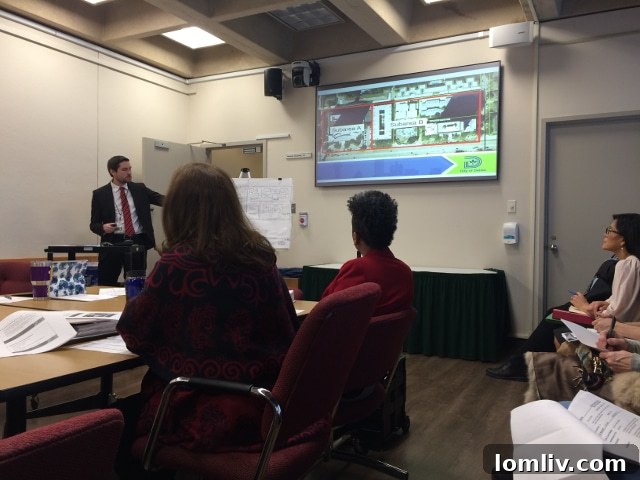
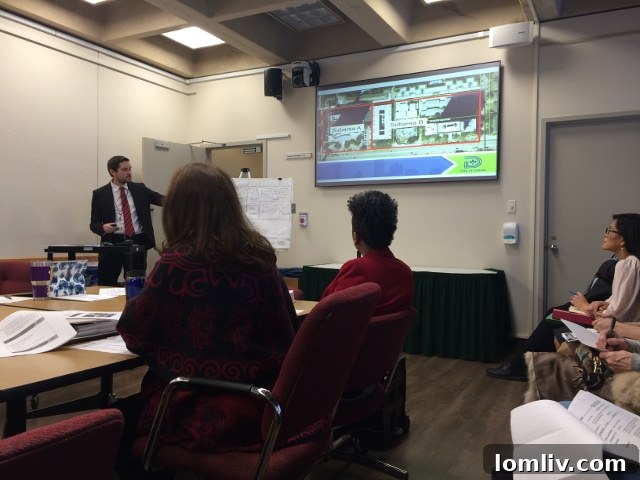
Senior Planner Andrew Ruegg, who has been instrumental in leading the extensive revision process for PD-15, presented the proposed changes to the plan commissioners. His briefing on Thursday morning mirrored the presentation previously delivered to the community, offering a consistent overview of the staff’s vision. However, the true value of this particular meeting lay not just in the staff’s presentation, but in the thoughtful inquiries and astute observations made by the commissioners themselves.
For those attending the briefing, the exchanges between commissioners and staff proved to be the most compelling aspect. A notable moment of recognition came from CPC chair Gloria Tarpley, whose “Hallelujah!” echoed a sentiment many urban planners and community advocates share: the necessity of 3-D visualizations in planning discussions. Tarpley rightly highlighted that the inclusion of 3-D images of the proposed changes would have been immensely beneficial, not just for PD-15 but for other complex development cases as well. It remains a perplexing challenge that the city continues to draft “words on paper” documents to dictate three-dimensional realities without consistently employing comprehensive 3-D models. Such visual aids should be a fundamental prerequisite, an “ante to the game,” ensuring that all stakeholders can fully grasp the real-world implications of zoning and development proposals.
Commissioner Insights: Unpacking the Proposed PD-15 Amendments
The commission’s questioning began with District 11 appointee Janie Schultz, who raised two pertinent concerns. Her first query addressed the boilerplate requirement for a street lamp every 50 feet, questioning its adequacy for the unique characteristics of PD-15. While standard, staff agreed to review the stipulation, acknowledging the potential need for more tailored lighting solutions. Schultz’s second, and perhaps more critical, question focused on the efficacy of the proposed affordable housing incentives. She expressed skepticism about their widespread adoption, particularly along the northern side of the district, anticipating that developers might only leverage these sweeteners on the Northwest Highway side if they sought to maximize building height. This observation aligns with a recurring argument: if the overall buildable envelope doesn’t expand significantly, such incentives might merely lead to the “cannibalization” of market-rate units in favor of affordable ones, rather than generating truly new affordable housing opportunities.
Following Schultz, Commissioner Jung (whose back was to the author, making positive identification difficult but whose contributions were clearly impactful) delved into the complex issue of non-conforming structures. He sought clarity on the fate of various existing elements—such as carports along the PD’s northern alley, two caretakers’ cottages that had been converted into condos, and even the existing high-rise towers themselves (which might violate the proposed residential proximity slope)—should the new changes be adopted. The staff’s response indicated that these elements would largely remain unaffected unless or until a property undergoes redevelopment, a common approach in zoning but one that often leaves questions about long-term urban fabric consistency.
Commissioner Shadid subsequently built upon Schultz’s earlier remarks regarding the practical usability of the proposed affordable housing sweeteners. Despite the pressing nature of the inquiry, Senior Planner Ruegg prudently declined to offer specific comments on the likelihood of their utilization, underscoring the uncertainty surrounding developer uptake of these incentives and their potential impact on achieving affordable housing goals within the district.
District 14 appointee Paul Ridley brought attention to the Preston Place lot, a site of significant historical context following a devastating fire. His primary concern was whether the existing footprint of the former Preston Place development would be grandfathered into the new regulations. Ridley highlighted a potential conflict where the current Tulane Blvd. buildable lot line appeared to encroach upon the proposed setbacks if the intention was to rebuild Preston Place precisely as it once stood. The discussion momentarily veered into confusion as Ridley seemed to conflate Preston Place’s original 60 units with the 66 “surplus lots” within PD-15. City staff, appearing to recognize this misunderstanding, clarified that Preston Place’s 60 units are entirely separate from the 66 surplus units. These surplus units are a shared resource among other PD-15 parcels, created when the district’s density was adjusted to reflect a never-built 125-unit high-rise on the Preston Place site. When only a 60-unit complex materialized, the additional 66 units were never formally removed from the PD’s allowances, thus creating this pool of transferable density. This intricate detail underscores the historical layers and regulatory complexities that make PD-15 such a challenging district to amend.
The final commissioner to pose a question, whose name the author chose to omit due to the nature of the inquiry, raised a rather embarrassing point. This commissioner inquired about the process for replatting the area if a single-family home builder wished to develop within the PD. This question was deemed embarrassing because, as the author points out, the land values in this district make it economically unfeasible to construct single-family homes, especially “hugely expensive” ones, in a neighborhood that, “on a generous day, would be called middle-class.” While acknowledging that “never say never” (citing a historical example from 2006 where townhouses were built in Farmers’ Market on land zoned CA-1 with unlimited height and 100% lot coverage), the question highlighted a fundamental disconnect with the economic realities and established development patterns of PD-15. It underscored the need for commissioners to be fully informed about the practical implications of zoning ordinances within specific economic contexts.
Author’s Recommendations: Enhancing PD-15 for the Community
Given that the public was not afforded an opportunity to speak during the briefing, this commentary now shifts to two crucial suggestions that warrant careful consideration by the City Plan Commission and staff.
Rethinking Northwest Highway Setbacks: Preserving Urban Form and Pedestrian Experience
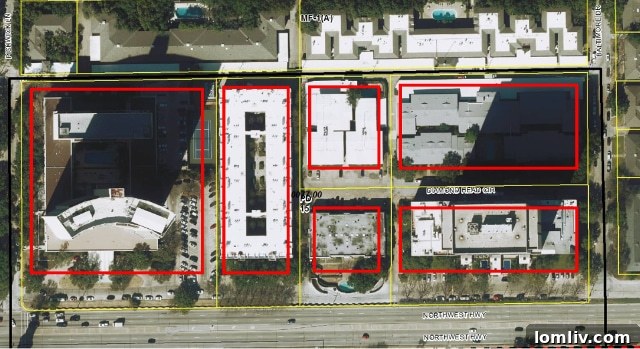
A critical look at the proposed changes to the Northwest Highway setbacks reveals a potential misstep that could detrimentally impact the urban character and pedestrian experience of PD-15. Observing the current alignment from an aerial perspective, it’s evident that the four buildings fronting Northwest Highway maintain a consistent structural relationship. This uniformity is no accident; it is the product of historical planning and legal agreements.
Tracing back to 1945, a city survey explicitly called out “Preston Tower” and stipulated a minimum 100-foot setback. By 1963, another survey extended this 100-foot setback across all four parcels. The commitment was further solidified in 1966 when a contract, unanimously signed by each of the four parcel owners, explicitly mandated the 100-foot setback and a 50-foot right-of-way. Crucially, this agreement stipulated that any changes required unanimous approval from all owners. To this day, each owner’s title documents legally enshrine the 100-foot setback as a fundamental property characteristic.
Presently, only two parcels could realistically benefit from a reduced setback. Preston Place, with its substantial two-acre parcel, does not inherently require a reduced setback to accommodate a well-designed building. Royal Orleans, on the other hand, is a smaller parcel with a commensurately limited buildable envelope. The question then becomes: should the urban alignment be compromised, potentially pulling one building out of harmony with its neighbors, and for what tangible benefit?
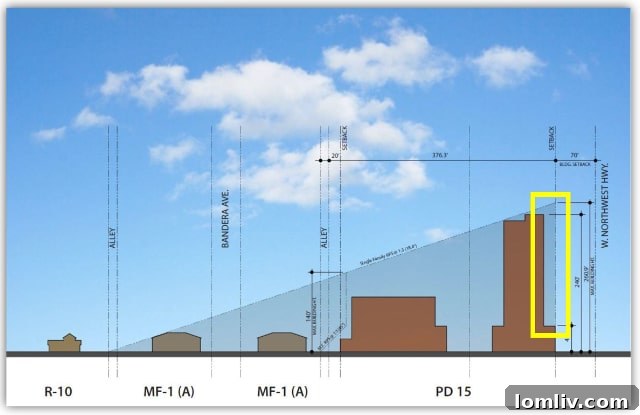
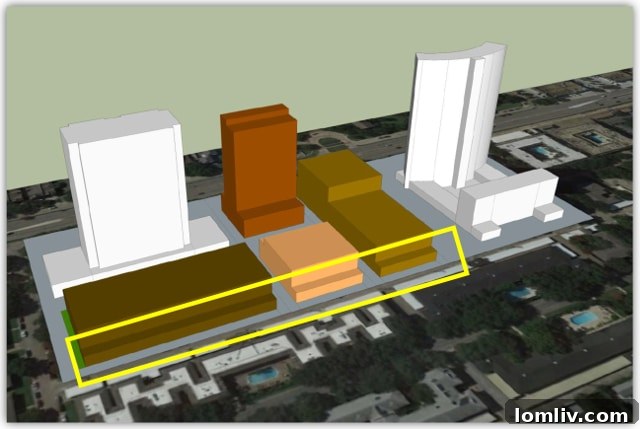
Even if one were to assume the legality of reducing the setback—which appears highly questionable given the historical covenants—the proposed 70-foot setback along Northwest Highway is poised to create a decidedly poor pedestrian experience. As illustrated in the yellow box of the accompanying image, the 70-foot setback is only applicable for the first 45 feet of building height. Beyond this, the Northwest Highway urban form setback of 20 feet comes into play, effectively pushing the building’s upper mass to a 90-foot setback above 45 feet. This design means the only marginal benefit of the 70-foot setback applies to the lowest 45 feet of what could be a 240-foot tall structure—precisely the zone where pedestrian interaction and urban vitality are most crucial.
Further analysis of the proposed numerical specifics reveals inconsistencies. The plans call for a 10-foot “pink” wall/green space border along Northwest Highway, followed by a 50-foot public access frontage road. A 70-foot setback would ostensibly place the building 10 feet back from this frontage road. However, the plan also permits up to 15 feet of encroachment for architectural elements such as porticos. This calculation suggests a discrepancy of 5 feet, indicating a lack of precision in the proposed measurements that could lead to unforeseen design and functional challenges.
The practical outcome of these proposed changes would be a sprawling “landing strip” of sidewalk, occasionally punctuated by sparse landscaping, flanked by buildings that, despite having porticos, would likely lack the engaging and vibrant street-level presence fostered by more integrated urban design. Moreover, the existing towers effectively utilize the 100-foot setback to create dedicated drop-off zones that are safely separated from active roadways. A reduced 70-foot setback, by contrast, would inevitably result in road-blocking drop-offs, exacerbating traffic congestion and compromising safety for both pedestrians and vehicles.
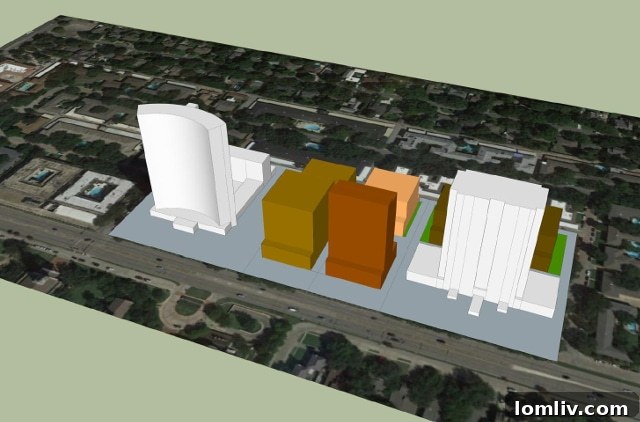
The solution here appears straightforward and compelling. If the urban form setback along Northwest Highway were to be removed, it would allow for a flat building face towards the highway (a minor aesthetic trade-off, perhaps, but one that avoids more significant issues). More importantly, if the building line were pushed back to the historic 100-foot line, it could potentially yield the same, or even greater, buildable square footage for developers without disrupting the very streetscape and pedestrian environment that the plan purports to enhance. Allowing a four-story encroachment into the established 100-foot setback in exchange for an urban form setback that offers no demonstrable benefit—and would likely face legal challenges—represents a deeply flawed trade-off for the community.
Refining the Multi-Family Residential Proximity Slope (RPS): Balancing Height and Livability
Another critical setback requiring meticulous examination is located along the northern boundary of PD-15: the Multi-Family Residential Proximity Slope (RPS). While the institution of a single-family RPS is highly commendable and beneficial for preserving neighborhood character, the proposed multi-family version carries the risk of producing unintended and potentially detrimental consequences. The overarching goal for the “back” northern lots is to maintain a lower building profile compared to those fronting Northwest Highway. This staggered height provides an essential step-down, creating a harmonious transition between the existing tall structures on Northwest Highway and the predominantly two-story developments to the north. Furthermore, lower buildings generally elicit less opposition from residents in the existing high-rise towers, preserving views and light.
The single-family RPS achieves this objective effectively and without undue complications. However, the multi-family RPS, as currently formulated, threatens to “chunk out” significant portions of the lower floors of potential buildings along the northern alleyway. Consider the existing two-story buildings across this alley, which feature bedroom windows directly facing the alley. The ground-floor windows of these residences are situated below the corrugated steel carport roofline, meaning their primary “view” consists of car hoods and a limited expanse of white-painted steel sky. If a new, exceptionally tall building were to be constructed, the views from these specific ground-floor windows would remain largely unchanged. The second-floor windows, often obscured by curtains or shutters, already suggest a view that is not highly valued by residents.
Crucially, the area across the alley is zoned MF-1 and further constrained by deed restrictions, making significant change to these existing properties highly improbable. Therefore, the primary beneficiaries of a restrictive multi-family RPS would be minimal. Conversely, if the multi-family RPS reduces the usable floor area of new developments sufficiently to force buildings to increase in height—due to less efficient architectural geometry required to achieve the desired density—it represents a poor trade-off for the neighborhood. For instance, considering known dimensions, would the proposed 85-foot Diplomat replacement be compelled to rise to a full eight stories to make its geometry economically viable? It is highly unlikely that such an increase in height, solely for the sake of a multi-family RPS that primarily impacts an alley and buildings with already compromised views, would garner significant neighborhood support. The additional story would not only fail to improve the alley-facing views but would also further diminish the amount of sky visible from existing properties, making the area darker and less desirable.
The nuances inherent in setback regulations are profound, and their true cost-benefit analysis for the resulting neighborhood character and livability must be considered with far greater precision and foresight. Balancing the desire for appropriate density with the preservation of existing community quality requires a detailed, context-specific approach to every aspect of urban planning.

Remember: High-rises, HOAs, and renovation trends are central to my focus. Yet, I also deeply appreciate the delicate balance between modern and historical architecture, especially in conversation with the influential YIMBY (Yes In My Backyard) movement. My writing has been consistently recognized by the National Association of Real Estate Editors, earning me three Bronze awards in 2016, 2017, and 2018, alongside two Silver awards in 2016 and 2017, for my comprehensive real estate coverage. Have a compelling story to share, or perhaps an intriguing development proposal to discuss? Please feel free to reach out via email at [email protected]. While you’re welcome to search for me on Facebook and Twitter, my online presence in those spheres is deliberately minimal; however, I appreciate the effort!