

Dallas Accelerates Vital Water and Sewer Infrastructure Upgrades for Unserved Communities
For too long, certain neighborhoods within the City of Dallas have remained disconnected from essential modern utilities, relying instead on antiquated systems like private wells for water and septic tanks for wastewater. This prolonged lack of access to city water and sewer service has not only posed significant public health and environmental challenges but has also hindered the quality of life and economic potential for thousands of residents. However, this long-standing disparity is now set to change dramatically and swiftly, as the City of Dallas embarks on an aggressive and comprehensive initiative to bring these fundamental services to its historically unserved areas.
This monumental undertaking signifies a profound commitment by Dallas to equitable urban development, ensuring that every resident, regardless of their neighborhood’s past, benefits from reliable and safe infrastructure. The program is specifically designed to address entrenched inequalities, promising to transform communities and improve living conditions for its most vulnerable populations. With targeted interventions and accelerated timelines, Dallas is setting a new standard for inclusive growth and infrastructure modernization.
Addressing the Gap: Focus on Dallas City Council Districts 8 and 3
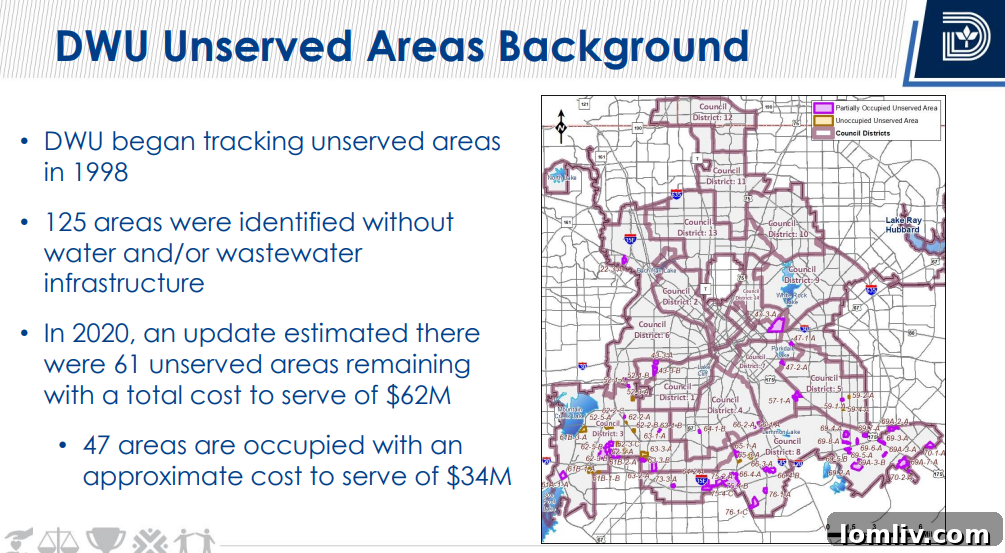
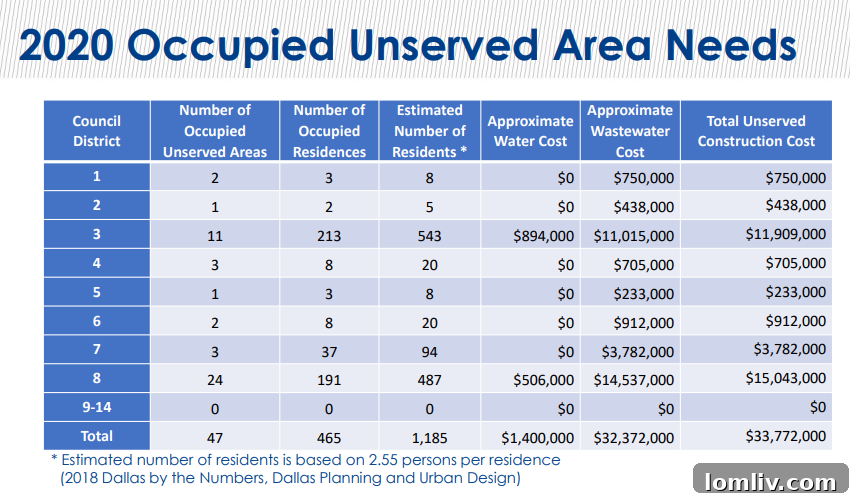
The scale of the challenge and the targeted nature of the solution were clearly outlined during a recent Wednesday briefing. Terry Lowery, Director of Dallas Water Utilities (DWU), highlighted that Dallas City Council Districts 8 and 3 are disproportionately affected, containing the highest concentration of unserved areas. In stark contrast, districts 9 through 14 have only a handful of such regions, underscoring a geographical and potentially historical imbalance in infrastructure development that the city is now actively working to correct.
The foundation of this program was laid in 2020, following a meticulous identification process that pinpointed forty-seven occupied areas critically in need of utility upgrades. This extensive assessment revealed the true scope of the infrastructure deficit and informed the strategic planning for the revitalization effort. The projected cost for this vital urban renewal project is approximately $34 million, a substantial investment that reflects the city’s unwavering resolve to uplift these communities and integrate them fully into the modern municipal framework.
Strategic Funding and a Game-Changing Timeline
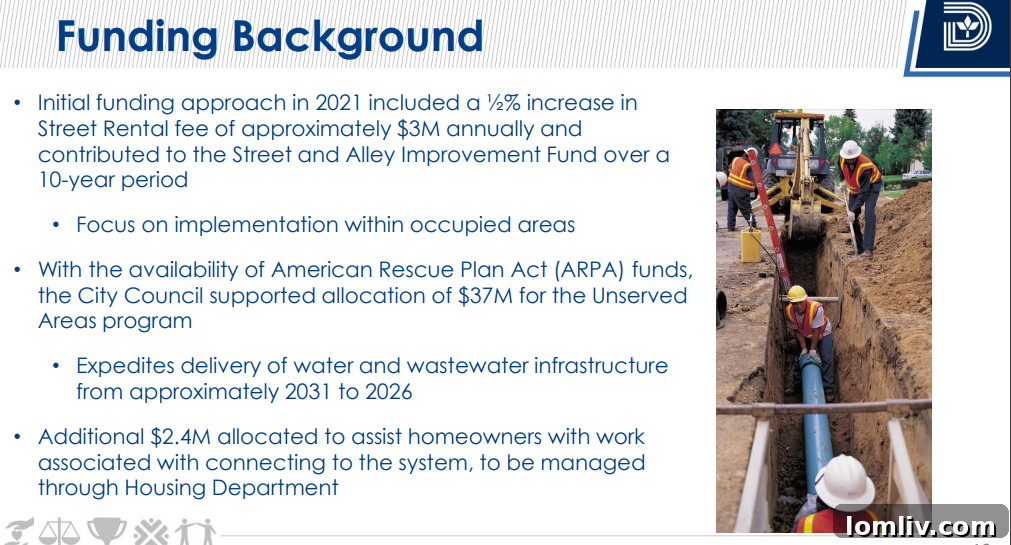
A pivotal aspect of the Unserved Areas Program’s viability and rapid progress is its robust funding model. The initiative is primarily financed through a significant increase in contributions from Dallas Water Utilities to the city’s dedicated Street and Alley Repair Fund. Crucially, these local funds are augmented by substantial allocations from the American Rescue Plan Act (ARPA), a federal stimulus package designed to aid communities in recovering from economic and public health crises. The combination of sustained local investment and critical federal support has provided the necessary impetus for this ambitious project.
The impact of the ARPA funds, in particular, has been transformational for the project’s timeline. What was originally conceived as a challenging 10-year endeavor has now been dramatically accelerated. DWU Assistant Director Sarah Standifer confirmed that with the additional ARPA funds, the entire project is now slated for completion by 2026. This accelerated schedule is a testament to the city’s proactive approach and its determination to deliver essential services to residents who have long awaited them, promising quicker relief from the burdens of outdated infrastructure and paving the way for improved public health and quality of life.
From Historical Oversight to Proactive Development
City Manager T.C. Broadnax provided a detailed account of the program’s origins and objectives during the briefing, referencing an extensive 72-page report. He underscored the profound historical context, noting that these unserved areas have been on the city’s radar since the late 1990s. Recognizing that merely awaiting broader redevelopment initiatives would prolong the suffering of residents, the city leadership made a crucial decision to launch a dedicated program. This initiative specifically focuses on extending services directly to areas where customers are already living and working, prioritizing immediate community needs over long-term, diffuse development strategies.
This proactive shift represents a commitment to community-centric urban planning. Beyond the physical installation of pipes and mains, the city has also wisely authorized additional funding to assist individual homeowners. These funds are vital for helping residents manage the costs associated with retrofitting their properties and connecting to the city’s newest infrastructure. This critical support ensures that the financial burden of transitioning from private systems to municipal utilities does not become a barrier for low-income or historically marginalized households, thereby promoting truly equitable access.
The successful implementation of such a complex, city-wide program demands exceptional coordination and collaboration. City Manager Broadnax commended the robust partnership forged between Dallas Water Utilities (DWU), the Public Works Department, and the Housing & Neighborhood Revitalization Department. This integrated approach leverages the distinct expertise of each department—from engineering and construction to community outreach and homeowner support—to ensure the most cost-effective, efficient, and expedited delivery of services, maximizing impact and minimizing disruption for residents.
The Evolution of Dallas’s Unserved Areas Initiative
DWU Director Terry Lowery provided a compelling historical overview of the program, detailing its evolution and the methodical approach to utility implementation. She revealed that the initial efforts to tackle the issue of unserved areas within Dallas commenced as early as 1998. At that time, an alarming 125 distinct areas across the city were identified as lacking access to either municipal water, wastewater, or both, highlighting a pervasive and long-standing infrastructure deficit.
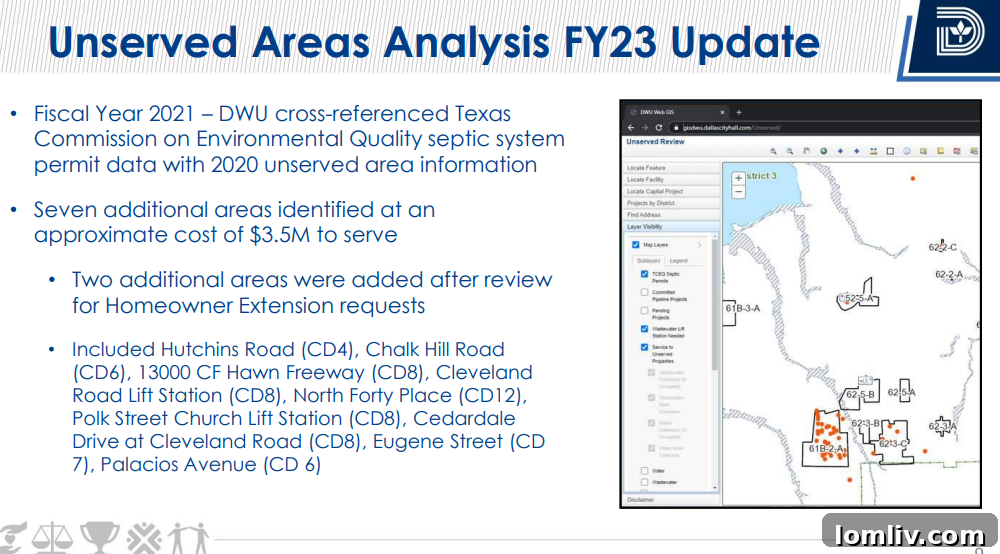
A significant milestone occurred in 2020 with a comprehensive update and “deeper dive” into the data. This reassessment was crucial for evaluating the progress made over more than two decades, accurately identifying the remaining unserved pockets, and understanding the nuances of their specific needs. This updated analysis served as the bedrock for the current accelerated program, allowing the city to refine its strategies, allocate resources more effectively, and target interventions with precision, ensuring that the most critical needs are met first.
Tackling Septic Systems and Enhancing Environmental Health
One of the most pressing issues within these unserved areas is the pervasive reliance on individual septic systems for wastewater management. While functional in sparsely populated rural settings, these systems can pose substantial environmental and public health risks when concentrated in urban or semi-urban environments. The state of Texas meticulously regulates septic systems through the Texas Commission on Environmental Quality (TCEQ), with Dallas County serving as its local representative for the permitting and inspection of these systems within its jurisdiction.
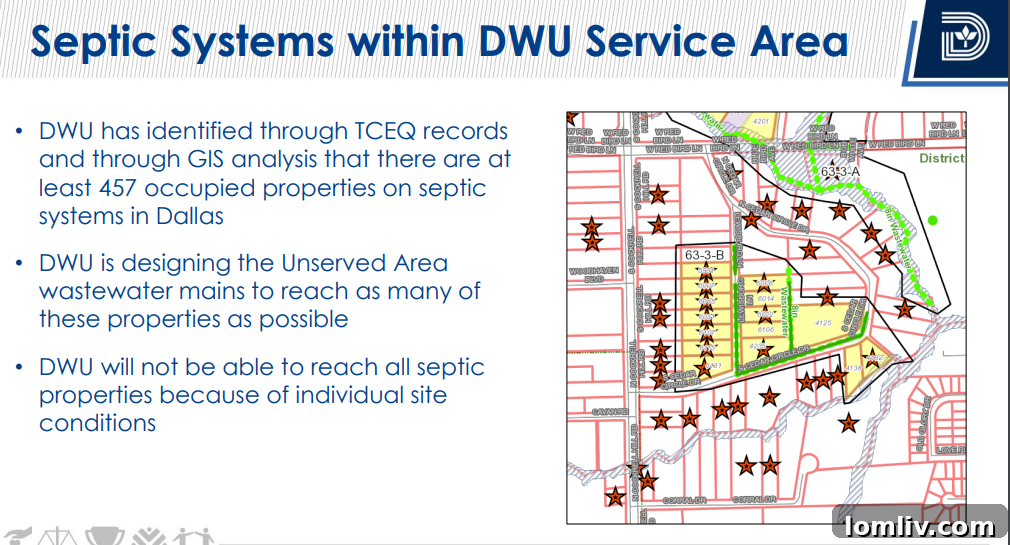
Leveraging a combination of TCEQ data and its own sophisticated Geographic Information System (GIS) data, DWU has accurately identified at least 457 active septic systems currently operating within the Dallas city limits. The primary goal of the Unserved Areas Program is ambitious yet critical: to eliminate as many of these private septic systems as is technologically and practically feasible. Connecting these properties to the city’s centralized wastewater infrastructure offers multifaceted benefits, significantly enhancing public health by reducing potential groundwater contamination, safeguarding local ecosystems, and ensuring higher standards of water quality across the city.
However, Director Lowery candidly acknowledged that complete elimination may not be possible in every instance. Due to intricate topographical challenges in specific locations, some septic systems might remain in operation. These cases often involve engineering complexities or prohibitive costs that make connection to the municipal grid impractical, underscoring the nuanced and pragmatic approach required for comprehensive urban utility planning.
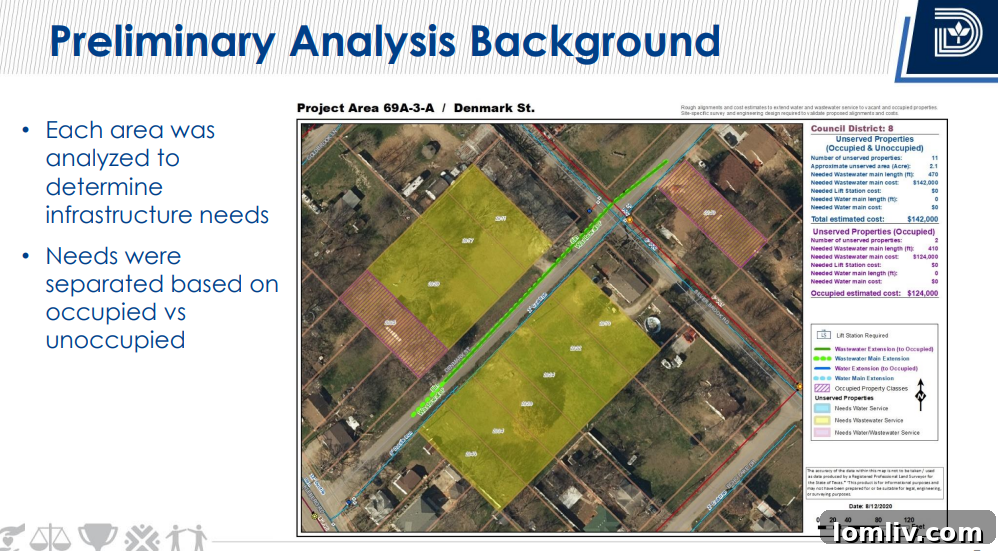
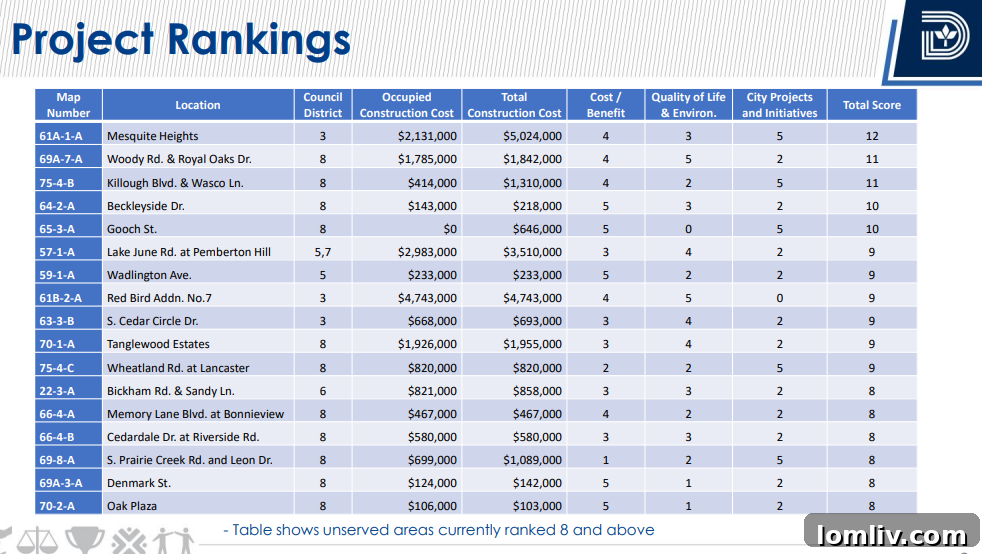
The strategic framework for addressing the 47 identified unserved areas involved a rigorous prioritization and ranking methodology. This system meticulously weighed several crucial factors: a detailed cost-benefit analysis to ensure optimal resource allocation, the measurable impact on residents’ quality of life, and the synergy with other existing city initiatives and development projects. For example, areas already designated as part of a broader revitalization zone or falling under the purview of the city’s Comprehensive Housing Policy received additional weighting, ensuring that the utility upgrades seamlessly align with and amplify wider urban development goals, ultimately maximizing their positive impact on community well-being.
Unserved Areas: A Crucial Imperative for Racial Equity
Beyond the technical aspects of infrastructure, the discussion surrounding the Unserved Areas Program deeply resonates with the City of Dallas’s broader commitment to racial equity. District 3 Councilman Casey Thomas articulated this powerful connection, emphasizing that the program presents a tangible opportunity to “not just talk about racial equity but to show racial equity.” He highlighted that many of these areas have been intentionally underserved for decades, a sobering legacy of historical planning decisions that disproportionately affected marginalized and minority communities. While acknowledging that no current city official played a direct role in creating these historical disparities, Councilman Thomas affirmed the present administration’s firm resolve to actively rectify them.
This initiative represents a pivotal step in confronting and correcting historical inequities, ensuring that all Dallas residents, irrespective of their neighborhood’s past socio-economic standing, receive equitable access to essential municipal services. The extended wait for fundamental infrastructure upgrades in these communities, particularly within Districts 8 and 3, serves as a poignant reminder of how systemic disparities can manifest in the most basic aspects of daily living.
District 8 Councilman Tennell Atkins reinforced this emphasis on equity, advocating strongly for its prioritization throughout the entire upgrade process. He posed pertinent questions to city staff, seeking detailed information on how residents can efficiently connect to the new city infrastructure and, equally important, how they can access and qualify for existing neighborhood revitalization programs. Atkins’s request specifically targeted ensuring that all council members are fully apprised of the exact locations of homes still relying on septic tanks within their respective districts. He underscored the critical need for council staff to possess this information, enabling them to proactively engage with affected residents and inform them about the available financial assistance, thus ensuring that the cost of connection does not inadvertently create a new barrier to essential services.
Mayor Pro Tem Carolyn King Arnold expressed her profound shock at the surprisingly large number of homes in a major metropolitan hub like Dallas that still depend on septic tanks. She candidly remarked, “I know there are many who find it hard to believe [that some residents are without city water and wastewater] in Big D. I was one of them. I was actually shocked to find out we still have that disparity.” Her statement powerfully underscores a broader lack of public awareness regarding these deep-seated infrastructure inequalities within a modern, thriving city, further emphasizing the profound urgency and critical significance of the city’s current efforts to rectify these long-standing injustices.
The Path Forward: Implementation and Enduring Impact
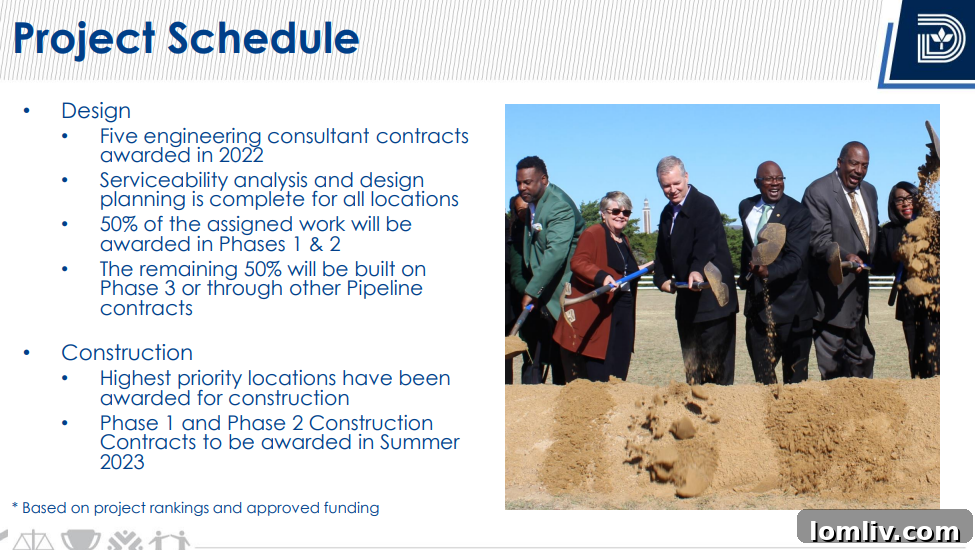
The Dallas Water and Wastewater Services Unserved Areas Program is progressing with clear, decisive steps towards its ambitious objectives. The immediate critical stages include the meticulous completion of detailed engineering designs for all identified unserved areas, ensuring that every technical specification and logistical detail is thoroughly planned and accounted for. Following this crucial design phase, the city will move forward with awarding construction contracts for the project work plans, initiating the physical groundwork necessary to lay new pipes, establish connections, and fully integrate these communities into the modern municipal utility network.
Crucially, a significant and ongoing focus remains on the finalization of a comprehensive homeowner assistance program. This program is fundamental to the equitable success of the entire initiative, designed specifically to alleviate the financial burden on residents who might otherwise struggle to afford the necessary property retrofits and connection fees. By providing this vital financial support, Dallas ensures that the benefits of modern, reliable utilities are truly accessible to every resident, fostering inclusive growth and actively working to prevent the creation of new forms of disparity based on economic means.
Upon its successful completion, this groundbreaking program will deliver far more than just essential water and sewer services. It will catalyze broader community revitalization, significantly improve public health outcomes, provide robust environmental protection by mitigating contamination risks, and enhance property values in neighborhoods that have historically been overlooked. The City of Dallas is demonstrating an unwavering commitment to building a more equitable, resilient, and prosperous future for all its citizens. This initiative stands as a powerful testament to Dallas’s resolve to address historical inequities and invest strategically in a comprehensive, sustainable urban future.