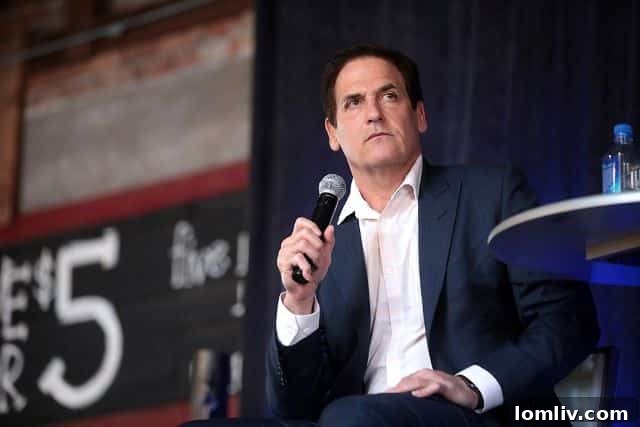
Mark Cuban’s Curious Acquisition: What’s Next for the Town of Mustang, Texas?
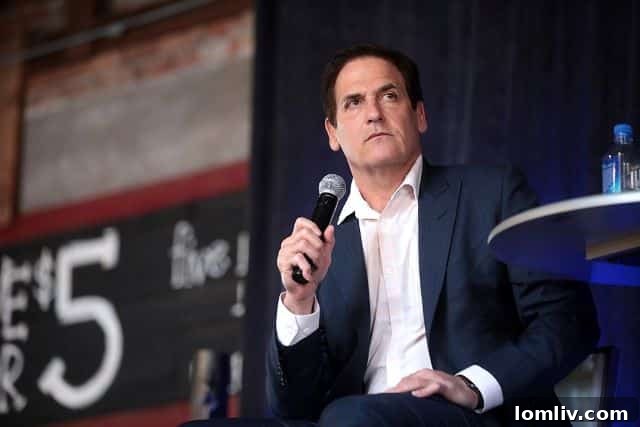
For over two decades, I’ve had the unique opportunity to correspond with Mark Cuban, an individual whose name is synonymous with innovation, entrepreneurship, and a refreshingly candid approach to business and life. Sharing a similar generational background, I’ve often found myself posing questions to him on an eclectic range of topics – from the cultural phenomenon of Seinfeld and the cinematic absurdity of Sharknado, to the unpredictable sports career of Dennis Rodman, and the ever-evolving landscape of digital technology. His responses, consistently thoughtful and insightful, always underscore his broad interests and sharp intellect.
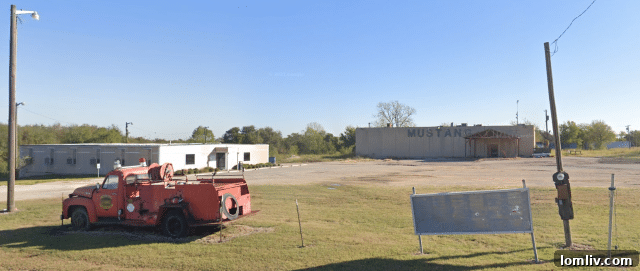
It’s this very characteristic willingness to engage with the unexpected that makes his latest venture so intriguing. Last month, the perennially newsworthy Cuban made headlines again, this time for an acquisition that truly pushed the boundaries of conventional investment: he bought an entire town in Texas. The town in question is Mustang, a small, unincorporated settlement nestled in Navarro County, strategically located at the intersection of Interstate 45 and FM 739, not far from Corsicana. This 77-acre property was officially acquired by a company under Cuban’s control, a detail confirmed by county records obtained byThe Dallas Morning News.
When pressed for his plans concerning this unusual purchase, Cuban offered a characteristically pragmatic, if somewhat enigmatic, response to the DMN‘s Steve Brown: “I don’t know what if anything I will do with it.” This statement, far from dismissing the acquisition as trivial, only amplifies the curiosity surrounding his motives and future intentions for Mustang.
The Curious History of Mustang, Texas: A Town Frozen in Time
Mustang, Texas, represents a fascinating relic of a bygone era. According to the most recent Census records, its population stands at a modest 23 individuals, a stark contrast to its peak of 47 residents. Incorporated in 1973, the town has a history as colorful and tumultuous as any frontier settlement. Its past is reportedly replete with “Wild West-like” tales of mayhem and political intrigue, elements that are concisely captured in the town’s Wikipedia history entry. Despite being offered for sale on multiple occasions over the years, the property remained unsold, its potential overlooked or perhaps deemed too challenging for conventional investors, until now.
This history is not just a collection of anecdotes; it paints a picture of a community that, for various reasons, struggled to find its footing and maintain growth. The challenges faced by small towns like Mustang often include economic shifts, dwindling populations, lack of infrastructure, and the difficulty of attracting new businesses or residents. Its location on a major interstate, I-45, while offering visibility, hasn’t been enough to spark significant development or prevent its decline into a near-ghost town. The allure of Mustang for Cuban, therefore, cannot be solely based on its current economic viability or thriving community. It suggests a vision that transcends traditional real estate metrics, hinting at an interest in potential, transformation, or perhaps something even more personal.
“Schitt’s Creek” Real-Life Edition? Speculating on Cuban’s Vision
One cannot help but draw parallels between Cuban’s acquisition and popular culture. I believe there’s a strong possibility that Cuban, like many, might be a fan of Schitt’s Creek, the acclaimed Canadian sitcom that captivated audiences globally during its 80-episode run from 2015 to 2020. The show’s central premise involves a once-wealthy family, defrauded by their business manager, being forced to relocate to the titular small town—a property they had once purchased as a joke. The series beautifully explores themes of reinvention, community, and finding unexpected value in overlooked places.
Cuban’s purchase of Mustang almost feels like life imitating art, albeit with a crucial difference. While the Rose family in Schitt’s Creek was compelled to move to their joke town out of necessity, it’s highly improbable that Cuban, with his multi-billion-dollar empire built through ventures like the Dallas Mavericks basketball franchise and shrewd investments on NBC’s Shark Tank, will find himself needing to move into a Mustang motel (should one even exist) to start anew. His move is one of choice, not desperation, which makes the underlying motivations all the more fascinating.
So, if not for personal relocation, what could Cuban envision for Mustang? The possibilities, as Mike Turner, president of Dallas real estate firm J. Elmer Turner, aptly put it, are “endless.” Given Cuban’s track record, any future plan for Mustang is likely to be innovative, perhaps even disruptive. We could see the town transformed into a unique tech hub, an experimental community for startups, a private retreat, or even a novel marketing venture for one of his many businesses. Its proximity to a major interstate could make it an ideal location for a large-scale data center, a logistical hub, or a specialized manufacturing facility, leveraging the open space and relative isolation. Alternatively, it could become a philanthropic project, an incubator for social enterprises, or an unusual educational facility. Cuban has often shown an interest in projects that blend business with community impact, making a revitalization effort with a social component a distinct possibility.
A Personal Connection: The Mavericks Link and a Tribute to Marty Price
Beyond the potential for grand ventures or whimsical experiments, there’s a deeply personal layer to Cuban’s acquisition of Mustang. The town previously belonged to attorney Marty Price, a close friend of Cuban’s and a devoted Dallas Mavericks fan who frequently enjoyed games from floor seats. Price sadly passed away in August, leaving behind not just a legacy but also, apparently, the ownership of Mustang, Texas. This personal connection suggests that Cuban’s purchase might be more than just an investment; it could be a gesture of tribute, a way to honor the memory of a friend, or perhaps to ensure the property is handled with care and consideration, rather than simply being sold off to the highest bidder without a clear vision.
The sentiment behind the purchase aligns with Cuban’s known loyalty and commitment to his friends and to the Dallas community. This aspect makes the acquisition even more compelling, adding a layer of emotional depth to what might otherwise appear to be purely a strategic business move. It underscores the multifaceted nature of Cuban’s decision-making process, often blending shrewd business acumen with personal values and relationships. The idea that he might step in to manage an asset belonging to a departed friend, perhaps even with the intention of creating something meaningful in his honor, is entirely consistent with the public persona he has cultivated.
The Mark Cuban Effect: Endless Possibilities for Mustang
As Mike Turner of J. Elmer Turner emphasized, “Mark Cuban stepped up, and it was natural for him to buy it. With his resources and imagination, I’m sure there are endless possibilities.” This sentiment perfectly encapsulates the “Mark Cuban effect.” He brings not just immense financial capital, but also an unparalleled capacity for creative problem-solving, a willingness to take calculated risks, and a talent for generating buzz and attention around his projects. His involvement alone transforms Mustang from an obscure, forgotten dot on the map into a place of potential and intrigue.
Cuban’s history is filled with examples of him identifying overlooked opportunities and transforming them into successful ventures. From his early days with Broadcast.com, revolutionizing online radio, to his investments on Shark Tank, where he often champions unconventional ideas, his Midas touch is undeniable. He possesses a unique ability to foresee trends, adapt to new technologies, and build strong teams to execute ambitious visions. These qualities are precisely what a struggling town like Mustang needs for a chance at revitalization. It’s not just about money; it’s about leadership, innovation, and the strategic foresight to turn a seemingly desolate patch of land into something extraordinary.
What Lies Ahead for Mustang, Texas?
As of now, the future of Mustang, Texas, remains an open book, albeit one that Mark Cuban is poised to write. Whether he decides to transform it into a cutting-edge tech campus, a unique tourism destination, a community project, or something entirely unforeseen, one thing is certain: his involvement guarantees that Mustang will no longer be overlooked. This tiny Texas town, once a quiet footnote in county records, is now under the ownership of one of America’s most dynamic and unpredictable entrepreneurs. Whatever his eventual plan, it is bound to be innovative, attention-grabbing, and will undoubtedly contribute to the ongoing narrative of Mark Cuban’s remarkable career. The world watches with anticipation to see how he will breathe new life into Mustang, turning a forgotten piece of Texas into a testament to imagination and possibility.