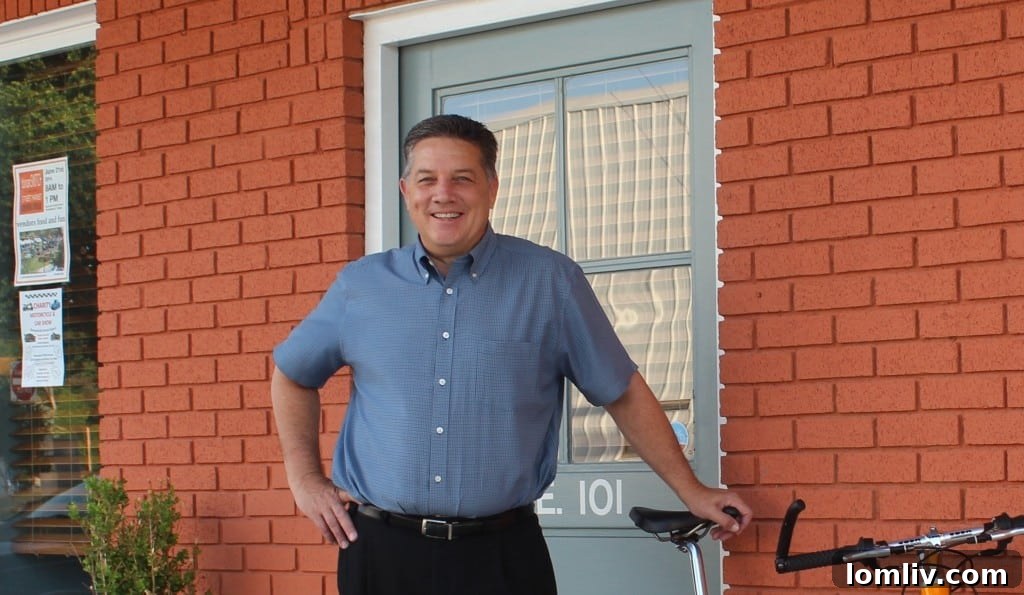
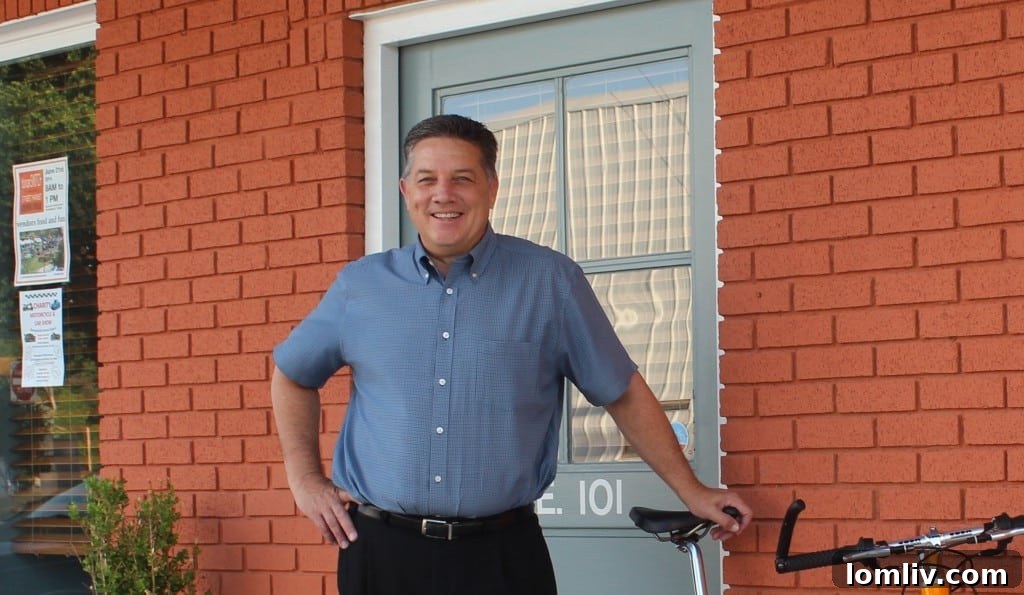
Monte Anderson Honored with Inaugural Urban Pioneer Award for Redefining Community Development
In a significant moment for urban planning and community revitalization in North Texas, the Greater Dallas Planning Council recently bestowed its inaugural Urban Pioneer Award upon seasoned developer Monte Anderson. Presented at the prestigious Urban Design Awards, this recognition celebrates Anderson’s innovative and deeply community-centric approach to real estate development, particularly his pioneering concept of “gentlefication” in the overlooked neighborhoods of Southern Dallas and Ellis counties.
Anderson, who serves as the president of Options Real Estate, a multi-service company, has long distinguished himself by focusing on creating sustainable and inclusive neighborhoods. His work is a deliberate counter-narrative to traditional gentrification, aiming instead for a process he aptly terms “gentlefication.” This philosophy emphasizes nurturing existing communities and fostering organic growth rather than displacement.
Understanding “Gentlefication”: A Sustainable Alternative to Traditional Urban Change
To fully grasp Monte Anderson’s impact, it’s crucial to understand the distinction between “gentlefication” and its often-maligned counterpart, “gentrification.” While both terms suggest changes in urban areas, their methods and outcomes diverge dramatically. The working definition of “gentlefication” eloquently articulates this difference:
Moving into a neighborhood in an effort to reduce crime, create harmony, and build community. As opposed to “gentrification,” which changes neighborhoods by forcing out low-income residents with high-income folks seeking the next hip thing. Gentlefication helps long-term residents take back their neighborhoods, stabilize property values, and build safe spaces for their children and grandchildren.
This definition highlights the core tenets of Anderson’s vision: a collaborative, empathetic approach that prioritizes the well-being and longevity of existing residents. Rather than viewing underserved areas merely as opportunities for high-profit, rapid turnover, gentlefication seeks to empower those who already call these places home, inviting positive change that strengthens the social fabric and economic stability for everyone.
The Power of “Microsurgery”: Monte Anderson’s Incremental Development Strategy
Anderson’s receipt of the Urban Pioneer Award underscores a growing recognition that large-scale, “silver bullet” solutions often fall short in complex urban environments. “The award means a lot because it means people are starting to recognize that incremental development, or ‘microsurgery’, not big silver bullet deals, works in our southern Dallas neighborhoods,” Anderson explained. His strategy is rooted in a belief that meaningful, lasting change comes from meticulous, localized efforts, much like a surgeon performs precise, small-scale interventions rather than radical overhauls.
His approach is to cultivate change from within, by inviting other small developers and entrepreneurs to become active participants very early in the revitalization process. This includes local artists, restaurateurs, and small business owners – individuals who contribute significantly to a neighborhood’s unique character and vibrancy. Anderson’s philosophy ensures these creative forces and local innovators are not merely temporary catalysts for desirability, only to be priced out later. Instead, they are given a genuine stake in the community’s future. “My approach is to come in and get other small developers and entrepreneurs to come in very early and be a part of the change. These are the people who make it cool, like artists and restaurateurs, and they [usually] end up not owning anything and getting pushed out in the end.” Anderson’s model directly combats this common pitfall, transforming transient participants into enduring stakeholders.
Beyond Traditional Gentrification: Fostering Genuine Stakeholder Ownership
Anderson’s methods stand in stark contrast to the prevalent model of many developers who acquire large tracts of land, implement sweeping changes, and then lease properties at continuously escalating prices. This typical strategy often leads to the displacement of long-standing residents and local businesses, eroding the very culture and community that initially attracted investment. Anderson points to well-known Dallas areas like Deep Ellum, South Side on Lamar, and the Bishop Arts District as examples where, despite their vibrant successes, many original small businesses and residents ultimately faced immense pressure to relocate due to rising costs.
A shining example of Anderson’s groundbreaking work can be seen in West Dallas, particularly along Fort Worth Avenue. His transformative efforts began with the acquisition, renovation, and expansion of the historic Belmont Hotel in 2005. This pivotal project not only breathed new life into an iconic landmark but also laid the groundwork for subsequent community-driven development in the vicinity. Crucially, Anderson didn’t just develop his own properties; he actively facilitated opportunities for others to invest and thrive.
His deep commitment to local ownership manifested through extraordinary means, such as helping individuals purchase nearby land when prices were affordable, often extending personal loans or leveraging his own credit rating. This unconventional approach was not driven by altruism alone, but by a strategic understanding of community dynamics. “I wanted somebody else next to me, and when they pay me back, they own their buildings themselves,” he explained. “It’s not that I’m a good guy, it’s that I’m building a healthy community where everybody is a stakeholder. When a lot of us own, that’s where the culture shifts, that’s the ‘secret sauce.’” This “secret sauce” of collective ownership fosters a shared sense of responsibility, pride, and investment, leading to a more resilient and authentic neighborhood culture.
The proof of this concept is visible near Fort Worth Avenue. While larger developers certainly have a presence, right alongside the Belmont Hotel, one finds establishments like Metro Paws Animal Hospital, and nearby, Manny Rodriguez Photography. These are not merely tenants; they are small businesses that own their buildings, embodying Anderson’s vision of a truly local, stakeholder-driven economy. This model ensures that local businesses and community members are not merely beneficiaries of development but active participants in its long-term success, deeply invested in the neighborhood’s future.
The “Old Fashioned” Way: Rebuilding Communities with Patience and Purpose
Anderson often describes his approach as “old fashioned,” harkening back to a time when local businesses were intrinsically woven into the fabric of their communities. “This is not new stuff, it’s actually old fashioned: The butcher, the baker, and the candlestick maker used to build their buildings in downtown and live upstairs and work right there,” he remarked. This historical perspective highlights a model of urban living where commerce and residential life were seamlessly integrated, fostering self-sufficient and vibrant local economies.
He understands that rebuilding distressed areas like Southern Dallas is not a quest for a “quick fix.” Instead, it demands patience, persistence, and a belief in the cumulative power of small actions. “Rebuilding southern Dallas is never going to be a quick fix, but by rebuilding one house, one block at a time, over a period of years, you end up with 25 or 30 [buildings in one location].” This incremental, block-by-block strategy allows for organic growth, ensuring that development is responsive to community needs and can adapt over time, building a robust foundation rather than imposing a fragile, top-down structure. It is a testament to his long-term vision that he champions methods that yield results over decades, not just fiscal quarters.
A Legacy in Motion: Current Endeavors Across North Texas
Monte Anderson’s commitment to urban revitalization is an ongoing journey. These days, his fingerprints can be found on a diverse array of projects across the region. He is actively involved in the historic Texas Theatre in Oak Cliff, a cultural landmark he is dedicated to preserving and enhancing. His expertise is also transforming downtown Duncanville, where he is spearheading efforts to breathe new life into its core. Further afield, he is taking on significant urban development challenges in downtown Midlothian, and meticulously working on projects along Beckley Avenue, south of the Dallas Zoo, extending his unique brand of gentlefication into new territories.
A History of Esteemed Recognition: Awards and Influence
The Urban Pioneer Award, while inaugural and highly significant, is by no means the first major recognition for Monte Anderson’s distinguished career. His dedication and innovative approaches have consistently earned him accolades from various organizations committed to urban excellence and community welfare:
- Celebrating Leadership in Development Excellence (CLIDE) Award, North Central Texas Council of Governments, 2013. This award recognized his impactful work on the Duncanville Main Street Revitalization project, highlighting his ability to breathe new life into traditional town centers.
- Ruth Chenoweth Conservation Achievement Award, Old Oak Cliff Conservation League, 2012. This honor underscores his commitment to preserving the historical and architectural integrity of communities while fostering modern growth.
- Mayor’s Award of Excellence, Duncanville, 2012. A testament to his direct and positive influence on local governance and community prosperity.
- Celebrating Leadership in Development Excellence (CLIDE) Award, North Central Texas Council of Governments, 2011. This earlier CLIDE award recognized his forward-thinking work on the Midtowne Midlothian Development, showcasing his long-standing vision for sustainable development.
- American Planning Award, American Planning Association, Texas Chapter, 2007. This prestigious award from a national planning body affirms the significance and foresight of his strategies.
- Special Recognition Award, Oak Cliff Chamber of Commerce, 2003. This award was for his instrumental role in “Operation Clean Sweep,” demonstrating his proactive engagement in improving public spaces.
- Entrepreneur of the Year, Duncanville Chamber of Commerce, 2003. Recognizing his business acumen combined with a strong sense of civic responsibility.
- Business Person of the Year, Oak Cliff Chamber of Commerce, 2002. Further evidence of his positive economic and social impact within the business community.
- Lifetime Achievement Award, DeSoto Chamber of Commerce, 2000. This early recognition speaks volumes about the enduring nature and profound impact of his contributions over several decades.
Anderson began his real estate career in 1984, and from the outset, his focus has been unwavering: to enhance the living and working environments in areas often overlooked by mainstream development. His methodology consistently involves repurposing old buildings and strategically redeveloping underused business districts in places like West and South Dallas and DeSoto. This approach not only conserves resources but also respects the existing character and history of a place, integrating new life into old bones.
The Collective Power of Community: “It Takes a Village”
Despite the individual accolades, Monte Anderson remains remarkably humble and grounded, consistently emphasizing the collaborative nature of true community transformation. “There are many pioneers out there with me—I may have won the award, but what’s really important are the community activists,” he stated. This profound insight encapsulates his philosophy: that lasting change is never the work of a single developer, no matter how visionary. “It takes a village to rebuild a community, not just a developer.” This closing sentiment underscores his belief in the power of collective action, local engagement, and the indispensable role of every community member in creating vibrant, equitable, and sustainable urban spaces for future generations.