

Unlocking Opportunity in Dallas: Bridging the City’s Enduring Divide
Dallas, a city known for its vibrant growth and economic dynamism, grapples with a persistent challenge: the uneven distribution of opportunity. Thanks to groundbreaking new tools, we now possess a clearer, more granular understanding of where these disparities lie and, crucially, how deeply they are rooted in the city’s history and geography. This in-depth analysis confirms what many social equity advocates have long suspected: opportunity gaps are not random occurrences but are often the direct result of decades of policy decisions that have shaped the urban landscape.
The recently unveiled Opportunity Atlas stands as a testament to the power of data in illuminating complex social issues. This remarkable interactive resource is the brainchild of renowned economist Raj Chetty, his esteemed colleagues at Harvard University, and the dedicated team from the U.S. Census Bureau, including Sonya Porter and Maggie Jones. By meticulously tracking individuals’ incomes across generations, utilizing extensive tax and U.S. Census data, the Atlas offers an unprecedented look into the dynamics of social mobility.
What the Opportunity Atlas unequivocally reveals is a powerful correlation between economic opportunity and income levels, demonstrating a stark reality: low-income, low-opportunity neighborhoods rarely emerge overnight. Instead, these areas have typically been characterized by economic stagnation for many years, often extending back through multiple generations. The most disheartening finding is the cyclical nature of this disadvantage: children raised in these economically struggling communities frequently find themselves reaching adulthood, establishing families, and earning wages strikingly similar to those of their parents, perpetuating a cycle of intergenerational poverty.
Ron Jarmin, Deputy Director and acting Director of the Census Bureau, emphasized the tool’s profound significance, stating, “We’re excited that the Census Bureau can provide the public with access to social mobility estimates for the first time through the Opportunity Atlas. The Atlas has great social significance because no one has ever had access to social mobility estimates at such a granular level.” This granular data provides policymakers, community leaders, and residents with the detailed insights necessary to target interventions effectively.
To construct this comprehensive map of social mobility, the Opportunity Atlas measured the average outcomes of Americans based on the specific neighborhoods where they grew up. Researchers meticulously traced nearly 21 million Americans born between 1978 and 1983 back to their childhood environments. By cross-referencing this information with income tax returns and census data, they were able to ascertain annual earnings, providing a robust empirical foundation for understanding the long-term impact of childhood environment on adult economic success.
Dallas’s Opportunity Landscape: A Historical Mirror
A focused examination of Dallas’s census tracts, particularly those surrounding schools that have received the “Improvement Required” designation from the Texas Education Agency – a classification indicating failure to meet state standards – reveals a concerning pattern. Schools such as JJ Rhoads Learning Center, Elisha Pease Elementary, and O.W. Holmes Middle School are situated in areas where the average annual income falls below $20,000. This data point underscores the deep correlation between neighborhood income levels and educational challenges.
To truly grasp the underlying causes of these disparities, a deeper dive into historical context is essential. My research utilized Robert Mundinger’s invaluable site, The Map, a local resource frequently relied upon for its rich visual data overlays spanning economic factors, demographics, education, and more. A striking comparison between the Opportunity Index Map and historical Redlining Maps proved to be profoundly revealing, though not at all surprising.
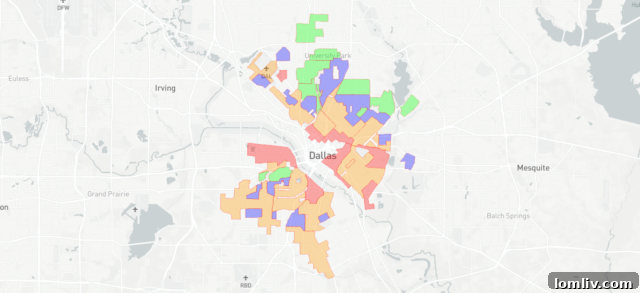
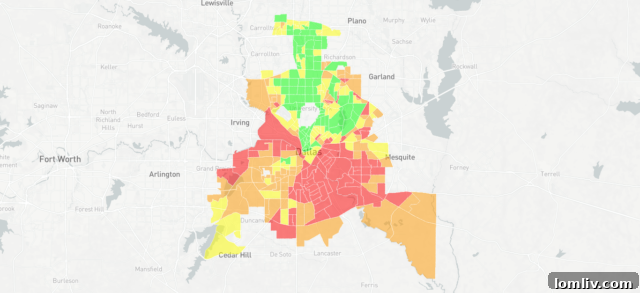
The areas identified by the Opportunity Atlas as having low levels of opportunity and income correspond almost perfectly with neighborhoods that were “red” or “yellow” lined in the 1930s. This lack of surprise stems from previous research, including a meeting held three years prior at Children’s Health, where researchers from both Children’s Health and Ohio State’s Kirwan Institute presented similar overlays. They vividly demonstrated how redlining policies from decades past continue to exert a powerful influence on the health, educational attainment, and economic opportunity of residents in those very same areas today.
The Shadow of Redlining: Policy Decisions with Lasting Consequences
The discriminatory practice of redlining originated in the aftermath of the Home Owners Refinancing Act of 1933, which established the Home Owners’ Loan Corporation (HOLC). The HOLC played a pivotal role in stabilizing the housing market during the Great Depression by raising funds through government-backed bonds to purchase and reinstate defaulted mortgages. Crucially, the agency revolutionized mortgage terms, creating the fully amortized, fixed-rate, long-term mortgage that is standard today.
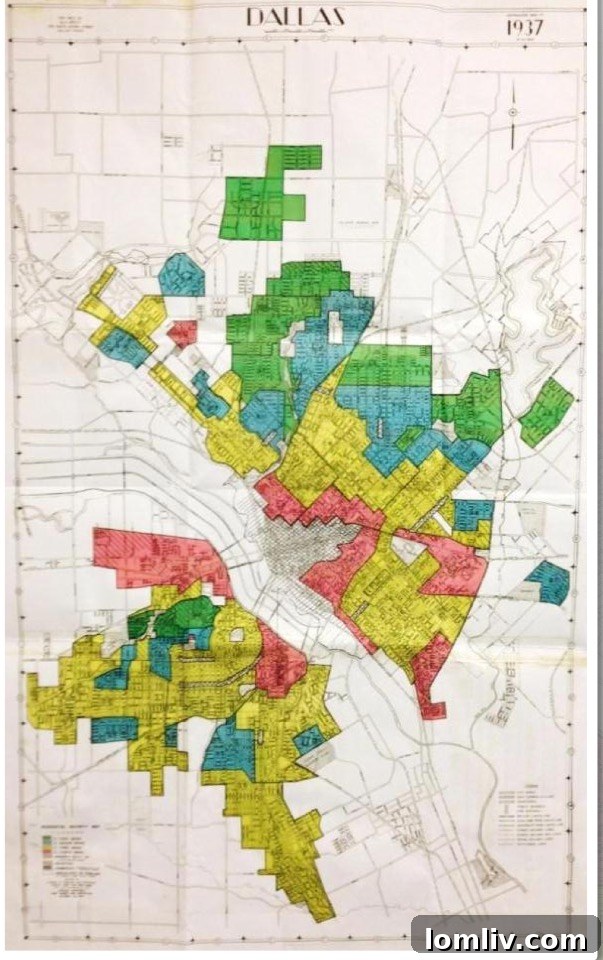
However, an insidious element of this system was the process by which the HOLC assessed neighborhoods to determine the risk level for the Federal Housing Authority (FHA), which guaranteed mortgages. Neighborhoods were systematically color-coded on maps, a practice that directly correlated with racial and ethnic demographics, effectively determining access to homeownership and wealth building.
- Green Areas (First Grade): These were deemed the most desirable. Homebuyers in green-lined areas could qualify for FHA-guaranteed loans covering up to 80 percent of the property value, requiring only a 20 percent down payment. These areas were almost exclusively populated by white, Anglo, and Protestant residents.
- Blue Areas (Second Grade): While still considered good, these neighborhoods presented slightly higher risk. Homebuyers could qualify for 60-80 percent loan coverage. These areas were predominantly white but included other ethnic origins such as Jewish, Italian, and Irish communities, often still on an upwardly mobile trajectory.
- Yellow Areas (Third Grade): Categorized as “declining,” these areas were seen as higher risk. Loans in yellow-lined neighborhoods typically covered only 15 percent of the value, necessitating an arduous 85 percent down payment. These were mixed-ethnicity areas, including Black residents, and were generally poorer.
- Red-lined Areas (Fourth Grade): These neighborhoods were deemed “hazardous” and ineligible for any FHA-backed loans whatsoever. Homebuyers in these areas faced insurmountable barriers to securing conventional mortgages. These redlined zones were almost exclusively inhabited by Black communities.
The insidious nature of redlining meant that wealth accumulation through homeownership was systemically denied to minority communities. The visual evidence of this lasting impact is chilling: a map compiled by Parkland showing loss of lifespan (years of life lost per racial group), when superimposed on a 1937 HOLC map, dramatically illustrates the enduring consequences of a policy enacted more than 80 years ago. Similarly, a Kirwan Institute map measuring child opportunities in the Dallas-Fort Worth area reveals a nearly identical pattern, underscoring the deep intergenerational impact of these historical injustices.
This practice of institutionalized discrimination continued largely unabated for nearly three decades until its eventual outlawing in 1968. Thirty years was more than enough time to inflict immense and lasting damage, cementing patterns of disinvestment and segregation that echo to this day. As an article in NextCity examining the parallels between Opportunity Atlas boundaries and redlining maps succinctly put it: “Throughout the 20th century, government policies and actions at the federal, state and local levels all contributed to the systematic investment in exclusively white suburbs, while denying similar levels of investment to black and Latino neighborhoods and households. The resulting disparities of investment available based on race filtered through history into differing outcomes with regard to household income and wealth, as well as disparate access to well-funded schools, parks and other amenities.”
Pathways to Progress: Intertwined Policies for a Brighter Future
While the historical roots of these disparities are undeniable, it is crucial to recognize that children growing up in these communities are not condemned to lives of poverty. However, achieving genuine upward mobility necessitates substantive policy changes across multiple sectors, most notably in education and affordable housing. Without such integrated reforms, the path to opportunity will remain elusive for many, though not entirely unattainable.
Dallas ISD serves as a compelling example of how dedicated efforts can yield significant improvements. Just five years ago, 43 schools within the district – many located squarely within the historically redlined “pockets of town” highlighted by the Opportunity Atlas – were designated “Improvement Required.” Today, that number has plummeted to just four. Furthermore, in the state’s most recent A-F accountability ratings, Dallas ISD proudly accounted for six of the eleven schools statewide that achieved a perfect score, demonstrating remarkable progress in educational outcomes.
However, genuine and lasting change requires a holistic approach. I have long argued that affordable housing policy and public education policy are not merely intersecting; they are intrinsically intertwined. The circumstances outside the schoolhouse doors profoundly impact what happens within its walls. Until policymakers adopt a more integrated strategy to address these external factors, a disproportionate burden of meeting these complex needs will continue to fall upon urban school districts like Dallas ISD.
Innovating Policy: Lessons from Montgomery County
What might such comprehensive policy changes entail? Often, it requires thinking innovatively and beyond traditional silos. The National Low Income Housing Coalition (NLIHC) recently highlighted a case study that offers a powerful model: treating housing policy as an integral component of education policy. This study focused on Montgomery County, Maryland, a region renowned for one of the country’s best school systems, which decades ago pioneered a comprehensive inclusionary housing program.
Under Montgomery County’s program, private-sector housing developers are mandated to set aside a percentage of apartment homes for sale at below-market rates. A distinguishing feature of this initiative allows housing authorities to acquire some of these units and operate them as federally subsidized housing. Through a randomized lottery, low-income families were selected to reside in these units. The study’s findings were compelling: children living in public housing located within low-poverty neighborhoods significantly outperformed their counterparts residing in public housing in higher-poverty school zones over a five-to-seven-year period. “In fact,” the review noted, “public housing students attending the lower-poverty schools narrowed the achievement gap with their wealthier peers by half in math and one-third in reading.” This demonstrates a direct, measurable positive impact on educational attainment linked to housing location.
These findings are further reinforced by the very researchers behind the Opportunity Atlas. Porter and Jones affirmed that “Moving at birth from a below-average to an above-average mobility neighborhood within the same county would increase the lifetime earnings of a child growing up in a low-income family by approximately $200,000.” Beyond economic gains, they added, “Children who grow up in areas with better outcomes are also less likely to be incarcerated or to become a teen parent.” While acknowledging the profound benefits of relocation, they caution that “The lesson to be drawn from these findings is not necessarily that moving is the best solution for increasing upward mobility, but rather that the low rates of upward mobility in some areas can be changed.” This emphasizes the importance of improving conditions within existing communities.
Beyond the Classroom: External Interventions Matter
Journalist Matt Barnum of Chalkbeat also underscored the direct impact of interventions outside the schoolhouse on student success. His research highlights how specific anti-poverty measures can effectively counteract the detrimental effects of poverty. Barnum explained, “These programs — or other methods of increasing family income — boost students’ test scores, make them more likely to finish high school, and raise their chances of enrolling in college.”
He further elaborated on a crucial insight often overlooked by education policymakers: “In other words, many policies with a shot at changing the experience of low-income students in school don’t have anything to do with the schools themselves. That also means, as these findings pile up, they get relatively little attention from education policymakers who could be key advocates.” Barnum’s extensive review encompassed 20 studies examining how strategies like increased family assistance – including food stamps, health insurance, or rental assistance – directly influence student outcomes.
Crucially, this research moves beyond simply restating the well-known correlation between socioeconomic status and academic performance. Barnum clarified, “These studies try to pin down the effect of providing additional resources to families in poverty,” thereby isolating the causal impact of targeted support. The evidence is clear: investing in families directly translates into improved educational trajectories for children.
The impetus for change doesn’t always originate solely from city or county governments. Across the country, diverse community organizations, including churches and non-profits, have taken on the vital task of fostering opportunity, working block by block to uplift neighborhoods. As reported by NPR, these grassroots efforts are making tangible differences, demonstrating that local initiatives are powerful catalysts for change.
Investing in Future Generations: A Call to Action for Dallas
To further enhance opportunity in Dallas’s underserved areas, several evidence-based strategies stand out. Studies, including the Maryland case study, consistently show the critical importance of ensuring that schools in these areas have equitable access to funding. This funding is essential to address the comprehensive needs of students, which often extend far beyond basic reading, writing, and arithmetic, encompassing social-emotional support, health services, and more.
Access to high-quality, all-day early childhood education is another proven pathway to improving long-term outcomes. Statistics indicate that participation in Pre-K programs significantly increases when their schedules align more closely with typical parental workdays, making them a viable option for working families. Both enhanced school funding and accessible early childhood education are critical investments that would directly benefit from initiatives like Dallas ISD’s current Tax Ratification Election, providing the necessary resources to address systemic inequities.
The journey to equitable opportunity in Dallas is complex, deeply entwined with historical injustices. However, with powerful tools like the Opportunity Atlas, a growing understanding of interconnected policy solutions, and a commitment to strategic investment, the city can actively work to dismantle the enduring barriers to social mobility. By focusing on integrated housing and education policies, supporting external interventions that uplift families, and empowering local community efforts, Dallas can move towards a future where opportunity is truly accessible to all its residents, regardless of their starting point.
Bethany Erickson is the education, consumer affairs, and public policy columnist for Daltxrealestate.com. She is a member of the Online News Association, the Education Writers Association, and the Society of Professional Journalists, and is the 2018 NAREE Gold winner for best series. Contact her at [email protected].