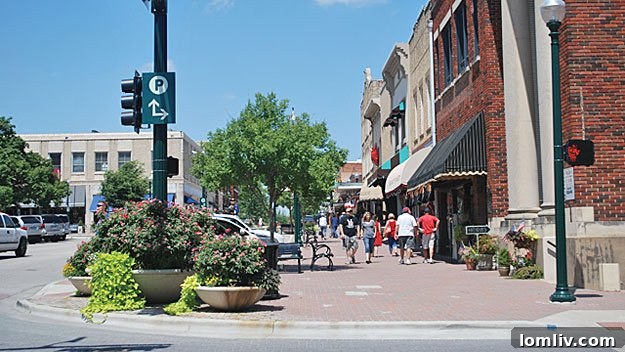
McKinney, Texas, a jewel in Collin County, has long been celebrated for its outstanding quality of life and vibrant community spirit. Just last year, MONEY Magazine recognized McKinney as the best place to live in America, a testament to its charm, robust economy, and family-friendly atmosphere. We’ve always been bullish on McKinney real estate, appreciating its beautiful homes, excellent property values, a captivating downtown area, and a highly-regarded school system.
While some real estate agents note that buyers occasionally prefer schools in neighboring communities like Lucas, Prosper, and Allen, McKinney’s educational institutions consistently receive high ratings, contributing significantly to its appeal for families considering a move to the Dallas-Fort Worth metroplex. The city’s historic downtown, with its unique shops, restaurants, and lively events, serves as a central hub, fostering a strong sense of community that residents cherish.
However, a recent incident at a private community pool in Craig Ranch, an expansive 2200-acre development featuring upscale single-family homes, thrust McKinney into the national spotlight for reasons far less celebratory. A widely circulated video of a police response to a pool party quickly went viral, igniting a national conversation and sparking outrage across the internet. The footage, which appeared to show excessive police force against teenagers, particularly a young girl, quickly led to headlines that many perceived as inciting negative reactions against the McKinney police department and painting McKinney as a community grappling with racial tensions.
UPDATE: The incident has prompted significant action, with civil rights groups and activists formally demanding a U.S. Department of Justice investigation into the police actions in McKinney. Many, including myself, feel that the officer involved, Eric Casebolt, displayed an extreme overreaction and should likely pursue a different career path. This demand for a federal inquiry underscores the gravity of the situation and the widespread concern over police conduct. Efforts are currently underway to locate Michael Cory Quattrin, the individual who posted a “neighborhood plea” on Facebook, circulating widely and offering an alternative perspective on the events.
For many long-time residents and those familiar with McKinney, this portrayal felt jarring and inconsistent with the community they know. My initial reaction to the footage was, like many, one of profound outrage at what seemed to be undeniable police brutality. The immediate narrative suggested that McKinney was a racist community, a label that felt profoundly out of sync with the city’s reputation and my personal experiences.
This incident brought back a vivid memory from years ago, around 1998, when my daughter and two friends decided to host an impromptu backyard pool party at our Park Lane home. Word spread like wildfire (pre-Twitter, kids had cell phones!), and suddenly, teenagers from all walks of life – tall, thin, black, white, from public and private schools – started arriving. They came with six-packs slung over shoulders and bottles of tequila, despite strict rules against underage drinking. The sheer volume of alcohol we discovered in our yard the next morning was enough to stock our (locked) bar for years.
Overwhelmed, I called the police for assistance in dispersing the crowd, which they did efficiently. The teenagers were told to go home, and they complied. That night taught me some harsh but invaluable lessons about parenting teenagers and managing social gatherings:
- Teenagers often lie, or at least stretch the truth, about their intentions or actions.
- Underage drinking and cigarette use, and now even cannabis in some areas, are prevalent challenges despite legal prohibitions.
- As a homeowner, I bore full responsibility and liability for anyone injured on my property that night. It was my absolute right, and indeed my obligation, to remove them before the situation escalated beyond control.
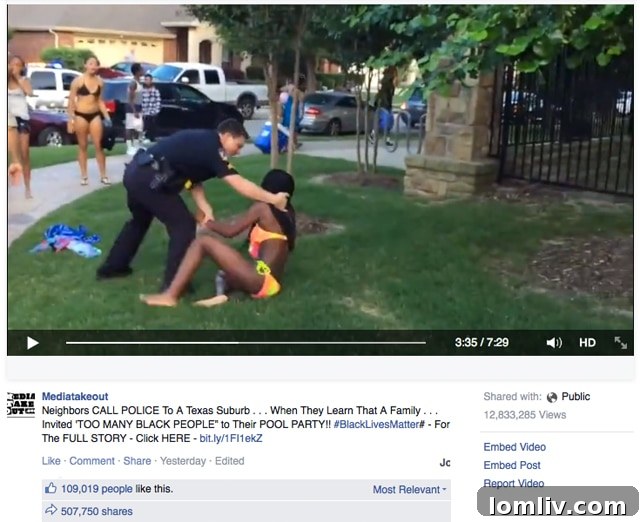
Considering my own experience, I was eager to understand the full scope of what truly transpired in McKinney that Friday night. The event took place at a private pool, owned and managed by the Homeowners Association (HOA) of Craig Ranch. The term “private” here isn’t meant to imply elitism, but rather to emphasize ownership, responsibility, and liability. It’s clear that the situation involving the teenagers at the pool became chaotic, with allegations of a fight preceding the police arrival.
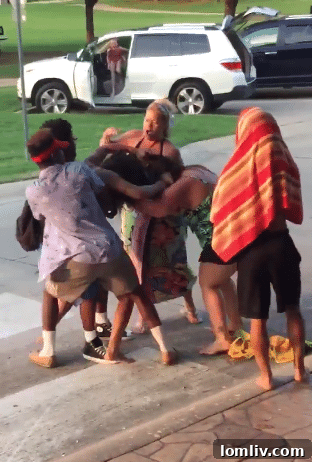
The highly publicized video, showing a police officer pushing a young girl to the ground, was a mere 7-minute segment of an incident that unfolded over at least 30 minutes. This short clip represented a micro-shot of a much larger event, leading to the suspicion that crucial details were not captured or widely disseminated. Indeed, other videos and accounts have since surfaced, shedding more light on the circumstances that prompted residents to call the police. We anticipate more evidence will emerge, including pleas from residents who claim the media has largely ignored their perspective, leading to a potentially one-sided narrative.
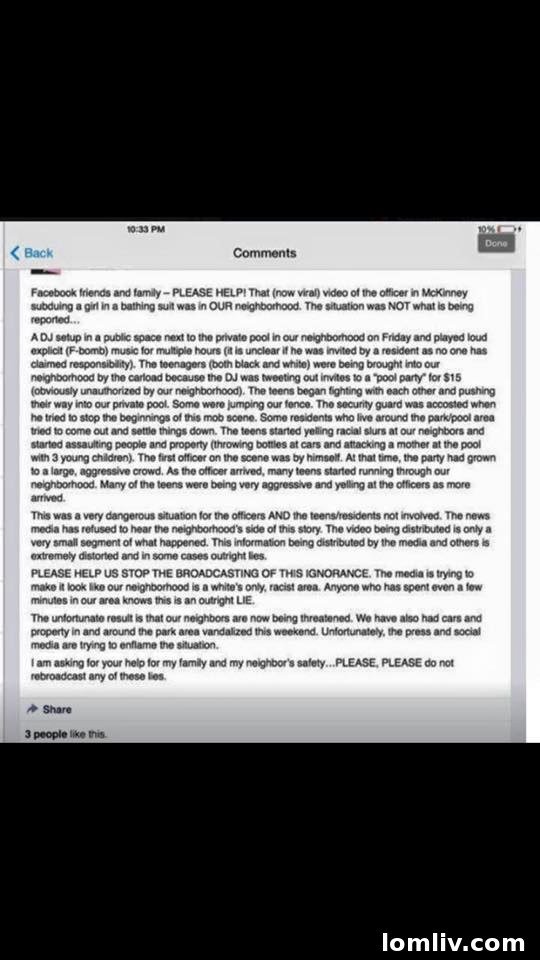
This raises critical questions: Was the McKinney incident a clear-cut case of vicious racism, or was the situation inflamed by sensationalist media reporting? It’s often challenging to ascertain the complete truth from initial news reports. Unfortunately, media outlets sometimes prioritize being first or generating maximum impact, leading to premature and sometimes inaccurate conclusions. The initial Facebook posts, while admittedly inciting my own outrage at first, have proven to be contradictory and, in some instances, off-base. The McKinney pool party serves as a stark reminder of how media sensationalism can sometimes overshadow an accurate and balanced portrayal of events.
We urge our McKinney readers to share their insights and experiences, contributing to a more comprehensive understanding of what occurred. Furthermore, we trust that the McKinney Police Department will honor its promise to conduct a thorough and transparent investigation. This situation presents an opportunity for the community to demonstrate how to effectively communicate and react to inflammatory situations, setting an example for thoughtful engagement rather than hasty judgment. While the alleged remark of “go back to your Section 8 housing” from one adult to party-crashers—if true—is deeply disappointing and certainly not representative of a mature, intelligent McKinney resident, it’s crucial to separate individual actions from the character of an entire community.
I find particular disappointment in a recent article from the Atlantic, which suggested that racism and elitism, fueled by a lack of public pool funding and the privatization of recreational facilities, were at the root of such incidents. This narrative risks unfairly impacting McKinney property values and misrepresents the city’s commitment to its residents. Firstly, McKinney boasts several public pools, many accessible for a nominal fee (e.g., $1.25), though they typically close earlier than private facilities. Crucially, the incident in question did not occur at a public or communal pool, but at a private facility within the Craig Ranch development:
It is the latest in a string of incidents of police using apparently excessive force against African Americans that has captured public attention. And it took place at a communal pool—where, for more than a century, conflicts over race and class have often surfaced.
This distinction is vital. The event unfolded at one of two private pools owned by the Craig Ranch HOA. The landscape of pool ownership has evolved considerably. In recent years, securing insurance for pools has become increasingly challenging. For instance, obtaining insurance for a private backyard pool with a diving board is now reportedly almost impossible due to heightened liability concerns. While pool construction might be more affordable today than in the 1920s, the ongoing maintenance costs and the substantial liability they represent make them significant investments and responsibilities.
The historical context of pools in America is complex, intertwined with issues of race, class, and public health:
In Marshall, Texas, for example, in 1957, a young man backed by the NAACP sued to force the integration of a brand-new swimming pool. When the judge made it clear the city would lose, citizens voted 1,758-89 to have the city sell all of its recreational facilities rather than integrate them. The pool was sold to a local Lions’ Club, which was able to operate it as a whites-only private facility. The decisions of other communities were rarely so transparent, but the trend was unmistakable. Before 1950, Americans went swimming as often as they went to the movies, but they did so in public pools. There were relatively few club pools, and private pools were markers of extraordinary wealth. Over the next half-century, though, the number of private in-ground pools increased from roughly 2,500 to more than four million. The declining cost of pool construction, improved technology, and suburbanization all played important roles.
The actions taken in Marshall, Texas, were indeed shameful, representing a clear act of blatant discrimination. However, it’s important to recognize that not all public pool closures or the shift towards private pools were solely due to racial motives. Many communities, particularly in the 1940s and 1950s, witnessed pool closures during the poliovirus outbreak. There was a genuine, though sometimes misdirected, fear that public swimming pools could expose children to the virus:
With the growth in popularity came the need for better sanitation measures. Originally pools used archaic filtration systems that required that water filters, and the actual water itself, to be changed frequently. Chlorine was discovered and produced prior to WWI in the early 1900s, but it was not until the war invigorated its manufacture that its use truly came into vogue. By the time of the polio scare in the late 1930s and 1940s, chlorine was used widely in public swimming pools as a sanitation measure.
Still, this didn’t prevent the panic that arose over the public’s fears that children could be exposed to the poliovirus in community swimming pools.
Here in Dallas, we understand all too well how disease outbreaks can trigger widespread public panic and significantly impact public spaces and activities.
As of this writing, there remains a strong sentiment that the McKinney pool party incident is not being accurately or fully reported by the media. A complete and nuanced story is essential:
Whatever took place in McKinney on Friday, it occurred against this backdrop of the privatization of once-public facilities, giving residents the expectation of control over who sunbathes or doggie-paddles alongside them. Even if some of the teens were residents, and others possessed valid guest passes, as some insisted they did, the presence of “multiple juveniles…who do not live in the area” clearly triggered alarm. Several adults at the pool reportedly placed calls to the police. And none of the adult residents shown in the video appeared to manifest concern that the police response had gone too far, nor that its violence was disproportionate to the alleged offense.
To the contrary. Someone placed a sign by the pool on Sunday afternoon. It read, simply: “Thank you McKinney Police for keeping us safe.”
Friends in McKinney have clarified that the “Thank You McKinney Police” sign was reportedly not placed directly by the pool, but rather on the gate to a private home’s yard. This detail, though seemingly minor, further underscores the importance of verifying information and considering multiple perspectives to arrive at a truly accurate account. We eagerly await and welcome your thoughts and any additional information you can provide as the community seeks clarity and moves towards understanding this complex situation.