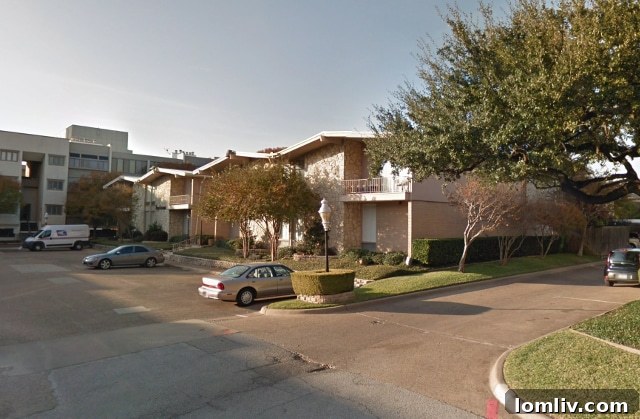
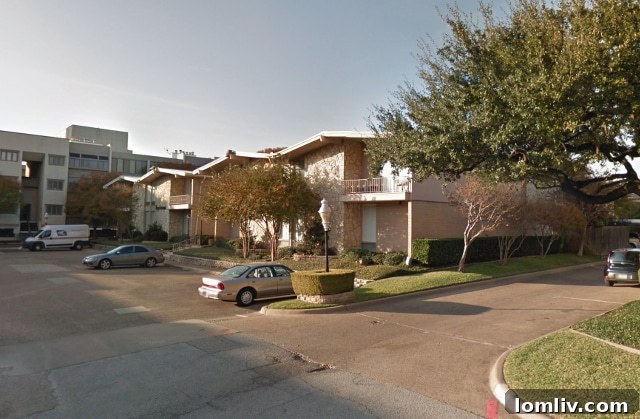
Dallas Development Debacle: Fire Lane Regulations Derail Diplomat Condos
In a recent series of events impacting Dallas’s urban development landscape, plans for the Diplomat condos, situated in the iconic “Pink Wall” area, have been unexpectedly halted. This development follows closely on the heels of similar setbacks concerning other parcels within PD-15, where city council-approved development rights were upended months after intense public and private battles. The core issue behind this latest disappointment? A contentious reinterpretation of fire lane width regulations.
This critical update reveals that the Diplomat project, envisioned as a premium residential offering, can no longer proceed as originally conceived. The implications extend beyond just this single site, shining a spotlight on broader challenges in urban planning and fire safety regulations that are shaping the future of Dallas’s beloved neighborhoods.
The Unraveling of the Diplomat Project: A “Reinterpretation” of Fire Lane Standards
Just weeks ago, insights into how road width regulations are impacting development were highlighted, particularly for areas like Oak Lawn’s Mansion Park. Now, the Diplomat condos have become a stark example of these regulations in action. A recent “reinterpretation” of fire lane widths by city authorities has rendered the current development plan financially unworkable for the developer.
While the site itself remains buildable, the new interpretations significantly restrict the density and product quality that the developer aimed to deliver. Discussions with city staffers suggest that any future development on the site would likely need to be “something cheaper (though unlikely smaller),” a significant downgrade from the originally envisioned high-end project. This outcome represents a deeply disappointing conclusion to a three-year arduous process of design, redesign, and extensive collaboration attempts with both the city and the local neighborhood.
The root cause? The ever-growing size of modern fire trucks, which dictate increasingly expansive requirements for urban roadways and access lanes.
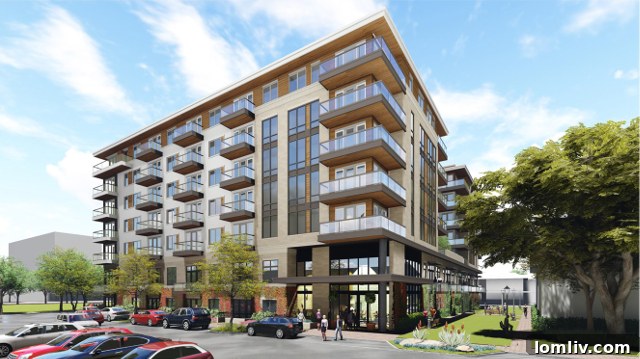
The Paradox of Wider Streets: Oversized Equipment vs. Urban Livability
Across the United States, fire departments have increasingly advocated for wider street requirements, ostensibly to accommodate the formidable dimensions of contemporary emergency vehicles. This push often results in demands for clear 20-foot rights-of-way, sometimes even retroactively enforced, leading to detrimental consequences for urban environments. Communities frequently experience a loss of valuable on-street parking, crucial parkway landscaping, and mature trees – elements vital to the character and functionality of pedestrian-friendly neighborhoods.
This trend directly clashes with established urban design principles and mounting research. Studies consistently demonstrate that wider streets and larger corner radii, while seemingly improving traffic flow, paradoxically lead to increased vehicle speeds. Higher speeds, in turn, elevate the risk for pedestrians and cyclists, contributing to a greater number of accidents. Even a marginal two-foot increase in lane width has been shown to result in significant increases in both vehicle speeds and crash incidents. The very goals of narrower streets and pedestrian-focused design – to enhance safety and promote walkability – are undermined by these expansive road requirements.
The situation presents a stark paradox: fire department demands, driven by the need to operate ever-larger equipment in often confined urban spaces, are inadvertently creating less safe and less livable environments. This approach appears to be “bass-ackwards,” prioritizing equipment size over the holistic needs of the urban fabric and the safety of its inhabitants.
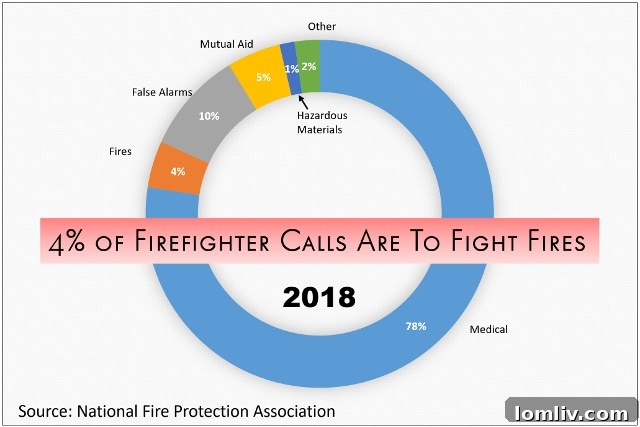
While acknowledging that wider roads might shave precious seconds off response times to an emergency, it’s crucial to consider the broader context. A more agile, appropriately sized vehicle navigating existing roadways could achieve similar efficiencies without necessitating destructive urban alterations. Furthermore, it might surprise many to learn that actual firefighting activities constitute a relatively small fraction of calls to which fire departments respond.
Rethinking Fire Response: Data, Efficiency, and Alternative Approaches
Prioritizing Efficiency: Are Mammoth Fire Trucks Always Necessary?
According to comprehensive data from the National Fire Protection Association (NFPA), a staggering 78 percent of all emergency calls in 2018 were medical-related. These calls typically necessitate an ambulance or EMT truck, possibly with a fire truck escort, but rarely demand the full capabilities of a massive fire engine. These colossal vehicles, often seating up to eight personnel and laden with ladders, hundreds of gallons of water, and an array of specialized equipment, are designed for the most severe fire incidents, which are increasingly rare in urban centers.
This raises a fundamental question: When such a small percentage of calls are genuinely fire-related, would it not be more logical and cost-effective for municipalities to invest in a diversified fleet of smaller, more purpose-built vehicles? Such a strategy could significantly improve response efficiency for the majority of calls, reduce operational costs, and mitigate the pressure for destructive road widenings.
Lessons from Abroad: Adapting to Urban Realities
Many urban areas outside the U.S. have long embraced more pragmatic approaches to emergency vehicle fleets. With centuries-old, often narrow street grids, European cities, for instance, have pioneered the use of smaller, purpose-built vehicles. These nimble machines sacrifice nothing in terms of capability or response time for fire suppression and rescue but are far more adept at navigating congested city streets. Examples from various international cities demonstrate that effective emergency response doesn’t require disproportionately large equipment; it requires smart, adaptable solutions tailored to the urban environment.
Even within the U.S., some forward-thinking municipalities are adopting a more restrained and efficient approach. When faced with the need to replace two aging fire trucks, Beaufort, South Carolina (a town with a population of approximately 13,000 and dating back to 1711), chose a different path. Instead of purchasing traditional fire trucks, each costing upwards of $600,000, they opted for two “All Purpose Response Vehicles” at a cost of $145,000 each. This decision resulted in an impressive savings of $765,000 and, crucially, provided them with vehicles far more capable of navigating their historic, narrow streets effectively. This example vividly illustrates the potential for significant financial savings and improved urban compatibility through strategic fleet management.
The Dallas Opportunity: Right-Sizing the Fleet for Urban Future
Imagine the transformative impact if a major city like Dallas were to adopt a similar “right-sizing” strategy for its emergency vehicle fleet. Aligning the fleet with actual operational needs and the specific characteristics of its urban fabric could unlock substantial financial resources. The money saved from purchasing and maintaining oversized, underutilized equipment could be redirected towards critical city services, infrastructure improvements, or even shoring up vital pension funds. This strategic shift represents not just a cost-saving measure but a fundamental reimagining of urban emergency response that prioritizes efficiency, sustainability, and urban livability.
A New York City first responder eloquently captured the essence of urban emergency operations, highlighting the adaptability required:
“If it can be done all over NYC then it can be done. Sometimes it is difficult to drive on a narrow street during an emergency. Sometimes you have to block streets/intersections, or park on the sidewalk or do whatever you have to do to fit, but that’s just part of urban living.
I guess what I’m trying to say is that driving conditions in places like this are less than ideal, but that’s because these places are built to be more pedestrian friendly than car friendly. This can make driving emergency vehicles difficult, but you just have to adapt to it the best you can.
The biggest problem, in my experience, isn’t the narrow streets but it’s the other drivers that think they’re so important that they don’t need to pull over. You’d be surprised how many people don’t get the **** out of the way.”
This perspective underscores that human adaptability and efficient on-the-ground tactics often outweigh the perceived necessity for ever-larger equipment, especially when the latter comes at the expense of urban character and pedestrian safety.
The Cost of Unvetted Regulation: Erosion of Urban Character
One of the most concerning aspects of this phenomenon is the manner in which these expansive roadway changes are often adopted. Proposed by uniformed personnel, such regulations frequently bypass robust public debate and rigorous vetting. They are quietly incorporated into city codes, often without a comprehensive understanding of their long-term ramifications for urban environments. For Dallas, a city striving to cultivate a vibrant, dense urban core, allowing codes designed for sprawling new developments in distant exurbs to blanket its historic urban fabric without critical assessment is a dangerous precedent.
Revisiting the tragic seven-alarm blaze at Preston Place within PD-15, it’s crucial to remember that despite the severity of the incident, there were no reports of access issues impeding firefighters’ response or their ability to combat the fire effectively. Yet, a “no-problem problem” – the newly interpreted fire lane widths – has now stalled a promising development project. This not only forces developers to compromise on quality but also risks opening the neighborhood to potentially lower-grade development that does not align with community aspirations.
Furthermore, these regulations compel the widening of roadways fronting redevelopment sites. This, in turn, creates more attractive thoroughfares for drivers seeking cut-through routes, increasing local traffic and diminishing neighborhood tranquility. The neighborhood faces a daily loss of character, greenspace, and safety for the sake of accommodating an emergency scenario (like the Preston Place fire) that occurs perhaps once in a lifetime. Such disproportionate responses to perceived risks can severely undermine the very qualities that make urban neighborhoods desirable.
The Diplomat project is, unfortunately, not an isolated incident. Numerous other development initiatives across Dallas are reportedly grappling with similar regulatory hurdles, indicating a systemic issue that demands urgent attention and a reevaluation of city planning priorities. Stay tuned for further updates on how these evolving regulations continue to shape Dallas’s real estate and urban development landscape.