The housing market is currently experiencing a significant transformation, with single-family rental homes emerging as one of the most dynamic and rapidly expanding segments. For individuals and families seeking the comfort and space of a traditional home without the long-term commitment and maintenance burdens of ownership, now presents an opportune moment to explore the burgeoning built-to-rent sector.
This trend is not merely a fleeting phenomenon but a profound shift in residential living, driven by evolving consumer preferences and market dynamics. Purpose-built communities, specifically designed for renting single-family homes, are redefining what it means to rent, offering a lifestyle that blends flexibility with the amenities and privacy typically associated with homeownership.
The Phenomenon of Built-to-Rent Communities
The concept of “built-to-rent” involves developers constructing entire communities of single-family homes specifically for the rental market, rather than for sale. This model contrasts sharply with the traditional single-family rental market, which often consists of individual homes purchased by private landlords. Built-to-rent communities typically feature cohesive architectural styles, shared amenities like pools, clubhouses, and green spaces, and professional property management teams, offering a consistent and high-quality living experience.
This innovative approach addresses a critical gap in the housing market, catering to a diverse demographic that desires more space and a yard than an apartment can offer, alongside the convenience and lower upfront costs of renting. The meticulous planning and professional oversight inherent in these communities ensure a superior resident experience, from responsive maintenance to well-maintained common areas, differentiating them from isolated rental properties.
Dallas and Houston Lead the Built-to-Rent Boom
Texas, particularly the Dallas and Houston metropolitan areas, has solidified its position as a national leader in the built-to-rent housing revolution. A recent RentCafé report highlights the Lone Star State’s prominence, with both major metros ranking among the top U.S. markets for new rental single-family home communities. This growth is a testament to the strong economic fundamentals, robust job markets, and continuous population influx experienced in these regions, making them highly attractive for both residents and developers.
Market Rankings and Statistics: A Snapshot of Growth
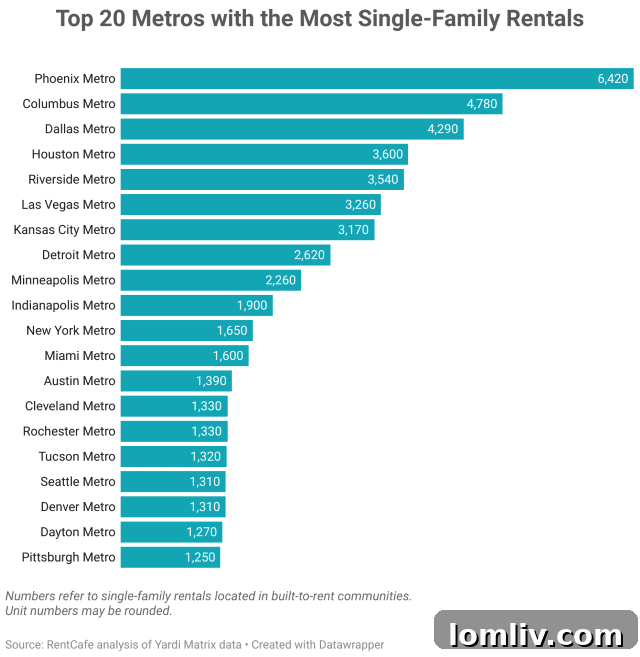
- Nationally, the Dallas metro area secures the third position with an impressive total of 4,290 houses within built-to-rent communities. This significant number underscores the scale and speed at which this housing model is expanding in North Texas.
- Hot on its heels, Houston ranks fourth nationally, boasting 3,600 rental units in these specialized communities. The demand in Houston reflects its sprawling nature, diverse economy, and continuous population expansion.
- To put this into perspective, the Phoenix, Arizona, area currently leads the nation with 6,420 units, followed by Columbus, Ohio, with 4,780. The strong showings by Dallas and Houston place them in elite company, indicating their vital roles in shaping the future of American housing.
City-Specific Performance
When analyzing specific cities rather than broader metropolitan areas, the picture remains compelling:
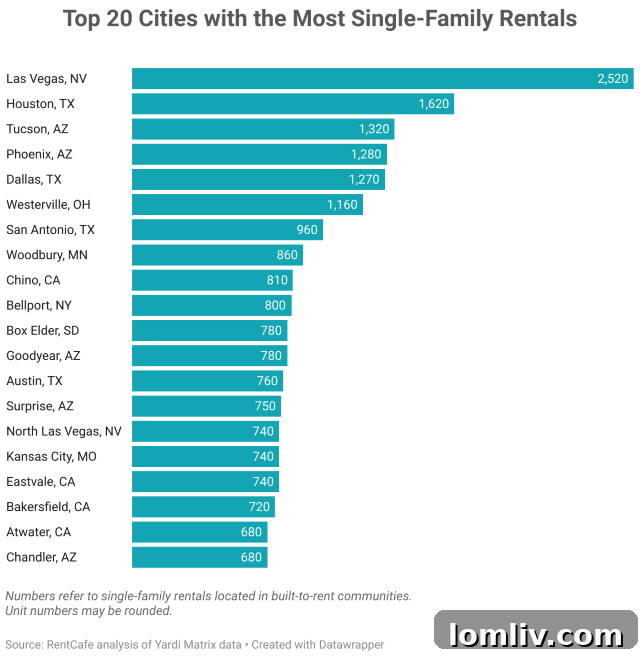
- Las Vegas, Nevada, claims the top spot with 2,520 completed rental homes.
- Houston metropolitan area cities collectively rank second with 1,620 completed units, showcasing the city’s individual strength within its larger metro.
- Dallas cities, similarly, rank fifth with 1,270 completed units, solidifying its status as a pivotal hub for single-family rentals.
These figures highlight not only the sheer volume of new construction but also the concentrated demand in key urban centers and their surrounding suburbs. The strategic placement of these communities often provides residents with access to top-rated school districts, burgeoning employment centers, and desirable amenities, all contributing to their high occupancy rates.
Communities of houses built exclusively for renting have rapidly become the most talked-about and fastest-growing trend in residential living. The data from Yardi Matrix, which informed the RentCafé report, reveals a historic peak in 2021, with 6,740 new homes completed in built-to-rent communities nationwide. This unprecedented level of development signals a robust response from the industry to a growing consumer demand.
Key Players Driving the Built-to-Rent Market
The expansion of the built-to-rent sector is spearheaded by established industry giants and innovative developers. Dallas-based Invitation Homes stands as the nation’s largest rental homebuilder, commanding a vast portfolio of over 80,000 rental properties, demonstrating the immense scale achievable in this market segment.
In the dynamic North Texas market, two significant developers have emerged as key facilitators of this trend: Phoenix-based NexMetro and Arlington-based D.R. Horton. Both companies have contributed thousands of completed homes to the region’s built-to-rent landscape, showcasing their commitment to meeting the escalating demand for high-quality rental housing solutions. Their strategic investments and efficient development processes are crucial in shaping the future of residential rentals.
The Future is Rental: Unprecedented Growth Projections
The momentum behind the built-to-rent trend is not slowing down; in fact, it’s accelerating. Current estimates project that approximately 14,000 built-to-rent homes currently under construction are slated for delivery this year. This figure represents more than double the total from the previous year, signaling an aggressive expansion phase for the sector. Such rapid growth indicates strong investor confidence and an expectation of sustained demand from renters across various demographics. This influx of new inventory will be critical in addressing the housing supply challenges facing many regions, particularly those with high population growth.
Why the Shift? Understanding Consumer Demand for Single-Family Rentals
What factors are driving this monumental shift in the housing market towards single-family rentals? According to RentCafé, the motivations are multi-faceted, reflecting evolving lifestyle preferences and practical considerations for today’s renters.
Seeking Space, Privacy, and a Lifestyle Upgrade
A primary driver is renters’ desire for a lifestyle change that offers more space and privacy than traditional apartment living. This includes access to private yards, greater square footage, and separation from neighbors – attributes often associated with homeownership. Many renters are looking for the suburban dream without the financial burdens of a down payment, mortgage, or property taxes. Built-to-rent communities offer precisely this, providing spacious floor plans, often multi-story layouts, and private outdoor areas, creating a true sense of home.
Combining Flexibility with Professional Management
The built-to-rent model expertly combines the financial and leasing flexibility inherent in a rental property with the amenities and convenience of a professionally managed community. Renters benefit from predictable monthly costs, avoiding unexpected repair expenses, and the ability to relocate with less hassle than selling a home. Furthermore, living in a professionally managed community means access to dedicated maintenance teams, well-kept common areas, and often a suite of community amenities such as fitness centers, dog parks, and communal gathering spaces. This blend of freedom and luxury is a significant draw.
Soaring Search Interest
The increasing interest in this housing type is also evident in online search trends. Searches for homes for rent on RentCafé’s platform tripled in 2021 compared to 2020, illustrating a dramatic surge in consumer appetite for single-family rental options. This heightened online activity directly translates into robust demand and high occupancy rates within built-to-rent communities.
Local Market Dynamics: The Dallas-Fort Worth Experience
The Dallas-Fort Worth market exemplifies the pressures and opportunities within the current housing landscape. A CoreLogic analysis revealed that home prices in the metro area soared by 14.1 percent over the past year, marking the sixth-highest increase in the nation. This rapid appreciation makes homeownership increasingly challenging for many, pushing more individuals and families into the rental market. As of September, the median rent in the Dallas-Fort Worth area stood at $1,909, a figure that, while substantial, often represents a more accessible entry point to a desirable lifestyle compared to purchasing a home in a competitive market.
This dynamic interplay between rising home prices and strong rental demand further fuels the growth of the built-to-rent sector, providing a viable and attractive alternative for those priced out of the buying market or simply preferring the flexibility of renting.
Debunking Rental Demographics: A Broad Appeal
The perception that the majority of renters are exclusively millennials is a common misconception. Shannon Hersker of Walker & Dunlop insightfully points out in the RentCafé report, “There is a misconception that the majority of renters are millennials when, in reality, you have everyone — including college students, empty nesters, families with kids, pet owners, and those wanting to downsize.” This diverse demographic includes individuals and families at various life stages, all seeking the unique advantages offered by single-family rentals. From young professionals establishing their careers to retirees looking for maintenance-free living, the appeal of built-to-rent is broad and inclusive.
The COVID-19 Catalyst: Reshaping Housing Preferences
Undoubtedly, the COVID-19 pandemic has played a pivotal role in accelerating and reshaping dynamics within the housing market. The health crisis prompted many to re-evaluate their living situations, leading to significant shifts in preferences. Christopher Michael, architect and founder of archisoup, noted in the report, “Many are now moving out of the cities and apartment living to seek out more space in rural and suburban locations.”
The pandemic underscored the importance of personal space, outdoor access, and the ability to work remotely, prompting an exodus from dense urban centers and cramped apartment buildings. Single-family rental homes in suburban and exurban areas offered an ideal solution, providing room to spread out, private yards, and a greater sense of community, all while maintaining the financial flexibility crucial during uncertain times. This accelerated trend has solidified the built-to-rent model as a resilient and future-proof housing solution.
The Lasting Impact and Future of Built-to-Rent
The built-to-rent single-family home market is more than just a passing trend; it represents a fundamental evolution in how people choose to live. With robust construction pipelines, diverse renter demographics, and strong market performance in key areas like Dallas and Houston, this sector is poised for continued growth. It offers a compelling alternative for those who desire the attributes of a standalone home without the long-term financial commitment or maintenance responsibilities of ownership. As housing affordability challenges persist and lifestyle preferences continue to evolve, built-to-rent communities will undoubtedly play an increasingly central role in the broader residential landscape, providing high-quality, flexible, and professionally managed living options for a wide array of residents.