

Midland, Texas: Navigating the Shifting Tides of Real Estate Price Reductions
The dynamic landscape of the U.S. real estate market is currently experiencing a significant recalibration, with numerous industry reports pointing towards a noticeable slowdown. This trend has been underscored by authoritative sources, including the Texas Real Estate Research Center at Texas A&M University, which recently released findings corroborating a moderation in market activity. While the prospect of a housing market slowdown might be a cause for celebration among buyers in some regions, offering a much-needed respite from intense competition and soaring prices, in other areas, it signals deeper, more intricate economic shifts and trends that are reshaping local property valuations.
Amidst these evolving national and regional dynamics, one particular market has captured considerable attention due to its unique position: Midland, Texas. This pivotal city, nestled in the heart of the Permian Basin, recently earned the notable No. 2 spot in Realtor.com’s comprehensive breakdown of the top 10 U.S. real estate markets experiencing the most significant price reductions. This distinctive ranking positions Midland as an essential case study for understanding how localized economic drivers can profoundly influence real estate movements, often diverging from broader national patterns.
The Growing Trend of Price Reductions: A Buyer’s Opportunity
Price reductions serve as a crucial barometer for market adjustments, providing valuable insights into the fluctuating balance between housing supply and demand. According to George Ratiu, Senior Economist at Realtor.com, “In our July data, about 45 cities from the top 300 largest showed an increase in the number of homes with price cuts.” This data point is highly significant, indicating a widespread, albeit localized, cooling trend. For prospective homebuyers, these emerging patterns hold the promise of a less frantic and competitive market environment. This translates directly into an expanded array of choices, reduced instances of aggressive bidding wars, and potentially more advantageous pricing, collectively empowering buyers with greater negotiation leverage than they have enjoyed in recent memory.
Contrasting Dynamics: Midland vs. Dallas-Fort Worth Real Estate
The vast and diverse Texas housing market often presents a mosaic of regional variations, starkly illustrating the highly localized nature of real estate performance. Data from Realtor.com’s July 2021 report reveals an intriguing divergence between Midland and other major metropolitan areas. For instance, in bustling hubs like Dallas-Fort Worth, new listing counts demonstrated a robust increase of 6.7 percent compared to the previous year. However, despite this healthy influx of new properties entering the market, the overall active listings remained notably constrained, down by a significant 24.4 percent year-over-year. This suggests that even with new homes coming online, demand in diversified economic powerhouses like DFW continues to outpace supply, thereby maintaining relatively tight inventory levels and contributing to resilient property values.
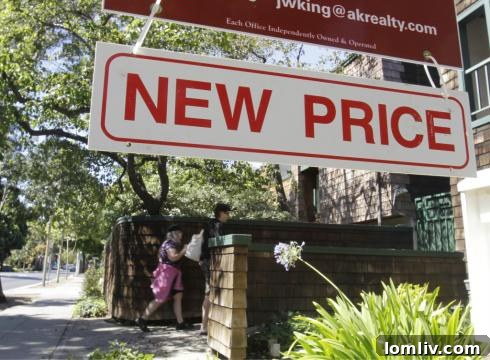
Midland, however, narrates an entirely different story, one intricately woven into its foundational economic sector. The real estate market in Midland, along with the broader Permian Basin region, is renowned for its extreme cyclicality, characterized by pronounced boom-bust cycles. This inherent volatility is a direct and historical consequence of its deep entanglement with the global oil and gas industry. During periods when crude oil prices per barrel soar, the demand for housing — encompassing everything from conventional single-family homes to temporary mobile trailers parked in remote lots — frequently reaches equally elevated valuations. Conversely, when oil prices experience a downturn, the ripple effect on the local economy is immediate and profound, triggering a cascading series of price reductions within the housing sector.
The Permian Basin Paradox: High Oil Prices, Reduced Housing Demand
While the cyclical nature directly linked to global oil prices is a well-established characteristic of Midland’s economy, recent data from Realtor.com brings to light a more intricate and somewhat paradoxical cause for the current prevalence of price reductions. This phenomenon presents a compelling puzzle: despite global oil prices achieving their highest levels since 2018, companies operating within the Permian Basin have, contrary to popular expectation, curbed drilling activity. This strategic shift, often driven by investor demands for capital discipline, a focus on profitability over sheer production volume, and long-term energy transition considerations, has significant and immediate local consequences.
Despite oil prices reaching the highest levels since 2018, companies in the area have curbed drilling activity. That’s part of the reason why the unemployment rate in Midland stood at 6.7% in June, higher than the 5.9% reported nationally.
With fewer locals able to buy homes and fewer people moving to the area, demand just isn’t as frenzied as in the rest of the country.
To help his properties stand out, Chris Beckett, broker and owner at Pine & Beckett Realtors in Midland, says he cuts prices on his listings every seven to 10 days.
That strategy appears to be typical in this market—last year the share of price cuts was slightly higher, at 32%. Buyers in this area could take a look at this three-bedroom home with a recent $5,000 price cut.
This critical insight from Realtor.com underscores the significant divergence between robust global commodity prices and the nuances of localized economic activity. The restrained drilling activity, even amidst what might appear to be favorable market conditions for oil, directly contributes to a less vibrant job market. This impact is clearly reflected in Midland’s elevated unemployment rate, which reached 6.7% in June, notably surpassing the national average of 5.9% during the same period. A higher unemployment rate translates directly into diminished financial stability and reduced confidence among prospective homebuyers, encompassing both existing residents and the transient workforce that typically migrates to the Permian Basin during periods of energy sector expansion. Consequently, the frenzied demand observed in many other parts of the country simply isn’t mirrored in Midland, leading to a distinct supply-demand imbalance that undeniably favors buyers.
Local Strategies in a Buyer-Centric Market Environment
The direct consequence of this subdued demand is a profound shift in market dynamics, compelling sellers and real estate professionals to adopt more proactive and aggressive strategies to capture buyer interest. The approach taken by individuals like Chris Beckett, broker and owner at Pine & Beckett Realtors in Midland, exemplifies this necessary adaptation. His strategy of systematically applying price reductions to listings every seven to ten days highlights the imperative for strategic and realistic pricing in the current Midland market. This frequent adjustment is not an isolated tactic but appears to be a defining characteristic of the local market, with historical data from the previous year indicating an even higher share of price cuts, reaching 32% of all listings. Such consistent price adjustments are vital for preventing properties from becoming stale on the market, especially as inventory levels may gradually accumulate.
For discerning buyers, this unique market environment in Midland is brimming with compelling opportunities. The widespread prevalence of price cuts, vividly illustrated by listings such as a charming three-bedroom home that recently saw a $5,000 reduction, provides a tangible advantage. Buyers in Midland are now empowered with a broader selection of properties, increased negotiation leverage, and the genuine potential to acquire homes at values that more accurately reflect current economic realities, moving away from the often-inflated prices witnessed during previous boom cycles. This buyer-friendly market encourages careful consideration, allowing individuals to make well-informed decisions without the intense pressure and urgency commonly associated with highly competitive real estate regions.
Midland in the National Context: A Leader in Price Adjustments
Midland’s prominent ranking as the second-highest city for price reductions nationwide, trailing only Des Moines, Iowa, significantly underscores its unique position within the broader national housing discourse. This is not merely a reflection of a quirky local custom; it is a clear indicator of distinct and powerful economic forces at play. While Des Moines may be experiencing its own set of market dynamics influencing price adjustments – perhaps related to shifts in its employment sectors, local population growth patterns, or a rebalancing following a period of rapid appreciation – Midland’s situation is intrinsically and undeniably tied to the complex intricacies of the global energy sector and its highly localized impact on employment and economic stability.
The broader implications of these widespread price reductions, particularly visible in markets like Midland, ignite a crucial debate among real estate economists and analysts. Danielle Hale, chief economist at Realtor.com, offers two nuanced perspectives on this phenomenon: “Price cuts could signal a turning point in the market, but they may also just be a sign of sellers getting ahead of buyers in pricing.” She further observes, “There seem to be some markets where it’s a local custom to price real estate that way.” This dual interpretation highlights the inherent complexity of market analysis. Are these reductions merely tactical responses by sellers to a less frenzied environment, or are they indeed harbingers of a more widespread softening of the market, potentially signaling the conclusion of an era characterized by ever-climbing property values?
Strategic Insights for Buyers and Sellers Across Texas
For proactive buyers, markets experiencing consistent price reductions, such as Midland, offer a truly golden opportunity. The perceptible shift from a protracted seller’s market to a more balanced, or even buyer-friendly, environment means considerably less competition, ample time for thoughtful decision-making, and significantly greater room for negotiation. This is an opportune moment to secure a home that perfectly aligns with budget constraints and personal preferences, often without the intense pressure of bidding wars or the need to waive crucial contingencies. Buyers should prioritize a thorough understanding of local market trends, engage with highly skilled and experienced real estate agents, and be prepared to act decisively when a thoughtfully priced property emerges.
For sellers, particularly those in markets defined by frequent price adjustments like Midland, these evolving conditions necessitate a strategic and often swift recalibration of expectations and tactics. Overpricing a home in a market characterized by regular price reductions can lead to extended listing times and, ultimately, the necessity for even larger, more impactful price cuts down the line. Sellers must collaborate closely with their agents to conduct comprehensive comparative market analyses, ensure their homes are priced realistically from the initial listing, and remain prepared for potential negotiations. Furthermore, strategically highlighting a property’s unique features, making necessary cosmetic updates, or staging effectively can significantly help a listing stand out in an increasingly competitive landscape.
The Future Outlook for Midland’s Real Estate Market
The future trajectory of Midland’s real estate market will undoubtedly remain inextricably linked to the ebb and flow of the global energy sector, yet with an added layer of nuanced complexity. As the oil and gas industry continues its evolution, driven by increasing pressures for environmental sustainability, enhanced capital efficiency, and technological advancements, its direct impact on local employment patterns and housing demand might also undergo significant transformations. Investors and homeowners in the Permian Basin will need to closely monitor not just crude oil prices, but also key indicators such as regional drilling activity levels, local employment figures, and broader economic and energy policies that directly affect the sector. Diversification efforts within Midland’s economy could also play a crucial role in mitigating future boom-bust cycles.
The compelling insights gleaned from Midland serve as a powerful and enduring reminder that real estate, at its core, is fundamentally local. While national trends provide a broad contextual framework, it is the granular details of local economies, the specific performance of key employment sectors, and unique demographic shifts that truly dictate market behavior and property values. As the U.S. housing market continues its journey towards finding a new equilibrium in a post-pandemic world, understanding these intricate regional nuances will be paramount for anyone contemplating buying, selling, or investing in real estate. Midland, Texas, stands as a prime, dynamic example of a market actively adapting to its unique set of economic pressures, offering invaluable lessons for real estate stakeholders across the nation.