Navigating Urban Development: The Transwestern Luxury Apartment Proposal in Preston Hollow
The picturesque and highly sought-after Preston Hollow neighborhood in Dallas, Texas, is renowned for its expansive estates, verdant landscapes, and a serene residential ambiance. Yet, even in such an established and prestigious area, the relentless march of urban development frequently introduces new proposals, often igniting passionate discussions and robust community engagement. A prime example of this dynamic tension is Transwestern’s proposed luxury apartment complex slated for the critical intersection of Preston Road and Northwest Highway. This particular project has quickly emerged as a central point of contention for local residents, who are deeply invested in preserving their neighborhood’s distinct character and managing its already strained infrastructure.
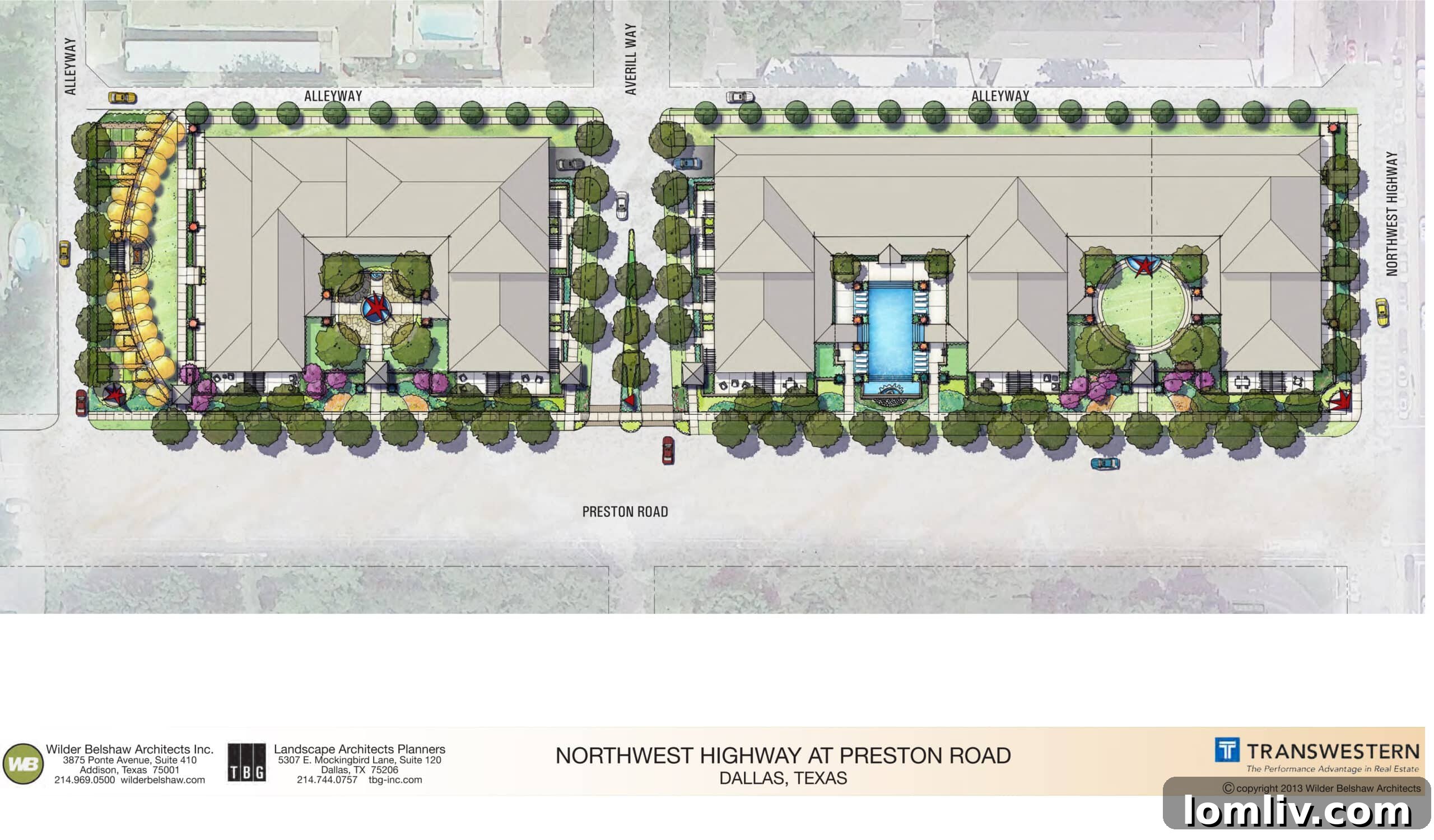
Initially, Transwestern, a prominent real estate development firm with a significant presence across the nation, unveiled ambitious plans for an eight-story apartment development. This initial vision encompassed an imposing 296 residential units. The sheer magnitude of this undertaking, strategically positioned at one of Dallas’s busiest traffic arteries, immediately drew the attention and sparked significant alarm among those residing nearby, especially members of the Preston Hollow East Homeowners Association (PHEHA). For a neighborhood largely characterized by its spacious single-family homes and a low-density residential profile, a nearly 300-unit, eight-story complex represented a dramatic and unwelcome departure from the prevailing architectural and population density norms.
Revised Development Plans: A Nod to Compromise or Continued Concern?
Following a period of considerable public outcry and intense community dialogue, Transwestern has, as reported by the diligent neighborhood journalists at the Preston Hollow Advocate, presented a revised proposal. This adjusted plan sees the project scaled back from its original eight stories to a more modest six stories, simultaneously reducing the total number of proposed luxury apartment units from 296 to 225. While this concession has been acknowledged by some as a demonstration of the developer’s willingness to negotiate, a significant portion of the community remains unconvinced, feeling that the core issues driving their opposition have yet to be adequately addressed.
The proposed site itself commands a highly visible and strategically important location: the northeast corner of Preston Road and Northwest Highway. This puts it directly across the street from the historic “Little White House” of Ebby Halliday Realtors, a local landmark. This intersection is not merely a geographic point but a vital conduit, serving as a gateway to several of Dallas’s most affluent residential enclaves and a bustling commercial corridor. Currently, the property houses 24 existing apartment units and 12 condominiums, totaling just 36 residential spaces. The revised proposal for 225 units, therefore, still represents an astounding increase of more than six times the current density, signaling a profound intensification of land use that deeply concerns area residents.
The Epicenter of Opposition: Unbearable Traffic Congestion
At the absolute heart of the Preston Hollow community’s unwavering opposition lies a pervasive and profound concern regarding traffic congestion. Preston Road and Northwest Highway are not just major streets; they are two of Dallas’s most heavily trafficked thoroughfares, acting as critical commuter routes for tens of thousands of vehicles every single day. Residents are all too familiar with the agonizing delays and gridlock, particularly during the grueling morning and evening rush hours, as they navigate an already overburdened and often inadequate road infrastructure. The prospect of introducing hundreds of additional vehicles, stemming from 225 new luxury apartment units, is not merely seen as an inconvenient nuisance but as an utterly unsustainable strain on an already teetering transportation system.
“Traffic is the big concern,” unequivocally stated Ashley Parks, the esteemed president of the Preston Hollow East Homeowners Association, in her remarks to the Advocate. This sentiment resonates profoundly throughout the community, where daily commutes, school drop-offs, and even simple trips to local shops are already arduous endeavors. An influx of new residents, even those drawn by the allure of “high-net-worth leasing” options, would invariably swell the volume of vehicles. This would further exacerbate existing delays, accelerate wear and tear on the road network, and critically, potentially compromise pedestrian safety in an area that was fundamentally not designed to accommodate such high-density living and the voluminous vehicular traffic it inevitably generates.
Navigating Dallas’s Zoning Labyrinth: The Rezoning Battleground
Another crucial flashpoint in this ongoing debate is the significant disparity between the scale of Transwestern’s revised development proposal and the site’s current zoning classification. Existing zoning regulations for this specific property strictly permit a maximum of 130 residential units. Consequently, Transwestern’s plan for 225 units mandates a formal rezoning approval, a process that must first pass through the scrutiny of the Dallas Planning Commission and ultimately secure the final endorsement of the Dallas City Council. This stringent requirement elevates the project from a standard construction endeavor into a complex and often heated civic debate, placing the onus squarely on the developer to furnish compelling justifications for such a dramatic deviation from long-established land-use guidelines.
The rezoning process, while designed to allow for carefully considered and strategically beneficial alterations to a city’s comprehensive master plan, simultaneously functions as a vital conduit for public and community input. For the residents of Preston Hollow, the notion of granting a rezoning request that permits nearly double the currently allowed density feels like a direct assault on the protective measures meticulously put in place to safeguard their neighborhood’s distinctive character. The palpable fear is that approving such a substantial increase could inadvertently set a dangerous precedent, potentially opening the floodgates for similar high-density developments in other cherished pockets of Preston Hollow, thereby incrementally eroding the low-rise, spacious ambiance that defines the area.
Community Mobilization: The Resounding Voice of Preston Hollow Residents
In this unfolding saga, the Preston Hollow East Homeowners Association has unequivocally emerged as a formidable and highly effective advocate for neighborhood preservation. They have meticulously orchestrated a robust and multi-faceted campaign to amplify the unified concerns of area residents, brilliantly showcasing the potent impact of organized community action in influencing and shaping urban development trajectories. A readily accessible PHEHA petition, specifically targeting the rezoning proposal, has garnered overwhelming support, boasting an impressive tally of over 1,050 signatures as of this morning – nearly double the amount reported just recently. This resounding and widespread response vividly underscores the profound apprehension and collective resolve pervading the entire community.
Beyond the effectiveness of digital petitions, residents have also actively engaged in more traditional and highly visible forms of civic activism. A well-publicized rally at Preston Hollow Park, strategically scheduled for a Saturday afternoon, unmistakably signals a tangible and unwavering commitment to their cause. These community gatherings serve not only to galvanize and unify residents but also to transmit an unequivocal message to Transwestern, the Dallas Planning Commission, and the Dallas City Council: the Preston Hollow community is actively engaged, exceptionally well-informed, and resolutely prepared to vigorously defend what they firmly believe is in the paramount best interest of their beloved neighborhood. Such prominent and visible displays of organized opposition frequently play a pivotal role in swaying public opinion and ultimately influencing the crucial decisions made by civic leaders and policymakers.
The Developer’s Perspective: Catering to the Demand for Luxury Living
From Transwestern’s strategic vantage point, the proposed luxury apartment development represents a calculated and well-timed response to a burgeoning demand for high-end, sophisticated urban living options within the thriving Dallas metropolitan area. Preston Hollow, with its esteemed reputation, enviable proximity to world-class upscale retail establishments, gourmet dining experiences, and top-tier educational institutions, presents an extraordinarily attractive and lucrative location for individuals seeking premium apartment living. The emphasis on “high-net-worth leasing” clearly indicates a target demographic willing to invest significantly for unparalleled amenities, impeccable service, and a prestigious address, thereby contributing substantial valuable tax revenue to the city and enriching its housing inventory with diverse, quality options.
Developers frequently articulate the argument that new construction, particularly in highly desirable and economically vibrant locales, is not merely beneficial but essential for sustained urban growth and robust economic vitality. They might also assert that meticulously designed, contemporary apartment complexes can significantly enhance an area’s appeal by attracting new residents, stimulating local commerce, and providing viable housing alternatives for empty nesters seeking to downsize or young professionals eager to establish roots in a desirable neighborhood without the long-term commitment of homeownership. The calculated reduction in the project’s scale, from the initial 296 units to the revised 225 units, could plausibly be interpreted as a genuine demonstration of good faith by Transwestern, an attempt to partially address community concerns and seek a viable compromise that still allows for a financially sound project while acknowledging, and responding to, the persistent community pushback.
Striking a Delicate Balance: Growth, Infrastructure, and Neighborhood Identity
The contentious Transwestern proposal in Preston Hollow serves as a powerful microcosm of a pervasive and often perplexing dilemma confronting rapidly expanding urban centers across the globe, including Dallas: how to effectively accommodate population growth and meet escalating housing demands without irrevocably sacrificing the unique character, intrinsic charm, and cherished quality of life in established, historic neighborhoods. The phrase “battle behind the pink wall,” often used to describe this particular dispute, eloquently encapsulates the enduring tension between the unrelenting pressures of urban development and the fervent desire for the preservation of local identity and community ethos.
On one side of this multifaceted debate, urban planners and developers passionately advocate for increased density in strategically chosen locations. Their arguments are rooted in principles designed to combat urban sprawl, foster greater walkability (where environmental and infrastructural conditions permit), and efficiently leverage existing public infrastructure. Conversely, long-term residents often voice profound concerns that unchecked and disproportionate development erodes the very attributes that made their neighborhoods desirable in the first place, leading to overcrowded schools, overstretched public services, and, perhaps most saliently in this specific instance, intolerable traffic congestion. Achieving a harmonious and sustainable balance necessitates meticulous consideration of sound urban planning principles, comprehensive and unbiased traffic impact studies, and, critically, genuine and open engagement with all affected stakeholders, ensuring that community voices are not only heard but actively incorporated into decision-making processes.
The Revised Plan: A Sufficient Resolution, or Justified Concern?
This intricate situation inevitably brings us back to the pivotal question that hovers over this entire debate: Does Transwestern’s revised re-zoning plan go far enough to effectively shield the cherished Preston Hollow neighborhood from an anticipated surge in traffic and genuinely preserve its fundamental residential character? Or are nearby residents, as some observers might provocatively suggest, exaggerating the potential impact and blowing the entire situation disproportionately out of perspective?
Arguments advocating for the revised plan as a sufficient resolution might emphasize the developer’s notable willingness to reduce the project’s overall size, presenting this as a tangible movement towards a mutually agreeable compromise. Proponents of the revised plan might logically contend that a six-story, 225-unit building represents a reasonable and acceptable density for a major intersection within a vibrant and growing metropolitan area, particularly if it promises to introduce high-quality housing options and yield significant economic benefits for the city. Furthermore, they might highlight the growing necessity for diverse housing options within Preston Hollow, catering to a broader demographic spectrum beyond solely single-family homeowners.
However, the robust and sustained opposition emanating from the PHEHA, coupled with the rapidly escalating number of signatures on its petition, strongly indicates that for a substantial majority of residents, the current revision does not adequately address the root cause of their profound concerns. The stark difference between the 130 units currently permitted under zoning regulations and the 225 units still proposed is, to many, fundamentally substantial. Given the notorious and well-documented congestion that already plagues the Preston and Northwest Highway intersection, an addition of nearly 200 residential units (from the existing 36) unequivocally represents a significant potential increase in daily vehicle trips, irrespective of the reduction from the developer’s initial, even larger proposal. For these deeply concerned residents, the issue transcends mere density; it encompasses the cumulative environmental and social impact and, crucially, their inherent right to enjoy a neighborhood free from what they perceive as unsustainable and detrimental development.
The Road Ahead: A Landmark Decision for Dallas’s Future
The ultimate and binding decision regarding the Transwestern rezoning proposal rests squarely with the Dallas Planning Commission and, subsequently, with the Dallas City Council. Their deliberations will meticulously involve a complex balancing act, carefully weighing the developer’s legitimate economic interests, the city’s undeniable need for continued growth and augmented tax revenue, and the fervent, well-articulated concerns of the local community. This particular case serves as a compelling microcosm of the broader and often thorny challenges confronting rapidly urbanizing areas worldwide: how to strategically evolve and expand while simultaneously respecting and assiduously preserving the established communities that collectively impart a city with its unique and irreplaceable identity. The eventual outcome for Preston Hollow will undoubtedly set a powerful precedent for future development battles and community engagement initiatives across Dallas, serving as a poignant reminder of the delicate and critical balance required between fostering progress and diligently safeguarding preservation.