Dallas’s Unstoppable Rise: Why the City’s Real Estate Market is Its Greatest Asset
In the wake of a challenging week that tested the spirit of Dallas, renowned journalist Jim Schutze of The Dallas Observer offered a beacon of hope and a profound insight into the city’s future. His observations, while acknowledging the city’s complex history, pointed towards an undeniable source of optimism that underpins Dallas’s remarkable transformation: its vibrant and burgeoning real estate market. Far more than just brick and mortar, Dallas’s housing landscape represents the very foundation of its appeal, attracting new residents, fostering economic growth, and shaping a distinctive, forward-looking culture.
Schutze astutely noted that despite a past “burdened by a peculiar past” and a perceived “disconnection from national progress,” Dallas and its surrounding areas have, in the last decade, blossomed into “marvelous new realms.” These transformations, though perhaps arriving later than in some other major American cities, are now firmly taking root, promising a profoundly optimistic future for everyone who calls Dallas home. This evolution isn’t just about economic indicators; it’s about a fundamental shift in how Dallas functions, perceives itself, and invites the world in.
Bridging the Past and Embracing a Progressive Future
The “peculiar past” Schutze references is a critical component of Dallas’s narrative. It speaks to a history often characterized by a more insular and, at times, regressive approach to city governance and social dynamics. For those of us who arrived later, stepping into a city grappling with its historical context, the remnants of such a past could be jarring. I recall my surprise in the 1980s at encountering what residents described as “separate drinking fountains”—a stark symbol of segregation that felt anachronistic to someone who grew up in the seemingly more integrated urban landscapes of Chicago, Boston, or New York City. The very concept of such profound division felt not just archaic, but deeply unjust. Yet, even in those early days, Dallas also held moments of unexpected grace, like the kind man who, irrespective of race, chased down my lost doll shoes on a windy State Street.
Jim Schutze, widely regarded as one of Dallas’s most knowledgeable voices on the intricacies of its racial and political history, served as a crucial guide for out-of-town reporters seeking to understand the city’s soul in the aftermath of a devastating downtown ambush. While not shying away from discussing the city’s “skeletons”—the deep-seated historical challenges that have shaped its identity—he pivoted to highlight a powerful, emerging positive trend. This shift in perspective underscores Dallas’s journey from a city once defined by its past to one actively forging a more inclusive and dynamic future. The ability to confront its history while simultaneously celebrating its progress is a testament to Dallas’s resilience and capacity for growth, making it an increasingly attractive destination for a new generation.
The New Dallas Narrative: Innovation, Opportunity, and Inclusivity
What truly excites Schutze, and many long-time Dallas observers, is the city’s unique trajectory of modernization. He champions a “hipsterization” that, while perhaps arriving later than in other metropolises, has spawned a distinctive local culture. This culture is a powerful hybrid: it merges the youthful energy of “back-to-the-city urbanization” with the enduring, old-fashioned Dallas spirit of entrepreneurship. This blend creates an environment ripe for innovation, where traditional ambition meets contemporary creativity, fostering a vibrant ecosystem for businesses and individuals alike.
Indeed, young professionals—from Generation X to millennials and beyond—are flocking to Dallas, or choosing to stay, for fundamental reasons that mirror the aspirations of previous generations: opportunity. Whether it’s securing a first job, launching a startup, or simply getting a foot in the door of a burgeoning industry, Dallas offers a clear path to economic advancement. But this new wave of residents brings more than just ambition; they carry with them invaluable qualities of tolerance and what Schutze terms “geographical porosity.” This refers to their willingness and ability to integrate into diverse communities. They move into historically underserved areas, once home primarily to Mexican immigrant families in North Oak Cliff, and instead of seeking to displace, they engage. They walk the streets, patronize local tiendas, and even make an effort to speak Spanish, embracing the existing cultural fabric rather than attempting to bulldoze it. This marks a profound evolution from past eras, fostering a more harmonious and interconnected urban landscape.
Vibrant Neighborhoods: A Tapestry of Old and New
This spirit of integration and revitalization is evident across Dallas. Neighborhoods like Oak Cliff, Bishop Arts, and various pockets of South Dallas are buzzing with new life and diverse communities. These areas, once overlooked, are now among the hottest ‘hoods in town, characterized by a striking mosaic of housing values. It’s not uncommon to find a multi-million-dollar estate standing near a charming, yet significantly more modest, starter home, all within the same vibrant locale. This juxtaposition speaks to the area’s rich history and its dynamic future, attracting a wide spectrum of residents and fostering an environment of true urban diversity.
However, it’s also important to acknowledge the natural byproduct of such growth: gentrification. I vividly recall the charm of an area once known as Little Mexico, a familiar sight on my daily commute into downtown Dallas via Harry Hines. Today, while a few bungalows might still cling on, much of that historical fabric has given way to gleaming, modern high-rises, commanding impressive prices per square foot. Gentrification, while bringing new investment and amenities, inherently alters the landscape. Yet, as the saying goes, “Gentrification happens.” And when considering the immense pressure on housing markets in other sought-after locales, one can almost breathe a sigh of relief: “at least we are not Jackson Hole,” where exclusivity often trumps accessibility. Dallas, by contrast, strives for a balance, continually offering compelling value even amidst its rapid evolution.
Dallas Real Estate: Unmatched Value and Lifestyle
While Schutze rightly emphasizes that the new generation moves to Dallas for work and opportunity, I believe there’s a more fundamental, almost visceral draw that often goes unstated: the sheer value and quality of life afforded by its housing market. To put it simply, people are coming for what I affectionately call “washers and dryers”—a metaphor for the generous space, modern amenities, and genuine affordability that Dallas homes offer, particularly when compared to coastal megacities.
Many of us who migrated to Dallas in the 1980s from urban centers like New York, Chicago, or Los Angeles arrived with temporary intentions. We came for jobs, residency programs, or burgeoning careers. But what truly rooted us here, what made those temporary stays permanent, was our profound affection for Dallas—and, crucially, our love for its housing. My own journey is illustrative: I traded a cramped, 300-square-foot New York City apartment (roughly the size of my current master closet) for a spacious 750-square-foot apartment in Dallas. It felt like absolute hog heaven. My desire to purchase our first home, even before marriage (a confession I happily make!), was met with incredulity by friends back East, who saw homeownership as an expensive, daunting commitment. Yet, within a year, we were married, holding college debt, and facing a surprisingly manageable $79,000 mortgage. While I half-joked about impending bankruptcy, the reality was a burgeoning sense of security and possibility that was unattainable elsewhere.
From Temporary Stays to Permanent Homes: The Dallas Dream
As our family grew, our children were raised with a blend of Dallas’s grounded values and an expansive worldview. We encouraged them to explore the world during summer breaks, exposing them to diverse cultures and new perspectives. These experiences shaped a generation that, upon returning to Dallas, embodies the “geographical porosity” Schutze speaks of. They are the young adults confidently walking the streets with Mexican families, exploring local tiendas, and embracing the vibrant multicultural tapestry of neighborhoods like North Oak Cliff. Perhaps these experiences remind them of a junior year abroad, fostering an inherent appreciation for global diversity within their own city.
Beyond cultural integration, the practical appeal of Dallas housing remains paramount. These newcomers are often simply astonished by the incredible “bang for their housing buck.” This reality is sharply illuminated when juxtaposed against the market conditions of other major American cities. The contrast is not just about price, but about the very lifestyle one can afford.
A Tale of Two Markets: Brooklyn vs. Dallas
To truly appreciate the value proposition of Dallas real estate, one only needs to glance at markets like Brooklyn, New York. My colleagues at Brownstoner, part of the BlankSlate Network, recently featured a headline that perfectly encapsulates this disparity:
Park Slope One-Bedroom With Juliette Balcony, Washer/Dryer on Park Block Asks $699K
Imagine, nearly $700,000 for a single-bedroom apartment in Brooklyn. The listing highlights its “excellent condition,” a “renovated eat-in kitchen,” and, notably, an “in-unit washer/dryer”—a feature so coveted it warrants explicit mention as a significant amenity. The bedroom faces the rear for “peaceful and quiet” living, pets are welcome, and the monthly maintenance alone stands at a staggering $964. As Schutze aptly quipped about Brooklyn, “Your Parents Have to Support You” to afford such a lifestyle, implying the significant financial burden even for a relatively modest dwelling.
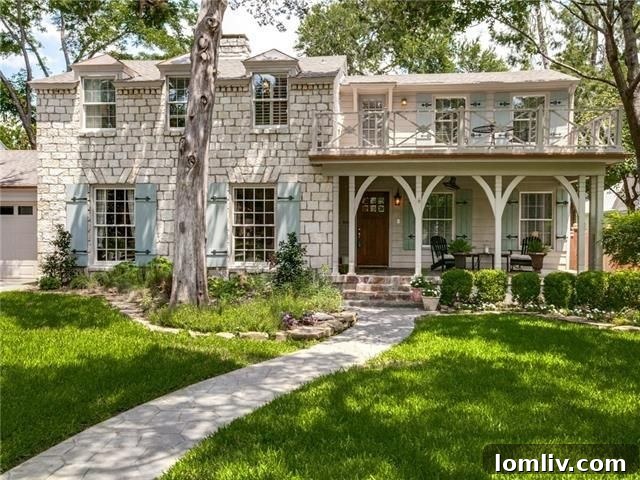
Now, consider what $700,000, or just a little more, can achieve in Dallas. For a mere $750,000, one could acquire a magnificent property at 1115 South Canterbury Court in the esteemed Kessler Park area. This isn’t a one-bedroom apartment; it’s a sprawling home boasting 2,663 square feet of living space, situated on a quarter-acre lot, featuring four spacious bedrooms and two full baths. The contrast is stark: expansive living, ample outdoor space, and significantly more bedrooms for a comparable or even slightly higher price point. This dramatic difference in purchasing power is precisely why Dallas continues to draw individuals and families seeking a higher quality of life without the prohibitive costs of other major urban centers.
Investing in Dallas: A Legacy of Opportunity
Reflecting on my own experience, I still marvel—and perhaps even a little bit “freak out”—that we managed to purchase our first home for a mere $79,000. My Lord, had I possessed the foresight then that I do now, I would have unequivocally bought five properties! This personal anecdote underscores a broader truth about the Dallas real estate market: it has consistently offered exceptional value and robust appreciation over decades, making it a powerful engine for personal wealth creation and community development.
Why Dallas Continues to Captivate
Dallas today stands as a testament to evolution and opportunity. It has skillfully navigated its complex past, emerging as a city defined by a vibrant, entrepreneurial spirit and a growing embrace of inclusivity. The strategic blend of economic opportunity, a welcoming culture, and an unparalleled housing market makes Dallas not just a place to visit or work temporarily, but a place to build a life, raise a family, and invest in a prosperous future. It’s a city where quality living isn’t a luxury, but an attainable reality, truly cementing its status as one of America’s most dynamic and desirable metropolitan areas.