
North Texas continues to solidify its reputation as a vibrant economic powerhouse, drawing job seekers and businesses alike with its burgeoning opportunities. In particular, the region has emerged as a beacon for professionals in the technology sector, boasting impressive growth rates and a favorable living environment. This week’s roundup delves into the latest developments shaping the North Texas landscape, from significant strides in job creation and the ascent of its tech industry to the prestigious recognition of leading real estate professionals by the MetroTex Association of Realtors. Understanding these trends offers valuable insights into why North Texas remains a top destination for career advancement and investment, presenting a compelling narrative of sustained prosperity and community recognition.
MetroTex Association of Realtors to Celebrate Excellence in December
The North Texas real estate community is gearing up for one of its most anticipated events of the year, as the MetroTex Association of Realtors prepares to honor its finest at the annual officer installation and awards ceremony. This prestigious gathering, scheduled for December 11 at the historic Statler Hotel, will celebrate the achievements of twelve outstanding Realtors who have been named finalists across four distinct industry award categories. These individuals represent the pinnacle of professionalism, dedication, and community service within the bustling North Texas real estate market, playing a pivotal role in shaping the region’s growth and client satisfaction.
The selection of these finalists underscores the competitive yet collaborative spirit that defines the North Texas real estate landscape. Each award category recognizes specific contributions that are vital to the industry’s integrity and progression, from exceptional sales performance to profound community engagement. The annual ceremony not only serves as a platform to acknowledge these achievements but also reinforces the high standards and ethical practices upheld by the MetroTex Association. This commitment to excellence ensures that consumers and professionals alike can trust in the quality and dedication of real estate services offered throughout the region.
The distinguished finalists for the 2018 MetroTex awards are:
Easterwood Cup Award (Realtor of the Year): This award recognizes a Realtor who has demonstrated exceptional leadership, professionalism, and service to the real estate industry and their community. The nominees are: Belinda Epps of Epps Realty, Cathy Mitchell of Keller Williams, and Teresa Rutherford of Rutherford Realty. Their collective contributions have significantly impacted the local market and set a benchmark for their peers.
Lois Hair Bernays Award (Salesperson of the Year): Honoring an individual who has exhibited outstanding sales achievements and client dedication. The finalists for this coveted award include: Carrie Hill of Dave Perry-Miller Real Estate, Sid Thom of RE/MAX Premier, and Taylor Walcik of The Blair Group. Their impressive sales records highlight their expertise and deep understanding of the North Texas housing market.
Ebby Halliday Community Service Award: This award celebrates a Realtor’s unwavering commitment to giving back to the community, reflecting the values of one of North Texas’s most revered real estate icons. The nominees are: Linda Argo of Clay Stapp + Co., Carrie Hill of Dave Perry-Miller Real Estate, and Anna Hudson of Ebby Halliday. Their efforts extend beyond transactions, making a tangible difference in the lives of North Texans.
Affiliate of the Year: Recognizing an affiliate member who has provided exemplary support and service to MetroTex and its Realtor members, crucial for the holistic functioning of the real estate ecosystem. The finalists are: Clayton Bailey of Green Scene Home Inspections, Chelsea Clayson of Tiago Title, and Anginette Cells Jorrey of Fairway Independent Mortgage. Their partnership is invaluable to the success of real estate professionals.
In addition to the awards, the ceremony will also feature the installation of the 2019 MetroTex officers, who will guide the association in the coming year. These dedicated leaders include Cathy Mitchell (Keller Williams) as President, Terry Tremaine (Century 21 Mike Bowman) as Vice President, Bill Jordan (Longhorn Real Estate) as Secretary/Treasurer, and Linda Callicutt (Coldwell Banker Residential) as Past President. Their leadership is crucial for fostering continued growth, advocating for property rights, and providing valuable resources to MetroTex members.
The event, a cornerstone of the North Texas real estate calendar, will take place on December 11 from 6:30 p.m. to 8:30 p.m. at the opulent Statler Hotel, offering an evening of networking, celebration, and reflection on the year’s accomplishments. For those interested in joining this esteemed gathering and witnessing the recognition of these outstanding professionals, further information and ticket purchase options are available by clicking here.
Dallas-Fort Worth Leads Texas in Robust Job Creation in September
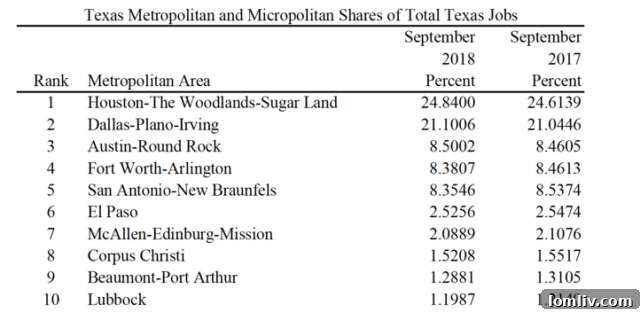
The Texas economy continued its impressive upward trajectory in September, with the Dallas-Fort Worth (DFW) metropolitan area emerging as a significant driver of statewide job growth. According to the comprehensive review of the Texas economy by the Texas A&M Real Estate Center, the Dallas-Plano-Irving metropolitan area experienced a robust 3.6 percent increase in job creation. This figure not only surpassed the state’s overall growth rate of 3.3 percent but also solidified DFW’s position as a top-tier employment hub within Texas, highlighting the region’s dynamic and resilient economic structure.
While Fort Worth-Arlington’s job growth rate of 2.3 percent fell slightly below the state average, it nonetheless secured the 11th spot statewide, demonstrating consistent, albeit more moderate, expansion. This indicates a broad-based economic health across the entire North Texas area, with both major cities contributing substantially to the state’s employment figures. The combined strength of Dallas and Fort Worth underscores the regional synergy that fuels job opportunities and attracts a diverse workforce.
When assessing their respective shares of total Texas jobs, Dallas and Fort Worth showcased their significant economic footprint. Dallas alone accounted for approximately 21 percent of the state’s total jobs, while Fort Worth contributed about 8.4 percent. These figures collectively emphasize North Texas as an undisputed economic engine for the entire state, disproportionately generating and sustaining employment opportunities across a multitude of sectors. The concentration of jobs here speaks volumes about the region’s appeal for businesses and its capacity for sustained growth.
Looking at the broader state picture, Texas experienced a remarkable gain of 406,400 non-farm jobs year over year, spanning from September 2017 to September 2018. This annual growth rate of 3.3 percent significantly outpaced the nation’s employment growth rate of 1.7 percent, reinforcing Texas’s status as a leading state for economic expansion. A considerable portion of this growth stemmed from the nongovernment sector, which added 402,500 jobs, reflecting an impressive annual growth of 3.9 percent. This robust private sector expansion also dwarfed the national rate of 2 percent, highlighting Texas’s business-friendly environment and diverse industries.
The state’s employment health was further reflected in its unemployment rates. The seasonally adjusted unemployment rate for September stood at a healthy 3.8 percent, a notable drop from the 4 percent recorded in September 2017. Even more encouraging were the actual unemployment rates for the key North Texas metropolitan areas: both Dallas and Fort Worth registered an impressive 3.4 percent. Such low unemployment rates signal a tight labor market, where employers are actively seeking talent, and job seekers have a wide array of opportunities, contributing to overall economic stability and prosperity in the region. This sustained job growth and low unemployment are key indicators of a thriving economy, making North Texas an increasingly attractive destination for both businesses and individuals.
Austin and DFW Shine in Top 10 of CompTIA Tech Town Index
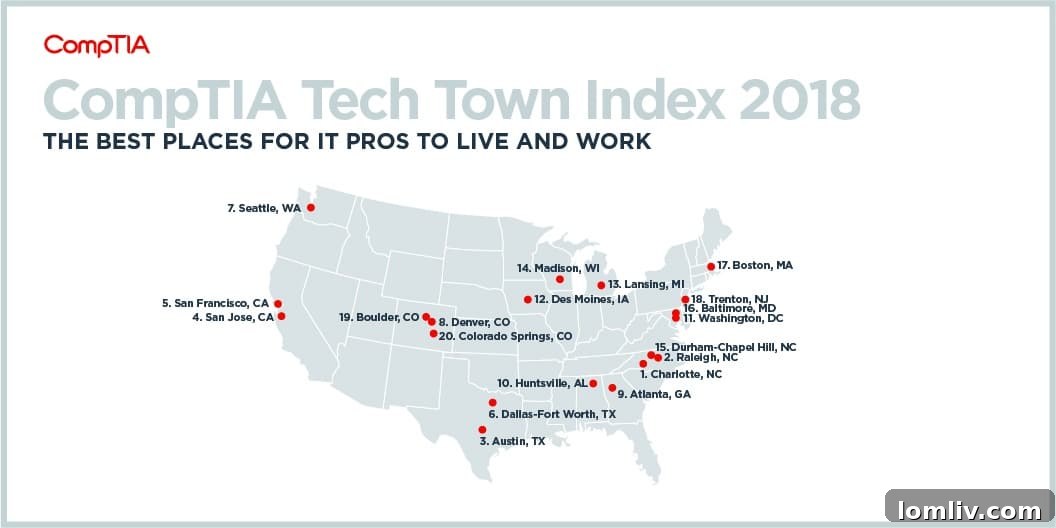
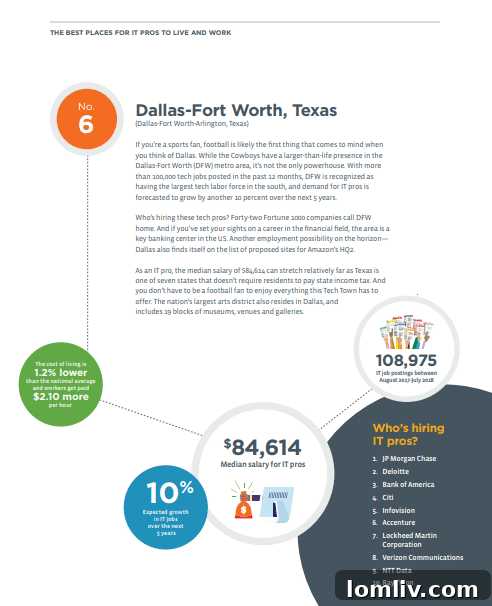
North Texas continues to assert its dominance as a premier destination for technology professionals, as both Austin-Round Rock and Dallas-Fort Worth (DFW) secured coveted spots in the top 10 of the Computing Technology Industry Association’s (CompTIA) 2018 Tech Town Index. Austin-Round Rock claimed an impressive third place, while DFW firmly established itself at the sixth position. This ranking underscores Texas’s growing stature as a national tech hub, offering a compelling blend of career opportunities, innovation, and quality of life for IT professionals. The CompTIA Tech Town Index is a crucial barometer, evaluating metropolitan areas based on a comprehensive set of factors including IT job postings, projected job growth, cost of living, and average tech salaries, making its endorsement a significant indicator of a region’s attractiveness to the tech industry.
Dallas-Fort Worth’s strong performance in the index is backed by compelling data points that highlight its burgeoning tech ecosystem. Between July 2017 and July 2018, the DFW metroplex saw an astounding 108,975 information technology job postings, reflecting a high demand for skilled tech talent across various specializations. This robust demand is projected to continue, with IT jobs in DFW expected to grow by an impressive 10 percent over the next five years. Such forward-looking growth forecasts solidify DFW’s appeal for individuals seeking long-term career stability and advancement in the rapidly evolving tech landscape.
Beyond sheer job volume and growth, DFW offers distinct advantages that enhance its appeal to tech professionals. The association specifically lauded Dallas for its favorable cost of living, which stands 1.2 percent lower than the national average. This affordability, combined with higher earning potential, creates a potent combination for financial well-being. IT professionals in DFW enjoy an average pay that is $2.10 per hour higher than the national average for similar roles, translating into a median salary of an impressive $84,614. This strong salary-to-cost-of-living ratio significantly boosts the purchasing power and overall quality of life for tech workers in North Texas, making it a highly competitive market compared to traditional, often more expensive, tech hubs.
Dallas-Fort Worth’s strategic placement in the CompTIA Tech Town Index, ranking just behind Silicon Valley’s heartland of San Jose-Sunnyvale-Santa Clara, California, and ahead of other major tech cities like Seattle-Tacoma-Bellevue, highlights its formidable competitive edge. Unlike these West Coast giants, DFW provides comparable, if not superior, opportunities for career growth in tech, coupled with the undeniable benefit of a significantly lower cost of living. This allows tech professionals to achieve a better work-life balance and greater financial security, without compromising on professional advancement. The region’s diverse economy, strong corporate presence, and continuous investment in technological infrastructure further promise a sustained trajectory for DFW as a leading force in the national and global tech industry.
As businesses continue to relocate and expand their tech operations within North Texas, the region is poised for even greater prominence. Its welcoming business environment, skilled workforce, and strategic geographical location make it an ideal ground for innovation and technological development. For IT professionals considering their next career move, DFW presents a compelling case, offering not just a job, but a thriving community where their skills are valued, their careers can flourish, and their quality of life is genuinely enhanced.