
The dynamic Dallas–Fort Worth (DFW) housing market is renowned for its constant evolution. One moment, it’s experiencing unprecedented growth; the next, it might be adjusting to new economic realities, yet always maintaining a robust pulse. For seasoned real estate professionals in North Texas, this pattern of shifts—in pricing, migration, interest rates, and rental demand—is a familiar landscape.
Navigating the DFW rental market presents a unique blend of challenge and opportunity for property managers. The continuous need to adapt to rapid changes can be demanding, but a keen understanding of underlying trends offers a distinct advantage. In a region as fast-paced as Dallas–Fort Worth, foresight and timely adjustments are not just beneficial, but critical for sustained success.
Therefore, for anyone managing rental properties in the bustling North Texas area, the pertinent question isn’t whether the market will change in the upcoming year, but rather if your strategies are proactively aligned to capitalize on these shifts. This article delves into several pivotal trends that are actively reshaping the DFW rental landscape, providing insights on how to strategically align with them for optimal property performance.
DFW’s Population Boom Shows No Signs of Slowing
Dallas–Fort Worth has consistently ranked among the fastest-growing metropolitan areas in the United States, a testament to its enduring appeal. Despite broader economic fluctuations and occasional headlines suggesting a cooling housing market, the influx of new residents into DFW remains robust. This sustained growth is fueled by a multitude of factors, drawing people from across the country and beyond.
Many new residents are drawn by the promise of burgeoning job opportunities, particularly in sectors like technology, finance, and logistics, which have established strong footholds in the region. Others seek the relative affordability DFW offers compared to pricier coastal cities, providing a higher quality of life for their housing budget. Often, the decision to relocate is also influenced by personal networks, with friends and family encouraging others to explore what Dallas has to offer, creating a powerful organic migration pattern.
According to comprehensive data from the U.S. Census Bureau, the Dallas–Fort Worth metroplex welcomed more than 170,000 new residents in a single year, solidifying its position as one of the nation’s fastest-expanding large metropolitan areas. This remarkable demographic expansion inevitably exerts significant pressure on the housing supply, ensuring that rental demand in DFW remains exceptionally strong.
For property managers, the implication is clear: a growing population translates directly into a larger pool of prospective renters. This is especially true during transitional phases, when newcomers are still familiarizing themselves with the region and are more inclined to rent before making a long-term home purchase commitment. Renting offers a flexible, lower-commitment pathway for new arrivals to explore different neighborhoods, understand market dynamics, and ultimately decide where they wish to establish permanent roots. This makes the initial rental experience a critical gateway for many entering the DFW market.
Suburban Rentals Emerge as Quiet Victors in DFW
Just a few years ago, the narrative around urban living suggested it was the inevitable future of residential development, characterized by bustling downtown apartments, vibrant walkable districts, and an abundance of amenities. However, in the expansive Dallas–Fort Worth area, this storyline has significantly evolved, revealing a pronounced and steady surge in suburban rental demand.
Cities surrounding the core, such as Frisco, McKinney, Denton, and Arlington, are now experiencing considerable interest from a diverse range of renters. These individuals and families are seeking the tangible benefits of more space, often coupled with larger properties and yards, without sacrificing convenient access to DFW’s thriving economic hubs and diverse job markets. The allure of suburban life, offering a blend of spaciousness and connectivity, is proving increasingly irresistible.
This trend is particularly noticeable among growing families who prioritize access to highly-rated school districts, safer neighborhoods, and community-oriented amenities. Remote workers, too, are a significant driving force behind this shift. With many professionals now working from home for several days a week, the luxury of an extra bedroom has transformed into the necessity of a dedicated home office. This fundamental change in work-life dynamics places a premium on properties that offer greater square footage and adaptable layouts.
Astute property managers who recognize and respond to this shift can strategically refine their marketing approaches. Rental listings that prominently feature attributes like generous space, versatile floor plans, private outdoor areas, and proximity to family-friendly neighborhood amenities are likely to garner significantly more interest. Moving beyond outdated marketing strategies that solely emphasize downtown proximity or urban convenience is crucial. Instead, highlighting how a property supports a modern, balanced suburban lifestyle will resonate more effectively with today’s discerning DFW renters.
DFW Renters: More Discerning and Data-Driven Than Ever

The era of quick, impulse-driven rental decisions is largely over. A decade ago, many renters would tour a handful of properties, choose one that met basic criteria, sign a lease, and move in. Today’s Dallas–Fort Worth renters approach their housing decisions with a remarkable level of strategic planning and meticulous research, reflecting a profound shift in consumer behavior.
Modern renters are deeply engaged in pre-screening properties and neighborhoods online. They meticulously compare rent trends across various submarkets, analyze commute times to workplaces, diligently check school ratings for their children, and even assess the convenience of access to essential amenities like grocery stores and healthcare facilities. Their search extends beyond mere square footage and rent price; they are actively evaluating how a prospective rental property integrates into and enhances their desired lifestyle.
This increased sophistication is largely empowered by technological advancements. A wealth of information is now readily available through comprehensive listing platforms, detailed neighborhood review sites, and advanced rental analytics tools. Tenants can gather an astonishing amount of data and insights long before they ever commit to an in-person showing, allowing them to narrow down their options with greater precision and confidence. This means the initial online impression is more critical than ever.
Consequently, property managers in DFW must elevate their approach beyond simply listing a vacant unit. High-quality, professional photographs are essential, as are compelling and descriptive narratives that go beyond generic property features. Providing rich neighborhood context – including details about local parks, dining, entertainment, and community events – can differentiate a listing. A description that articulates how a property fulfills specific lifestyle needs or solves common renter challenges will significantly outperform a listing that merely itemizes basic facts. This subtle yet crucial difference in presentation can greatly influence a renter’s decision-making process, highlighting the importance of thoughtful, tenant-centric marketing.
The Build-to-Rent Trend Continues its Rapid Expansion in DFW
One of the most transformative and fascinating developments within the Dallas–Fort Worth real estate landscape is the accelerating expansion of build-to-rent (BTR) communities. These innovative neighborhoods are specifically designed and constructed with renters in mind, typically featuring single-family homes that are professionally managed and often include a range of shared amenities such as clubhouses, fitness centers, and communal green spaces. This model merges the privacy and space of single-family living with the convenience and flexibility of renting.
While the rise of BTR communities might, at first glance, appear to present direct competition to traditional rental properties, it also illuminates a crucial underlying aspect of current housing demand. It unequivocally demonstrates that a significant segment of the population desires the experience and benefits of living in a detached house – including a yard, more space, and greater privacy – but without the substantial long-term financial commitment and responsibilities associated with homeownership.
As noted by theearnesthomes.com, many contemporary renters are increasingly gravitating towards single-family rental communities precisely because they offer an attractive balance: the desirable attributes of a house (like expansive living areas and private outdoor spaces) coupled with the flexibility, professional maintenance, and lower upfront costs inherent in renting. This compelling combination has positioned build-to-rent developments as one of the fastest-growing and most sought-after housing segments not just in Texas, but across the nation.
For property managers overseeing traditional rental portfolios, this trend offers valuable insights and opportunities. Properties that can mimic or provide similar benefits – such as homes with private yards, spacious garages, flexible interior layouts, or access to desirable community features – are well-positioned to attract strong interest. Understanding the factors that make BTR so appealing can help managers highlight comparable advantages in their existing properties. Essentially, the ‘product’ – the quality of the living experience and the amenities it offers – is proving to be as crucial, if not more so, than merely the rental price point. Adaptability in highlighting these features is key to staying competitive.
Migration Patterns Are Pinpointing DFW Neighborhood Demand
The growth of Dallas–Fort Worth is far from haphazard; it’s a nuanced process where specific areas disproportionately absorb new residents. Understanding these intricate migration patterns is paramount for property managers aiming to optimize their listings and investment strategies. Different neighborhoods act as magnets for distinct demographic profiles, creating localized pockets of demand.
Certain districts, particularly those surrounding major corporate campuses or burgeoning tech hubs, become focal points for corporate relocations and young professionals. Other areas, known for their vibrant social scenes and diverse housing options, appeal more to younger renters seeking an urban or semi-urban lifestyle. Conversely, neighborhoods boasting top-tier school districts, family-friendly parks, and a sense of community stability consistently attract families looking to settle down. Identifying these patterns allows property managers to tailor their marketing and property offerings more precisely.
For instance, areas strategically located near significant employment corridors or where substantial tech industry expansions are underway often experience a noticeable surge in rental demand long before these trends become widely apparent in broader market statistics. This anticipatory demand creates invaluable opportunities for those who are closely monitoring the economic landscape.
As highlighted by Westrom Group in their recent housing discussions, rental demand often correlates directly with employment growth patterns. When major job expansions occur within specific corridors, localized rental pressure typically manifests within a few months, impacting vacancy rates and rental prices. This underscores the critical importance of keeping an eye on announcements regarding new corporate headquarters, significant job creations, and planned infrastructure projects. These indicators can serve as invaluable early clues, offering property managers a strategic advantage in forecasting where the next waves of rental demand will emerge. It may sound analytical, but it fundamentally boils down to diligent observation and informed anticipation.
Pricing Strategy: A More Critical Factor Than Ever in DFW
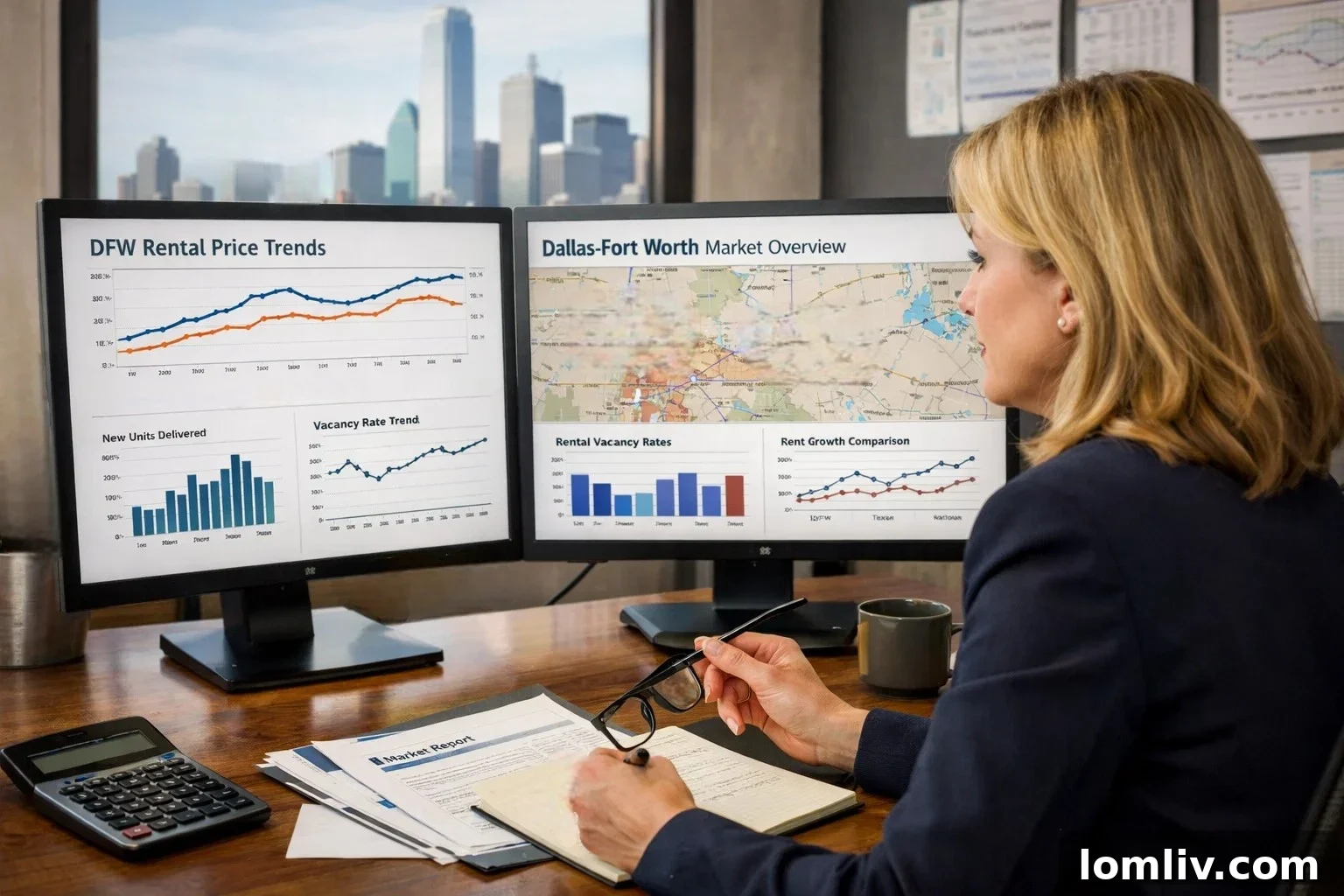
One aspect that frequently catches some landlords and less experienced property managers off guard in the Dallas–Fort Worth market is the heightened sensitivity of renters to pricing adjustments. In today’s competitive and transparent rental environment, even minor differences in rent can have a substantial impact on a property’s marketability and vacancy period.
In a dynamic market like DFW, a rental property priced just marginally above its truly comparable listings can languish on the market for weeks longer than anticipated. This extended vacancy period, when calculated against the potential rental income, often far outweighs any perceived benefit from the slightly higher asking price. The financial drain of an empty unit—lost rent, ongoing maintenance, and utility costs—quickly erodes profitability, making optimal pricing a top priority.
Sophisticated property managers who meticulously study micro-market pricing trends are often able to significantly reduce vacancy times and maximize rental income. This isn’t necessarily about perpetually lowering rent, but rather about understanding the nuanced market value and strategically positioning the property within its competitive set. It involves analyzing direct comparables, considering seasonal demand, and factoring in the property’s unique attributes and amenities.
Crucially, renters are not just looking at a single listing in isolation; they are actively comparing multiple properties side-by-side. They cross-reference features, locations, and, most importantly, prices. Therefore, a data-driven approach to pricing, combined with a deep understanding of what prospective tenants perceive as fair value, is indispensable. Accurately assessing and adjusting pricing strategy based on real-time market data is a powerful tool for maintaining high occupancy rates and achieving superior financial returns in the DFW rental market.
Professional Management: A Growing Competitive Edge in DFW
In the rapidly expanding and increasingly complex Dallas–Fort Worth rental market, an often-underestimated factor is the quality of property management. While many rental properties across DFW are still managed directly by individual owners – some doing an excellent job, others struggling to keep pace – renters are becoming acutely aware of the tangible differences that professional management brings to their living experience.
Attributes such as clear and proactive communication, prompt and efficient maintenance responsiveness, and streamlined, organized leasing processes have evolved into surprisingly powerful tools for tenant satisfaction and retention. Tenants who feel genuinely supported, whose concerns are addressed swiftly, and who experience transparent and fair dealings are far more likely to renew their leases. This stability in occupancy significantly mitigates vacancy risks, which in turn directly contributes to improved property performance and higher long-term returns for property owners.
This escalating demand for quality service is a primary reason why professional property management companies are now playing a substantially larger and more critical role in the DFW rental housing sector than they did a decade ago. The market has simply become too intricate and competitive for an ad-hoc or amateur approach to suffice. Effective property management today involves navigating complex legal frameworks, implementing advanced marketing strategies, leveraging technology for tenant relations, and maintaining properties to a high standard, all while optimizing financial performance.
The expertise, resources, and dedicated service offered by professional property managers not only attract higher-quality tenants but also ensure compliance, mitigate risks, and ultimately enhance the overall value and profitability of rental assets. For property owners in DFW, investing in professional management is no longer just a convenience; it’s a strategic competitive advantage that delivers measurable benefits in an ever-evolving market.
The Big Picture: Adaptability Drives Success in DFW Rentals
The trajectory of real estate trends in Dallas–Fort Worth is rarely linear or entirely predictable. While some market predictions align with reality, others quickly fade, and occasionally, the market introduces unforeseen dynamics. Yet, amidst this flux, a few fundamental principles consistently underpin the health and direction of the rental sector.
- Sustained population growth invariably fuels robust housing demand, a cornerstone of DFW’s market strength.
- Consistent employment growth acts as a powerful catalyst for migration, drawing new talent and families to the region.
- Evolving lifestyle preferences profoundly shape rental choices, influencing everything from property types to desired amenities and neighborhood selections.
Property managers who cultivate a persistent sense of curiosity about these overarching trends are consistently better positioned for long-term success. Their advantage doesn’t stem from an infallible ability to predict the future—a feat no one can perfectly achieve—but rather from their capacity to discern subtle shifts early on and adapt their strategies accordingly. In a diverse and dynamic market like Dallas–Fort Worth, this proactive flexibility and responsiveness can make a monumental difference in optimizing property performance and achieving sustained profitability.
Ultimately, the most intelligent and effective strategy in the DFW rental market often involves a simple yet profound act: paying close and continuous attention to the nuanced signals the market is quietly, but consistently, conveying. Remaining informed, agile, and tenant-centric will be the hallmarks of successful property management in North Texas for years to come.