

The quest for efficiency and innovation in urban development has led many cities to explore cutting-edge solutions. Dallas, a rapidly growing metropolitan hub, finds itself at a pivotal moment, closely observing a groundbreaking initiative in Altamonte Springs, Florida. This Floridian city recently made headlines as the first in the U.S. to integrate artificial intelligence (AI) into its site plan review process, a move that has profoundly captured the attention of Dallas leaders. The Dallas Development Services Department (DSD) is actively seeking transformative improvements to its permitting system, a system historically plagued by delays and operational challenges.
The necessity for reform within Dallas’s permitting framework became acutely apparent after Development Services Director Andrew Espinoza spent over a year painstakingly clearing a substantial permit backlog. This bottleneck, significantly exacerbated by the operational disruptions of the COVID-19 pandemic, highlighted deep-seated inefficiencies. Even with recent legislative advancements allowing developers to utilize third-party experts for reviews, the existing processes remain cumbersome, costly, and resource-intensive. Alarmingly, the department is currently facing a significant financial strain, described as “hemorrhaging cash,” partly due to outdated fee structures and an inadequate workforce, grappling with 78 vacant positions that further impede its operational capacity.
The AI tool, as successfully implemented in Altamonte Springs, represents a paradigm shift. Crucially, officials emphasize that this technology is not designed to replace human expertise but rather to augment and enhance it. This innovative approach aims to streamline complex review processes, reduce human error, and free up skilled staff to focus on more nuanced and critical aspects of urban planning and development. The preliminary results from Altamonte Springs have been highly encouraging, demonstrating a tangible pathway for Dallas to overcome its current challenges.
Dallas City Council members Chad West and Gay Donnell Willis have already taken proactive steps, engaging in a virtual meeting with the AI company partnering with Altamonte Springs. During this session, they received compelling data indicating that staff efficiency in reviews improved by over 60 percent. This dramatic improvement has galvanized enthusiasm within Dallas’s leadership. Following this initial engagement, Director Espinoza and Planning and Urban Design Director Andrea Gilles have scheduled a direct meeting with the California-based AI operating company later this month, signaling Dallas’s serious intent to explore this technology further. The potential for such a significant leap in efficiency presents a beacon of hope for a department struggling with resource constraints and public dissatisfaction.
Councilman West expressed profound optimism regarding these developments. He intends to invite the department directors to brief the Government Performance and Financial Management Committee once their meeting with the AI company concludes. West eloquently articulated the transformative potential of such technology, stating, “Imagine having a tool on hand that can cut out all of the guesswork, personalities, and ambiguity, allowing staff and developers to focus on the technical aspects of proposed projects. It’s time for Dallas to embrace the future.” This sentiment underscores a growing consensus among Dallas leaders that technological adoption is no longer an option but a necessity for modern governance and economic competitiveness.
The embrace of AI extends beyond the Development Services Department. City Auditor Mark Swann, speaking at a recent GPFM meeting, highlighted AI as the “new frontier” within his field. He noted that while AI discussions were prevalent at every conference he attended, concrete applications for municipal auditing were only just beginning to materialize. However, Swann affirmed that his department already utilizes analytical software for managing vast datasets, indicating a foundational readiness for more advanced AI integration. This widespread recognition of AI’s potential across various city departments suggests a broader strategic pivot towards smart city solutions in Dallas.
Development Services Department: A Snapshot of Current Progress and Challenges
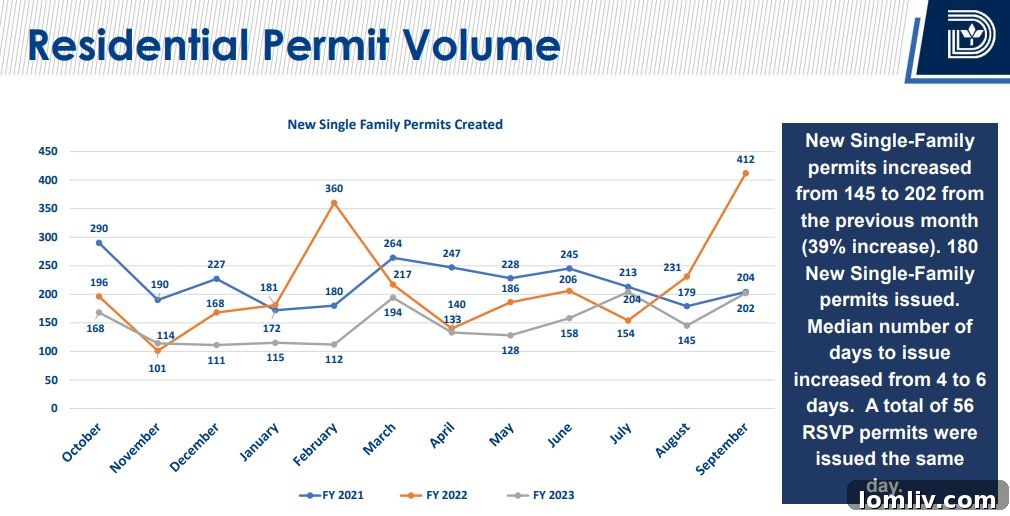
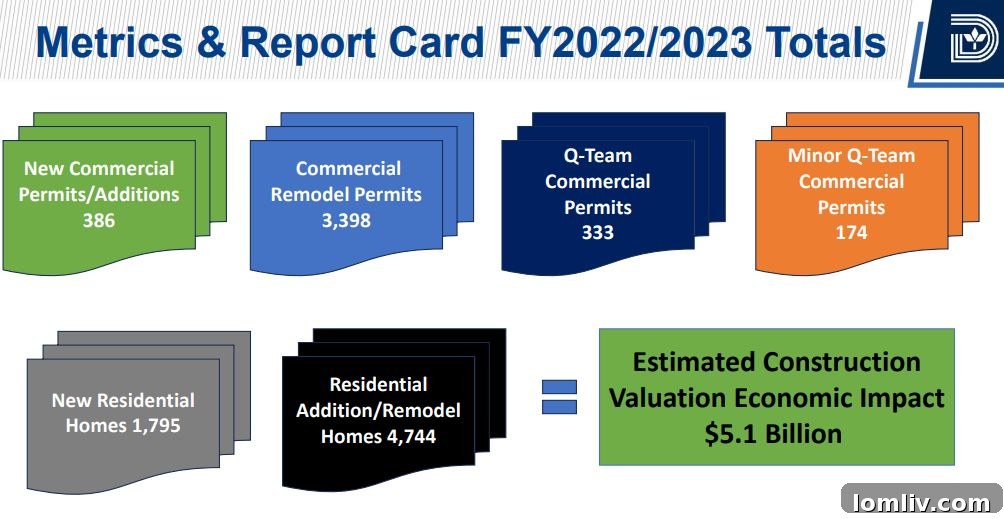
Amidst the discussions of future-forward technologies, the Development Services Department continues to navigate its current operational landscape. Director Espinoza provided an update to council members during an Economic Development Committee meeting earlier this month, noting a significant increase in residential permitting volume. In September, residential permit applications surged by approximately 39 percent, reflecting a robust housing market and persistent demand within the city. This uptick led to the issuance of 180 new single-family permits, with a notable achievement of 56 same-day permits being processed.
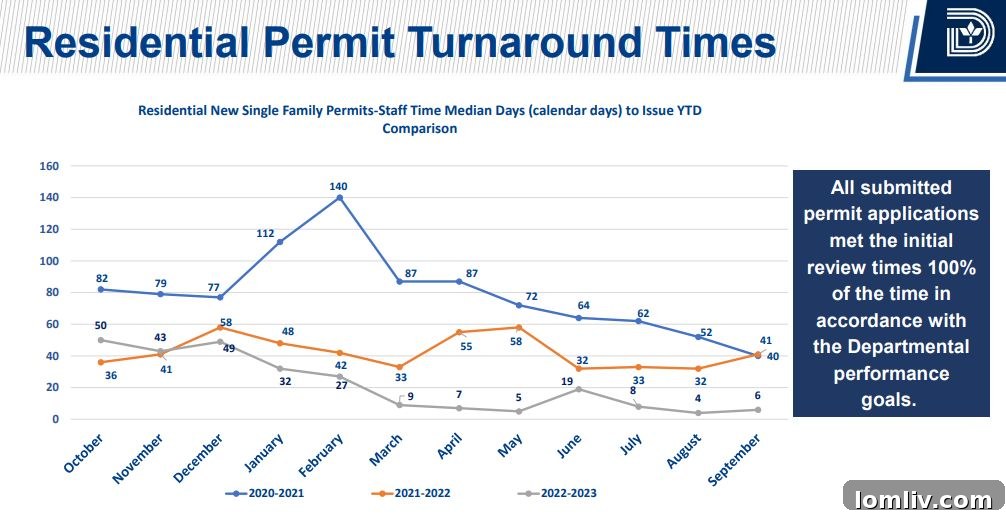
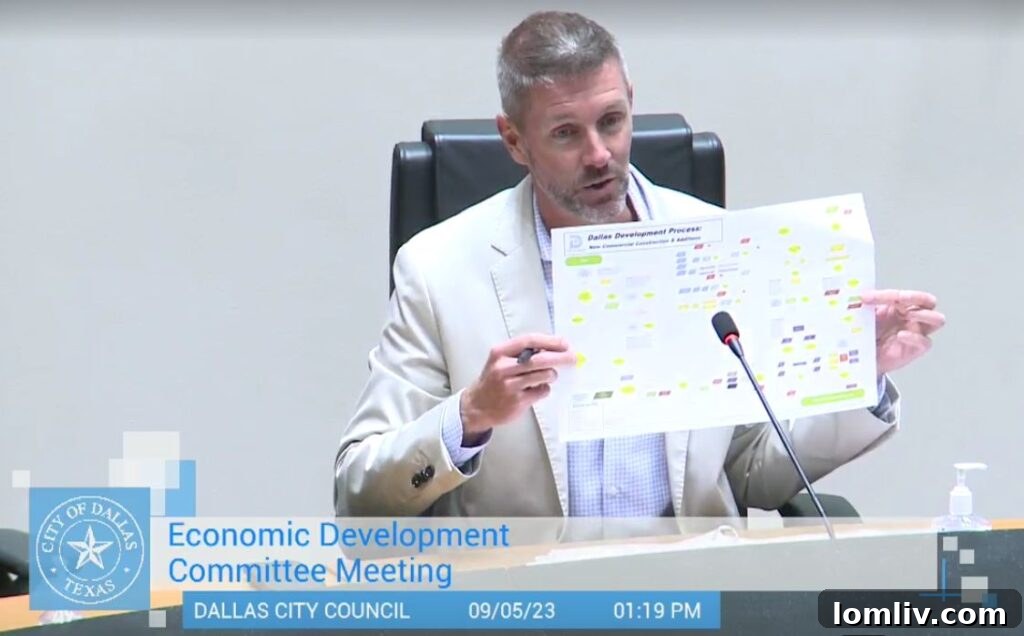
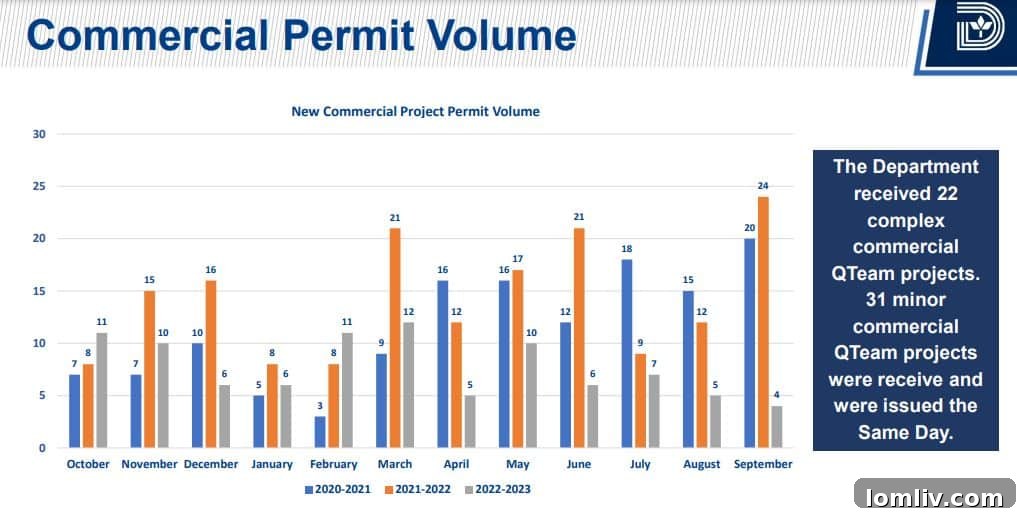
However, this positive trend in volume was accompanied by a slight, yet concerning, increase in the median number of days required to issue residential permits, rising from four to six days. This indicates that while demand is high, the underlying processes still face challenges in scaling efficiently. The primary bottleneck, as city staff have consistently pointed out, remains commercial permitting. The inherent complexity of commercial projects, encompassing intricate zoning regulations, extensive review requirements, and multifaceted stakeholder coordination, contributes significantly to protracted timelines. This segment of the permitting process is particularly vital for economic development, as it directly impacts commercial investments, job creation, and the city’s tax base.
In a direct effort to enhance transparency and accountability, the Development Services Department is preparing to launch a comprehensive permit dashboard in January. This innovative online portal will empower stakeholders within the development community – including developers, architects, and contractors – to track their permit applications in real-time. The dashboard will not only provide status updates but also aim to identify specific delays and their underlying causes, fostering greater clarity and communication. Concurrently, the department is strongly encouraging, and progressively moving towards, a policy where customers submit 100 percent of their plans online. This digital transformation is expected to reduce administrative burdens, accelerate initial reviews, and minimize the physical handling of documents, thereby contributing to overall process efficiency.
Espinoza also highlighted another critical aspect of streamlining the permitting process: ensuring the quality of initial submissions. He stated, “We want to move progressively toward only accepting applications that are properly platted and zoned.” He elaborated that applications submitted without the appropriate zoning or proper platting frequently stagnate within the system, creating unnecessary delays and bogging down the entire review process for all applicants. By enforcing stricter pre-submission standards, the DSD aims to reduce rework, prevent bottlenecks, and ensure a smoother journey for projects that are ready for review.
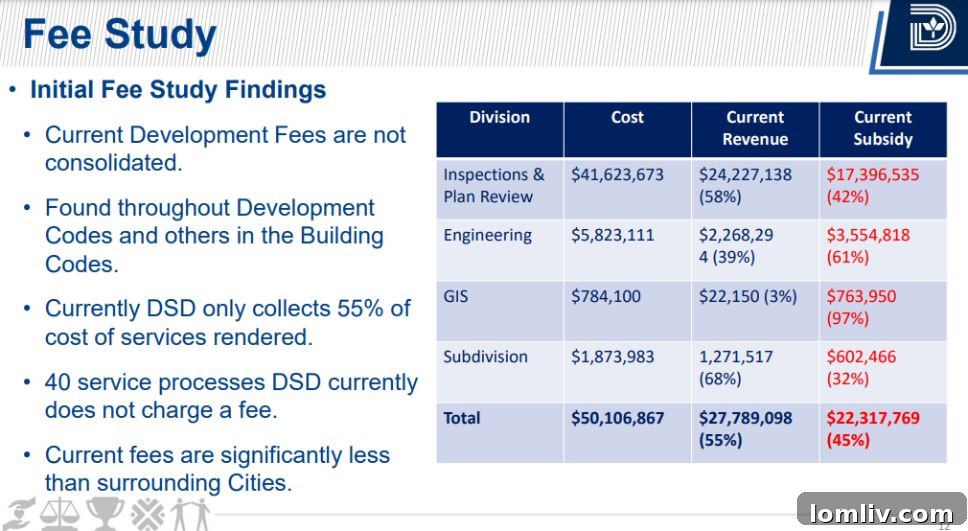
Beyond process improvements, financial sustainability is a critical focus for the DSD. The department’s fee structure has not been adjusted since 2015, a period during which construction costs and operational expenses have dramatically increased. A recent review by MGT Consulting of America revealed that an astonishing 40 services provided by the department are not associated with any fee whatsoever. Furthermore, the fees that are assessed are disproportionately lower when compared to those levied by other major North Texas cities, creating an unlevel playing field and a significant revenue shortfall for Dallas. MGT Consulting is currently conducting a comprehensive fee study, the findings of which are slated to be presented to the city council on December 4. This study is anticipated to provide a clear roadmap for recalibrating fees to better reflect the true cost of services and align with regional standards.
Economic Development Committee Chair Tennell Atkins voiced strong concerns about the financial implications of these outdated practices, estimating that the city is missing out on approximately $22 million in potential revenues and new development opportunities while awaiting the fee study and updated processes. Atkins asserted his committee’s resolve to promptly address the issue, stating, “My job on this committee is to fix this, and we’re going to fix this right now. It’s very simple. We’re undercharging. That’s unacceptable.” His forceful comments underscore the urgency felt by city leaders to rectify the financial hemorrhaging and ensure the department is adequately resourced to support Dallas’s economic growth ambitions. The department’s 78 vacant positions, 25 of which were newly added in the budget adopted on October 1st, further highlight the critical need for increased funding and more competitive compensation to attract and retain essential talent.
For those interested in a deeper dive into the department’s current status and future plans, the entire Nov. 6 presentation can be accessed and reviewed here.
What’s Next For The Dallas Development Services?
Director Espinoza candidly acknowledged that the department’s current permit issuance model is unsustainable. This frank admission sets the stage for significant reforms aimed at transforming the DSD into a more efficient, financially stable, and developer-friendly entity. The path forward will undoubtedly involve a multi-pronged approach, integrating technological innovation, process reengineering, and strategic financial adjustments.
However, the journey to reform has not been without its moments of intense scrutiny. Councilman Omar Narvaez, in particular, challenged the department’s leadership during a recent discussion. He questioned why the DSD requested new positions in the Fiscal Year 2024 budget, adopted just prior, when officials seemingly already knew the department was “hemorrhaging cash” due to a lack of competitive permitting fees. Narvaez’s comments reflected a sentiment of disappointment and a demand for greater transparency and proactive communication from city departments.
“That’s not good. You came to this body and you asked us for cash,” Narvaez asserted, expressing his frustration. “You knew we would give you anything you wanted because we wanted this fixed. I feel like this may have been done on purpose in order to get your way … I trust you guys to do your work and get it done.” These strong remarks underscore the council’s expectation that departments provide a complete and accurate picture of their financial health and operational needs at all times. In response, Development Services Assistant Director Vernon Young explained that unforeseen expenses, including the purchase of a new building, software upgrades, and the complexities of optimizing third-party vendor utilization, contributed to the financial strain. He admitted, “There were signs there, but without this full report, it was unclear how that would affect us in the future.”
In light of this, Councilman Narvaez reiterated the importance of proactive communication, asking that departments advise the City Council immediately if a negative financial trend or operational challenge appears to be forming. This would ensure that elected officials are not “blindsided” by issues and can collaboratively work towards solutions well in advance. The future of the Dallas Development Services Department hinges on its ability to embrace these modern solutions, foster transparency, and demonstrate accountability to its stakeholders. By leveraging AI, refining its processes, and stabilizing its finances, Dallas aims to cultivate a permitting environment that not only supports its vibrant growth but also serves as a national model for efficiency and innovation in urban development.