The U.S. mortgage market is currently navigating a period of significant transformation, marked by a notable slowdown in activity. This shift is primarily driven by the consistent rise in interest rates, which has diminished demand among prospective homebuyers and homeowners alike. The ripple effect of these elevated rates is palpable across the entire housing sector, prompting would-be purchasers to reconsider their timing and making current homeowners hesitant to pursue refinancing options. Understanding these dynamics is crucial for anyone involved in or affected by the real estate market.
The Federal Reserve’s aggressive stance on controlling inflation through a series of interest rate hikes has directly impacted the cost of borrowing for home loans. As mortgage rates climb, the affordability threshold for many potential homebuyers is significantly challenged. This scenario effectively prices a considerable segment of the population out of the market, while others adopt a “wait and see” approach, hoping for more favorable conditions. Consequently, the housing market has experienced a distinct cooling, characterized by fewer buyers willing or able to commit to new mortgages, leading to reduced transaction volumes nationwide.
Current U.S. Mortgage Rates 2024: An In-Depth Look
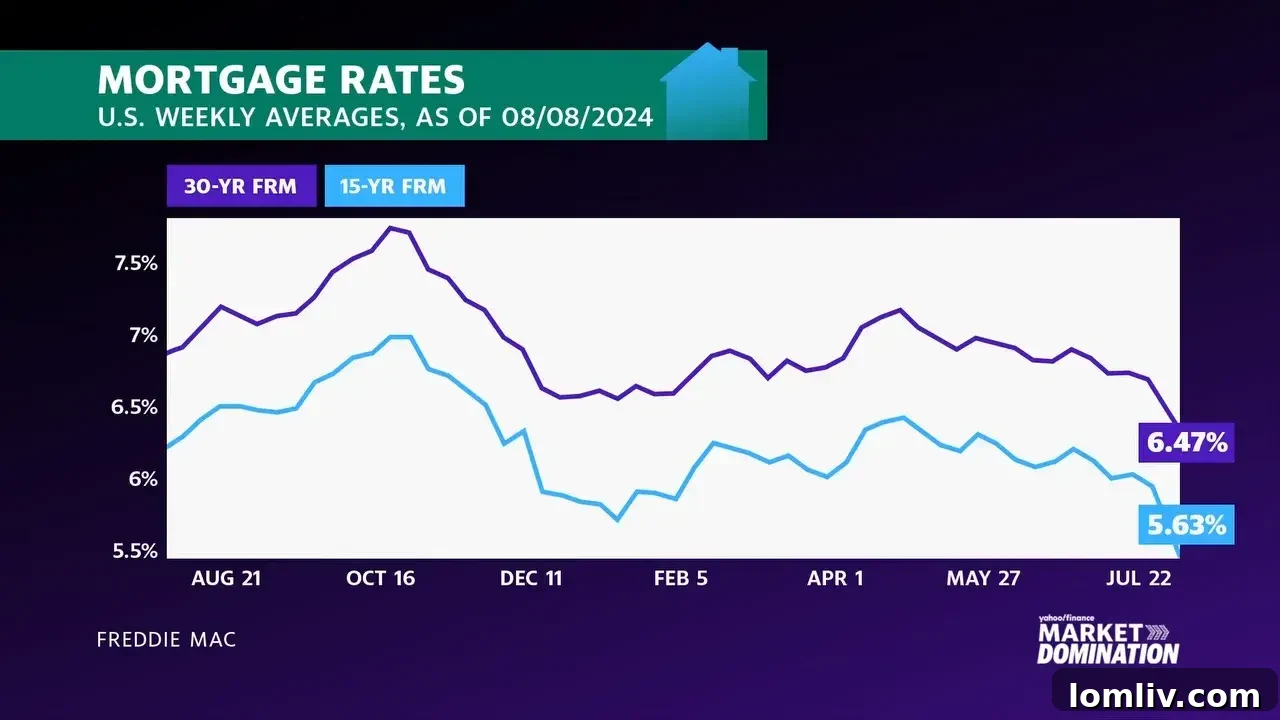
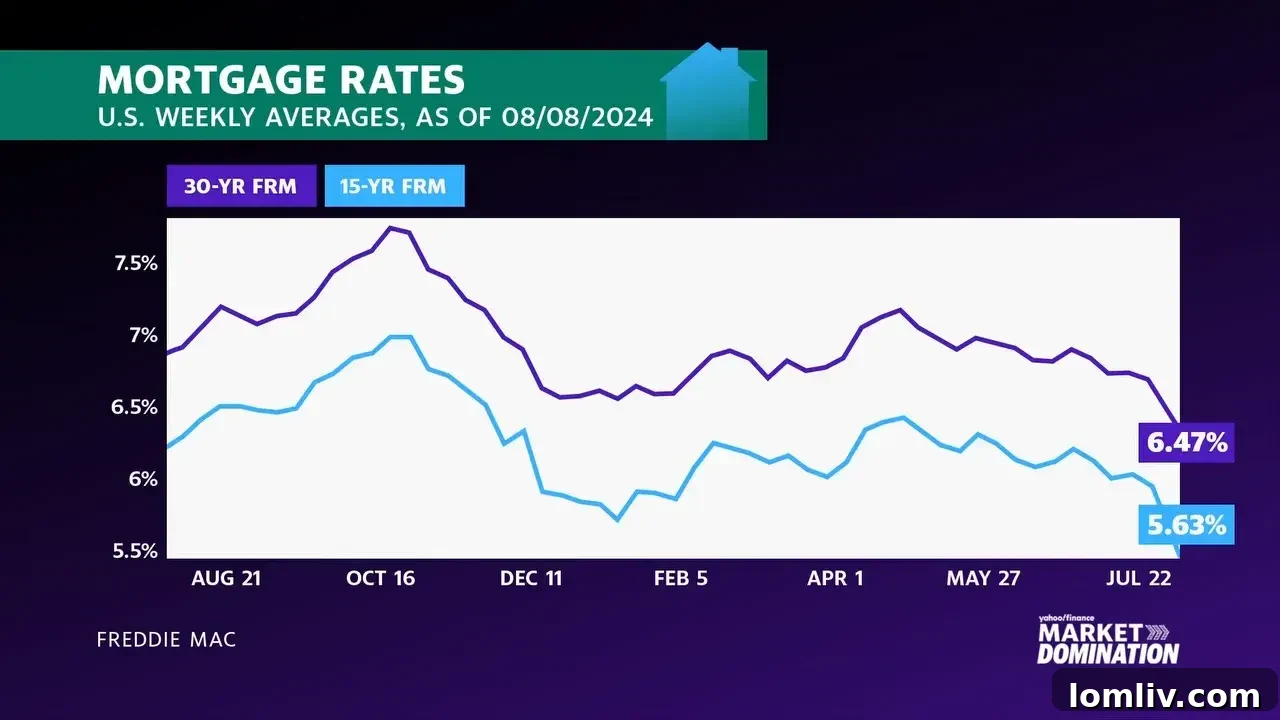
Analyzing the current mortgage rate landscape provides crucial insights into the present market conditions and helps prospective buyers and refinancers make informed decisions. The following table summarizes key mortgage rates, offering a comparison to recent past performance to highlight prevailing trends and shifts in the cost of borrowing.
| Loan type | Current | 4 weeks ago | One year ago | 52-week average | 52-week low |
|---|---|---|---|---|---|
| 30-year fixed | 6.59% | 7.04% | 7.12% | 7.22% | 6.59% |
| 15-year fixed | 5.89% | 6.38% | 6.54% | 6.55% | 5.89% |
| 30-year jumbo | 6.80% | 7.06% | 6.95% | 7.18% | 6.80% |
A closer look at these figures reveals interesting trends. While current rates for 30-year fixed and 15-year fixed mortgages are notably lower than they were four weeks ago and a year ago, they remain elevated compared to the historically low rates seen in recent years. For instance, the 30-year fixed rate has dropped from over 7% to 6.59%, reaching its 52-week low. This slight moderation might offer a glimmer of hope for some buyers, but the overall context of higher borrowing costs persists. The 15-year fixed mortgage, often favored by buyers seeking to pay off their loans faster with lower overall interest, also reflects this pattern, currently standing at its 52-week low of 5.89%.
Jumbo mortgages, typically used for loan amounts exceeding conventional limits, follow a similar trajectory, albeit often with slightly higher rates due to their larger principal. The 30-year jumbo rate, at 6.80%, is also at its 52-week low, indicating a broader market adjustment. These rate movements are critical indicators, influencing monthly mortgage payments and the total cost of homeownership over the life of the loan. Even small fluctuations can translate into significant financial differences for borrowers, underscoring the importance of monitoring these trends closely.
The Dual Challenge: High Home Prices and Soaring Interest Rates
The slowdown in the mortgage market is particularly pronounced in regions already grappling with elevated home prices. The confluence of high property valuations—which stretch beyond the financial reach of many potential buyers—and rising interest rates on home loans creates an acute affordability crisis. This dual challenge significantly impacts sales volumes, making the prospect of homeownership unattainable or exceedingly difficult for a large segment of the population. Consequently, fewer prospective buyers are entering the market with urgency, opting instead to delay purchases in anticipation of more favorable economic conditions or a potential easing of prices and rates.
This situation has led to an observable shift in buyer behavior. Many are now engaging in a more cautious and deliberate search, expanding their geographic parameters, or reconsidering the type of property they can realistically afford. The days of intense bidding wars and waived contingencies that characterized the recent boom market are largely behind us in many areas, replaced by a more balanced, albeit subdued, environment where buyers possess slightly more negotiation power, provided they can secure financing at acceptable terms.
The Fading Appeal of Refinancing
Another significant casualty of the increased interest rates is the refinancing market. The appeal of refinancing has substantially waned for a vast number of borrowers who previously locked in historically low rates. During the pandemic-driven housing boom, many homeowners secured mortgages with interest rates in the 2% to 4% range. Confronted with current rates hovering between 6% and 7%, the financial incentive to refinance has all but evaporated. The potential savings that once motivated borrowers to pursue lower rates are no longer compelling, as current rates are often higher than their existing ones, making refinancing an unviable or even detrimental option.
This phenomenon has created a “golden handcuff” effect, where homeowners are reluctant to sell their current properties, knowing that moving to a new home would entail taking on a new mortgage at a significantly higher rate. This reluctance contributes to a scarcity of inventory in the housing market, further complicating the landscape for active buyers. The sharp decline in refinancing activity adds another layer of complexity to the overall mortgage market, significantly impacting mortgage lenders and their operational strategies.
Broader Economic Implications of a Slowing Housing Market
The current reality on the ground poses challenges not only for individual buyers and homeowners but also for the broader economy. A robust and active housing market has historically been a significant driver of economic growth, stimulating various related sectors. Therefore, any prolonged decline in mortgage and housing activity carries the potential for long-term economic repercussions. With fewer people buying homes or refinancing, the ripple effect extends far beyond just real estate transactions.
Industries intrinsically linked to the housing sector face considerable headwinds. The construction industry, for instance, may experience a slowdown in new home builds and residential development projects, potentially leading to job losses and reduced investment. Similarly, the real estate sector, including agents, brokers, and ancillary services, sees reduced transaction volumes and commissions. Furthermore, the home improvement and retail sectors, which thrive on new homeowners furnishing and renovating their properties, could also suffer from decreased consumer spending in these categories. This interconnectedness highlights how a struggling mortgage market can send tremors throughout the entire economic ecosystem, affecting employment, consumer confidence, and overall economic output.
Navigating the Future: Buyer Sentiment and Market Outlook
Despite the prevailing challenges, a segment of buyers remains determined to proceed with purchases. For some, the fear of potential future rate increases, or the desire to establish roots, outweighs the current obstacles. These highly motivated buyers are often characterized by strong financial positions, greater flexibility, or a specific need to move. However, the general atmosphere across the market has shifted towards prudence and caution. The dominant sentiment among most prospective buyers is to wait for clearer signs of stability in the economic outlook and a more favorable interest rate environment before committing to significant long-term financial decisions like a home purchase.
Economists and housing market analysts are closely monitoring inflation data, the Federal Reserve’s policy decisions, and employment figures to predict future rate movements. While some forecasts suggest a potential easing of rates later in the year if inflation continues to cool, significant uncertainty remains. This uncertain outlook compels many to hold off, hoping to time their purchase effectively to secure the best possible terms. For those who choose to proceed, strategies like adjustable-rate mortgages (ARMs) or exploring specific local markets with more inventory or less competition might be considered, though these also come with their own set of risks and considerations.
Conclusion: A Market in Flux
The U.S. mortgage market in 2024 is undoubtedly in a state of flux, shaped by elevated interest rates, persistent affordability challenges, and a significant decline in refinancing activity. These factors have created a cautious environment for both buyers and sellers, leading to a broader slowdown across the housing sector. The ripple effects extend beyond real estate, impacting various industries and the national economy.
While the current landscape presents considerable hurdles, the market’s evolution will depend heavily on macroeconomic factors, particularly the Federal Reserve’s ongoing battle against inflation and the trajectory of interest rates. For potential homebuyers and existing homeowners, staying informed, exercising financial prudence, and carefully evaluating personal circumstances against market trends will be paramount in navigating this complex and dynamic period. The ultimate direction of the market remains uncertain, but adaptability and strategic planning will be key for all participants.