

Fort Worth, Texas, is experiencing an unprecedented surge in residential development, transforming vast swathes of land into vibrant new communities. While this rapid growth is largely welcomed by city officials and residents for the economic vitality it brings, it simultaneously sparks critical discussions about the long-term sustainability of the city’s infrastructure and, particularly, its stormwater management systems. The balance between accommodating a growing population and ensuring robust, future-proof urban planning is a delicate act, with recent developments in the city’s northwest serving as a prime example of these evolving challenges and conversations.
One such development, a substantial 500-home subdivision named La Frontera, recently came under review by the Fort Worth City Plan Commission. During a pivotal meeting in October, city officials deliberated on and ultimately approved a crucial waiver and preliminary plat for this expansive project. While the specific waiver—which sought to remove the requirement for a “bridge to nowhere,” as officials termed it—was not inherently controversial, its discussion brought to the forefront the much larger, pervasive question of adequate drainage and infrastructure capacity within this rapidly expanding sector of Fort Worth.
Community Concerns Rise Amidst Fort Worth’s Housing Boom
The swift pace of development in areas like northwest Fort Worth often leads to concerns from existing residents who witness the immediate impacts on their daily lives and local environment. James Biedenharn, a local Realtor with Keller Williams and a resident of the neighboring Harbour Creek Drive subdivision, articulated these anxieties directly to the City Plan Commission. His insights offered a valuable, on-the-ground perspective on the potential implications of the La Frontera development, particularly concerning its environmental footprint.
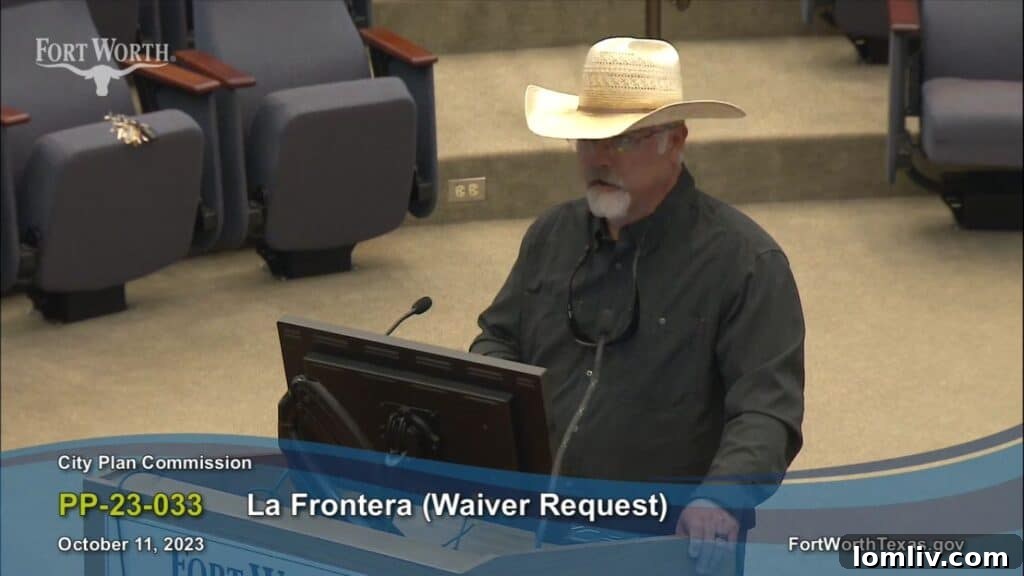
Biedenharn specifically highlighted a critical deficiency in the La Frontera neighborhood’s planning: the absence of adequate water retention solutions around a significant local creek. He elaborated on the existing developmental patterns, stating, “If you look at the existing plat where they have a couple of cul-de-sacs that come off of the already-developed area, they just built big rock channels right down into the creek.” This method, he argued, is fundamentally flawed from a stormwater management perspective. Rather than mitigating water flow, these channels accelerate it, preventing natural absorption and slowing, leading to increased velocity and volume of water entering the creek. This, in turn, has severe consequences downstream, primarily exacerbating erosion and potentially contributing to localized flooding during heavy rainfall events. The long-term environmental damage and maintenance costs associated with such issues can be substantial, impacting both natural ecosystems and adjacent properties.
Beyond environmental concerns, Biedenharn also broadened his critique to the broader urban planning strategy for northwest Fort Worth, suggesting it has been “poorly managed by the city.” As a Realtor, he acknowledges the economic benefits of growth, stating, “More houses is better for me…” However, he swiftly pivoted to the accompanying challenges. The area’s existing infrastructure, especially its transportation network, is already strained. With multiple railroad lines traversing the region, options for traffic relief are severely limited. The influx of hundreds of new homes without corresponding improvements to roads and public transit will inevitably escalate traffic congestion, diminish quality of life for residents, and create significant logistical hurdles for the entire community. This highlights the critical need for holistic urban planning that considers all facets of infrastructure alongside housing development.
The City Plan Commission Addresses Complex Growth Dynamics in Northwest Fort Worth
The La Frontera development encompasses a sprawling 189 acres, strategically located north of Boat Club Road, south of the future Eagle Mountain Parkway, and west of Harbour View Lane. This prime location underscores the pressures driving expansion in Fort Worth, yet also highlights the challenges of integrating new communities into an existing, often unprepared, urban fabric. A key point of contention during the CPC meeting revolved around a specific waiver request made by Jeremy Nelson of Colleyville-based Kirkman Engineering, the applicant for La Frontera.
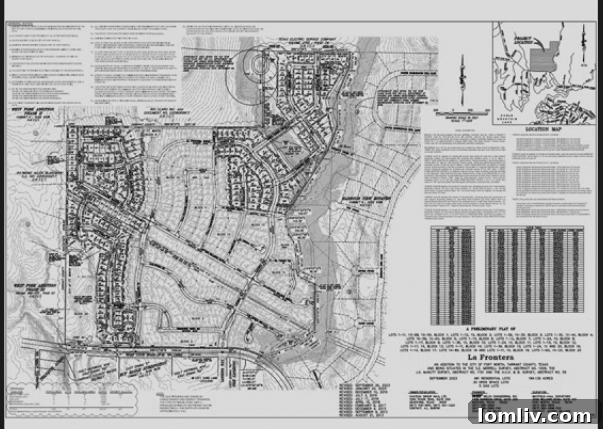
Nelson’s request was to waive the requirement to extend the existing Harbour Creek Drive right-of-way to the east. His argument against the extension was both pragmatic and environmentally conscious. He explained that “It does not appear that there was any anticipation of the extension of this street across the floodplain and over this creek.” Constructing such an extension would not only be “very costly” but would also cause significant environmental disturbance to the area. Furthermore, he warned of the potential to “create some hydraulic conditions that would really… tear it up for no reason at all,” emphasizing that the ecological impact and financial burden would far outweigh any perceived benefit of the road extension. This particular waiver underscored how unforeseen geographical features and environmental considerations can necessitate adaptive planning, moving beyond rigid, pre-established requirements.
Realtor James Biedenharn, despite his broader concerns about drainage, voiced his support for this specific waiver. He provided a vivid description of the terrain, noting, “There’s a deep, 25-foot cliffside there. That’s the reason the road stops so soon.” He unequivocally agreed with the assessment that requiring the extension would indeed result in a “bridge to nowhere,” a highly expensive and environmentally disruptive project with no practical utility. The CPC, recognizing the validity of these arguments, unanimously approved the waiver, demonstrating a pragmatic approach to specific topographical challenges.
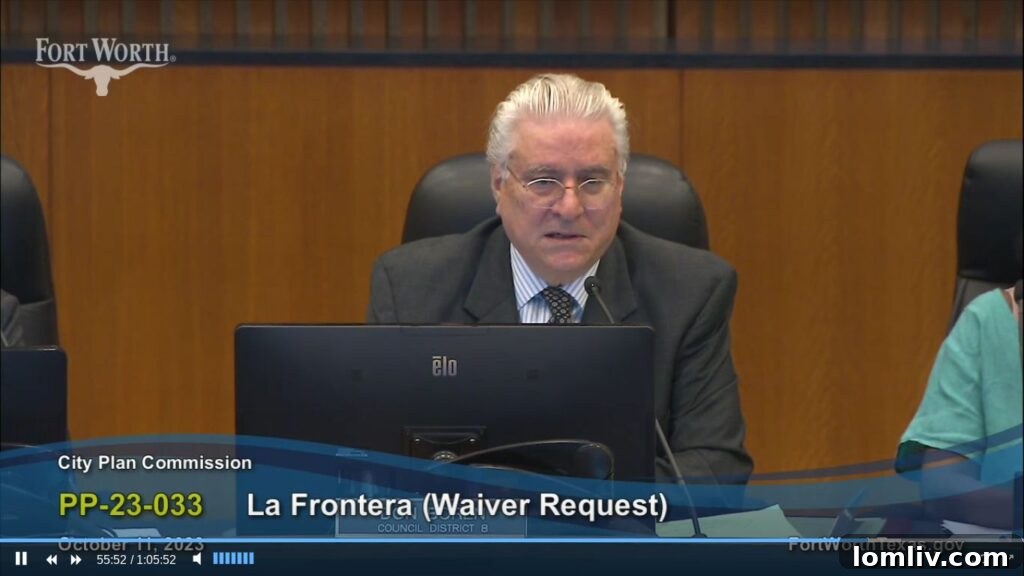
The larger issues of stormwater management and infrastructure, however, continued to resonate. City Plan Commission Chair Don Boren acknowledged the validity of Biedenharn’s broader concerns, stating, “You said exactly what we know. You said it very succinctly, very accurately.” Boren’s remarks highlighted a pervasive challenge faced by planning commissions in rapidly growing municipalities: “This area is being developed and outstripping our ability to maintain it in an orderly fashion.” This candid admission speaks to the systemic pressures on city departments struggling to keep pace with an accelerating development curve. Boren expressed a shared hope for a “bigger, broader view” of urban planning, recognizing that commission members themselves “see the same issues that you see.” His statements underscored the need for comprehensive, forward-thinking strategies that can prevent infrastructure deficits from becoming chronic problems.
Developer Commitments and the Importance of Drainage Studies
Despite the broader concerns raised, Chairman Boren clarified that the immediate focus of the October 11 meeting was strictly on the waiver request, not the extensive drainage issues or the subdivision’s overall design. However, the discussions underscored the critical importance of these elements in the subsequent phases of the development process. The City Plan Commission’s role often involves approving initial plans and waivers, with detailed technical aspects like drainage being addressed in later stages, typically requiring rigorous studies and adherence to strict city standards.
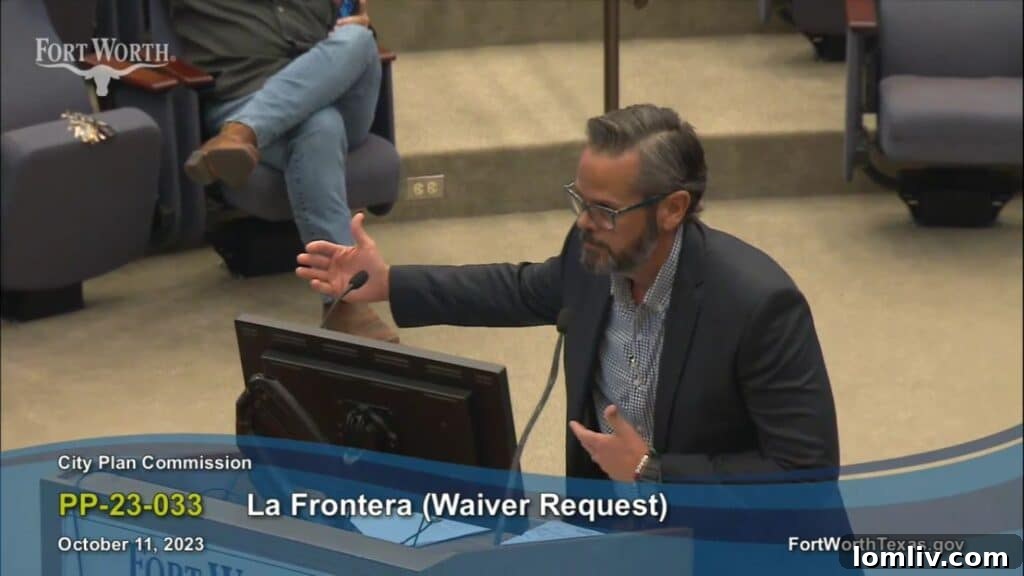
Shea Kirkman of Kirkman Engineering provided further details about the La Frontera project, explaining that the average lot size would be approximately 10,500 square feet, designed to integrate seamlessly with the existing development patterns in the area. This approach aims for continuity in the neighborhood’s aesthetic and density, ensuring that the new homes align with the established zoning regulations. Crucially, Kirkman emphasized the stringent regulatory environment in Fort Worth, assuring the commission and concerned residents that a comprehensive drainage study is an absolute requirement before the final plat for La Frontera can be presented for approval.
Addressing the specific concerns voiced by Biedenharn and the community, Kirkman stated, “I understand your concerns. We’re held to pretty high, strict standards, particularly here in the City of Fort Worth.” This assurance highlights the developer’s commitment to adhering to municipal regulations designed to protect existing communities and the environment. He further pledged, “We’re going to put us in the best position to have no adverse downstream conditions or impacts to the neighboring community.” Such a commitment is vital for fostering trust between developers, city planners, and residents. A thorough drainage study, meticulously designed to model rainfall runoff, analyze existing water bodies, and propose effective mitigation strategies—such as detention ponds, permeable surfaces, and carefully engineered channels—is indispensable for any large-scale development. Its findings will dictate the specific engineering solutions implemented to manage stormwater runoff, preventing increased erosion, flooding, and pollution in downstream areas.
The Path Forward for Sustainable Growth in Fort Worth
The discussions surrounding the La Frontera subdivision in Fort Worth serve as a microcosm of the broader challenges and opportunities facing rapidly expanding urban centers across Texas and beyond. While the demand for housing continues to drive economic growth and attract new residents, it simultaneously places immense pressure on existing infrastructure, natural resources, and community harmony. The concerns raised by local Realtor James Biedenharn and acknowledged by City Plan Commission Chair Don Boren highlight the critical need for proactive, integrated, and sustainable urban planning that looks beyond individual development parcels to the cumulative impact on the wider region.
For Fort Worth, moving forward means prioritizing collaborative efforts between developers like Kirkman Engineering, city officials, and community stakeholders. Robust drainage studies are just one piece of the puzzle; equally important are comprehensive traffic impact analyses, green infrastructure initiatives, and long-term capital improvement plans for roads, utilities, and public services. The “bridge to nowhere” waiver demonstrated a pragmatic approach to specific challenges, but the underlying issues of managing stormwater and traffic require more systemic solutions. Embracing innovative engineering, smart growth principles, and investing in resilient infrastructure will be paramount to ensuring that Fort Worth’s booming growth translates into a high quality of life for all its residents, both old and new. The La Frontera development, therefore, is not merely about 500 new homes, but a pivotal moment in shaping the sustainable future of Fort Worth’s dynamic urban landscape.