Unlocking Seamless Real Estate Transactions: The Critical Role of Paragraph 21 in Texas Contracts
In the intricate world of Texas real estate, countless details demand attention. Yet, amidst the excitement of buying or selling a home, one crucial clause often goes unnoticed or is simply left incomplete: Paragraph 21 of the Texas residential real estate contract. This seemingly simple section, which governs all communication and notices between parties, holds immense power to either facilitate a smooth transaction or plunge it into avoidable disputes and delays. Whether you refer to it as a notice provision, a notification requirement, or a disclosure clause, its importance cannot be overstated. Ignoring it can have significant repercussions for all involved.
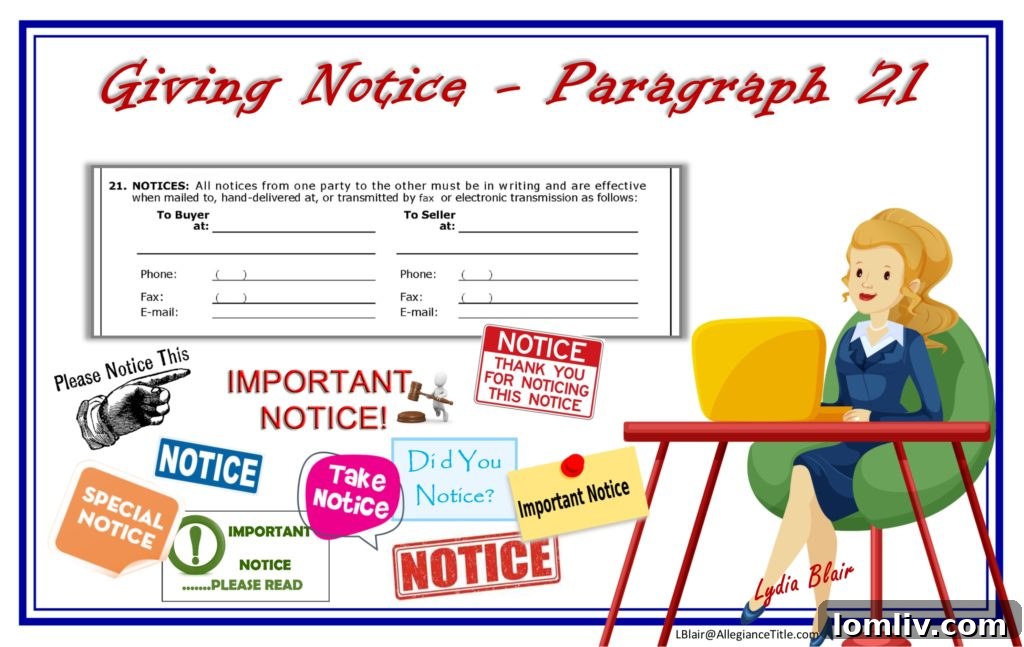
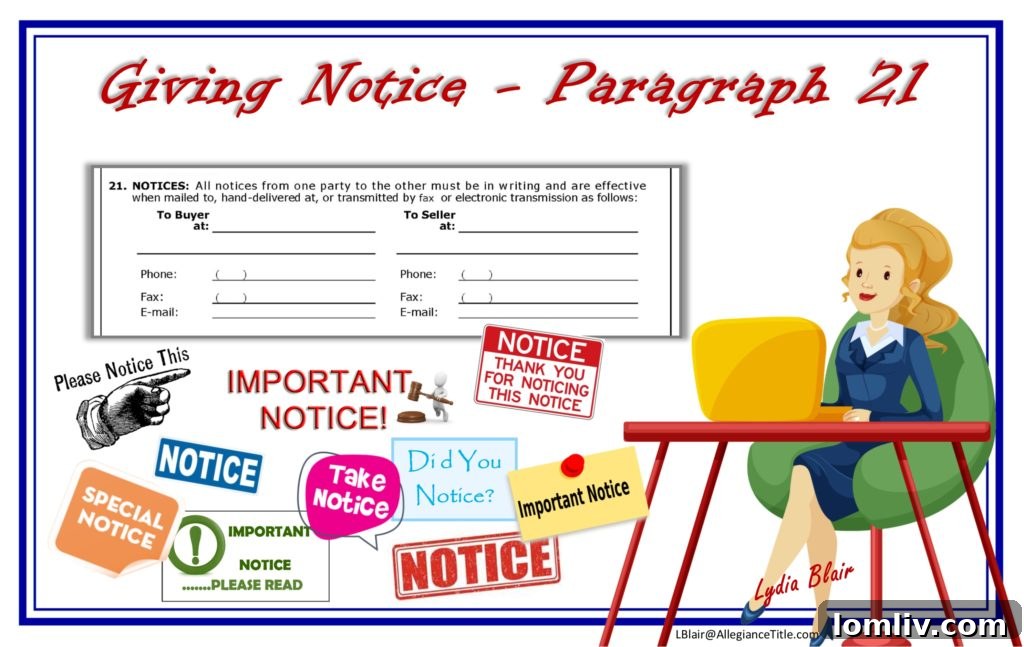
Paragraph 21, specifically within the Texas residential real estate contract, clearly outlines the protocol for formal communication. It states:
“All notices from one party to the other must be in writing and are effective when mailed to, hand-delivered at, or transmitted by fax or electronic transmission as follows:”
Following this declaration, the contract provides designated spaces for the inclusion of essential contact information for both the buyer and the seller. This typically includes their full names, physical addresses, phone numbers, fax numbers (if applicable), and crucially, email addresses.
The Pervasive Oversight: Why Paragraph 21 is Often Neglected
Despite its clear directive and critical function, Paragraph 21 is astonishingly a frequently overlooked component of the Texas residential contract. It’s not uncommon for a significant portion—an estimated one-third—of residential contracts submitted to title companies to arrive with this vital paragraph incomplete, lacking essential contact details for either the buyer, the seller, or both. This widespread neglect stems from various factors, including the sheer length and complexity of real estate contracts, the fast-paced nature of transactions, and sometimes, an understandable but misguided desire for privacy. However, in the context of a legally binding agreement, maintaining effective communication channels is paramount, and privacy must be balanced with the necessity of ensuring a successful closing.
This oversight creates a fertile ground for potential problems. Many participants in a real estate transaction, from first-time homebuyers to seasoned investors, fail to grasp the profound implications of an incomplete Paragraph 21. They might assume that their agent’s contact information is sufficient, or that verbal communications or informal emails will suffice. However, the contract explicitly defines how official notices must be delivered to be legally “effective.”
Direct Communication with the Title Company: Beyond Basic Information
One of the most immediate and practical consequences of an incomplete Paragraph 21 is the breakdown of direct communication with the title company. Consider this: without your accurate contact information – including your email, phone, or physical address – how can the title company fulfill its role in informing you about the progress of your transaction? The title company is responsible for delivering a wealth of critical information throughout the escrow process. This includes, but is not limited to:
- The Title Commitment: A crucial document outlining the condition of the title, any liens or encumbrances, and requirements that must be met before closing.
- Surveys: Copies of the property survey, often with deadlines for review and objection.
- Homeowners Association (HOA) Documents: If applicable, these documents detail the rules, regulations, and financial health of the HOA, which buyers typically have a period to review.
- Closing Disclosures (CDs): Legally mandated documents detailing all financial aspects of the transaction, which must be provided to the buyer several days before closing.
- Requests for Information or Documentation: The title company may need additional details or documents from you to clear title or prepare for closing.
- Updates on the Closing Schedule: Any changes to the closing date or time.
If your contact information is missing from Paragraph 21, the title company has no official means to reach you directly. This can lead to significant delays, misunderstandings, and even jeopardize the entire transaction.
The Legal Weight of Notices: Understanding “Effective” Communication
Beyond the practical challenges of receiving information from the title company, the legal implications of an incomplete Paragraph 21 are even more significant. The paragraph explicitly states that notices are *not effective* unless they are sent in writing and transmitted according to the specific methods and contact details provided within this section. This is not a mere suggestion; it is a contractual mandate with serious ramifications.
Imagine a scenario where a buyer discovers a critical issue with the property during the option period, perhaps through an inspection report, and needs to legally notify the seller of an objection or even a termination of the contract. If Paragraph 21 is blank or incorrect, how can the buyer legally deliver an “effective” notice? A simple email to the seller’s agent or an informal phone call might not meet the contractual definition of an effective notice, potentially causing the buyer to miss a critical deadline or lose their right to object or terminate.
Similarly, if a seller needs to communicate an important change, make a demand, or provide a “notice to cure” to the buyer, the efficacy of that communication hinges entirely on Paragraph 21. Without proper contact information, the notice might be deemed invalid, leading to disputes over whether a party met their contractual obligations. This can escalate into costly legal battles, contract termination, or even loss of earnest money.
The contract also specifies that critical title documents, such as the title commitment and related disclosures, must be delivered according to the address shown in Paragraph 21. There is no contractual requirement for these documents to be delivered elsewhere. Therefore, if incorrect or incomplete information is provided, a party might legitimately argue they never received proper notification, potentially creating grounds for delaying or even voiding parts of the agreement.
The Agent’s Role: Facilitator, Not a Courier
A common misconception, and a frequent error, is for the Realtor to insert only their own email address and phone number into Paragraph 21. While agents play an indispensable role in facilitating communication, they are not intended to be the sole conduit for all formal notices. Every party involved in the contract, including the title company, already has the agent’s contact information readily available on other parts of the contract, typically the last page.
When an agent’s information is the *only* contact provided in Paragraph 21, all official documents and notices will be sent exclusively to that agent. This places an undue burden on the agent, making them solely responsible for promptly delivering every piece of critical information to their client. This responsibility is significant and carries potential risks. An agent might be on vacation, in an emergency, or simply overwhelmed, causing delays in delivering time-sensitive documents to their client. Any such delay could inadvertently cause the client to miss a crucial deadline, potentially leading to contractual breaches, loss of rights, or even the collapse of the transaction.
Furthermore, relying solely on the agent as the communication hub blurs the lines of responsibility and can lead to misunderstandings. While agents provide expert guidance, they are primarily advisors and negotiators, not postal carriers for contractual notices. If an agent wishes to remain fully informed and included in all communications – which is a highly recommended best practice – they can easily do so by adding “cc:” followed by their own contact details in Paragraph 21, ensuring they receive copies of all notices without becoming the sole point of contact for their client’s formal communications.
Time is of the Essence: Protecting Your Deadlines
In real estate, timing is often everything. Many instances in a transaction are highly time-sensitive, requiring a buyer or seller to respond within a defined window after receiving a notice. This clock, dictating critical response times, begins ticking precisely when a notice is delivered effectively, as determined by the information provided in Paragraph 21. Examples of such time-sensitive actions include:
- Option Period Expiration: The buyer’s opportunity to terminate the contract for any reason.
- Objection to Title Commitment or Survey: Deadlines for raising concerns about the property’s title or boundary survey.
- Financing Contingency Deadlines: Timeframes for securing loan approval.
- Appraisal Objections: When the appraisal comes in lower than the sales price, there’s a window to negotiate.
- Requests for Repairs: Deadlines for buyers to request repairs based on inspection reports.
- Seller’s Right to Cure: If a buyer objects to something, the seller often has a period to address it.
If notices are not delivered effectively due to incomplete Paragraph 21 information, these critical deadlines can be missed. A missed deadline could lead to the loss of earnest money, the forfeiture of contractual rights, or even the automatic termination of the contract. The consequences can be financially devastating and legally complex.
Ensuring a Seamless Closing: Best Practices for Paragraph 21
Even the most diligent contract reader might experience “paragraph fatigue” by the time they reach Page 7 and Paragraph 21 of their real estate contract. However, this is precisely the moment to re-engage and ensure all details are correct and complete. The proper completion of Paragraph 21 is a fundamental step in protecting your interests and ensuring a smooth and legally sound real estate transaction.
For Buyers and Sellers:
- Always provide your full, current, and preferred contact information (physical address, phone, and email) in Paragraph 21.
- Understand that this information is necessary for official communication related to your contractual obligations and the closing process.
- Do not assume your agent will handle all formal notices; empower yourself to receive them directly.
- Review the Paragraph 21 section of the contract carefully before signing and ensure the other party’s information is also accurately provided.
For Real Estate Agents:
- Educate your clients about the critical importance of Paragraph 21 from the outset.
- Ensure that all necessary contact information for both buyer and seller is thoroughly completed.
- If you wish to be included in all notices (which is highly recommended for client support), add “cc: and your contact information” within the appropriate section of Paragraph 21. This ensures you receive copies without being the sole point of contact.
- Double-check Paragraph 21 before submitting the contract to the title company or other parties.
By diligently filling in the blanks in Paragraph 21 and ensuring that the other side of your transaction does the same, you establish clear, unambiguous channels for communication. This simple act can prevent countless headaches, protect your legal rights, and significantly contribute to a successful and stress-free real estate closing.
The opinions expressed are solely those of the individual author for informational purposes and do not constitute legal advice. For any specific legal issue or problem, please consult with a qualified attorney.
Lydia Blair (formerly Lydia Player) embarked on her real estate journey as a highly successful Realtor for a decade before transitioning to the title side of the business in 2015. Prior to her career in real estate sales, she was actively involved in buying, remodeling, and selling homes, long before the term “house flipping” became a common expression. With extensive experience as a buyer, seller, Realtor, and Escrow Officer, she has navigated the real estate closing process countless times from multiple perspectives. As an Escrow Officer for Allegiance Title at Preston Center, Lydia excels at problem-solving and streamlining complex processes. The most rewarding aspects of her job are the moments she gets to hand clients their new keys or a well-deserved check.