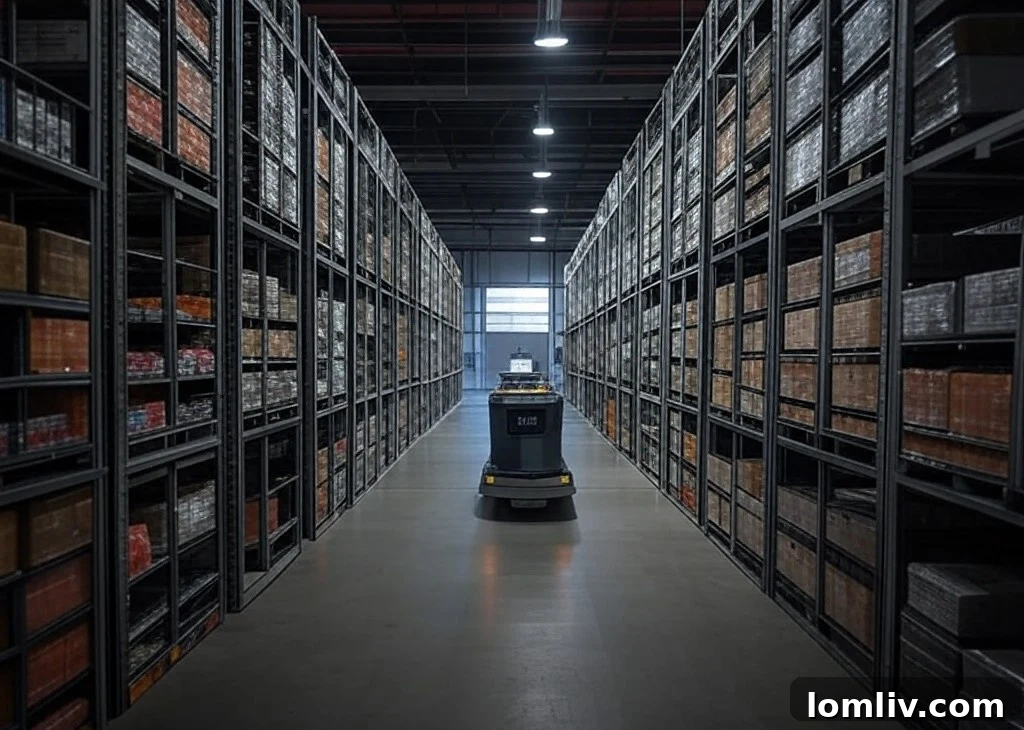
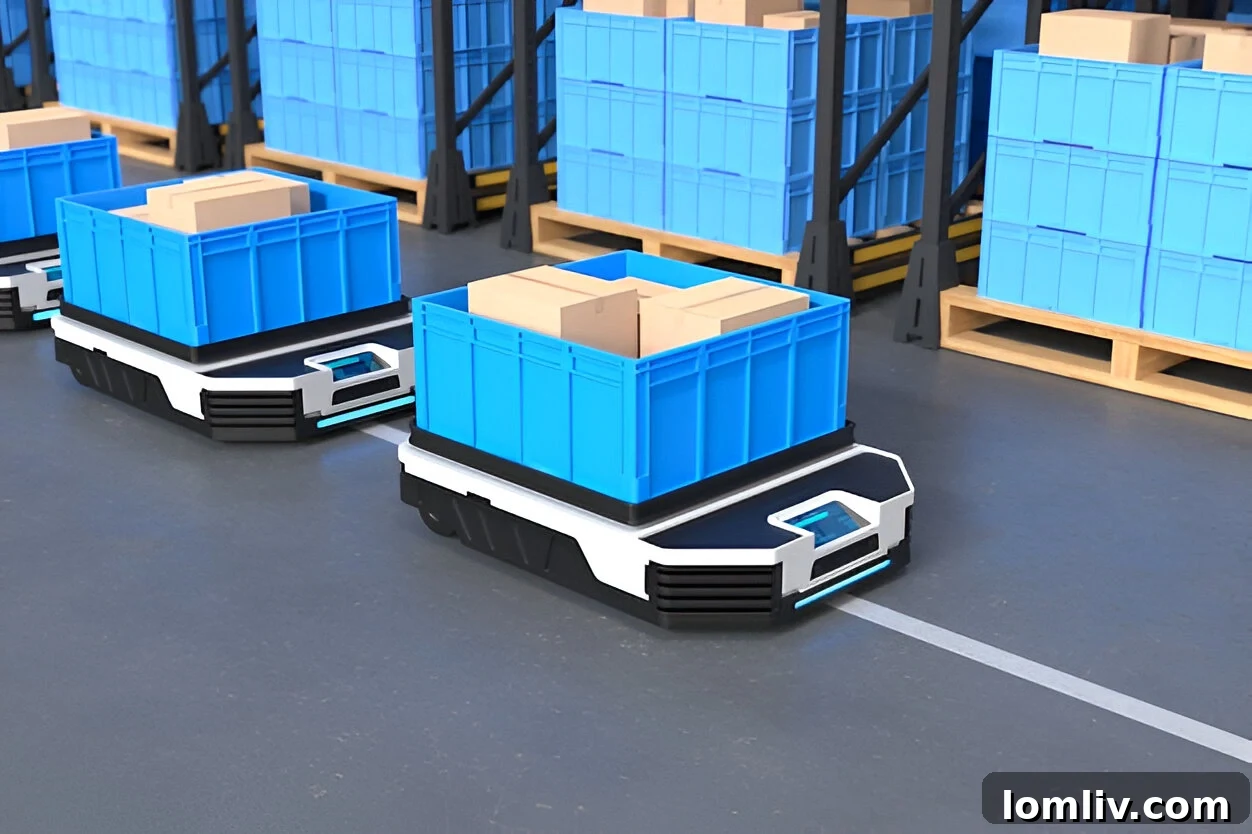
In the rapidly evolving landscape of commercial real estate, particularly within the warehousing and logistics sectors, Automated Storage and Retrieval Systems (ASRS) have emerged as a critical technology. These sophisticated systems represent a paradigm shift in how goods are managed, offering unparalleled efficiency from the moment products enter storage until they are retrieved for dispatch. By automating the entire storage and retrieval process, ASRS significantly minimizes, if not entirely eliminates, the need for human intervention, thereby revolutionizing operational workflows and setting new industry standards.
ASRS solutions are not merely about automation; they are about intelligent optimization. They play a pivotal role in maximizing spatial utilization, enhancing precision in inventory management, and dramatically increasing throughput capabilities. Beyond these immediate operational benefits, ASRS delivers substantial long-term advantages by conserving valuable time, reducing manual effort, and yielding significant cost savings. Moreover, these systems are highly customizable, featuring advanced technological components that can be meticulously tailored to meet the distinct and evolving demands of any business, ensuring scalability and future-readiness.
Understanding Automated Storage and Retrieval Systems (ASRS)
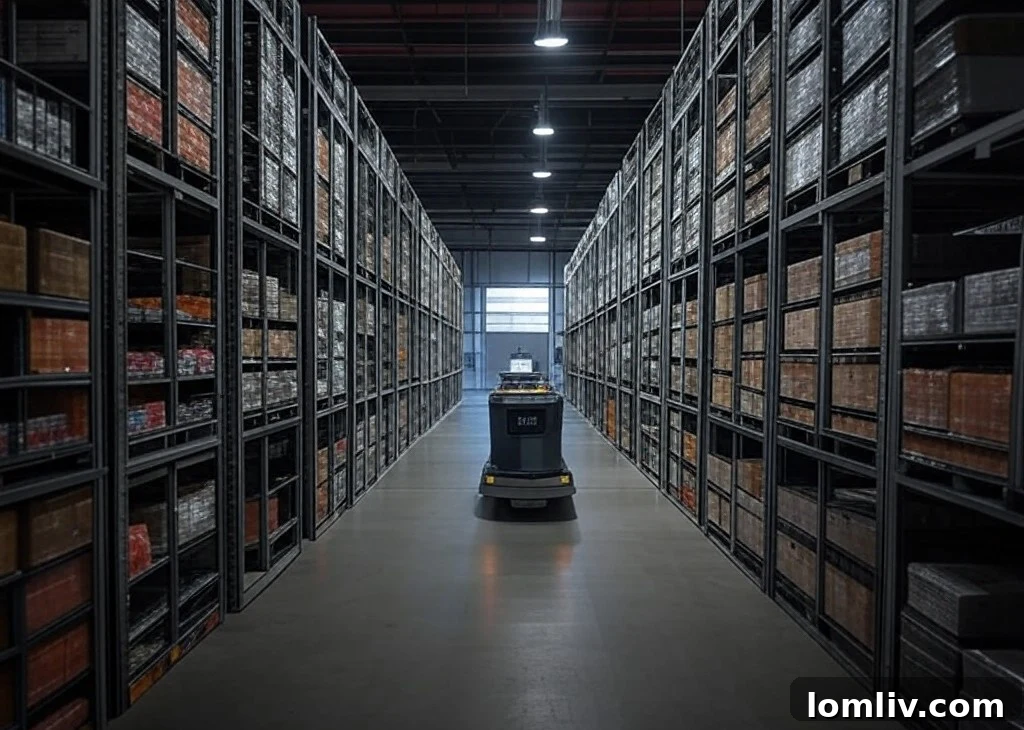
ASRS, an acronym for Automated Storage and Retrieval System, is a term frequently encountered in various forms such as AS-RS, AS RS, or AS/RS. At its core, it represents an advanced warehouse automation technology meticulously engineered to buffer, store, and retrieve products and inventory with precision and speed, all based on real-time demand. This complex technology is an intricate blend of diverse components, including high-speed shuttles, towering cranes, sophisticated Autonomous Mobile Robots (AMRs), and specialized conveyors, all working in seamless concert to optimize material flow.
The true power of ASRS is often realized through its integration with advanced software ecosystems. These systems are commonly interfaced with Warehouse Execution Systems (WES) software, comprehensive Warehouse Management Systems (WMS) software, or precise Warehouse Control Systems (WCS) software, among other specialized control platforms. This integration creates a holistic, interconnected automation environment that provides real-time visibility and control over inventory. In modern, state-of-the-art warehouses, it’s increasingly common to find cutting-edge solutions like automated shelving systems seamlessly integrated with ASRS technologies. This synergy not only maximizes every cubic foot of available space but also dramatically improves retrieval times, enhances inventory accuracy, and elevates overall warehouse performance to unprecedented levels, delivering a competitive edge in today’s demanding market.
The Transformative Impact of ASRS on Commercial Real Estate
The strategic implementation of ASRS technology extends far beyond mere operational enhancements; it has a profound and demonstrable impact on the functionality, design, and inherent value of warehouse properties within the commercial real estate sector. This integration fundamentally reshapes how properties are utilized, valued, and positioned in the market.
- Enhancing Space Efficiency: ASRS fundamentally redefines space utilization by maximizing both vertical and horizontal dimensions. Unlike traditional warehousing which relies heavily on horizontal expansion, ASRS leverages sophisticated stacking and retrieval mechanisms to utilize ceiling heights effectively. This allows a greater volume of operations and inventory to be accommodated within a significantly smaller real estate footprint. For property owners and developers, this means potentially reducing land acquisition costs for new builds or substantially increasing storage capacity within existing structures, thereby enhancing the asset’s utility and profitability per square foot. It also opens possibilities for developing multi-story warehouses in urban areas where land is scarce and expensive.
- Attracting Premium Tenants: Buildings equipped with the latest ASRS technology inherently become more attractive to high-revenue tenants who prioritize operational efficiency, rapid throughput, and state-of-the-art amenities. Modern businesses, especially those in e-commerce, pharmaceuticals, and manufacturing, seek competitive advantages through optimized supply chains. ASRS-integrated facilities offer precisely that, providing faster order fulfillment, reduced labor costs, and enhanced inventory accuracy. This appeal translates into higher demand for such properties, potentially leading to increased rental yields, longer lease agreements, and a more robust tenant portfolio for landlords. These technologically advanced warehouses are perceived as future-proof assets that offer tenants a strategic operational edge.
- Increasing Property Value: Properties that have seamlessly integrated ASRS solutions are not merely warehouses; they are sophisticated operational hubs. This advanced capability allows for highly optimized and resilient supply chain operations, directly contributing to higher market prices and attracting significant investment interest. The perceived value of such properties increases due to their enhanced functionality, reduced operational expenses for tenants, and the long-term competitive advantage they offer. Investors recognize that ASRS-equipped warehouses represent a modern standard, commanding higher capitalization rates and faster appreciation in value compared to conventional, less automated facilities. They are seen as vital infrastructure for the digital economy, making them highly desirable assets.
- Operational Flexibility and Scalability: Beyond core value metrics, ASRS imparts significant operational flexibility and scalability to warehouse properties. These systems are designed to adapt to fluctuating demand, seasonal peaks, and changes in product mix more efficiently than manual operations. For commercial real estate, this means a property can cater to a wider array of tenant needs, offering a resilient solution that can grow or reconfigure with business requirements. This adaptability reduces vacancy risks and enhances the long-term desirability and utility of the property in a dynamic market environment.
Exploring the Variety of ASRS and Their Distinct Real Estate Implications

Each distinct type of ASRS possesses unique operational features and design requirements, profoundly influencing how it integrates with and impacts specific warehousing and commercial real estate needs. Understanding these variations is crucial for optimizing property selection, design, and investment strategies.
1) Unit-Load ASRS
Unit-Load ASRS systems are engineered for robustness, specifically designed to handle and transport heavy, palletized loads. These formidable automation systems utilize powerful cranes or robotic shuttles to move materials with exceptional smoothness and precision across vast storage areas. They are ideally suited for warehouse buildings characterized by high clear ceiling heights, as they are specifically designed to maximize the utilization of vertical space, often reaching dozens of meters high. You will most frequently encounter Unit-Load ASRS deployed in heavy manufacturing plants, large-scale food and beverage distribution centers, and highly specialized cold storage facilities, where the sheer volume and weight of inventory necessitate a powerful, automated solution.
Key Benefits and Real Estate Considerations:
- Heavy Load Capacity: Capable of handling substantial weights, making them indispensable for bulk storage.
- Automated Crane Integration: Utilizes automated cranes or stacker cranes, significantly easing the workload and improving retrieval speeds for large items.
- High-Density Vertical Storage: Designed for maximum vertical storage, these systems optimize warehouse space by substantially reducing the required floor footprint for a given volume, making high-bay facilities particularly valuable.
- WMS Integration: Seamlessly integrates with Warehouse Management Systems (WMS) for comprehensive, real-time inventory tracking and management, ensuring operational transparency.
- Real Estate Implication: Requires warehouses with very high clear heights and robust floor slabs to support the weight of the racks and contents. Can be configured as rack-supported buildings, where the racking itself forms the structural support for the roof and walls, eliminating the need for a separate building structure and often reducing construction costs while maximizing cubic capacity.
2) Mini-Load ASRS
Mini-Load ASRS systems share a conceptual similarity with their Unit-Load counterparts but are scaled down to handle smaller, lighter loads such as individual totes, trays, and cartons. This system plays a crucial role in industries where rapid, high-speed order fulfillment and the most efficient utilization of storage space are not just paramount but critical for competitive advantage. They bridge the gap between small item storage and high throughput requirements.
Key Benefits and Real Estate Considerations:
- Small Load Specialization: Perfectly suited for handling small to medium-sized items with high precision.
- Compact Footprint: Characterized by a compact footprint and narrow racking aisles, allowing for incredibly dense storage even in facilities with standard ceiling heights.
- Ideal Industries: Highly favored in e-commerce fulfillment centers, pharmaceutical distribution, and retail operations requiring rapid access to a vast array of SKUs.
- Modular Design: Features a modular design that allows for relatively easy expansion and reconfiguration as business needs evolve.
- Real Estate Implication: Requires less clear height than Unit-Load systems but benefits from deep, narrow aisles. Ideal for optimizing existing warehouse footprints and can be installed in facilities with moderate ceiling heights, providing high-density storage without massive structural changes.
3) Shuttle-Based ASRS
This advanced ASRS solution leverages sophisticated shuttle technology, where independent robotic shuttles move horizontally along designated storage racks with incredible speed. For vertical movement within the system, dedicated lifts are employed to transport items between levels. This highly efficient and scalable solution frequently results in significantly higher throughput rates and offers a highly cost-effective operational model due to its speed and flexibility.
Key Benefits and Real Estate Considerations:
- High-Speed Operations: Offers exceptional speed for both storage and retrieval processes, crucial for high-volume operations.
- Superior Space Utilization: Achieves highly effective space utilization, especially suitable for deep lane storage and multi-level rack systems.
- Increased Throughput: Enables a dramatic increase in throughput capacity, handling more orders in less time.
- Customization Options: Provides extensive customization possibilities to cater to diverse inventory management strategies and product types.
- Real Estate Implication: Can be highly adaptable to various building heights and configurations, often built into multi-level structures. Its modularity allows for phased expansion within an existing warehouse, requiring less disruptive construction than some other ASRS types. Floor loading capacity needs to accommodate dense racking and shuttle weight.
4) Vertical Lift Modules (VLMs)
Vertical Lift Modules (VLMs) operate ingeniously within a vertical series of arranged trays enclosed within a compact cabinet. At the heart of the system, an automated extractor precisely retrieves and delivers the specific required tray to an ergonomic access point, directly to the operator. This design entirely eliminates the need for time-consuming manual searching and significantly reduces pick times, thereby enhancing productivity and accuracy.
Key Benefits and Real Estate Considerations:
- Versatile Product Storage: Best suited for storing a wide range of small to medium-sized products, parts, and tools.
- Flexible Tray Heights: Can automatically accommodate varying tray heights, optimizing storage density for different item sizes.
- Significant Floor Space Savings: Maximizes vertical space, leading to substantial savings in valuable floor space, which is critical in expensive urban real estate.
- Ergonomic Design: Features an ergonomic “goods-to-person” design that dramatically reduces physical strain on workers, improving safety and morale.
- Real Estate Implication: Ideal for facilities with limited floor space but ample clear height. VLMs can fit into relatively narrow areas, making them perfect for optimizing smaller warehouses, manufacturing lines, or even retail backrooms without requiring extensive structural changes.
5) Carousel-Based ASRS
Carousel ASRS systems are classified into two primary types: Vertical Carousels and Horizontal Carousels. Both variations share a fundamental principle of using a rotating mechanism to efficiently deliver inventory directly to the operator, embodying the “goods-to-person” philosophy and minimizing travel time.
Vertical Carousels:
- High-Density Vertical Storage: Exceptionally well-suited for high-density storage of small items within a compact vertical footprint, leveraging vertical space effectively.
- Ferris Wheel Operation: Operates much like a Ferris wheel, bringing requested items to a precisely positioned ergonomic pick station, eliminating operator movement.
- Reduced Retrieval Time: Dramatically reduces retrieval time and significantly enhances picking accuracy, boosting overall order fulfillment speed.
- Real Estate Implication: Like VLMs, Vertical Carousels maximize vertical space within a small floor footprint, making them ideal for smaller warehouses, parts departments, or even offices that need efficient, secure storage without extensive horizontal space.
Horizontal Carousels:
- Rotating Bin System: These systems employ a series of rotating bins or shelves mounted on an oval track, presenting items to operators.
- High-Volume, Medium-Speed Picking: Performs exceptionally well for picking high volumes of medium-speed inventory, balancing speed with storage capacity.
- Pod Configuration: Often arranged in “pods” of multiple carousels controlled by a single operator, significantly improving order fulfillment efficiency and throughput.
- Real Estate Implication: Requires a larger horizontal footprint than vertical carousels but offers flexibility in layout. Can be integrated into existing rectangular warehouse spaces to create efficient picking zones.
6) Automated Guided Vehicles (AGVs) and Autonomous Mobile Robots (AMRs)
AGVs (Automated Guided Vehicles) and more advanced AMRs (Autonomous Mobile Robots) represent highly flexible, mobile ASRS solutions that autonomously transport inventory throughout a warehouse facility. These innovative systems largely eliminate the need for fixed infrastructure like traditional conveyor belts, thereby offering unparalleled flexibility in warehouse design, layout, and operational routing.
Key Benefits and Real Estate Considerations:
- Self-Navigating Transport: Robots intelligently navigate and transport goods directly to designated pick stations or other operational areas, optimizing material flow.
- Flexible Layouts: Ideal for warehouses that require frequent changes to their layouts or need to adapt to evolving operational needs without costly structural modifications.
- Reduced Fixed Infrastructure: Minimizes dependency on fixed infrastructure, reducing initial installation costs and increasing adaptability.
- Highly Scalable: Offers a highly scalable solution for growing warehouse operations; additional robots can be added to increase capacity and throughput as demand dictates.
- Real Estate Implication: Provides immense flexibility for warehouse design. Properties can have more open floor plans without fixed conveyors, making them adaptable to various tenant needs. Requires robust Wi-Fi infrastructure and smooth, level floors. Ideal for tenants who need to frequently reconfigure their operations.
7) Right Angle Fast Transfer (RAFT) System
The Right Angle Fast Transfer (RAFT) system represents a cutting-edge fusion, skillfully combining the most advantageous aspects of both shuttle-based and AutoStore-like systems. This innovative approach empowers robots to execute movements both horizontally and vertically, allowing for comprehensive access within the storage grid. The RAFT system is optimally suited for exceptionally dense pallet storage, guaranteeing rapid, precise, and highly efficient retrieval of goods, even in the most challenging storage configurations.
Key Benefits and Real Estate Considerations:
- High-Density Pallet Storage: Offers an unparalleled high-density solution for pallet storage, maximizing cubic space utilization.
- Seamless Integration: Easily integrates with existing conveyors and other robotic systems, creating a cohesive automated ecosystem.
- Enhanced Picking Speed: Dramatically enhances picking speed and overall warehouse efficiency through optimized robot movement.
- Real Estate Implication: Like other high-density systems, it reduces the overall footprint required for a given storage capacity. It requires strong floor loading capabilities due to the dense storage and robot movement. Often built as a self-contained cube, it can be adapted to various warehouse shapes, though it benefits from a clear, unobstructed footprint.
8) Micro-Load Stocker ASRS
As its name aptly suggests, Micro-Load Stocker ASRS is meticulously engineered for the highly efficient storage and rapid retrieval of small bins, totes, and individual items. This specialized system is commonly deployed in operational areas characterized by high-volume picking demands and where instantaneous inventory accessibility is not just beneficial but absolutely crucial for maintaining operational tempo and fulfilling customer expectations.
Key Benefits and Real Estate Considerations:
- Dense Small Parts Storage: Offers incredibly dense storage solutions for small parts, components, and items, making it ideal for electronics, spare parts, and assembly operations.
- Automated Queue-Based Retrieval: Features automated retrieval processes with queue-based pick stations, ensuring continuous flow and minimal idle time for operators.
- Reduced Manual Reliance: Significantly reduces reliance on manual picking methods and fixed conveyor systems, enhancing flexibility and labor efficiency.
- Real Estate Implication: Similar to Mini-Load systems and VLMs, it excels at maximizing vertical density for small items, freeing up floor space. It’s often integrated into specific sections of a larger warehouse or used in smaller, specialized facilities where precise inventory control of numerous small parts is paramount.
9) Hybrid ASRS Solutions
In response to unique and complex operational requirements, many modern warehouses are adopting customized hybrid ASRS solutions. These bespoke systems involve the strategic combination of various automation technologies, such as integrating shuttles with AGVs, or carousels with robotic picking arms. Because these hybrid systems are specifically designed and configured to address particular business needs, they inherently offer superior flexibility and enhanced scalability compared to single-technology implementations, providing a truly optimized solution.
Key Benefits and Real Estate Considerations:
- Tailored Requirements: Precisely customized to meet the highly specific and unique operational demands of a given warehouse or business.
- Maximized Efficiency: Integrates multiple automation technologies synergistically for unparalleled maximum efficiency and adaptability across diverse workflows.
- Seasonal Adaptability: Offers exceptional flexibility to adapt seamlessly to seasonal demand fluctuations, inventory variations, and evolving market conditions, ensuring operational resilience.
- Real Estate Implication: Requires careful upfront planning and often a more bespoke building design or substantial retrofitting. However, it results in a highly optimized and valuable property that can command premium tenants due to its tailored efficiency and future-proofing capabilities. These properties become highly specialized assets.
Summing Up: The Future of Warehousing in Commercial Real Estate
Automated Storage and Retrieval Systems (ASRS) are fundamentally revolutionizing warehouse operations, offering unparalleled accuracy, efficiency, and space optimization that traditional methods simply cannot match. From heavy manufacturing and sophisticated pharmaceutical logistics to dynamic retail and high-volume e-commerce fulfillment, the correct ASRS solution provides a transformative competitive advantage. By enabling companies in various industries to significantly increase productivity, substantially reduce labor costs, and streamline complex inventory management, ASRS is more than just a technological upgrade—it’s a strategic imperative.
For commercial real estate investors and developers, understanding and integrating ASRS technologies is no longer optional but essential. These systems directly influence property valuation, tenant attraction, and the long-term viability of warehouse assets. Properties equipped with ASRS are perceived as modern, efficient, and future-ready, capable of meeting the ever-growing demands of global supply chains. As technology continues to advance, with further integration of AI and sophisticated robotics, ASRS will remain at the forefront, driving innovation and defining the next generation of high-performing, valuable commercial warehouse properties.