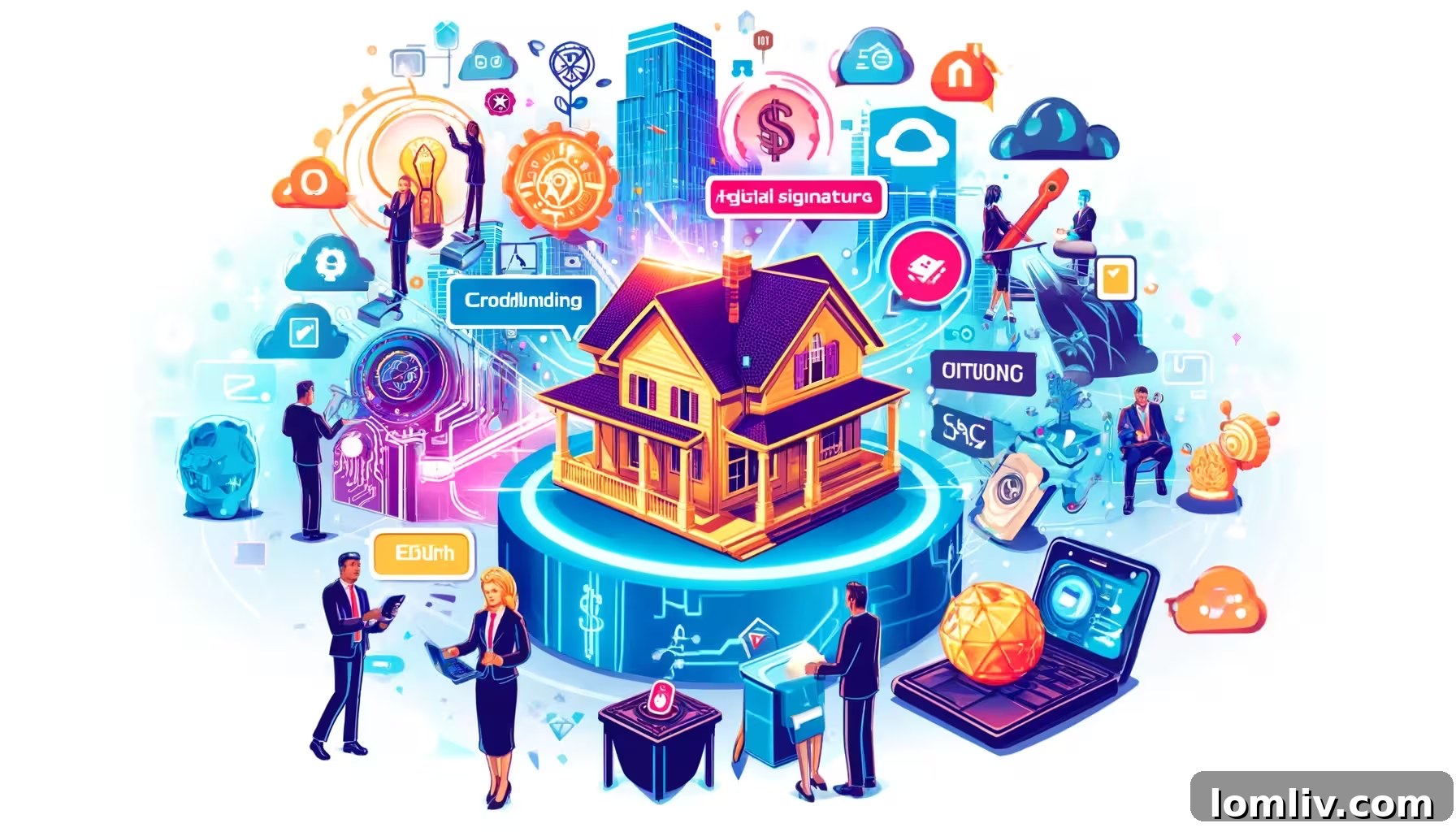
The real estate sector, a cornerstone of global economies, is experiencing an unprecedented transformation, largely driven by the rapid evolution of financial technology, or Fintech. This convergence of finance and technology has profoundly reshaped the landscape of property transactions, investment strategies, and customer engagement. Fintech software solutions are not merely incremental improvements; they are fundamentally redefining how properties are bought, sold, managed, and financed, making the entire process more accessible, efficient, and transparent for all stakeholders. From automating traditionally cumbersome manual tasks to introducing innovative financing models, Fintech is enabling professionals and consumers alike to navigate the complex real estate markets with unprecedented ease and confidence.
At the core of this seismic shift lies the ability of Fintech to streamline operations that were once mired in paperwork and protracted timelines. The automation of critical processes, such as document management, digital signatures, and identity verification, has drastically shortened deal cycles and significantly mitigated the risk of human error. Furthermore, Fintech has democratized access to real estate investment through alternative financing options and online lending platforms, most notably real estate crowdfunding. This has opened up lucrative property investment opportunities to a much broader audience, moving beyond institutional investors and high-net-worth individuals. Understanding these foundational shifts is key to grasping the profound impact of Fintech software on the real estate world.
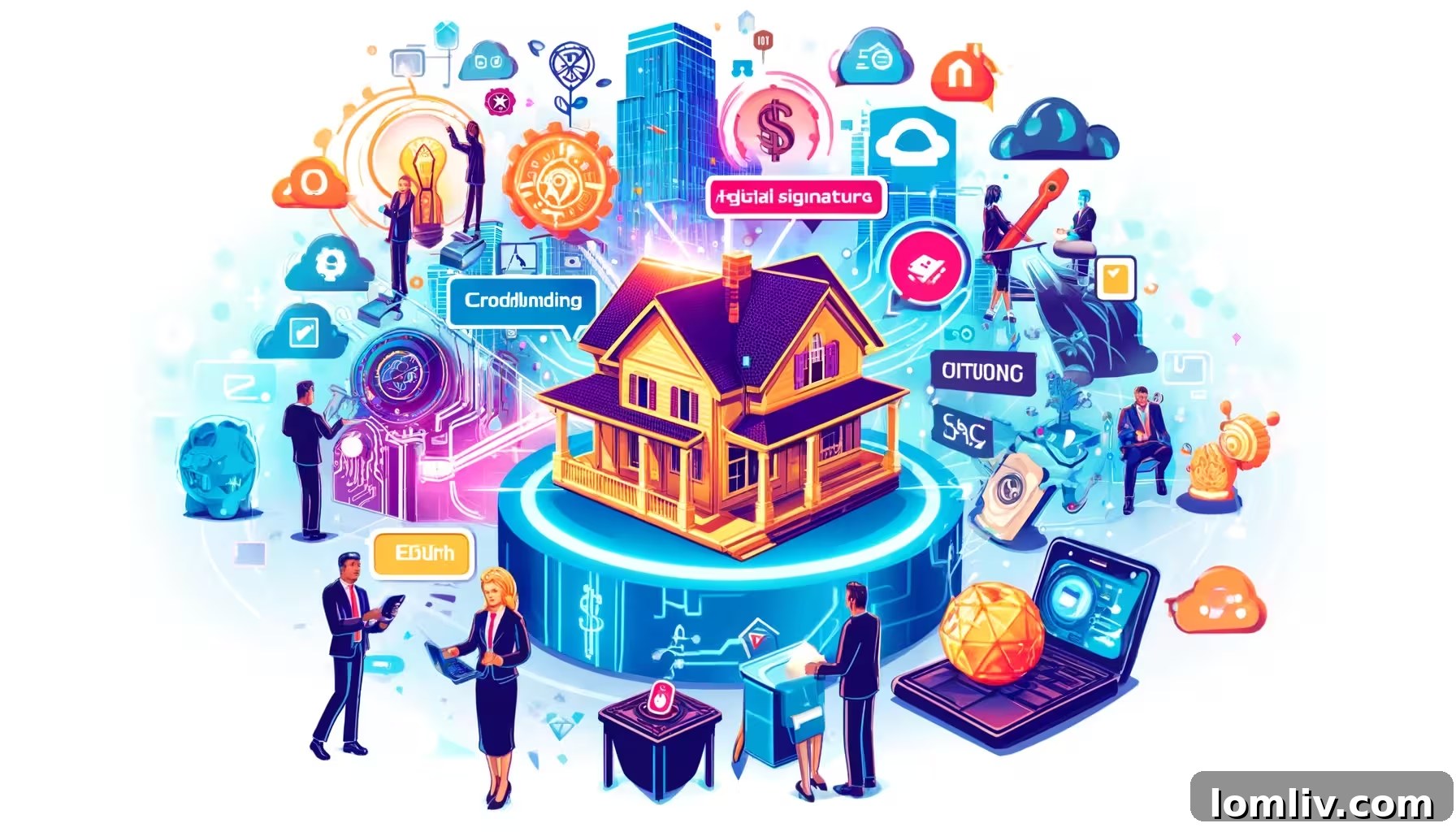
Before delving deeper into its transformative effects, it’s essential to define Fintech itself. Financial technology, or Fintech, represents the innovative integration of advanced technological solutions into financial services. This encompasses a broad spectrum of cutting-edge technologies, including big data analytics, artificial intelligence (AI), machine learning (ML), blockchain technology, cloud computing, and biometrics. These technologies are leveraged to challenge and ultimately enhance traditional financial systems, offering more efficient, secure, and user-friendly alternatives. In the real estate context, Fintech solutions are actively streamlining transactions, improving financial accessibility for both lenders and borrowers, and fostering a more dynamic and responsive market. Let’s explore the key ways Fintech software is fundamentally altering the dynamics of the real estate world.
Streamlined Transactions and Enhanced Automation
Fintech software is a powerful catalyst for streamlined transactions and widespread automation within real estate, yielding substantial savings in both time and effort. Traditional real estate processes, often characterized by extensive paperwork and numerous intermediaries, are being replaced by digital workflows that accelerate every stage of a transaction. For instance, tenants can now effortlessly make rental payments using their preferred digital payment methods via secure online platforms, all from the comfort of their homes. This convenience far surpasses conventional payment methods, such as checks or in-person bank transfers, significantly improving the tenant experience.
Beyond simple payments, sophisticated automated Fintech software solutions accelerate the entire property acquisition process, particularly for rental properties, by automating everything from initial application processing to lease signing. This not only speeds up purchases but also dramatically reduces the likelihood of human error and lowers operational costs for real estate businesses. Furthermore, these platforms provide real-time access to crucial documents and transactional data, fostering more efficient and transparent collaboration among all parties involved—buyers, sellers, agents, lenders, and legal teams. By providing secure digital platforms for managing escrow and title processes, Fintech further minimizes delays, ensuring greater accuracy and transparency in property transactions. The comprehensive automation of these often-complex processes not only boosts efficiency but also significantly reduces potential disputes, cultivating a more trustworthy and seamless experience for everyone involved in a real estate deal.
Data-Driven Decision Making and Predictive Analytics
In today’s competitive real estate market, data has emerged as an invaluable asset, and Fintech software is expertly designed to leverage it. These platforms employ advanced data analytics capabilities to derive actionable insights from vast datasets. This empowers real estate professionals, investors, and developers to analyze intricate market trends, evaluate potential rental yields, accurately assess property values, and identify emerging opportunities with unparalleled precision. Consequently, they are equipped to make more informed, strategic decisions that maximize returns and mitigate risks. The days of relying solely on intuition are giving way to evidence-based strategies powered by robust data analysis.
Data-driven insights play a pivotal role not only in risk management but also in strategic planning. For example, sophisticated Fintech tools allow real estate professionals to analyze historical data and current market indicators to predict potential property appreciation or anticipate future market swings. This foresight is critical for optimizing investment portfolios and guiding decisions on when and where to invest for maximum returns. By integrating predictive analytics, Fintech solutions can forecast demand, identify undervalued assets, and even personalize investment recommendations, transforming how investment strategies are formulated and executed in the dynamic real estate landscape. This shift towards data-centric approaches ensures that decisions are robust, proactive, and aligned with market realities.
Enhanced Security and Unwavering Transparency
Security and transparency are paramount concerns in any real estate transaction, given the significant financial sums and legal complexities involved. Fintech software addresses these critical issues head-on, particularly through the adoption of blockchain technology. Blockchain, a distributed and immutable ledger system, offers an unprecedented level of security for recording and verifying property transactions. Each transaction, once recorded, cannot be altered or deleted, creating a tamper-proof audit trail that significantly reduces the chances of fraud and builds an unparalleled level of trust among all parties involved. This foundational integrity is revolutionizing how property ownership is established and transferred.
Blockchain technology enables real estate processes to be handled with far greater precision and security. Property titles, for instance, can be recorded on a blockchain, creating an unchangeable and verifiable record of ownership that is accessible to authorized parties. This eliminates the need for cumbersome and often vulnerable paper-based title deeds, significantly streamlining due diligence and reducing the risk of title fraud. What’s more, self-executing smart contracts, encoded and stored on a blockchain, automate and streamline various aspects of real estate deals. These digital contracts automatically enforce agreed-upon terms, such as the release of payments upon specific conditions being met or the transfer of ownership once all contractual obligations are fulfilled. This automation not only enhances efficiency but also provides an incredibly high level of security and certainty, removing the need for intermediaries and their associated costs and risks.
Elevated Customer Experience and Personalized Services
Fintech software plays a crucial role in significantly enhancing the overall customer experience in real estate by providing customized, seamless, and highly engaging services. Modern consumers expect instant access to information and personalized interactions, and Fintech solutions deliver precisely that. For instance, the integration of AI-driven chatbots into real estate platforms allows for instantaneous assistance, solving customer queries around the clock and providing immediate support, which significantly improves satisfaction levels and reduces response times for common inquiries.
Furthermore, customized mortgage calculators, often powered by AI and machine learning, empower clients to gain a clear and comprehensive understanding of various financing options tailored to their specific financial situations. These tools go beyond simple calculations, offering insights into interest rates, repayment schedules, and potential savings, thereby simplifying complex financial decisions for prospective buyers. The advent of virtual reality (VR) and augmented reality (AR) within Fintech solutions is also transforming how properties are viewed and explored. These immersive technologies enable virtual property tours, interactive visualizations, and even virtual staging, allowing prospects to research and experience properties remotely from anywhere in the world. This not only expands the reach of properties but also makes the home-buying process far more engaging, informative, and convenient, catering to a new generation of digitally-native buyers.
Innovative Financing and Investment Models
Perhaps one of the most revolutionary aspects of Fintech software in real estate is its capacity to broaden the scope of property investment to a much larger pool of individuals, democratizing access to wealth creation opportunities. Real estate crowdfunding platforms, for example, enable individuals to invest in properties or development projects with relatively minor amounts of capital. This collective investment model breaks down traditional barriers to entry, such as high capital requirements, opening up doors to new opportunities for both seasoned investors looking to diversify and new investors seeking to enter the market. This democratization fosters financial inclusion and allows for diversified investment portfolios without the burden of sole ownership.
Another significant Fintech innovation is fractional ownership, which allows investors to purchase shares in properties rather than requiring them to buy entire assets. This approach not only substantially lowers the entry barrier to real estate investment but also offers significant diversification benefits for investors, as they can spread their capital across multiple properties or asset classes. Fractional ownership often leverages blockchain technology to manage and verify ownership stakes, providing transparency and liquidity to a previously illiquid asset class. These innovative models are reshaping traditional investment paradigms, making real estate investment more accessible, flexible, and efficient, and connecting a global network of investors to a diverse range of property opportunities, fostering a more dynamic and inclusive investment landscape.
The Future is Fintech: A Concluding Perspective
In summation, it is undeniable that Fintech software is not just refining but actively redefining the entire real estate sector. By offering a suite of innovative solutions, it dramatically enhances efficiency, security, transparency, and customer experience across all facets of the industry. The digital transformation spurred by Fintech ranges from automating manual processes and enabling data-driven decision-making to providing cutting-edge security via blockchain and fostering new, inclusive investment models. The impact is profound, leading to a more accessible, efficient, and dynamic real estate market globally.
As Fintech continues its rapid progress and integrates even more deeply into the real estate ecosystem, professionals who proactively leverage these advanced technologies will undoubtedly stand head and shoulders above their competition. Embracing Fintech is no longer an option but a strategic imperative for any entity looking to thrive in the modern real estate landscape. The future of real estate is intrinsically linked with the ongoing innovations of financial technology, promising a more streamlined, secure, and user-centric experience for everyone involved.