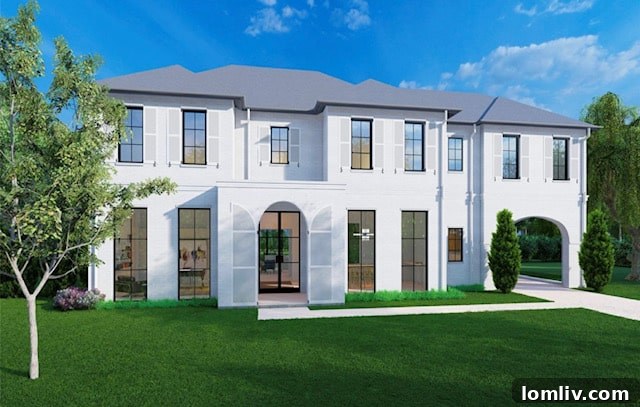
In the dynamic and rapidly transforming landscape of Dallas real estate, the narrative often explores the intricate relationship between ambitious urban development and the deeply rooted concerns of established communities. One compelling story unfolds in the Elm Thicket/Northpark neighborhood, a historically significant area contending with the intense pressures of displacement and gentrification. At the core of this complex discussion is Louis Michael Olerio Jr., a prominent local developer whose company, Olerio Homes, has significantly influenced various Dallas districts over the past 14 years. While Olerio Homes aims to deliver aspirational dream homes, Mr. Olerio Jr.’s past and his development practices have ignited considerable friction with residents, particularly in Elm Thicket/Northpark and the neighboring Devonshire community.
The developer’s controversial history, which includes federal prison time for his involvement in a hydroponic marijuana growing operation and a more recent scandal involving a hot chicken franchise, frequently emerges in community discussions. While Mr. Olerio might argue that these past events are distinct from his professional credibility as a home builder, for many long-term residents of Elm Thicket/Northpark, these details contribute to a broader perception. They view them as indicators of a developer who, in their eyes, operates with insufficient regard for established community norms and values. This sentiment is further fueled by specific grievances: the aggressive removal of mature trees, the obstruction of public rights-of-way with large construction dumpsters, and past statements interpreted as threats to accelerate the gentrification of their cherished Freedman’s community.
Olerio Homes: A Developer Under Public and Community Scrutiny
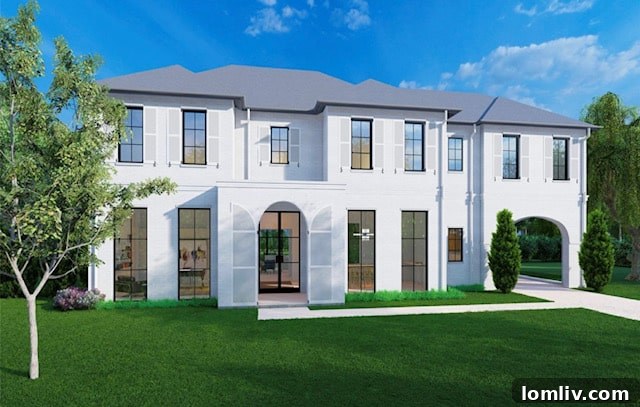
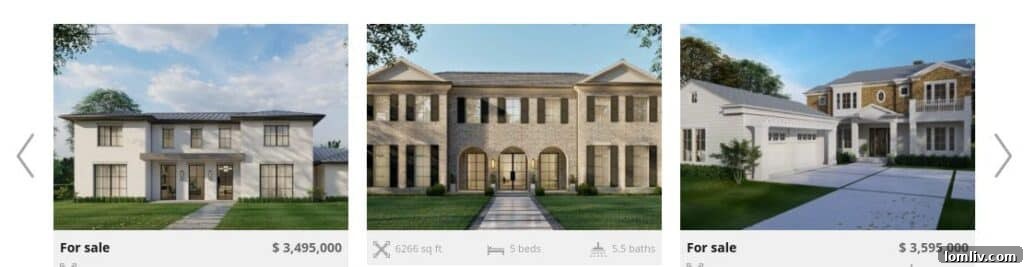
Olerio Homes, under the leadership of Louis Michael Olerio Jr., has undoubtedly played a substantial role in shaping parts of Dallas’s housing market. The company’s online portfolio showcases a range of modern, expansive properties, reflecting a commitment to contemporary design and construction. Mr. Olerio maintains that his interactions with residents in Elm Thicket/Northpark are generally positive and amicable. However, this assertion is sharply contradicted by numerous neighbors who present a vastly different account of their experiences.
Jonathan Maples, the outspoken president of the Elm Thicket/Northpark Neighborhood Association, did not hesitate to challenge the developer’s claims. “That’s not just a lie, that’s a damn lie,” Maples stated emphatically, highlighting the profound distrust. “Nobody cares for Lou Olerio. He’s the same SOB that said he’s going to gentrify the whole neighborhood when he lost the first zoning case.” This direct statement underscores the deep-seated animosity and skepticism that has become prevalent within the community, painting a picture of a relationship far from harmonious or cooperative.
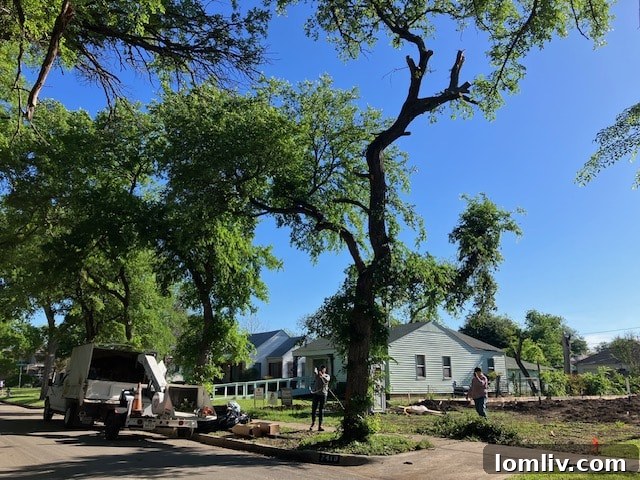
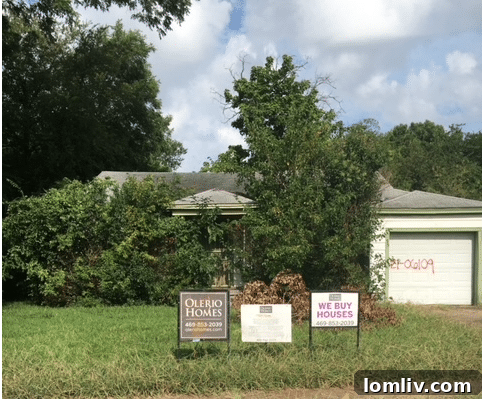
Further insights into the community’s perspective were provided by an anonymous neighbor, who shared her personal experience with the builder’s methods. Her primary grievance revolved around Olerio’s perceived indifference to environmental preservation within the neighborhood. “The complaint ETNP has with Olerio is that he does not make an effort to preserve our old-growth trees. He is more than willing to pay whatever fines the city levels when he gets reported,” she explained. This indicates a frustrating cycle for residents: reporting infractions, only to see the developer seemingly treat fines as an operational expense rather than a deterrent for altering his practices. Beyond tree removal, the neighbor also cited instances of unauthorized Sunday construction work and aggressive attempts to advocate for “spot zoning,” which would permit duplexes on lots traditionally designated for single-family residences, thereby fundamentally altering the visual and demographic character of the streetscape.
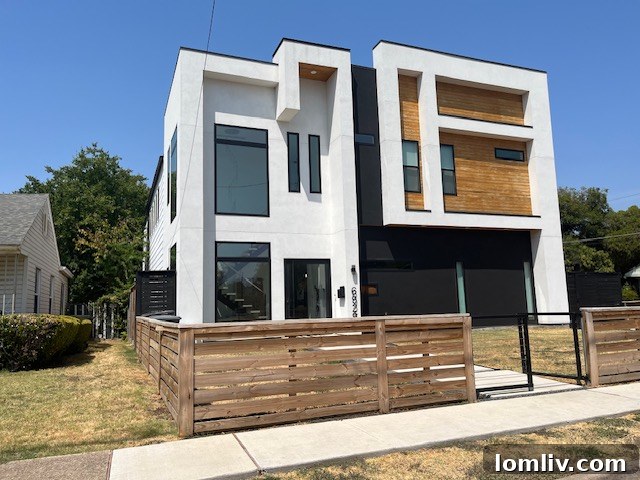
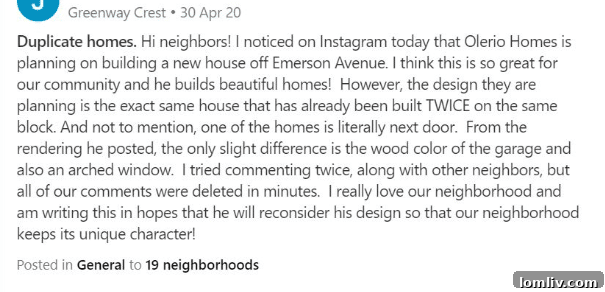
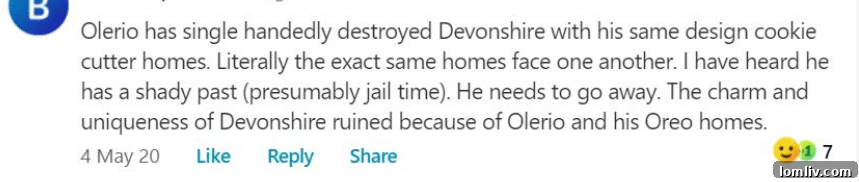
The sentiment of discontent is not isolated to Elm Thicket/Northpark. In the nearby Devonshire area, the popular neighborhood social media platform, Nextdoor, frequently features discussions and complaints regarding the proliferation of Olerio’s distinctive “white box” or “cookie-cutter” style homes. These properties, often perceived as mass-produced and lacking unique architectural character, are viewed by some residents as eroding the diverse aesthetic tapestry of their neighborhoods. Jonathan Maples broadened this critique, asserting, “It’s not just our neighborhood; it’s the whole damn city, north of the Trinity River,” suggesting a widespread dissatisfaction with certain development trends impacting the architectural integrity of Dallas.
Unpacking Lou Olerio’s Past and Recent Business Endeavors
The public record of Louis Michael Olerio Jr.’s past contains elements that have undeniably shaped public perception regarding his current development activities. In December 2013, Olerio received a sentence of two years in federal prison for conspiracy to commit money laundering, a fact confirmed by the U.S. Attorney’s Office Northern District of Texas. He was subsequently released to a halfway house in January 2016. Since his release, Olerio has successfully re-established himself in the Dallas real estate market through Olerio Homes and has also expanded his entrepreneurial portfolio by investing in Lucky’s Hot Chicken franchises.
However, his ventures into the hospitality sector have not been without further controversy. Earlier this month, a legal settlement was reached concerning significant claims related to the Lucky’s Hot Chicken expansion. According to a detailed People Newspapersreport, Olerio and other investors purportedly raised $1.8 million to launch Lucky’s franchises in key Dallas locations such as Oak Lawn, Pleasant Grove, Richardson, and Arlington. Yet, many of these highly anticipated locations never became operational. In the specific case of the Oak Lawn franchise, it reportedly opened its doors only to close within a mere four months. Such incidents, while not directly related to the structural integrity of his homes, can contribute to a public narrative of inconsistent business practices, further fueling skepticism among concerned residents and the broader public regarding the developer’s reliability and long-term commitment.

Olerio Homes and the Pivotal Elm Thicket/Northpark Zoning Battle
The tensions between Olerio Homes and the Elm Thicket/Northpark community escalated significantly, culminating in a critical zoning battle last fall. This struggle resulted in an October vote to approve a “downzoning” overlay, a major regulatory change designed to impose strict limitations on new construction. These restrictions included specific requirements for lot coverage, mandated roof styles, and a cap on maximum structure height. When offered an interview with daltxrealestate.com, Mr. Olerio agreed to discuss his development practices, though he notably declined to address questions concerning his personal legal history. The journalistic focus, therefore, centered on understanding the impact of his projects on neighborhoods undergoing profound transitions.
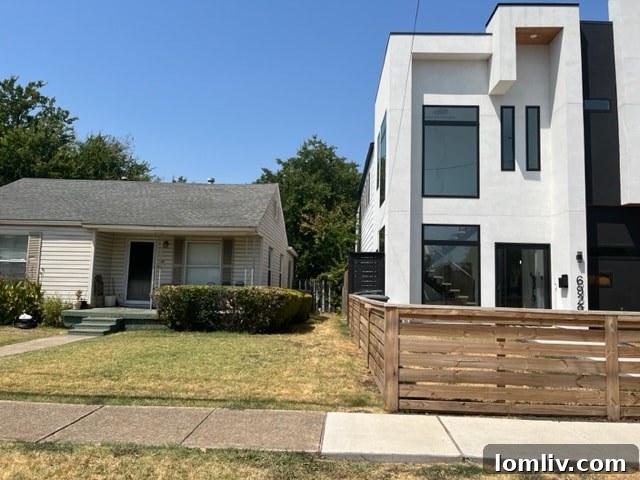
While residents concede that Olerio is not currently in violation of the newly enacted zoning regulations—nor was he technically before their implementation—a profound suspicion persists within the community. Many residents harbor fears that the developer’s ultimate goal is to systematically demolish existing legacy homes, thereby facilitating the displacement of minority residents and fundamentally altering the long-standing demographic fabric of the neighborhood. This apprehension was significantly exacerbated in January 2021 when Olerio confidently informed daltxrealestate.com of his ambitious plans to construct 64 single-family attached units on March Avenue. His accompanying statement, “We’ll totally regentrify that area,” was widely interpreted by residents as an explicit and unwelcome declaration of intent to transform the community in a manner they found both threatening and profoundly disrespectful.
In addressing the criticism surrounding the construction of large, expensive homes placed alongside smaller, more modest legacy cottages, Olerio presents a counter-argument focused on enhancing property values. He contends that his developments significantly contribute to the overall appreciation of the neighborhood, ultimately benefiting existing homeowners. “When I first started buying over there 20 years ago, we were paying $40,000 to $50,000 a lot,” he explained. “Now we’re paying $500,000, plus a lot. My answer to that is we’re creating generational wealth for families [for whom] that is their biggest financial asset. I mean, when prices have increased tenfold on dirt, that’s creating value for the homeowners.” This perspective underscores the economic benefits of rising property values, framing them as a pathway to intergenerational financial stability for long-term residents, regardless of whether they choose to sell or stay.
Jonathan Maples, however, vehemently challenges Olerio’s interpretation of “generational wealth” in the context of current market dynamics. He argues that genuine generational wealth is not fostered when developers acquire homes at what he describes as significantly undervalued prices. “You don’t build generational wealth when the person that is buying your home is low-balling you,” Maples asserted. He further elaborated on the stark disparity: “Building generational wealth would be getting 80 percent of what he’s going to sell the home for when he’s ready to sell. What he’s buying the homes for in this neighborhood, they’re getting about an eighth or less of what he’s going to end up selling it for.” This critique highlights a fundamental disagreement regarding equitable compensation for existing homeowners, suggesting that the current market dynamics disproportionately benefit developers rather than those who have built their lives in the community.

To counter this perceived imbalance and empower residents, Maples actively encourages homeowners contemplating a sale to consider an alternative strategy: demolishing their existing homes, preparing their properties for new construction themselves, building new residences, and subsequently demanding prices comparable to those commanded by professional builders. He underscores the financial feasibility of this approach for residents: “If you go to any bank that loans for real estate and give them the ZIP code of 75209 and your street address, there’s a great chance they will loan you the money to rebuild your own home, simply because they understand the value of the dirt,” he explained. This counsel aims to equip residents with the knowledge to capture more of the escalating land value, rather than succumbing to what they perceive as predatory acquisition tactics.
From Olerio’s standpoint, homeowners are not being coercively removed from their properties. He emphasizes that the decision to sell is entirely voluntary, and those who wish to remain in their homes are unequivocally welcome to do so. “If they want to stay, they’re welcome to stay,” he reiterated. “If they want to stay there, that’s great. If they don’t, then they’ll get a sales price that is much more than they ever thought about when they purchased their homes.” This statement positions Olerio as offering a lucrative opportunity for significant financial gain for those who choose to sell, rather than actively contributing to forced displacement.
The Direct Impact of Downzoning in Elm Thicket/Northpark
The Dallas City Council’s decisive action in October 2022 to approve a “downzoning” overlay in Elm Thicket/Northpark marked a critical juncture in the neighborhood’s efforts for self-preservation. This new zoning ordinance is highly prescriptive, mandating that both single-story and two-story structures adhere to a strict 40 percent lot coverage. Furthermore, it explicitly stipulates that 90 percent of the main structure’s roof must incorporate a hip and gable design when positioned more than 20 feet from the grade. The maximum structure height is also rigidly capped at 25 feet. These detailed regulations were specifically formulated to limit the scale and density of new constructions, thereby aiming to preserve the traditional character and architectural vernacular of the cherished community.
Despite the implementation of these new regulations, a significant loophole exists for developers who successfully pulled permits prior to the City Council’s vote last year. These projects were “grandfathered in,” allowing construction to proceed even if they do not conform to the recently approved criteria. This has resulted in the continuation of some developments that clash directly with the community’s desired aesthetic and density, further frustrating residents who had campaigned tirelessly for the downzoning measures. Olerio, for his part, stated that he actively participated in negotiating these changes with council members and made concessions during the process. He affirmed his commitment to adhering to the updated requirements: “I really have no issue building within the new zoning,” he said. “The ones I’m doing [meet the new criteria].”
While Olerio expresses compliance, not all developers share this perspective or the residents’ view of the zoning’s broader impact. Reagan Anderes, representing RAM Properties, voiced criticism of previous media coverage on Elm Thicket/Northpark, suggesting it presented a one-sided narrative. “Dallas council members did nothing to help with displacement, which all of us fought hard to try to point out,” she stated, highlighting a broader concern among some builders that the zoning changes, while well-intentioned, failed to effectively address the core issue of displacement. “We fought hard to make the zoning case worthwhile, all while pointing out how it would make things more difficult for the original owners. Every single thing we tried to communicate to City Council has now come true. Everyone lost. Especially original homeowners.” This perspective suggests that while the downzoning was intended as a protective measure, it may have inadvertently created new and complex challenges, particularly for long-term residents navigating an already difficult and evolving real estate market.
Devonshire’s Discontent: The Rise of the “White Box” Phenomenon
Across various Dallas neighborhoods, including Devonshire, which operates without the specific overlay zoning district found in Elm Thicket/Northpark, a distinct set of concerns surrounding Olerio Homes has gained prominence. Residents here primarily express dissatisfaction with what they perceive as the uniformity and rapid, cost-effective construction methods employed by the developer. The pervasive presence of Olerio’s distinctive “white box” homes is viewed by many as eroding the unique architectural character of their neighborhood and, by extension, potentially diminishing the perceived craftsmanship of other local builders who prioritize bespoke designs and higher quality finishes.
The Nextdoor social media platform has become an increasingly popular public forum for Devonshire residents to voice their experiences and frustrations with Olerio Homes. These online discussions paint a consistent picture of a developer whose projects, though numerous, are often criticized for their aesthetic repetition and a perceived lack of sensitivity to the existing architectural heritage of the area. Despite these community outcries, Olerio Homes’ portfolio itself showcases a variety of home styles, reflecting an evolution in design over his extensive career. Olerio notes his long-standing presence in these key areas, having commenced building in Elm Thicket in 2010 and expanded into Devonshire in 2012.
The developer offers a strategic rationale for his focus on these specific neighborhoods, highlighting their inherent appeal and prime locations. “We build north of 50 homes a year and those are two of the neighborhoods we focus on,” he stated. The close proximity to downtown Dallas, Love Field Airport, and the Dallas North Tollway makes these areas exceptionally desirable for homebuyers, contributing to consistent year-over-year price increases. Olerio further elaborated on the escalating land values: “Devonshire now is getting to the point where lot values are pushing close to $1 million. In Elm Thicket, lot values are between $400,000 and $500,000 on the smaller side and over $1 million on the bigger lots.” These figures underscore the significant investment and profit potential that continuously attracts developers to these rapidly appreciating locales.
While some of the Nextdoor posts critiquing the “cookie-cutter” aesthetic date back a couple of years, the sentiment remains robust and widespread, demonstrating an enduring disdain for repetitive architectural designs. One Elm Thicket/Northpark resident powerfully articulated this frustration online: “This is much more than a white box trend. When three to four are going up on the same street at the same time as a spec, it’s pure greed and laziness. Consider the source. If you know LO, then you know there is an issue.” This commentary not only criticizes the design but also impugns the developer’s underlying motives, suggesting a prioritization of profit and construction expediency over creative design and sensitive community integration.
Olerio, however, offers a defense of his design choices, particularly within the context of the new zoning regulations. He argues that the very restrictions intended to preserve neighborhood character paradoxically limit architectural creativity. “I think we do a good job of making them look different,” he contended. “One of the things the overlay did is we’re going to have to all build boxes with low-pitched roofs. The overlay, the downzone, reduced the height and the footprint size. Instead of building homes that are more architecturally different, we’re now going to be forced to build boxes with low roofs. You can only build a hip or a gable and you can only max at 30 feet with 40 percent coverage. It takes away a lot of the ability to do creative things that you can do in other neighborhoods.” This explanation presents a challenging dilemma inherent in urban planning: how can communities achieve desired aesthetic preservation without inadvertently stifling innovative architectural expression and potentially creating design monotony?
Despite Olerio’s technical justifications, residents opposed to his architectural style remain unconvinced, often suggesting that more imaginative and context-sensitive solutions are indeed possible. “The legacy homes are all different,” one neighbor pointed out, emphasizing the historical diversity and individuality of the area’s existing housing stock. “[Olerio] is lazy and does not care what the neighborhood looks like. He builds rectangle houses with hip and gable roofs because they’re the cheapest.” This sharp critique implies that the developer’s design choices are primarily driven by cost-efficiency rather than a genuine commitment to neighborhood aesthetics or architectural diversity. When contacted, the Devonshire Neighborhood Association provided a response that, while acknowledging Olerio’s prolific construction in the area, clarified its primary role as a crime watch organization. They suggested leveraging Nextdoor for broader community input, further highlighting the platform’s importance in local discourse regarding development issues.
The Broader Stakes: Displacement and Gentrification in Dallas’s Evolving Neighborhoods
The profound and often painful specter of displacement and gentrification forms the underlying current in these neighborhood disputes. For Elm Thicket/Northpark, a community with deep historical roots as an original Freedman’s neighborhood, the threat is particularly acute and emotionally charged. Many residents shared their experiences during last year’s downzoning debate, recounting persistent solicitations from investors seeking to acquire their properties at prices significantly below market value, often with the explicit intention of demolishing existing homes and effectively forcing long-term residents out. In a community where familial ties often span generations and homes are within walking distance of relatives, the prospect of being uprooted is not merely a financial transaction but a deeply unsettling disruption to the social, cultural, and historical fabric of their lives.
The community’s fervent desire to preserve its heritage and unique residential character is palpable. As one Elm Thicket/Northpark resident expressed on Nextdoor, articulating a common hope, “My neighborhood is definitely in transition and I am hoping for more builders who want to keep cottages alive.” This sentiment reflects a widespread yearning for development that respects and thoughtfully integrates with the existing architectural and social landscape, rather than simply erasing it. Olerio Homes currently maintains a substantial presence in Elm Thicket/Northpark, with approximately a dozen homes under construction, including a lavish $3.75 million residence at 6710 Robin Road in Shannon Estates, as well as three ongoing projects in Devonshire. Beyond these specific Dallas neighborhoods, Olerio’s operations extend to other significant markets such as Waco, Fort Worth, and even recreational destinations like Cedar Creek Lake, underscoring the considerable scale and diverse breadth of his development enterprise.

Jonathan Maples, a resident of Elm Thicket/Northpark for an impressive 58 years, articulates his profound passion for his neighborhood as one of his top three life priorities. For him, the term “gentrification” carries a specific and alarming interpretation: an concerted and systematic effort to drive Black residents out of the community. “I warn all my neighbors about the predatory tactics developers use to colonize our neighborhood,” Maples declared, reflecting a deep-seated vigilance against forces he perceives as threatening the very existence and cultural identity of his community. This perspective highlights the crucial racial and historical dimensions of gentrification, moving beyond purely economic considerations to encompass issues of heritage and belonging.
In stark contrast to the prevailing community sentiment, Olerio stated to daltxrealestate.com that he maintains a positive and productive working relationship with the residents of Elm Thicket/Northpark. He also emphasized his personal connection to the area, having lived there himself for 15 years, although he no longer resides in the neighborhood. “Everyone gets along very well,” he asserted. “There’s very little animosity. I find it to be a very safe and very friendly neighborhood.” This striking divergence in perception underscores the inherent complexity of these urban development narratives, where developers and residents often operate from fundamentally different experiences, priorities, and understandings of “community.” The ongoing dialogue between progress and preservation, profit and community, continues to shape the future of Dallas’s diverse and dynamic neighborhoods, demanding continuous communication and understanding from all stakeholders.