Dubai’s real estate market continues to attract investors globally, offering unparalleled potential for rental income and capital appreciation. However, transforming that potential into consistent, stress-free profit requires more than just owning a property; it demands meticulous day-to-day management. From tenant acquisition to routine maintenance and legal compliance, the operational demands of a rental property can quickly become overwhelming, especially for landlords with multiple units or those residing overseas. This is precisely why a growing number of property owners in Dubai opt for professional property management services. These expert firms handle the intricacies of rental management, providing peace of mind and optimizing returns, but their services come with associated fees that every landlord should thoroughly understand.
Understanding property management fees in Dubai is crucial for making informed investment decisions and accurately forecasting your net rental income. Typically, these fees range from 5% to 10% of the annual rental income, although this figure can fluctuate significantly based on various factors. Key determinants include the specific type of property, the rental model (long-term vs. short-term), the comprehensive suite of services desired by the landlord, and even the property’s location and overall condition. These percentages cover a broad spectrum of essential services designed to protect your investment and ensure a smooth operational flow, encompassing everything from diligent tenant screening and efficient rent collection to proactive maintenance coordination and adherence to local regulatory frameworks.
The complexity and nature of your property directly influence the level of management required, and consequently, the cost. For instance, short-term vacation rentals inherently demand a more intensive and hands-on approach compared to traditional long-term leases, leading to higher management fees. Furthermore, the type of building, its geographical placement within Dubai, and any specific or bespoke services requested by the landlord will all contribute to the final pricing structure. A clear grasp of these variables empowers landlords to better budget for their property investments and select a management package that aligns perfectly with their needs and financial objectives.
Decoding the Standard Fee Range: 5% to 10% of Annual Rent
In Dubai’s competitive real estate landscape, the percentage-based model is the widely accepted standard for calculating property management fees. This transparent approach links the property manager’s earnings directly to the property’s performance, fostering a mutually beneficial relationship. Within this typical range of 5% to 10% of the annual rental income, landlords can generally expect a foundational set of services from Dubai property management services. These core offerings commonly include rigorous tenant screening processes, efficient rent collection mechanisms, and responsive maintenance coordination. For properties that are newer, require minimal upkeep, or have stable, long-term tenants, the fees often trend towards the lower end of this spectrum, reflecting less intensive management effort.
Conversely, if a landlord requires more specialized, comprehensive, or hands-on services, such as extensive marketing for difficult-to-rent units, frequent property inspections beyond the standard, detailed financial reporting, or active negotiation of lease renewals, they should anticipate fees closer to the higher end of the 10% mark. This could also apply to older properties that demand more frequent maintenance or those with a higher tenant turnover rate. The inherent beauty of this percentage model is its adaptability; it automatically adjusts to any fluctuations in rental rates throughout the year, ensuring the management fee remains proportional to the actual income generated.
This incentivized structure is highly advantageous for property owners. Managers are directly motivated to minimize vacancy periods, secure the highest possible market rent, and ensure consistent rent collection, as their profitability is tied to these outcomes. This alignment of interests translates into proactive management, diligent tenant retention efforts, and a keen focus on maintaining property value. However, it is always prudent for landlords to request a meticulously detailed breakdown of what exactly these percentage-based fees encompass. Some companies might present a headline percentage but then itemize additional charges for specific tasks such as lease renewal fees, emergency repair call-outs, or charges for processing utility connections, which can significantly impact the overall cost. Transparency is paramount to avoid unexpected expenditures.
Comprehensive Core Services Included in Management Fees
A standard property management fee in Dubai is structured to cover four primary and essential areas, forming the backbone of effective rental property oversight. These services are designed to protect the landlord’s asset, ensure legal compliance, and maximize rental income while minimizing the owner’s direct involvement:
- Tenant Screening: This is arguably one of the most critical services. Property managers undertake a thorough vetting process for all potential renters. This typically involves comprehensive background checks, reviewing credit histories to assess financial reliability, verifying previous rental records to understand tenant behavior, and confirming employment and income stability. The objective is to identify and secure reliable, responsible tenants, thereby significantly mitigating the risks of late payments, property damage, and potential eviction proceedings, saving landlords considerable stress and financial loss.
- Rent Collection: Property managers streamline and professionalize the monthly payment process. They not only handle the collection of rent but also meticulously track payments, proactively follow up on any late or missed payments, and issue necessary notices in accordance with Dubai’s tenancy laws. Many modern property management firms leverage advanced software platforms that facilitate online payments for tenants, provide automated reminders, and offer landlords real-time access to their account details and payment statuses, ensuring consistency and transparency in financial transactions.
- Maintenance Coordination: Maintaining the property’s condition is vital for tenant satisfaction and preserving asset value. Managers act as the first point of contact for all tenant maintenance requests, responding promptly and efficiently. They coordinate and oversee all necessary repairs, from minor fixes to major renovations, by engaging a network of trusted, licensed contractors and vendors. This includes scheduling regular property inspections to identify potential issues before they escalate, obtaining competitive quotes for work, and ensuring all tasks are completed to a high standard, saving landlords time and hassle in sourcing reliable service providers.
- Legal Compliance: Navigating the intricate landscape of rental laws and regulations in Dubai can be complex and ever-changing. Property managers stay meticulously current with RERA (Real Estate Regulatory Agency) guidelines, tenancy contract laws, eviction procedures, and all other pertinent legal requirements. Their expertise ensures that the landlord remains fully compliant with all local statutes, safeguarding them from potential legal disputes, penalties, or tenant-related challenges. This includes drafting legally sound tenancy agreements, managing lease renewals, and handling dispute resolution processes within the legal framework.
Fee Variations: Long-Term vs. Short-Term Rental Models
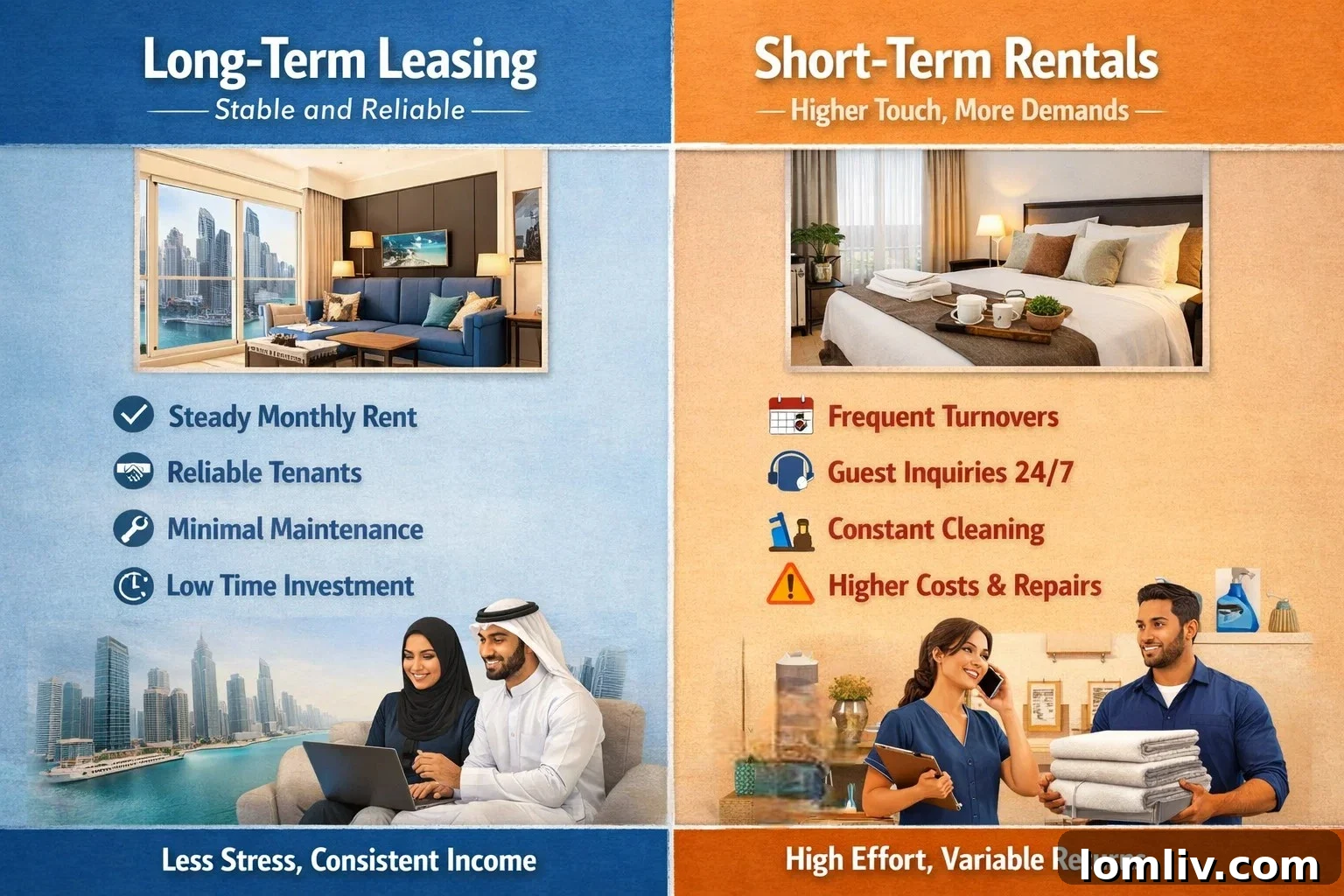
The type of rental model you employ for your Dubai property significantly impacts the management fees you will incur, largely due to the differing operational demands of long-term versus short-term leases. Long-term rentals, typically involving leases of one year or more, generally command lower management fees. This is primarily because they require less frequent intervention once a suitable tenant is secured. The income stream is more stable and predictable over extended periods, and the day-to-day tasks are less intensive, focusing more on reactive maintenance and periodic inspections rather than constant turnover management.
Conversely, managing a short-term rental property, such as those listed on platforms like Airbnb, is inherently more labor-intensive and, consequently, more expensive. The operational requirements for short-term rentals are akin to running a small hotel. Property managers must contend with frequent guest turnovers, which necessitate stringent coordination of cleaning services, linen changes, and restocking of amenities between each stay. Furthermore, they are responsible for dynamic pricing strategies, managing booking calendars across multiple platforms, handling immediate guest inquiries and check-ins/check-outs at all hours, and responding to maintenance issues with utmost urgency to maintain high guest satisfaction ratings. These added responsibilities and the intense logistical coordination involved justify the significantly higher commission rates associated with short-term rental management.
In Dubai, long-term lease management fees typically fall within the range of 5% to 8% of the annual rent, reflecting the relatively stable and less hands-on nature of these agreements. This percentage might include the core services mentioned previously, with additional charges for specific, non-routine tasks. However, short-term rental management can command fees ranging from 15% to 25% of the gross rental income, and in some cases, even higher for highly specialized luxury properties. These higher fees are a direct reflection of the extensive time, specialized expertise, and continuous effort required for comprehensive marketing across various booking platforms, meticulous guest communication, swift resolution of issues, and maintaining an immaculate property standard that ensures repeat bookings and stellar reviews. Landlords considering short-term rentals must factor these elevated management costs into their financial projections to accurately assess their potential profitability.
The Indispensable Value of a Clear, Written Fee Breakdown
Securing a detailed, written fee breakdown from your prospective property manager is not merely a formality; it is a critical safeguard for your rental income and a foundational element for a transparent landlord-manager relationship. Before committing to any contractual agreement, your property manager should furnish you with an itemized list that meticulously outlines all anticipated fees and charges. This comprehensive document empowers landlords to accurately compare services offered by different companies, allowing for an informed decision based on value, not just headline percentages. More importantly, it ensures you understand precisely what you are paying for each month, eliminating ambiguity and fostering financial clarity.
The risk of encountering “hidden fees” is a pervasive concern in the property management industry, often arising from vague or poorly defined contracts that lack specific cost details. Without a clear breakdown, charges for seemingly routine services such as tenant placement, lease renewals, property inspections, or even minor maintenance coordination can surreptitiously accumulate, significantly eroding your projected rental income. Examples of often-overlooked charges include administrative fees for utility transfers, advertising costs for vacant units, fees for processing eviction notices, or charges for attending tribunal hearings. A truly transparent breakdown will explicitly list every service provided and its associated cost, presented in plain, unambiguous terms, leaving no room for misinterpretation.
Therefore, it is imperative to obtain this detailed breakdown in writing and to review it with utmost diligence before affixing your signature to any agreement. The document should clearly delineate the regular, recurring management fees from any potential additional services or ad-hoc charges that might arise, such as emergency repairs, extensive legal work, or project management for significant renovations. This level of clarity is vital for property owners to establish accurate budgets, forecast cash flow effectively, and, most importantly, prevent any future disputes or disagreements regarding billing. A well-structured fee schedule is the cornerstone of a successful and trusting property management partnership.
How Property Types and Characteristics Influence Management Rates
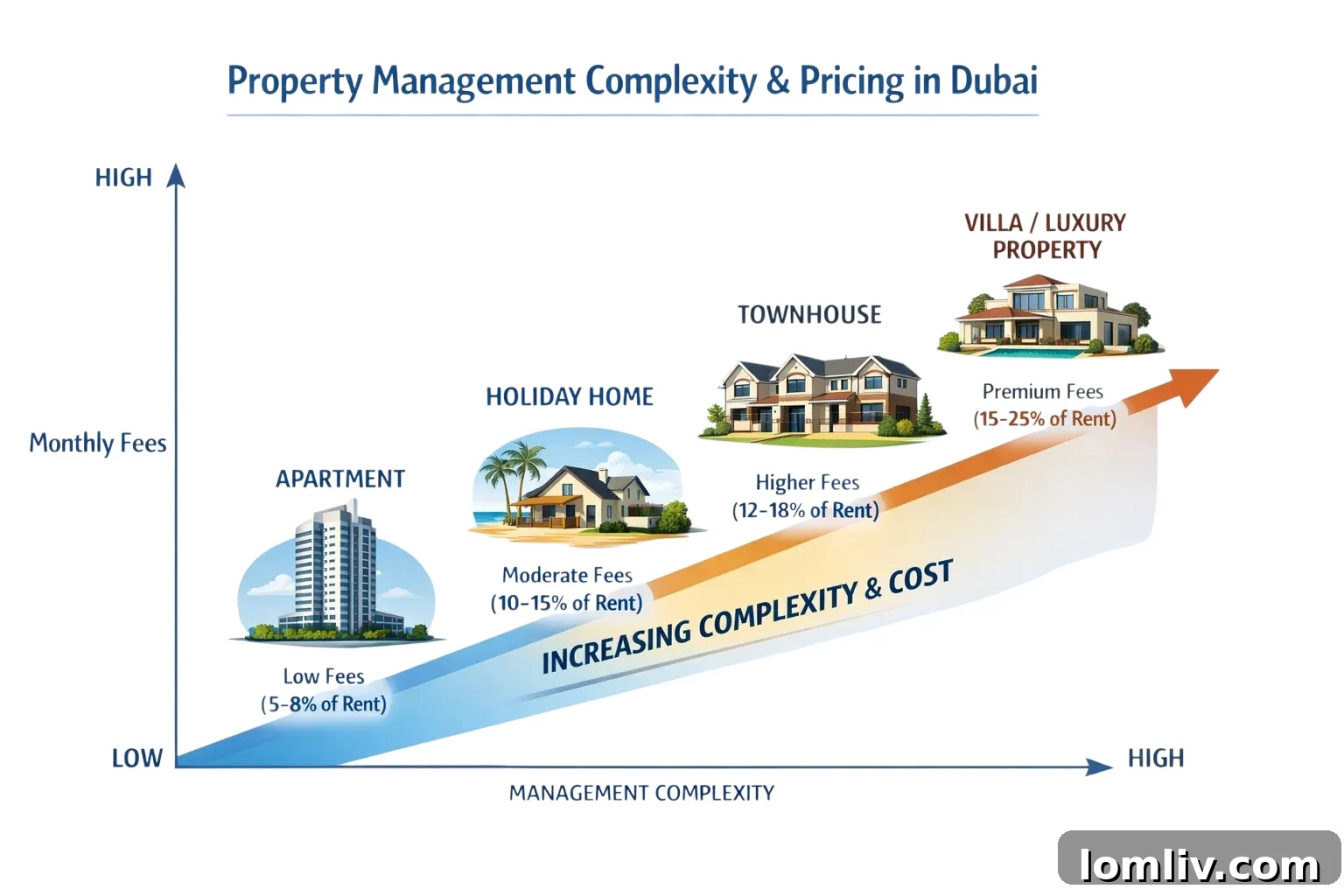
The inherent characteristics and type of property you own in Dubai play a substantial role in determining the specific rates you will pay for professional management services. The level of complexity, the tenant demographic, and the expected service standards all contribute to this variability. For instance, managing standard residential apartments typically falls within a range of 8% to 12% of the monthly rent. Commercial properties, on the other hand, can exhibit a broader range, from 4% to 12%, largely dependent on their size, the nature of the business operating within, and the intricacies of the lease agreements, which can often be more complex than residential ones.
Luxury properties represent a distinct category, almost invariably demanding higher management fees. Tenants in premium residences expect an elevated level of service, including dedicated concierge-style support, immediate response times to any issues, and impeccable maintenance of high-end finishes and bespoke amenities. Providing these bespoke services requires a more specialized and often more expensive management approach. Similarly, furnished units necessitate more attentive management than unfurnished ones. This is due to the added responsibilities of managing an inventory of furniture and appliances, addressing wear and tear on furnishings, and potentially coordinating cleaning or replacement of items between tenants.
The scale and type of residential dwelling also factor into pricing. Single-family villas, while larger, often incur lower management fees per unit compared to multi-unit apartment buildings. This is because managing a single detached unit generally involves fewer communal area concerns and less coordination across multiple tenants. However, for landlords owning a portfolio of multiple properties, there might be opportunities for reduced rates. Management companies can achieve economies of scale when handling several units for the same owner, streamlining processes and potentially offering bundled discounts. Property size itself is also a determinant; larger units with a greater number of rooms, bathrooms, and integrated amenities inherently require more time, resources, and skilled personnel to maintain properly.
Finally, location is an undeniable and significant factor in Dubai’s diverse real estate market. Properties situated in prime, high-demand areas such as Downtown Dubai, Palm Jumeirah, or Dubai Marina may command higher management fees. This is often a reflection of more competitive service standards expected by tenants in these prestigious locales, the higher value of the properties themselves, and the increased complexity of managing properties within highly sought-after and often regulated communities. Conversely, properties in more outlying or established communities might have slightly different fee structures. A thorough understanding of these property-specific variables is essential for any landlord to budget accurately and choose a management solution that aligns with their property’s unique profile and market positioning.
Optimizing Your Investment: The Bottom Line on Property Management Fees in Dubai
Investing in Dubai’s vibrant rental market offers substantial opportunities for lucrative returns, yet successful portfolio growth hinges on effective, efficient management. Engaging a professional property manager in Dubai, while an initial financial commitment, is an investment that typically yields considerable benefits, often outweighing the direct cost. On average, you can expect to allocate between 5% and 10% of your annual rental income towards these services. This percentage covers a broad spectrum of critical tasks, from rigorously vetting tenants and ensuring timely rent collection to coordinating all necessary maintenance and navigating the intricate landscape of Dubai’s real estate regulations.
While the fees represent an upfront expense, the value derived from professional property management extends far beyond the monetary. Landlords consistently find that the significant time saved, the invaluable peace of mind, and the superior professional service provided are well worth the cost. A skilled property manager acts as your eyes and ears on the ground, minimizing vacancies, maximizing rental yield, preserving property value, and adeptly handling any challenges that arise, from tenant disputes to emergency repairs. Their expertise safeguards your investment, ensures legal compliance, and allows you to enjoy the benefits of property ownership without the daily operational burdens.
To ensure a successful partnership and avoid any unexpected financial surprises, the most crucial step you can take is to secure a crystal-clear, written agreement detailing all services included and their associated fees. This transparent contract should explicitly outline the percentage-based management fee, any additional charges for specific tasks (such as lease renewals, marketing, or major repair project management), and the exact scope of responsibilities for both parties. By thoroughly understanding what you are paying for, you can accurately budget, compare service providers effectively, and ultimately make an informed decision that enhances the profitability and longevity of your Dubai real estate investment.