
For countless homeowners across the Lone Star State, from the bustling streets of Dallas and Houston to the vibrant communities of Austin and San Antonio, a pivotal question emerges when contemplating significant property enhancements: Is it better to embark on a comprehensive, full home remodel, or should renovations be tackled strategically, one room at a time? With Texas home values experiencing a steady ascent, an increasing number of residents are wisely investing in updates, aiming to boost comfort, functionality, and market appeal.
The decision between these two distinct approaches isn’t merely a matter of preference; it’s a strategic choice that can profoundly impact your budget, timeline, and overall experience. While the prospect of a complete home transformation might seem daunting, and a room-by-room approach appears more manageable, the true determinant often lies in understanding which path aligns best with your financial capacity, lifestyle, and long-term goals. This guide delves deep into the nuances of each renovation strategy, offering insights to help Texas homeowners make an informed decision tailored to their unique circumstances.
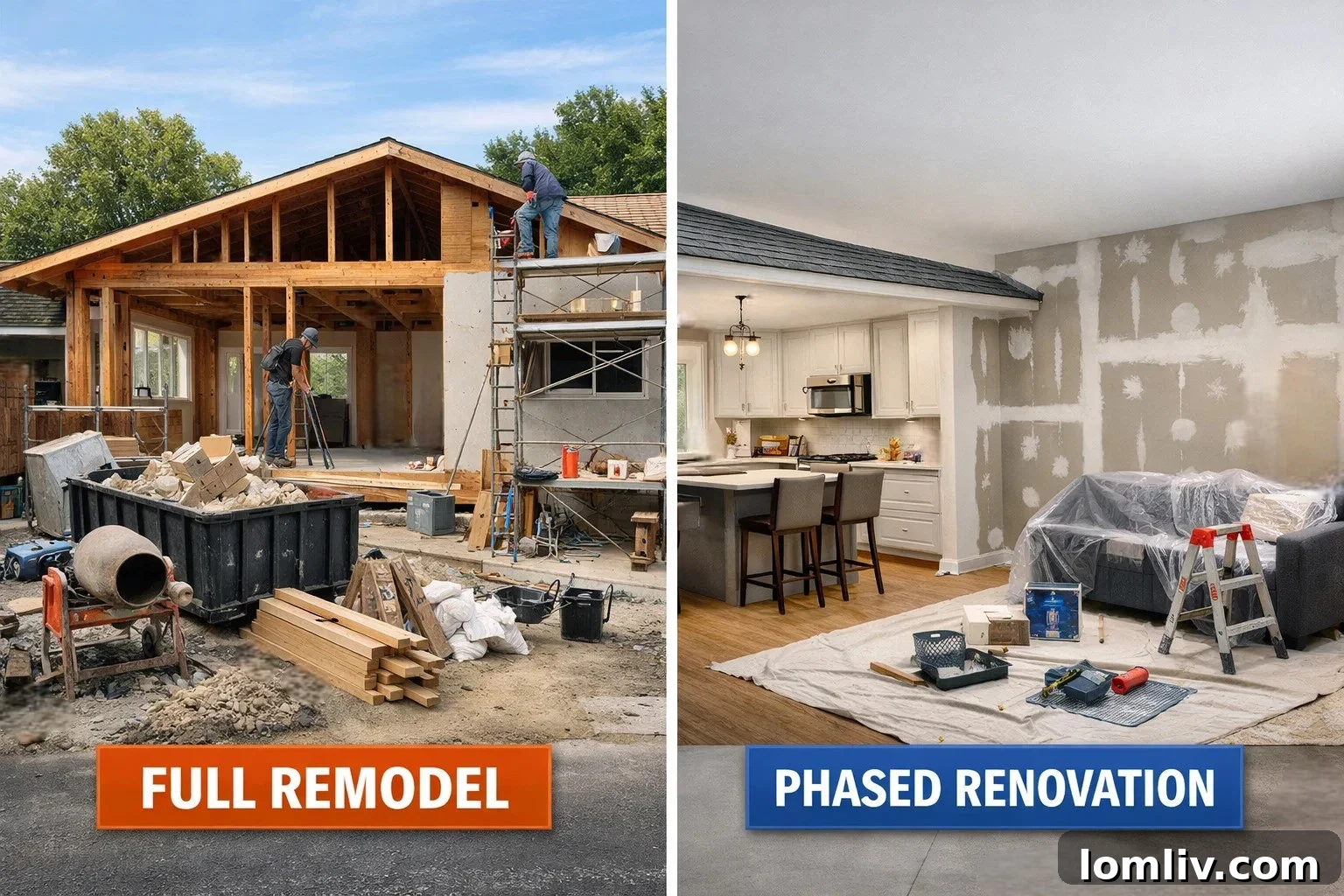
Understanding the Core Differences: Full Home Remodel vs. Phased Renovation
Before diving into the pros and cons, it’s essential to clearly define what each renovation philosophy truly entails. A full home remodel signifies a sweeping overhaul, addressing the majority, if not the entirety, of your property in a single, continuous project. This approach typically involves a unified team of contractors working under one master timeline, ensuring a cohesive vision and a singular, albeit intense, period of disruption. Homeowners often find themselves temporarily relocating during such extensive projects.
Conversely, a room-by-room renovation, also known as a phased approach, involves breaking down the work into smaller, more manageable stages. These stages can span months or even years, allowing you to prioritize specific spaces based on your immediate needs, available budget, and evolving schedule. This method offers greater flexibility and often enables homeowners to remain in their residence throughout the renovation process, albeit with localized disruptions.
The choice between these two distinct paths isn’t always straightforward. It often hinges on a critical factor many homeowners initially overlook: whether you intend to live in your home while the construction is underway. This single consideration frequently dictates the feasibility and practicality of each approach, shaping everything from daily routines to overall project stress levels.
When a Full Home Remodel Becomes Your Best Investment

Once a dedicated contractor team is mobilized and established on your property, significant cost efficiencies can be realized by bundling multiple projects together. One of the primary advantages of a full home remodel in Texas is the substantial reduction in labor costs. Crews avoid the inefficiencies of multiple, separate trips, setup, and teardown cycles that characterize staggered projects. Instead, they can maintain a continuous workflow, leading to lower per-project labor expenses and often a faster overall completion time.
Furthermore, purchasing materials such as flooring, cabinetry, countertops, and fixtures in bulk for an entire home renovation frequently unlocks better pricing from suppliers. In the dynamic Texas construction market, where material costs can fluctuate, securing these prices upfront for a large order can protect your budget from future inflationary increases. This proactive procurement strategy is a key financial benefit of the comprehensive approach.
Beyond cost savings, a full remodel ensures a truly cohesive aesthetic throughout your property. All finishes, fixtures, and flooring can be meticulously chosen to complement one another, creating a harmonious and unified design narrative. Achieving this level of consistency is incredibly challenging when rooms are updated years apart, risking a disjointed or piecemeal appearance. Moreover, enduring one concentrated period of disruption, especially during Texas’s notoriously hot summers, is often preferable to years of intermittent construction noise, dust, and inconvenience.
This all-encompassing strategy proves particularly advantageous for various Texas homeowners:
- Fixer-Upper Enthusiasts: Buyers acquiring properties in need of extensive repairs and modernizations can transform an outdated house into a dream home efficiently.
- Pre-Sale Preparation: Homeowners looking to maximize their property’s value and appeal in a competitive market can make a powerful, unified statement to potential buyers. A fully updated home often sells faster and for a higher price.
- Aging-in-Place Upgrades: Families planning long-term accessibility and comfort modifications can implement all necessary changes simultaneously, ensuring safety and ease of living for years to come.
- Major Structural Changes: If your renovation involves moving walls, reconfiguring layouts, or significant plumbing and electrical overhauls that impact multiple areas, a full remodel centralizes these complex tasks.
Why a Room-by-Room Renovation Might Be Your Smarter Move
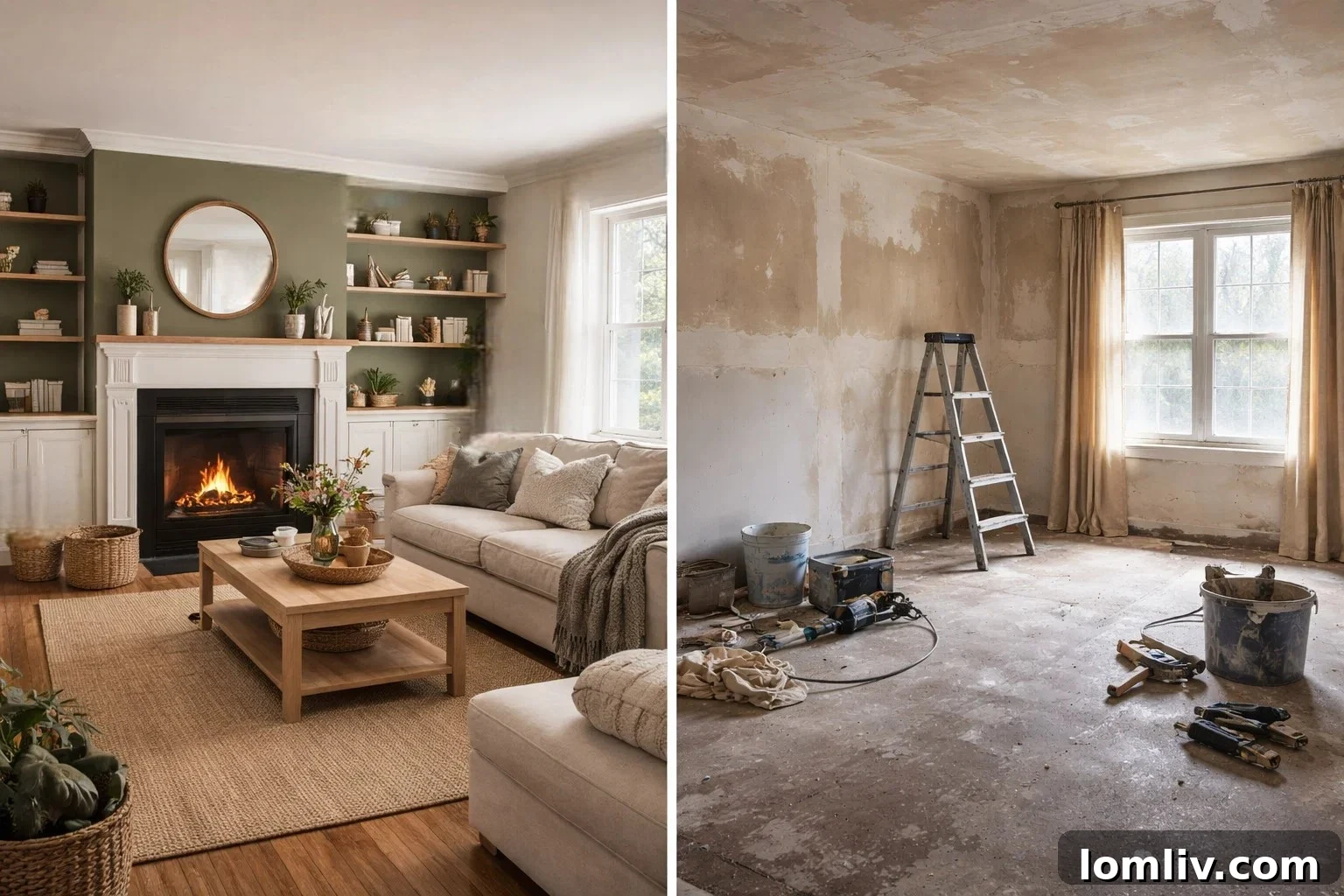
A phased approach to home renovation makes immense practical and financial sense when the entire budget for a comprehensive remodel isn’t immediately available. This scenario is quite common for many Texas families. Tackling one room or one section of the house at a time allows for manageable cash flow, preventing the need for extensive loans or depleting savings all at once. It provides the freedom to save up for each subsequent phase, reducing financial strain and stress.
The inherent flexibility of a room-by-room strategy is another compelling benefit. You can update your kitchen this year, followed by the primary bathroom next year, and perhaps the living area the year after. This staggered schedule allows you to live in and experience the newly finished spaces before committing to similar design choices for the rest of the house. It’s an excellent way to refine your aesthetic preferences, learn from earlier phases, and even test out new materials or design elements without a massive, irreversible commitment.
Perhaps most importantly, a phased renovation often allows homeowners to remain in their residence throughout the work. While there will be localized disruption, it’s typically far less invasive than vacating the entire property. This can save significantly on temporary housing costs, which can quickly add up during a full remodel. For those with children, pets, or work-from-home arrangements, maintaining some semblance of normalcy can be invaluable.
This approach is particularly well-suited for:
- Budget-Conscious Homeowners: Those who prefer to pay as they go, avoiding large debt and spreading out the financial commitment.
- Long-Term Residents: Homeowners not planning to sell anytime soon, focusing on personal enjoyment and gradual improvements rather than immediate market value.
- Design Exploration: Individuals who want to evolve their home’s style over time, experimenting with trends or personal tastes in smaller increments.
- Testing Contractor Relationships: Smaller projects can serve as a “test drive” for working with a new contractor or design team before committing to a larger, whole-home project.
Beware of These Hidden Costs in Phased Renovations

While a room-by-room renovation offers flexibility, it’s crucial for Texas homeowners to be aware of several hidden expenses that can accumulate rapidly, potentially making this approach more costly in the long run than an upfront full remodel:
- Mobilization Fees: Contractors typically charge a fee each time they mobilize their crew, equipment, and materials to a job site. For smaller, scattered jobs, these fees can add up significantly across multiple visits, whereas they are absorbed into one large project cost during a full remodel.
- Redundant Work and Re-Work: Imagine painting a hallway, only to have it scuffed or damaged a year later when an adjacent room undergoes renovation. You might end up paying twice for tasks like painting, protecting existing finishes, dust control, or even minor demolition if subsequent phases impact previously updated areas.
- Material Inflation: In Texas’s robust and often volatile construction market, the cost of building materials such as lumber, tile, plumbing fixtures, and appliances can rise steadily over time. Waiting almost invariably means paying more for the same materials later, eroding any initial budget savings.
- Permit Fees and Inspections: Each separate, significant renovation project typically requires its own set of permits and subsequent inspections. This means you’ll incur multiple application fees and inspection costs, whereas a single, comprehensive permit package covers an entire home remodel.
- Design Inconsistency Costs: Without a master plan, different phases might use slightly different materials, finishes, or even structural approaches that don’t quite match. Rectifying these inconsistencies later can be an unexpected and costly design challenge.
- Prolonged Disruption and Stress: While a phased approach aims to minimize disruption, living with ongoing, albeit intermittent, construction over months or years can take a significant toll on homeowner stress levels and daily routines, representing an intangible but real cost.
These hidden expenses can quickly erode the perceived savings of a phased renovation. The cumulative effect, especially when crews have to repeatedly start and stop, and material prices continue to climb, often makes a full, continuous project more cost-effective in the grand scheme.
Key Considerations for Your Renovation Decision

Before committing to either a full home remodel or a room-by-room renovation, a thoughtful evaluation of your current circumstances and future aspirations is essential. Consider the following crucial factors:
- Your Living Arrangements During Renovation: This is arguably the most critical factor. If the idea of living in your home during the renovation is non-negotiable, a phased approach will likely be much more manageable. For a full remodel, explore temporary housing options such as renting an apartment, staying with family, or utilizing an RV. Factor in the costs and logistics of temporary relocation if a full remodel is your preference.
- Your Current Budget and Funding Strategy: Assess your financial readiness. If you have the funds readily available, either through savings, a home equity line of credit (HELOC), or a favorable renovation loan, a full remodel can offer significant long-term savings by consolidating costs and avoiding future price hikes. If your budget is tighter and you prefer to finance projects incrementally, a phased approach allows you to spread out the financial commitment.
- Your Future Plans for the Property: Consider your timeline. If you plan to sell your Texas home within the next three to five years, a comprehensive, full remodel will likely maximize its market appeal, command a higher selling price, and ensure your property stands out in a competitive market. For homeowners planning to stay put for a decade or more, the immediate return on investment might be less critical, making a slower, room-by-room approach more appealing for personal enjoyment.
- Your Design Goals and Vision: Do you have a clear, overarching vision for your entire home? A full remodel is ideal for executing a unified design aesthetic, ensuring seamless transitions between spaces. If your vision is still evolving, or you prefer to discover your style as you go, phasing can offer the flexibility to adapt. However, without a foundational master plan, a phased approach can inadvertently lead to a disjointed style across different rooms, which might require costly corrections later.
- Your Tolerance for Disruption and Stress: Be honest about your comfort level with ongoing construction. A full remodel is intense but finite. A phased approach involves smaller disruptions but over a potentially much longer period. Which scenario is less stressful for you and your family?
Embracing the Hybrid Approach: The Best of Both Worlds
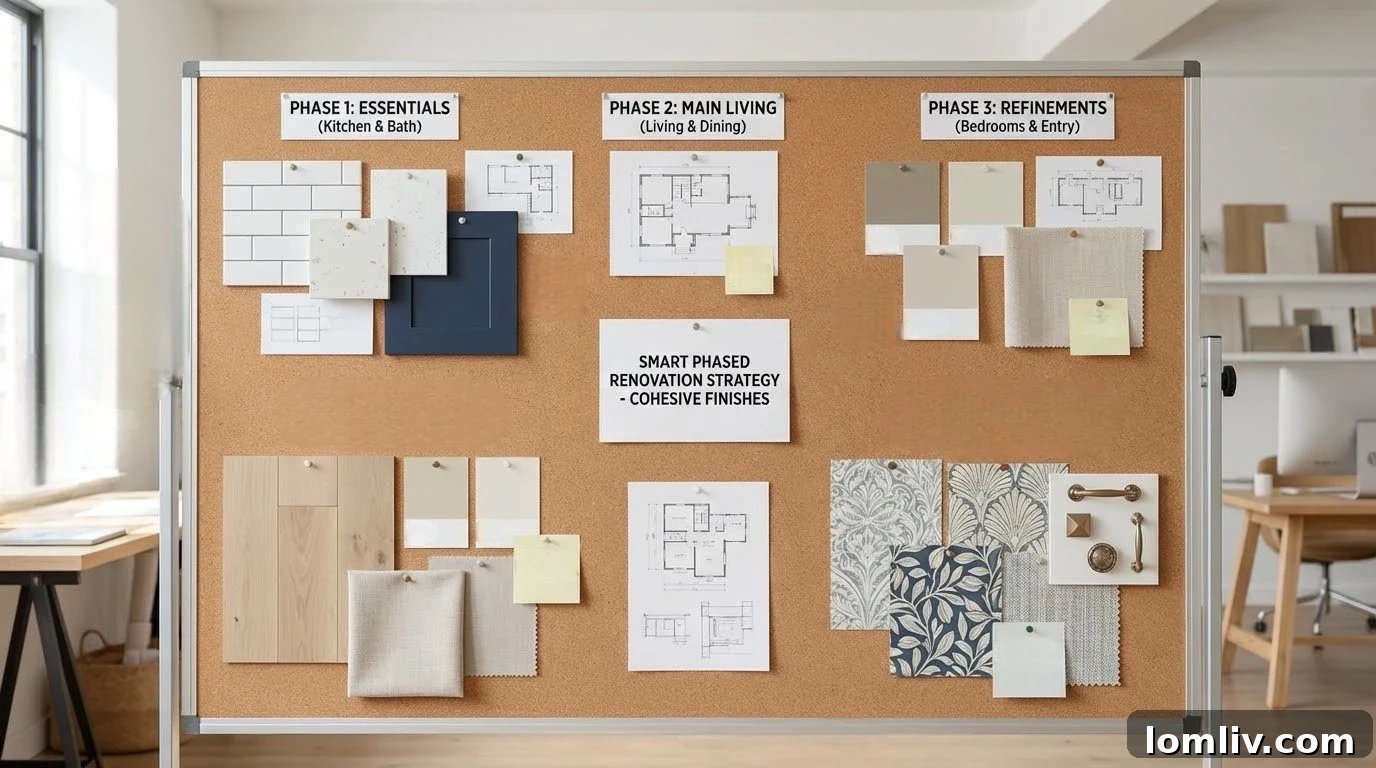
For many Texas homeowners, the ideal solution isn’t found at either extreme but rather in a strategic blend of both approaches: the hybrid remodel. This intelligent strategy involves prioritizing high-value spaces like the kitchen and primary bathroom first, then systematically phasing out the remaining areas of the house. The key to success with a hybrid approach lies in meticulous upfront planning, even if execution occurs in stages.
To maximize efficiency and minimize costs with a hybrid model:
- Group Adjacent Rooms: Instead of renovating individual, isolated rooms, try to group connected or adjacent spaces together. For example, renovate the kitchen, dining room, and living room simultaneously if they form an open-concept living area. This allows contractors to work more efficiently across connected spaces, reducing mobilization hassles.
- Coordinate Major System Upgrades: If your renovation involves significant electrical, plumbing, or HVAC upgrades, try to plan these interventions concurrently across all affected areas. This prevents the costly and disruptive need to tear into the same walls or floors multiple times for different phases, saving both time and money.
- Prioritize Core Functionality: Address essential structural repairs, roofing, windows, and critical systems first, as these impact the entire home’s integrity and energy efficiency.
- Develop a Master Plan: Even with a phased execution, having a comprehensive master plan for the entire property is paramount. This blueprint guides all subsequent phases, ensuring design consistency, material compatibility, and preventing those awkward, costly mismatches that arise when rooms are updated years apart without a clear overall vision. Your master plan should encompass everything from material selections to color palettes and general aesthetic direction.
The hybrid approach offers the financial flexibility of a phased renovation while striving for the cohesive design and cost-efficiency benefits of a full remodel. It’s about strategic prioritization and intelligent staging, all underpinned by a thorough initial design and planning process.
Final Thoughts on Your Texas Home Renovation
Ultimately, there is no universally “right” answer when deciding between a full home remodel and a room-by-room renovation. The optimal choice is deeply personal, depending entirely on your specific budget, your renovation timeline, your family’s lifestyle, and how you envision using your Texas home for years to come. What works perfectly for one homeowner in Austin might be entirely impractical for another in San Antonio.
However, one fundamental truth remains constant, regardless of the path you choose: the most expensive mistake any homeowner can make is commencing demolition or any significant work without a clearly defined, comprehensive plan. Whether you decide to go all-in with a complete home transformation or opt for a more gradual, room-by-room approach, having a solid strategy in place from the outset is your most powerful tool. It protects your financial investment, mitigates unexpected issues, and helps you avoid costly surprises and rework down the line.
If you’re ready to explore your renovation options and craft a strategy that aligns with your unique needs, connect with an experienced local remodeling team in Texas. They can provide invaluable insights into full renovation services in Texas, help you navigate the complexities, and establish a clear, actionable plan before any work begins, ensuring your home improvement journey is as smooth and successful as possible.