

Dallas, a city experiencing rapid growth and development, continues to grapple with a complex challenge: ensuring adequate and affordable housing for all its residents. While new apartment complexes seem to receive approval from the Dallas City Council on an almost weekly basis, a recent report from the Child Poverty Action Lab (CPAL) paints a stark picture of a burgeoning crisis in the Dallas rental market, particularly for its most vulnerable populations. This discrepancy between visible development and underlying need highlights a critical ongoing debate within the city’s leadership and planning circles.
The comprehensive CPAL report, released in July, serves as a crucial benchmark for understanding the true scope of Dallas’s affordable housing shortage. Its key findings are a sobering reminder that current development trends, while robust, may not be addressing the most pressing needs:
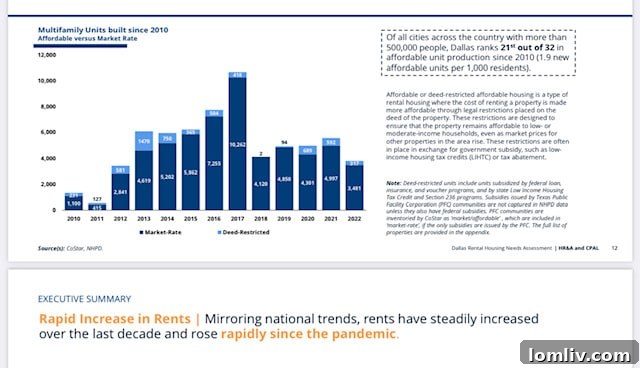
- Significant Rental Unit Supply Gap: The report revealed an immediate deficit of 33,660 rental units specifically for Dallas’s lowest-income households. These are families earning at or below 50 percent of the Area Median Income (AMI), which translates to $44,500 for a family of four. Crucially, the report found no immediate supply gap for households earning above 50 percent AMI, underscoring where the true problem lies.
- Alarming Projected Growth of the Gap: Without targeted intervention and policy changes, this existing gap is not only expected to persist but to dramatically widen. Projections indicate that by 2030, the deficit for households at or below 50 percent AMI could skyrocket to 83,500 rental units. Furthermore, this housing crunch is anticipated to extend to households earning at or below 80 percent AMI – an income level of $71,200 (in 2021 dollars) for a family of four – in the coming years, indicating a broader future challenge for middle-income families as well.
- Disproportionate Impact on Larger Families: Families with four or more individuals face a particularly dire situation. The report highlighted a severe shortage of appropriately sized units, with only 50 three-bedroom units available for every 100 households of four-plus people at or below 50 percent AMI. This already challenging ratio is projected to worsen drastically, plummeting to just 15 three-bedroom units per 100 households by 2030, leaving many larger families struggling to find suitable and affordable accommodation.
These findings from CPAL underscore the urgent necessity for Dallas to re-evaluate its strategies for fostering equitable housing development. The focus must shift not just to increasing the overall housing stock, but to delivering units that align with the affordability levels desperately needed by the city’s working families and those on limited incomes.
Public Facility Corporation Projects: A City’s Strategy for Affordable Housing
In response to the pervasive need for affordable housing, the City of Dallas frequently utilizes its Public Facility Corporation (PFC) financing structure. This mechanism allows developers to enter into a 75-year lease agreement with the Dallas PFC, granting their projects exemption from all ad valorem taxes. In exchange for these substantial tax benefits, the developers commit to including a specific percentage of mixed-income units, aiming to make housing more accessible across various income brackets.
During a recent Dallas City Council meeting, three such PFC projects were approved, sparking a familiar and often passionate debate among council members about the efficacy and fairness of these agreements. District 12 Councilwoman Cara Mendelsohn, a vocal advocate for genuine affordable housing, expressed reservations about whether these projects truly hit the mark in addressing the city’s most critical needs as identified by the CPAL report.
Mendelsohn highlighted several key concerns: “What I really want to point out is, No. 1, our estimated taxes that are foregone are expressed only as a 15-year period for a 75-year deal. This calculation vastly understates the long-term financial impact on the city. Furthermore, when we examine the Bishop 8th project, the lowest level of AMI that we have included is 60 percent. The CPAL report clearly shows that we actually have a surplus of units at both the 60 percent and 80 percent AMI levels. What we are critically missing are units for households at 30 percent and under, and 50 percent and under. This project, while adding units, simply does not get us where we need to be. It literally is not meeting the profound need that the Child Poverty Action Lab has so clearly demonstrated.” Her critique centered on the perception that the city’s incentives were misdirected, favoring development at income tiers where demand was already being met, rather than targeting the most acute shortages.
City Manager T.C. Broadnax offered a counterpoint, emphasizing the broader strategic value of PFC projects. He explained that revenue generated by these developments is funneled back into the PFC to be utilized for future affordable housing initiatives. Broadnax stressed that, in many instances, without the financial incentives provided by the city, these crucial affordable housing components would simply not be built. “We have this discussion every time a PFC item comes up,” he stated, acknowledging the recurring nature of the debate. “The fundamental theme is that Child Poverty Action Lab has obviously shared the undeniable need for affordable housing. This council has leveraged and talked about affordable housing in many of your conversations. We need affordable housing. The dollars created from the PFC go back into affordable housing, which in some cases would not have to come from a bond program, and/or from the general fund, and/or from future tax abatements and other kinds of things. The [PFC] mechanism was specifically created to do exactly what it’s doing: enabling projects that include affordable components while simultaneously generating funds for future affordable housing efforts.” His argument underscored the complex balancing act between providing immediate housing solutions and establishing a sustainable funding stream for long-term affordability goals.
Bishop 8th: A Mixed-Income Addition to Bishop Arts
One of the approved projects is Bishop 8th, a new mixed-income, multifamily development situated at 505 and 510 West 8th Street. This project, spearheaded by BV Acquisitions LLC, is slated to introduce 226 one-bedroom units and six studio units to the vibrant Bishop Arts district. The development aims to integrate various income levels within a single community, reflecting the mixed-income model favored by the city.
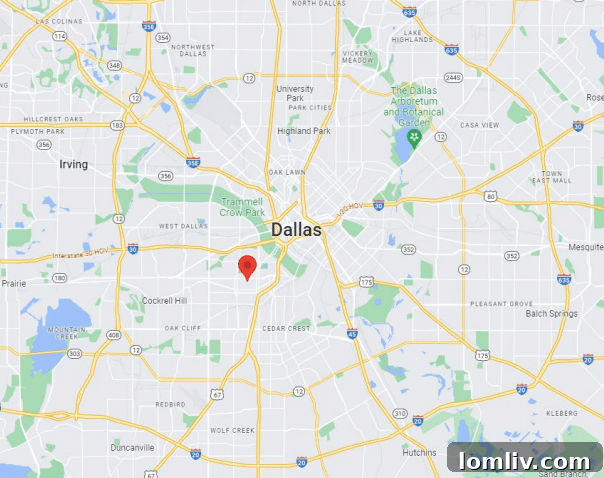
Specifically, the affordability breakdown for the 232 units is as follows: at least 94 units will be designated for households earning less than 80 percent of the Area Median Income (AMI), and within that, 24 units will be reserved for households earning less than 60 percent of AMI. The remaining 114 units will be leased at market rates. From a financial perspective, the city estimates that approximately $1.1 million in revenue will be foregone over a 15-year period due to the tax abatement. However, proponents argue that the project will generate a substantial $4.5 million for the city over the same timeframe through various revenue streams, demonstrating a positive net financial impact.
District 1 Councilman Chad West, whose district encompasses the Bishop Arts neighborhood, acknowledged the area’s ongoing transformation. While he noted the presence of some positive new developments, he also candidly mentioned some “big boxy, really ugly new apartments as well.” West emphasized the importance of design quality, especially when the city provides significant incentives like a Public Facility Corporation tax abatement. “I wanted to be sure that if the city is going to be providing a Public Facility Corporation tax abatement — of course, we’re going to be getting affordable housing in exchange for that — this is an opportunity to make sure we have some good designs,” West stated, advocating for aesthetically pleasing and community-enhancing architecture. Developer Ben Breunig with BV Acquisitions assured the council of his commitment to delivering a first-class project, emphasizing the use of quality masonry materials and thoughtful amenities, aiming to blend the new development seamlessly into the character of the Bishop Arts district.
Coombs Creek Alta Vista: Addressing Housing Needs in Southwest Dallas
Another significant development approved under the PFC structure is Coombs Creek Alta Vista, planned for construction at 3400 West Illinois Avenue in Southwest Dallas. This project by developer Marcer Group, LLC, envisions a substantial addition of 210 residential units to the area. The unit mix includes 48 studio apartments, 116 one-bedroom units, 34 two-bedroom units, and 12 three-bedroom units, designed to cater to a diverse range of household sizes and needs.
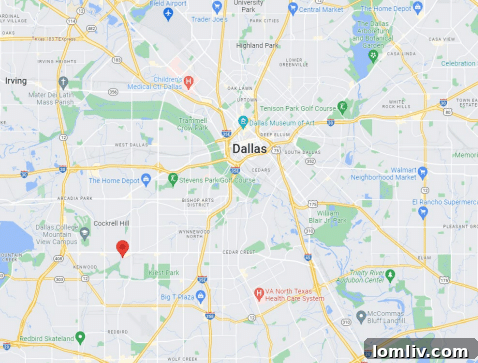
In line with the PFC agreement, a portion of these units will be set aside for affordable housing. Specifically, at least 82 units will be available to households earning less than 80 percent of AMI, with 23 of these units dedicated to households earning less than 60 percent of AMI. The remaining 105 units will be offered at market rental rates. The financial projections for Coombs Creek Alta Vista anticipate an estimated $84,464 in foregone revenue over a 15-year period due to the tax exemption. However, the project is expected to generate significant lease revenue of $4.4 million and provide an estimated $5.3 million in rental savings for the city’s residents over the same timeframe, portraying a substantial net benefit.
Despite these projected benefits, Councilwoman Mendelsohn reiterated her concerns, particularly regarding the relatively low number of units designated for households earning 30 percent or 50 percent of AMI – the segments most critically identified by the CPAL report as needing assistance. She argued, “This is a very bad financial deal for the city, and our resources could be used more effectively to create housing that genuinely meets the needs as identified by the Child Poverty Action Lab.” Her consistent criticism underscores the ongoing tension between leveraging development incentives and directly addressing the most profound housing affordability gaps, ensuring that city resources are allocated where they can have the greatest impact on the most vulnerable populations.
The Cedars: Enhancing Downtown Affordability Near a Major Hub
The third project to receive council approval is The Cedars, a significant mixed-income, multifamily development planned for 2000 and 2220 South Ervay Street. This strategic location places it within close proximity to downtown Dallas and the burgeoning convention center district, an area poised for considerable economic growth and job creation.
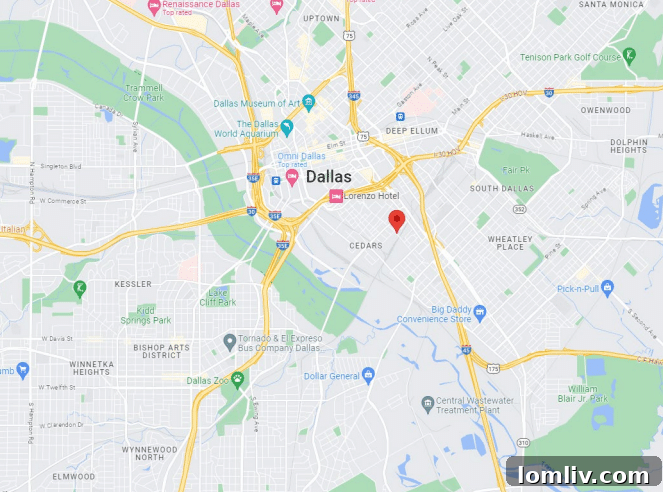
Savoy Equity Partners, LLC, the developer behind The Cedars, plans to construct 377 residential units. The proposed unit mix includes 57 studio units, 226 one-bedroom units, 76 two-bedroom units, and 18 three-bedroom units, offering a diverse range of living options. Consistent with the PFC framework, the development incorporates a significant affordable housing component: at least 155 units will be available to households earning less than 80 percent of AMI, with 39 of these specifically for households earning less than 60 percent of AMI. The remaining 183 units will be leased at market rates.
City officials project that The Cedars project will entail an estimated $700,377 in foregone revenue over a 15-year period due to the tax abatement. However, they anticipate the project will bring in approximately $7.8 million for the city over the same timeframe through various financial contributions, illustrating a favorable financial return on the city’s investment. Earlier in the same council meeting, a substantial $65 million project management contract was approved for the extensive redevelopment of the Kay Bailey Hutchison Convention Center Dallas. Officials highlighted that The Cedars project would provide much-needed affordable housing for the area, directly supporting the workforce expected to be drawn by the convention center expansion.
District 2 Councilman Jesse Moreno, whose district includes The Cedars, expressed strong support, stating, “The convention center project will undoubtedly bring thousands of jobs to The Cedars neighborhood. Providing affordable housing opportunities in such close proximity is not just beneficial, it’s essential for the economic vitality and social equity of our community. I wholeheartedly support this.” However, Councilwoman Mendelsohn again presented a counter-argument, questioning whether a project of this scale and in this desirable location might have been built even without the incentive of a tax abatement, implying that the city’s incentive might not have been strictly necessary.
Further defending the PFC model, District 11 Councilwoman Jaynie Schultz emphasized the financial benefits these projects offer. “Let’s be very clear about that,” she asserted, referring to PFC projects as “money-makers” for the city. “They are not only providing additional housing that we would not have gotten otherwise but also generating revenue for the city’s affordable housing initiatives. This mechanism is crucial for expanding our housing stock and addressing broader urban development goals.” This ongoing dialogue underscores the multifaceted considerations involved in urban planning, where economic development, social equity, and fiscal responsibility must constantly be weighed against each other.
The Broader Implications: Navigating Dallas’s Affordable Housing Future
The consistent approval of Public Facility Corporation projects, even in the face of critical reports like that from the Child Poverty Action Lab, illustrates the complex and often contentious landscape of affordable housing development in Dallas. The city is caught between the undeniable need for more housing units across all income levels and the strategic necessity of leveraging developer interest to achieve these goals. While PFCs offer a clear path to incentivizing mixed-income developments and generate funds for future affordable housing, the debate frequently circles back to their targeting efficiency and the long-term financial trade-offs.
Councilwoman Mendelsohn’s persistent critiques highlight a fundamental concern: are the city’s resources being optimally deployed to address the most urgent housing gaps, particularly for those earning 50 percent AMI and below? The CPAL report unequivocally points to a critical deficit in these lower income brackets, suggesting that current PFC projects, while beneficial, may not be fully aligned with the most acute needs. This raises questions about whether the city should adjust its incentive structures or eligibility criteria to more precisely target the populations most vulnerable to housing instability.
Conversely, City Manager Broadnax and Councilwoman Schultz articulate the practical realities of urban development. Without incentives, many affordable components of these large-scale projects might not materialize at all. The revenue generated by PFCs provides a vital, often self-sustaining, funding stream for affordable housing that reduces reliance on general funds or bond programs. This perspective frames PFCs as an essential tool in a broader strategy to incrementally build out affordable housing capacity, even if each project doesn’t perfectly match the precise demographics of the greatest need.
Dallas, as a rapidly expanding metropolitan area, will continue to face immense pressure on its housing market. The outcomes of these council decisions will shape not only the city’s skyline but also its social fabric, determining whether growth is inclusive and equitable. The ongoing dialogue, informed by comprehensive reports and passionate advocacy, is critical to refining the city’s approach to ensure that Dallas remains a vibrant and accessible home for all its residents, from its lowest-income families to its burgeoning professional class. Balancing economic prosperity with social responsibility remains the core challenge, demanding innovative solutions and a steadfast commitment to addressing the foundational need for secure, affordable housing.