Is Your Home Overpriced? 8 Undeniable Signs Every Seller Must Recognize
Selling a home is undeniably one of life’s most significant financial and emotional transactions. For many homeowners, the deep personal connection and cherished memories forged within their property can inadvertently cloud objective judgment regarding its true market value. While this emotional attachment is natural, allowing it to dictate your asking price can transform the selling process into a prolonged, frustrating, and ultimately less profitable endeavor. Real estate professionals often observe that homes, whether they are grand estates or cozy starter houses, that linger on the market for extended periods frequently share a common trait: they are simply priced too high. The ability to approach your home sale with a detached, market-oriented perspective is crucial for success.
In today’s dynamic real estate climate, accurately pricing your home from the outset is more critical than ever before. Market data consistently reveals a high volume of price reductions across various regions. A quick glance at major real estate platforms might show thousands of properties reducing their asking price within a month, with a significant portion of those adjustments occurring within a single week. This trend highlights the imperative of a precise and competitive pricing strategy. To assist you in navigating the complexities of the housing market, I’ve compiled an in-depth guide for home sellers. This guide aims to equip you with the knowledge to identify the tell-tale signs that your home might be overpriced, offering clear insights to help you avoid common pitfalls and achieve a timely, successful sale.
(Real estate agents: Feel free to leverage this comprehensive guide as a confidential resource for your clients, fostering transparency and informed decision-making. Our secret.)
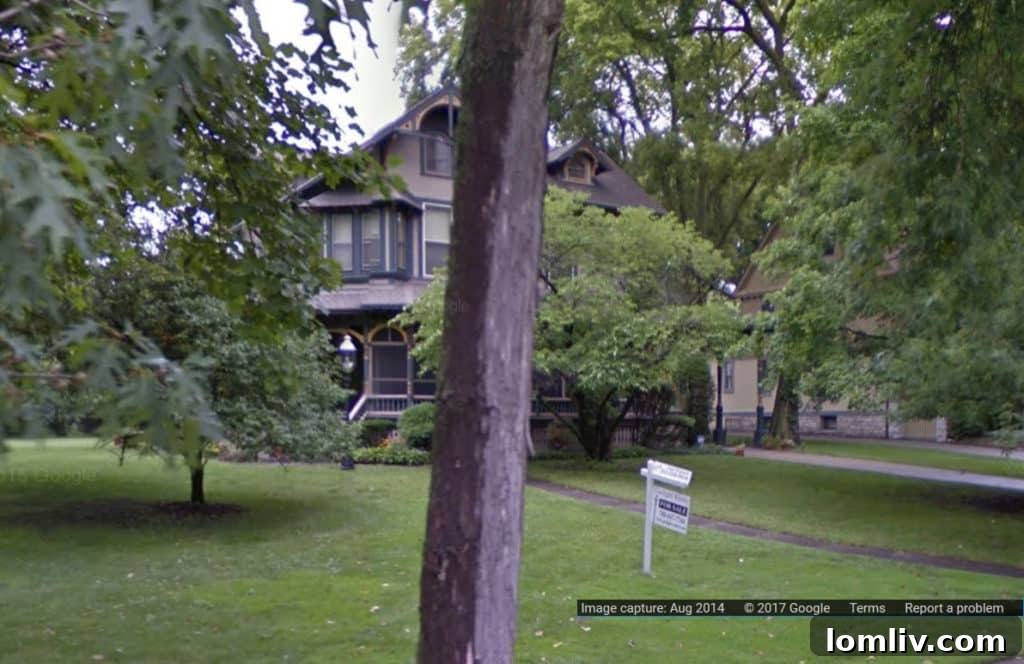
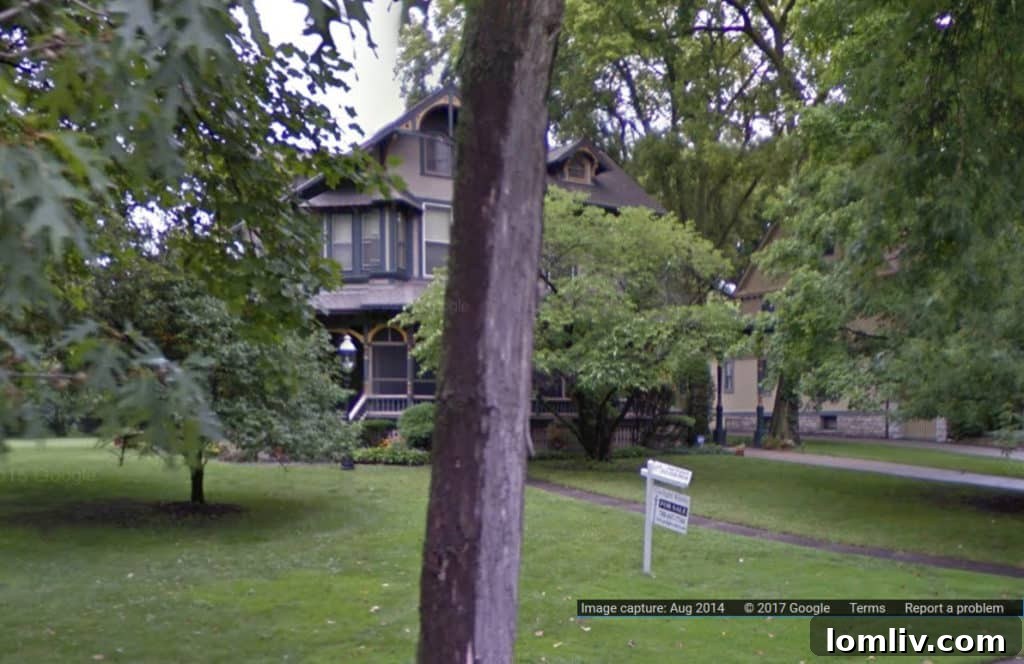
1. If Your “For Sale” Sign Was First Captured by Google Street View in 2014
Picture this scenario: you’re browsing attractive online listings, and a property catches your eye. Naturally, you navigate to Google Maps to get a sense of the neighborhood. As you virtually explore via Street View, you’re struck by a startling image – the very “For Sale” sign for the property you’re considering, prominently displayed in a snapshot taken years ago, perhaps even dating back to 2014. This isn’t merely an amusing anecdote; it’s a glaring indicator of a fundamentally flawed pricing strategy. If your home has been listed on the market long enough to be a permanent fixture in Google Street View’s historical archives, spanning multiple years, it’s an undeniable sign of overpricing.
Waiting for the market to miraculously rise to meet an unrealistic asking price is a high-risk, low-reward gamble. Extensive real estate research and countless case studies consistently demonstrate a clear correlation: the longer a property remains on the market, the lower its eventual selling price tends to be. While an exceptionally hot seller’s market might, in rare instances, forgive an overpriced listing, such conditions are typically fleeting. More often, a prolonged listing period generates a perception of stagnation or underlying issues. Potential buyers and their agents inevitably begin to question, “Why hasn’t this home sold? What’s wrong with it?” This inherent skepticism acts as a powerful deterrent, causing serious buyers to bypass the property. A long listing history creates “market memory,” eroding interest and often leading to significantly reduced offers. Furthermore, extended market time imposes substantial carrying costs on sellers, including mortgage payments, property taxes, insurance, and ongoing maintenance, all of which chip away at potential profits. Another clear sign of a stale listing is the presence of outdated seasonal photos – images featuring snow and winter foliage during the peak of summer, for example – immediately signaling to buyers that the listing is old and likely overpriced.
2. You’ve Changed Real Estate Agents Multiple Times Without Adjusting the Price
When you find yourself on a carousel of real estate agents, each attempting to market your home, yet your asking price remains rigid, it’s a definitive signal for introspection. The common sentiment, “It’s not the price, it’s the agent,” often serves as a protective shield against confronting uncomfortable truths. Your home is undoubtedly more than just an asset; it’s the repository of countless memories, the backdrop to significant life events, and a testament to your personal journey. This profound emotional attachment is entirely understandable, but it can severely impair your ability to objectively assess its market value.
Professional Realtors, however, approach your home primarily as a commodity within a competitive marketplace. Their expertise lies in providing dispassionate, data-driven advice derived from extensive comparative market analyses (CMAs), prevailing market trends, and the property’s condition. Disregarding these expert opinions in favor of an emotionally determined price is a common and costly mistake. The act of continually dismissing agents who recommend a price reduction, only to eventually lower the price with a subsequent agent, is not only unfair to the initial professionals but also wastes invaluable time on the market. It’s akin to blaming the meteorologist for the rain. The market operates on supply, demand, and empirical data, not sentimental value. By valuing the objective insights of experienced Realtors, especially when your own perspective is understandably biased, you foster a collaborative partnership crucial for a successful and efficient sale. An agent’s primary role is to guide you to the optimal market price, not merely to validate your hopes.
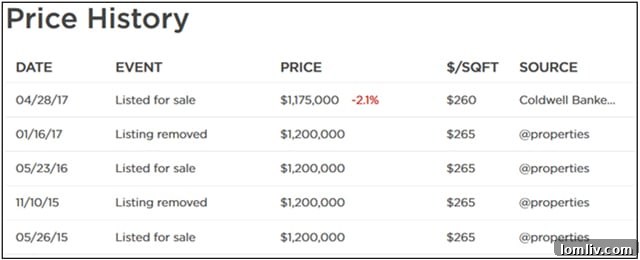
3. The Property Has Been On and Off the Market for Years
This sign is a direct corollary to the first point and illustrates a particularly frustrating and ineffective selling strategy. You list your home at an ambitious, often unrealistic, price. When the market fails to deliver the expected flurry of offers, or the offers received are considerably below your expectations, you become disillusioned. The solution many sellers opt for is to withdraw the property from the market, hoping that a period of absence will erase its history from the collective memory of potential buyers, only to re-list it at a later date, often repeating this cycle multiple times. This “on-again, off-again” approach is founded on the mistaken belief that a new wave of buyers will emerge, oblivious to the property’s past struggles, eager to pay the price you believe you are entitled to.
While the specific individuals in the buyer pool might change over time, the sophisticated real estate agent community, and more importantly, the digital footprint of your property, remain constant. Experienced agents possess the tools and knowledge to track property histories meticulously. Furthermore, savvy buyers routinely utilize online platforms like Zillow or explicitly request comprehensive sales histories, which reveal every listing attempt, price adjustment, and withdrawal. This transparency means that a property with a convoluted “on and off” market history immediately raises red flags for informed buyers. They interpret this pattern as a sign of an inflexible seller or a property that has consistently been overpriced, leading them to infer that previous buyers also found it to be poor value. This history actively deters serious inquiries, contributing to even longer market times and, paradoxically, necessitating more significant price reductions in the long run than would have been required with an initial, realistic listing. A marginal price reduction after years of market dormancy rarely revitalizes interest; buyers are looking for genuine value and a clear, consistent offering.
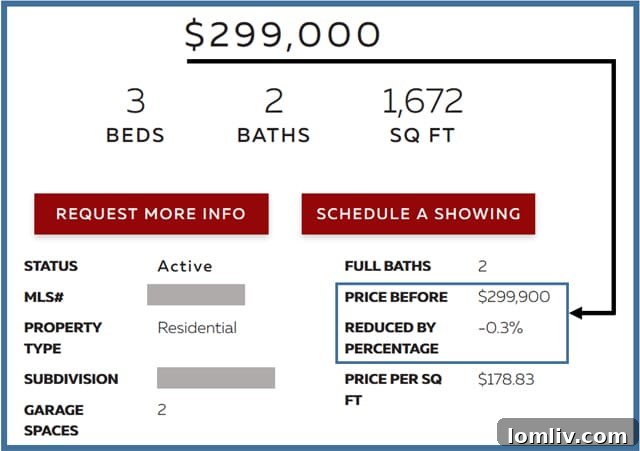
4. Your Listing Price is Lowered by Insignificant Amounts (Pennies)
It’s a familiar sight in the real estate world: a property that has languished on the market for an extended period suddenly gets a “price reduced” banner, only for prospective buyers to discover the reduction is negligible – perhaps a mere few hundred dollars, or even less. The underlying intent of such a move is to signal renewed motivation and pique buyer interest. However, in an era of unparalleled online data access and sophisticated search filters, this tactic is not only transparent but often counterproductive. The “magic of the internet” works against the seller here; every buyer and their agent can instantly ascertain the exact, often minuscule, amount of the reduction. Rather than generating excitement, these paltry adjustments frequently elicit cynicism or an eye-roll from potential buyers.
Such small reductions project an image of stubbornness rather than genuine motivation, effectively communicating that the seller is not truly committed to a serious negotiation. You aren’t fooling anyone but yourself. This strategy is sometimes coupled with another ineffective maneuver: briefly delisting the property for a few months, only to re-list it with an almost identical price, perhaps just $100 less. These tactics fail to reset buyer perceptions and often exacerbate the initial problem, reinforcing the notion that the seller is out of touch with prevailing market realities. For a price reduction to be truly effective, it must be substantial enough to capture new attention, appeal to a different segment of buyers who might have previously overlooked the property, and signal a credible shift in the seller’s expectations. A strategic, data-driven price adjustment can breathe new life into a stale listing, whereas insignificant reductions merely prolong the selling process and diminish overall buyer confidence.
5. Believing Your Untouched Home Commands the Price of a Fully Renovated One
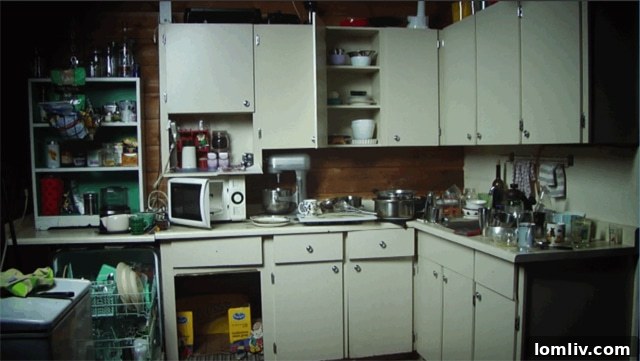
It’s natural for homeowners to compare their property to others in the vicinity, particularly those that have recently sold for impressive prices. You might observe a meticulously restored mid-century home, impeccably updated with modern amenities and designer finishes, and instinctively conclude that your home, perhaps untouched for four decades, should command a comparable price. This common misconception is a primary driver of significant overpricing. While your home might indeed boast “original period details” – perhaps an avocado-green kitchen or charmingly retro pink bathroom tiles – these features, if not meticulously maintained or intentionally preserved as part of a specific aesthetic, are often perceived as outdated rather than desirable by the majority of contemporary buyers. A home with original 1970s grout that hasn’t seen a deep clean since the Nixon administration simply cannot compete on price with a property that has undergone a contemporary, high-quality renovation.
Renovations, whether they are cosmetic enhancements or major structural overhauls, represent a substantial investment of time, capital, and effort. These improvements significantly enhance a home’s functionality, aesthetic appeal, and, crucially, its market value. If you have chosen not to make these investments over the years, it is unrealistic to expect to reap the financial benefits enjoyed by those who have. Today’s buyers frequently prioritize move-in-ready properties or, at minimum, homes requiring only minor, immediate updates. They meticulously factor in the potential costs and inconvenience of necessary renovations when formulating an offer on an un-updated property. Attempting to price an untouched home as if it were fully renovated is a classic example of expecting to “have your cake and eat it too.” The market will swiftly, and often brutally, correct this misperception. To achieve a competitive sale price, your home’s condition must align with that of its comparables, or its price must accurately reflect the substantial cost of the updates a new buyer would need to undertake to bring it up to current market standards.

6. You Selected The ONLY Real Estate Agent Who Agreed to Your Unrealistic List Price
After a series of consultations with various experienced real estate agents, you may have encountered what felt like a grueling “Bataan Death March” of professionals, each presenting similar, data-backed comparative market analyses (CMAs) suggesting a listing price range significantly lower than your ideal. For instance, if multiple reputable agents recommended a listing price between $400,000 and $420,000, with an expected sale price of $385,000 to $390,000, yet you were firmly convinced your home was worth $500,000, what did you do? In far too many instances, sellers gravitate towards the single agent – often less experienced or more desperate for a listing – who validated their inflated expectations. This phenomenon is commonly referred to as “buying the listing”: an agent agrees to an unrealistic price simply to secure the listing contract, with little genuine expectation of achieving that figure.
The common rationale behind this choice is, “If it doesn’t sell, we can always lower the price.” However, as previously highlighted in points two and three, the market is not easily swayed by such tactics. Overpricing from the outset inevitably leads to extended market time, heightened buyer skepticism, and ultimately, a lower final sale price than if the property had been priced correctly and competitively from day one. You might eventually sell your home, but only after enduring 18 months or more on the market, cycling through three different agents, and concluding the sale at a price point significantly below your initial, unrealistic target – perhaps even less than what the initial, honest agents had advised. This costly mistake, which I openly admit to having made myself when selling my first home, can result in considerable financial loss and immense emotional strain. The most effective real estate agents are not those who tell you precisely what you want to hear, but those who provide candid, data-driven counsel that strategically positions your home for a successful and timely sale, even if that advice is initially unwelcome.
7. Expired Dates and Unchanged Auction Calls Within the Listing Description
This particular sign highlights a detrimental combination of seller desperation and stubborn inflexibility – a truly unfavorable blend in the competitive real estate market. Imagine encountering an online property listing that explicitly details an “auction-style call for bids” or specifies a firm deadline for offers, perhaps stating, “all offers to be submitted by [Date X].” Now, picture discovering that Date X passed months ago, potentially even half a year, yet the listing remains “active” within the Multiple Listing Service (MLS), with the exact same, outdated language. This isn’t merely a minor oversight; it’s a glaring red flag that unequivocally signals significant underlying problems to savvy potential buyers and their agents. It suggests either an agent’s negligence in maintaining listing accuracy or, more critically, a seller’s outright refusal to acknowledge current market realities.
On one hand, the presence of an expired auction date inherently implies a certain level of desperation on the seller’s part – an attempt to generate swift interest that evidently failed to materialize. On the other hand, the persistent refusal to update the listing or adjust the price signals an entrenched inflexibility. Buyers are adept at perceiving this glaring contradiction: the seller desires a quick sale but is unwilling to meet the market’s demands. This combination acts as a powerful deterrent. Why would a serious buyer invest valuable time and effort into pursuing a property when the seller’s actions clearly indicate an unwillingness to negotiate fairly? It’s the real estate equivalent of crying wolf; after a certain point, no one takes the call to action seriously. Patience is a rare and precious commodity in a competitive real estate market, and buyers will swiftly move on when the prospects of securing a successful, equitable deal appear slim.
8. Six Identical Units Listed… All Cheaper Than Yours
In residential developments featuring multiple identical units, such as condominium complexes or high-rise apartment buildings, pricing transparency and market competition are significantly intensified. Many real estate agents, perhaps due to a limited vocabulary, frequently resort to overused and often inaccurate descriptors like “rare” or “rarely available” in their listings. However, when unit 101 is structurally and functionally identical to unit 201, 301, 2001, and potentially dozens of other units within the same building, the term “rare” loses all practical meaning. These units are, by definition, anything but rare. This reality becomes particularly pronounced when you are one of several identical units currently on the market, and your asking price conspicuously exceeds that of all the others.
To credibly justify a higher price for an identical unit, you must possess an exceptionally compelling reason. Perhaps your specific unit underwent a complete, high-end renovation last year, stripped “down to the studs,” while the competing units feature original, 40-year-old finishes. In such a unique scenario, you might legitimately command a premium and even employ terms like “rare” in conjunction with the *rarity of the renovation’s quality and scope*, not the inherent rarity of the unit itself. But without such significant and demonstrable differentiators, simply being the highest-priced identical unit is a direct path to prolonged market time and eventual price reductions. Buyers and their agents actively compare these units with meticulous detail. It is not uncommon for savvy buyers to contact all listing agents for multiple identical units, intentionally fostering a competitive environment where the seller most willing to be flexible on price or offer superior value secures the deal. This is a classic supply-and-demand dynamic; if there is an abundance of identical supply, the market will invariably favor the most competitively priced options. Overpricing in this context guarantees that your unit will be consistently overlooked in favor of better-value alternatives.
Your Insights Are Valued!
Dear readers, I am confident that your diverse experiences in the real estate market have provided even more valuable insights into the various signs of an overpriced home. I sincerely encourage you to share your thoughts, observations, and personal anecdotes in the comments section below. Let’s collectively expand our understanding and learn from each other’s perspectives!
A Bit About My Passion: My professional expertise spans the specialized domains of high-rises, homeowners’ associations (HOAs), and the intricate world of property renovation. Beyond these core areas, I cultivate a profound appreciation for both modern and historical architecture, consistently balancing these aesthetic considerations against the evolving principles of the YIMBY movement (Yes In My Backyard). If you are interested in collaborating on a project or hosting a dynamic daltxrealestate.com Staff Meeting event, please do not hesitate to reach out. My commitment to insightful real estate commentary has been recognized with both Bronze and Silver awards from the esteemed National Association of Real Estate Editors. Do you have a compelling story to share, a challenging real estate question that needs answering, or perhaps even a unique marriage proposal to make? You can always reach me directly and confidentially via email at [email protected]. I eagerly anticipate hearing from you!