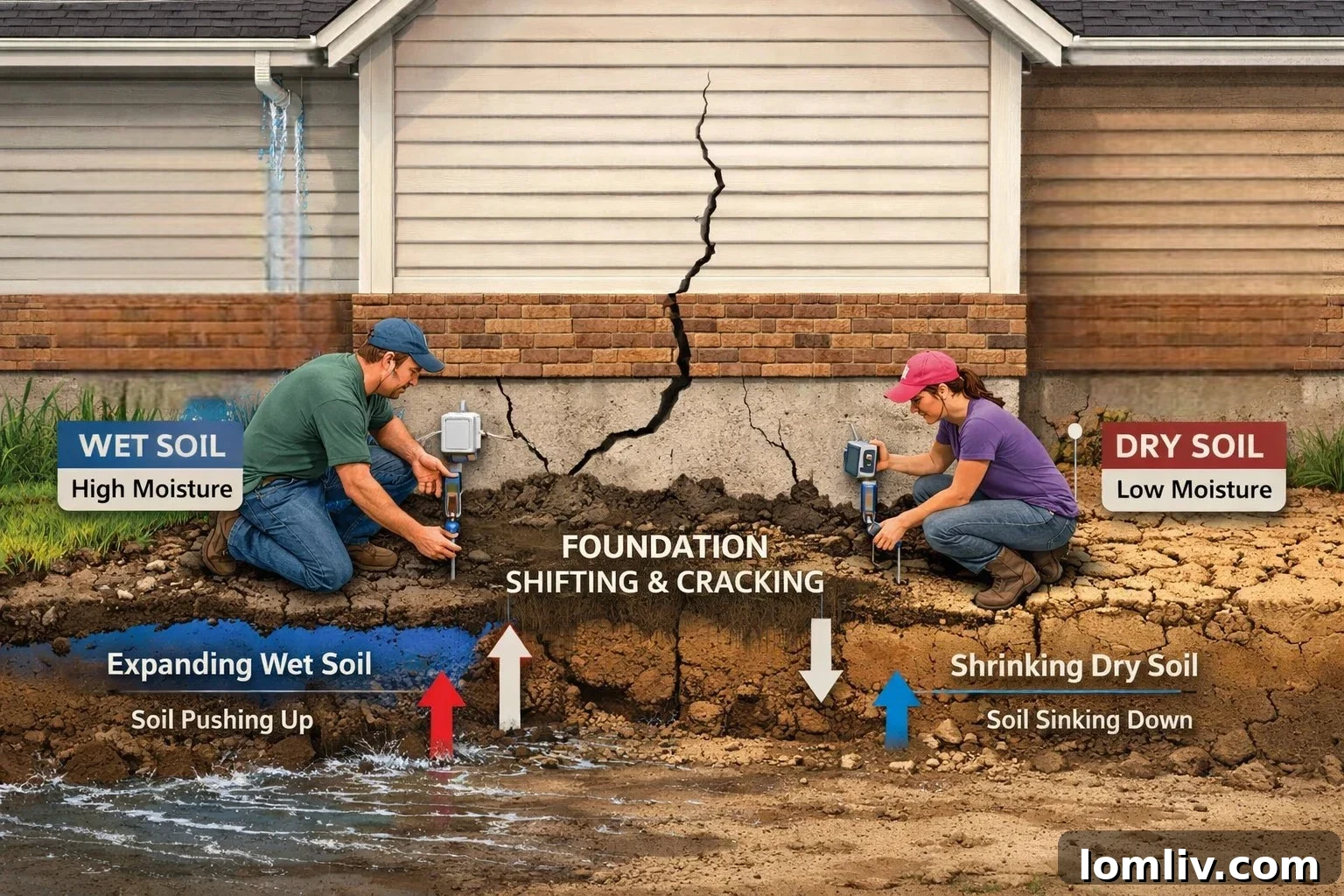
Living and working in North Texas has given me a deep understanding of one fundamental truth: our region’s clay soil is incredibly dynamic and often unforgiving, especially when it comes to residential foundations. For over a decade, I’ve seen firsthand how this expansive clay soil reacts dramatically to fluctuating moisture levels – swelling significantly during prolonged wet periods and cracking open extensively when it dries out. This constant shrink-swell cycle exerts immense pressure on home foundations, leading to widespread structural issues. In fact, a 2025 study shockingly revealed that over 70% of Dallas-Fort Worth is experiencing measurable sinking, making it the city with the highest subsidence rate among 28 major U.S. metropolitan areas. This statistic underscores the profound geological challenges faced by homeowners in our region.
The prevalence of foundation problems in DFW is a critical concern. Approximately 20% of homes in the Dallas-Fort Worth area are estimated to have foundation issues, a figure that is starkly higher than the national average. Texas foundations, on the whole, fail at a rate 10 times greater than the rest of the country. If you’re contemplating purchasing real estate in DFW, it’s absolutely essential to acknowledge that foundation integrity represents a significant risk in the local housing market. These issues frequently emerge as the primary hurdle preventing the successful closure of a sale. More than just a nuisance, unrepaired foundation damage can severely impact a property’s market value, potentially reducing a home’s value by 10 to 25 percent. For a median-priced DFW property valued at $375,000, this could translate into a staggering loss of up to $94,000.
Before committing to such a significant investment, it’s crucial to understand how various home services can proactively mitigate these risks and safeguard your long-term property value. Among these, irrigation solutions designed to stabilize soil moisture around your foundation are paramount. The way I often explain it to homeowners is simple yet profound: we cannot prevent rain from falling in North Texas; it’s an inevitable part of our climate. Therefore, our strategy must shift from trying to keep the soil dry to ensuring it remains consistently and evenly moist. Critically, this isn’t about surface-level watering, but rather penetrating two, three, or even four feet down – precisely where your home’s foundation rests. Your existing sprinkler system, when optimized and enhanced, becomes one of the most powerful tools in this preventative effort. In the context of expansive clay soil, consistency in moisture management is not just important; it is the entire game-changer for foundation health.
1. Foundation Drip Line: Essential Year-Round Insurance for Your Home
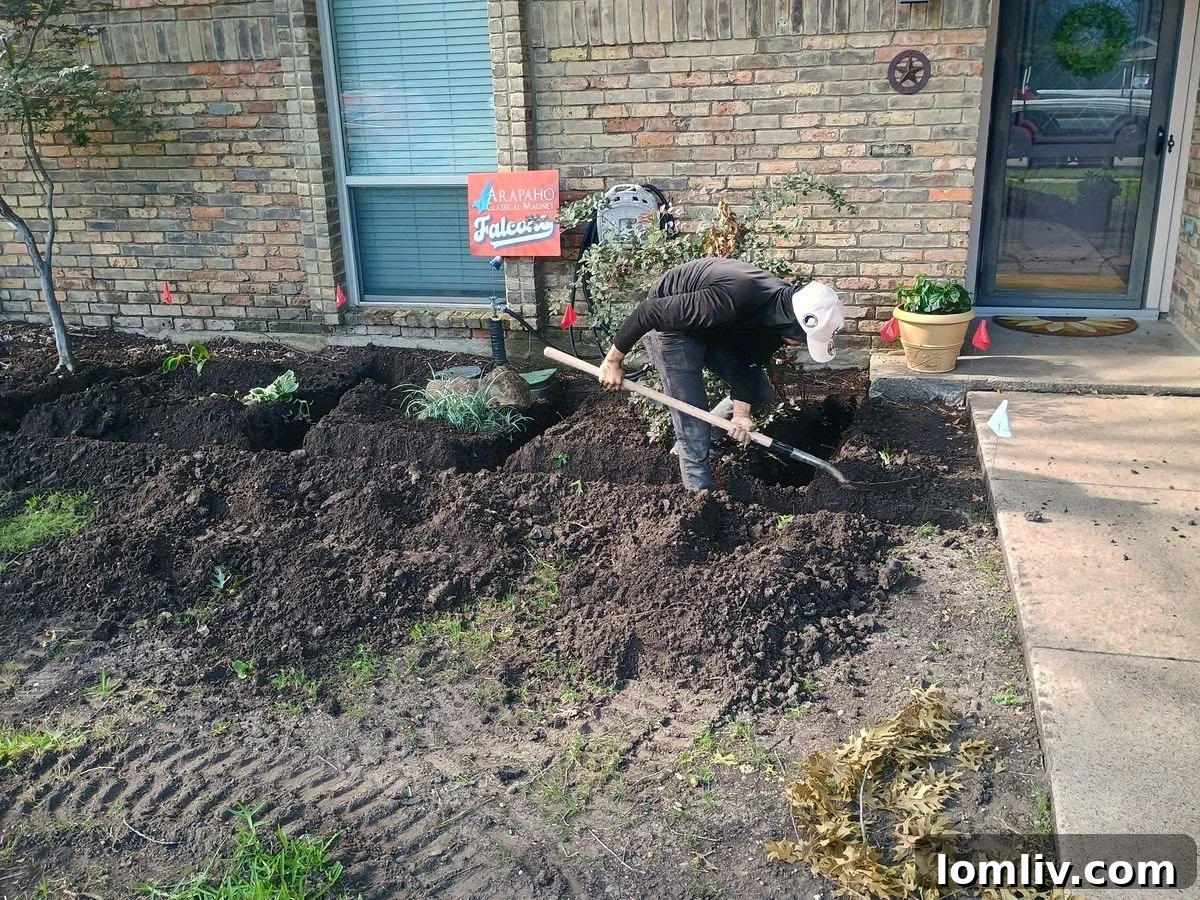
One of the most effective and often overlooked solutions for preserving foundation integrity is the installation of a dedicated drip line system around the perimeter of your home’s foundation. The primary objective of such a system is not to saturate the soil, but rather to maintain a stable and consistent moisture level beneath the slab. This deliberate approach is designed to effectively halt the detrimental shrink-swell cycle that is the leading cause of slab cracks and structural stress in expansive clay soils. By preventing extreme fluctuations in soil moisture, a foundation drip line acts as a crucial barrier against movement.
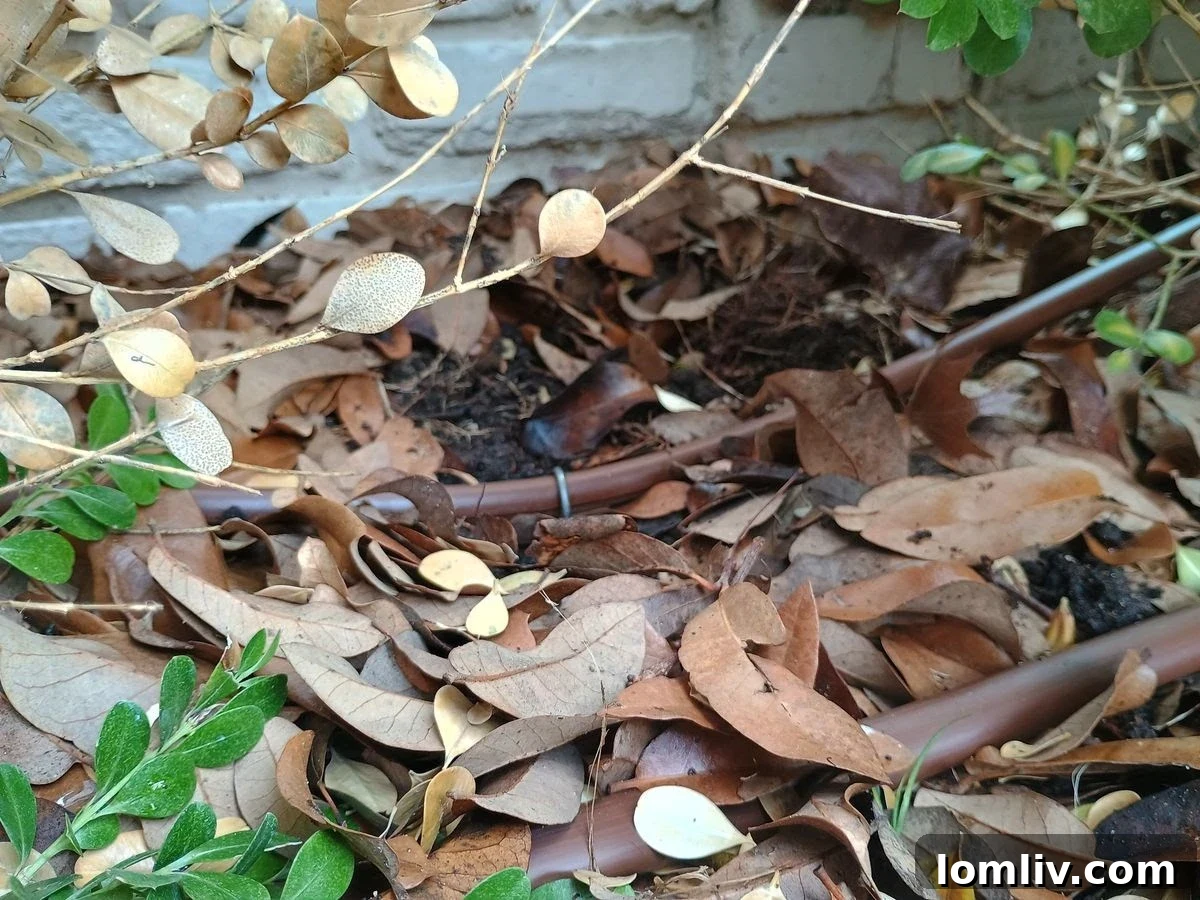
While many homes, particularly newer constructions, may feature what appears to be a builder-grade drip system, a significant number of these are unfortunately installed incorrectly. Common errors include placing the tubing too close to the house, burying it too shallowly, or leaving it exposed to the elements. For optimal performance and longevity, the drip tubing should be positioned 12 to 18 inches away from the foundation wall and buried at a depth of 4 to 6 inches. This careful placement ensures that water is delivered precisely where it’s needed most – deep into the soil around the foundation, rather than superficial watering that promotes shallow root growth or evaporation. A quick inspection and measurement now can spare you considerable trouble and expense down the line, potentially preventing costly foundation repairs.
The true strategic advantage of a dedicated foundation drip zone lies in its ability to allow you to water your foundation independently, without the necessity of running your entire sprinkler system. Most irrigation systems in DFW are configured with only turf and flower bed zones. To effectively push moisture deep enough into our dense clay soil, these systems often require multiple “cycle-and-soak” passes, which involve running all zones across your entire yard for extended periods. This can be highly inefficient and, more critically, impractical when drought restrictions are in effect. During periods of severe water conservation, maintaining consistent deep moisture with a conventional system becomes nearly impossible.
However, the proactive maintenance provided by a foundation drip system often benefits from specific local exemptions. In North Texas, foundation watering via drip lines is exempt from many of the standard twice-weekly outdoor watering restrictions. Under NTMWD (North Texas Municipal Water District) rules, you are typically permitted to water your foundation for up to 2 hours on any given day, even during critical Stage 3 drought conditions. This crucial flexibility ensures that your foundation remains protected even when other forms of irrigation are restricted. The investment for installing a comprehensive drip system, including a dedicated valve and zone integrated into your existing setup, generally ranges from $2,000 to $2,500, depending on your home’s perimeter size. Compare this to the cost of a typical DFW foundation repair, which can range from $3,000 to $7,500 for minor issues, or a staggering $75,000 to $125,000 for full underpinning. Clearly, spending $2,500 now on preventative measures is an exceptionally smart financial decision that can save you tens of thousands of dollars and immense stress in the future. Prevention truly is the best form of insurance for your most valuable asset.
2. A Smart Controller: The Brains Behind Optimal Foundation Watering
One of the most common pitfalls in home irrigation is the “set it and forget it” mentality. Many homeowners program their sprinkler controller once, perhaps in spring, and then neglect to adjust it throughout the year. This means the same watering schedule is often applied in a cool, wet May as in a scorching, bone-dry August. This static approach is fundamentally ill-suited for North Texas’s unpredictable climate and expansive clay soils. Foundation repair companies consistently report 20 to 30% spikes in service calls during dry years, as highlighted by CBS Texas. These surges are a direct consequence of irrigation systems failing to adapt to changing environmental conditions, leaving foundations vulnerable.
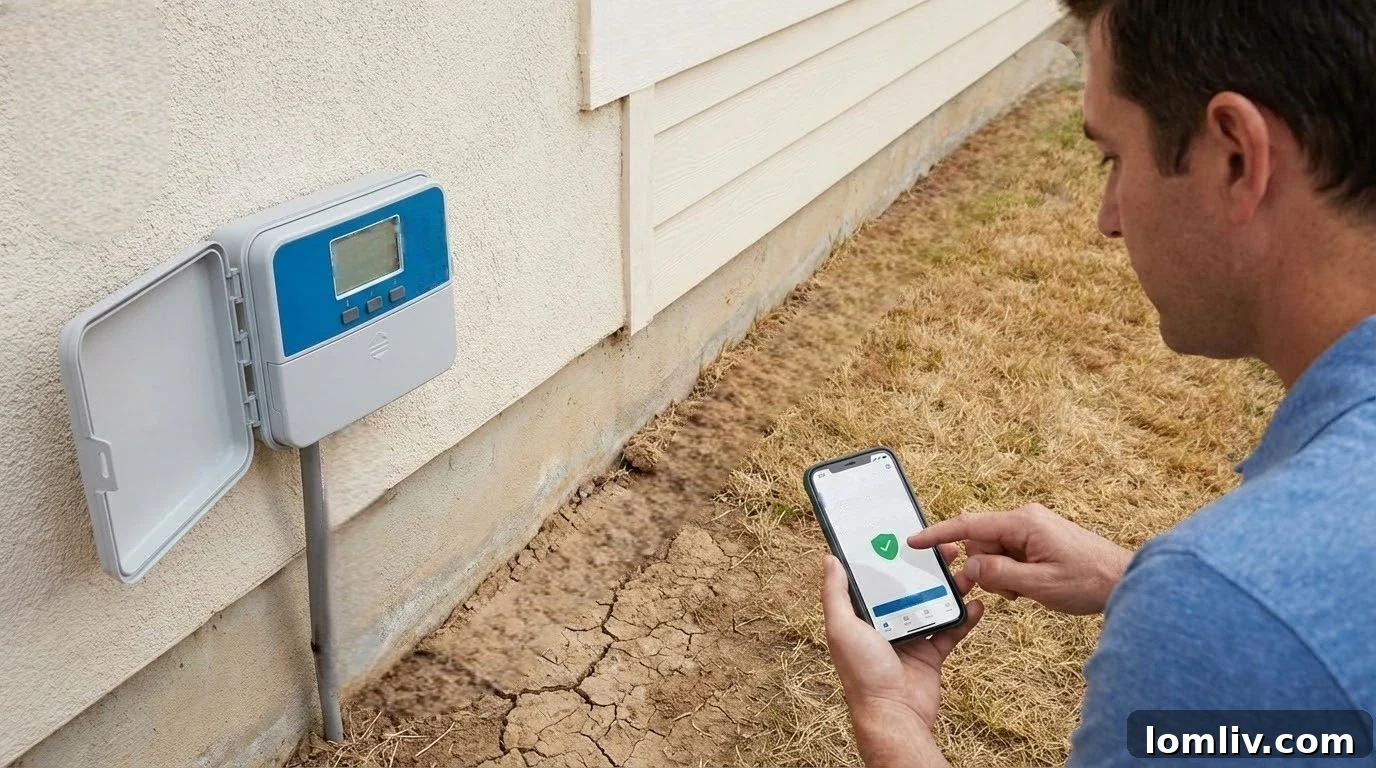
The solution lies in upgrading to a smart irrigation controller, such as popular models like Rachio or Hunter Hydrawise. These advanced devices revolutionize your watering strategy by continuously pulling real-time local weather data, including temperature, humidity, rainfall, and evapotranspiration rates. Based on this comprehensive information, a smart controller automatically adjusts your irrigation schedule. For instance, when temperatures soar to 105 degrees Fahrenheit and conditions are parched, your dedicated foundation zone will automatically run longer and more frequently to ensure deep soil moisture stability. Conversely, after a week of significant rainfall, the system will intelligently back off, preventing overwatering and potential pooling. This automatic, data-driven consistency is not merely a convenience; it is arguably the single most valuable upgrade you can make for proactive foundation protection, ensuring your soil moisture remains optimally balanced regardless of external weather shifts, thereby minimizing the damaging effects of the shrink-swell cycle.
3. Soil Moisture Sensors: Unveiling Subsurface Realities for Precision Watering
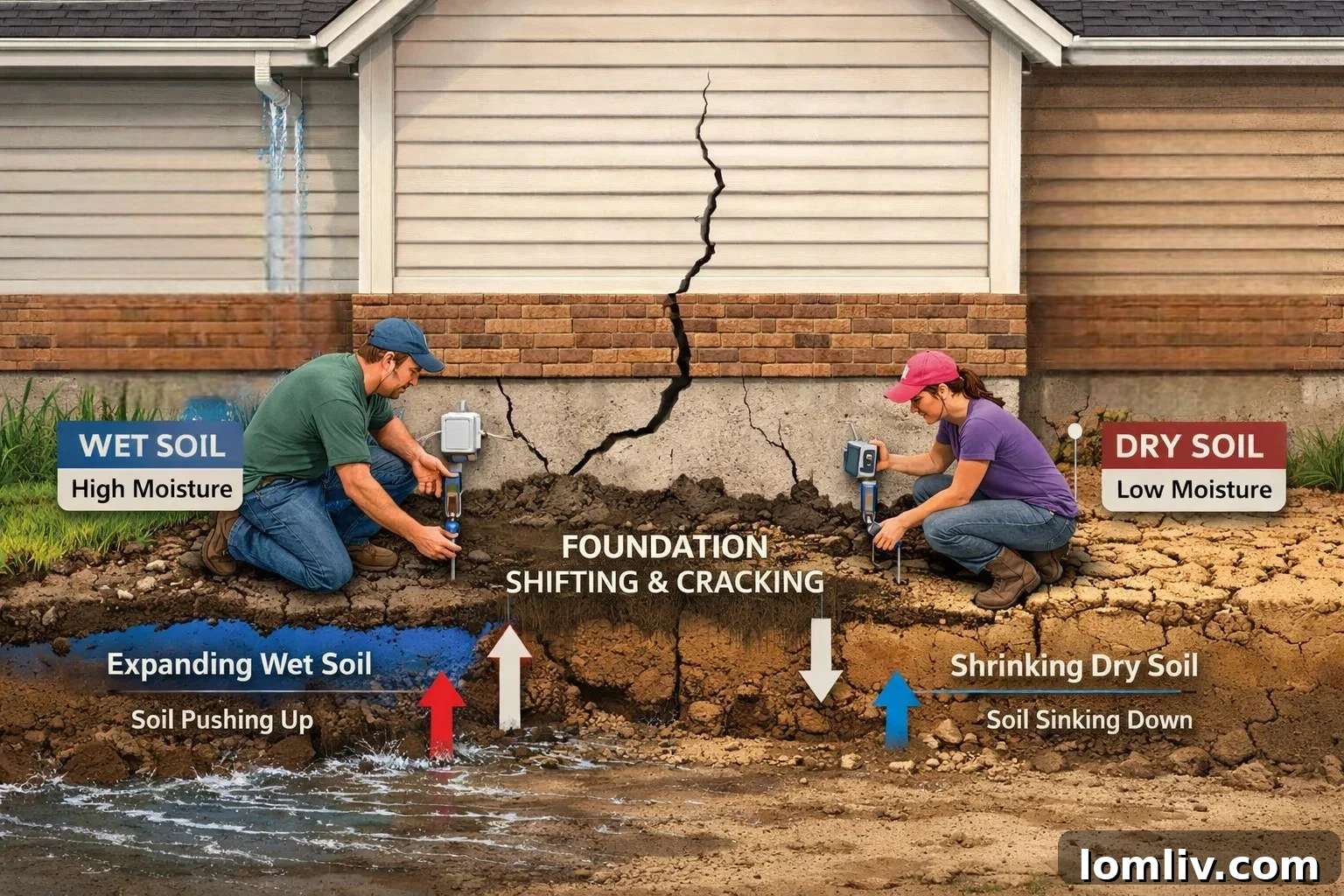
In my experience, a recurring scenario often underscores the inadequacy of surface-level observations: one side of a house, typically the south-facing side, is bone dry and parched, while the north side remains surprisingly saturated. Adding to this complexity, a large pecan tree on one corner might be drawing an astonishing 150 to 250 gallons of water per day from the soil, creating a massive localized deficit. The homeowner often remains oblivious to this critical imbalance because, at the surface, the lawn or landscaping appears perfectly acceptable. However, it is precisely this differential in soil moisture – one side of the foundation shrinking while the other expands – that is the root cause of many foundation failures and structural damage. Without precise data, you are essentially left guessing about the actual conditions beneath your home.
This is where strategically placed soil moisture sensors become indispensable. Installed at multiple points around the foundation perimeter, typically at depths of three or four feet, these sensors provide accurate, real-time data on what is truly happening at the critical foundation level. By continuously monitoring subsurface moisture content, these devices reveal hidden dry spots or areas of excessive saturation that are invisible to the naked eye. This actionable data allows homeowners, or their irrigation professionals, to make informed decisions about watering. Instead of relying on guesswork, you can implement a precision watering strategy, ensuring that moisture is consistently maintained around the entire foundation. When integrated with a smart controller, soil moisture sensors enable an adaptive irrigation system that responds directly to the needs of your soil, optimizing water usage and, most importantly, providing the stable environment your foundation requires to resist the damaging effects of expansive clay.
4. Surface Drainage: The Crucial Complement to Foundation Watering
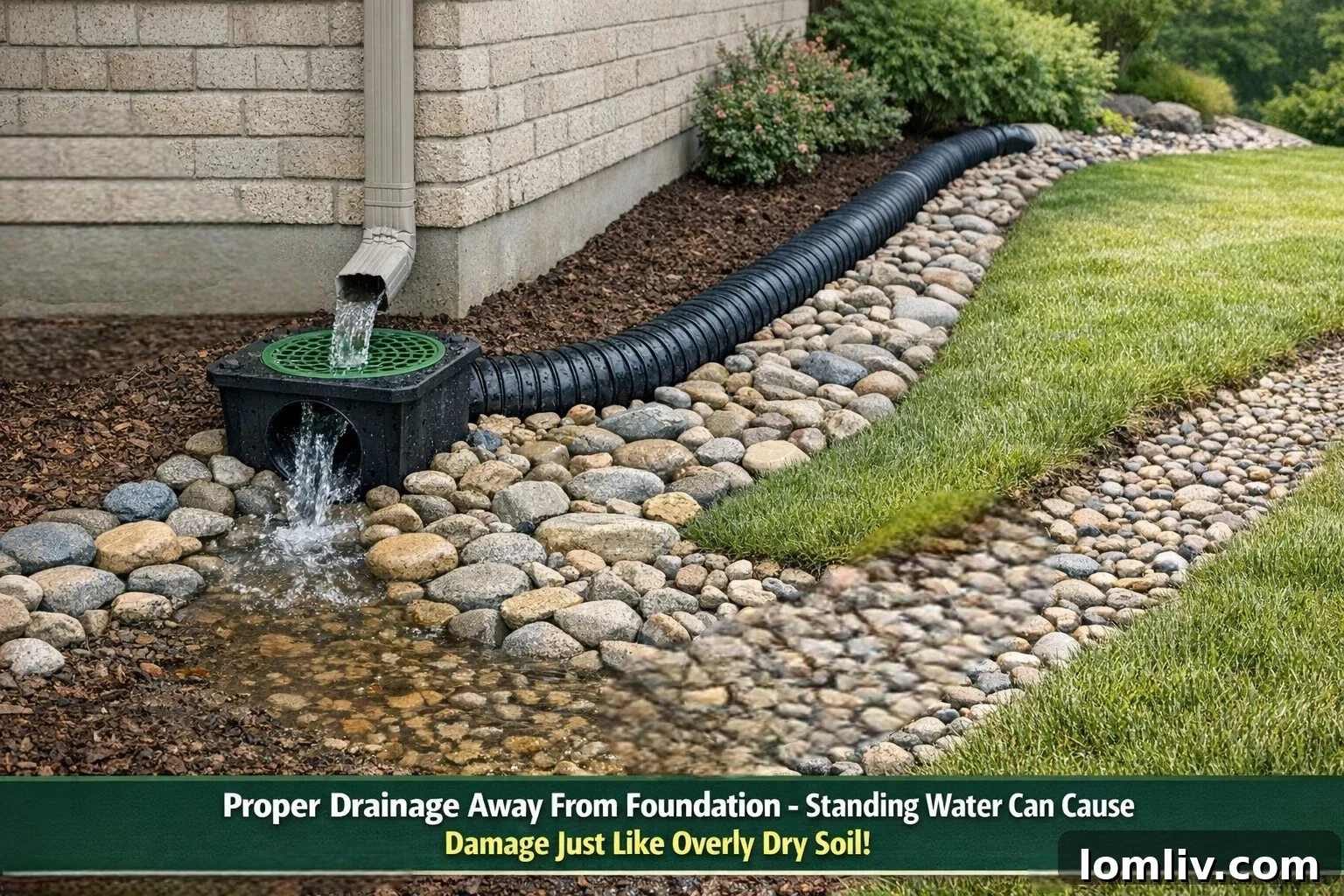
While maintaining consistent soil moisture around your foundation through irrigation is paramount, it is equally important to address the issue of water that accumulates or pools too close to the structure. This is where effective surface drainage becomes critical. Although not strictly an irrigation technique, drainage solutions are intrinsically linked to soil stability and are frequently offered by the same irrigation and landscape companies, as they must work in seamless conjunction with your watering system. When water is permitted to sit stagnant within a few feet of the concrete slab, it can seep underneath the foundation, causing the expansive clay soil to absorb excessive moisture, swell, and lift unevenly. This phenomenon, known as “heaving,” generates significant upward pressure and creates the very same types of cracks and structural stresses that are caused by extreme drying out. The goal is to keep the soil evenly moist, and pooling or ponding near the foundation is the antithesis of this objective.
The first and most fundamental component of effective drainage is proper grading. The soil and landscaping immediately surrounding your home must be meticulously sloped away from the foundation. This ensures that rainwater and irrigation runoff naturally flow away from the structure, preventing water from collecting and saturating the soil directly adjacent to the slab. Without correct grading, even the most sophisticated drainage systems will struggle to be fully effective.
Beyond proper grading, surface drains and French drains are the two most common and highly effective engineered solutions for managing excess water. Surface drains, often recognizable as grate-covered catch basins, are designed to collect water directly from the surface and channel it through underground pipes to a safe discharge point away from the house. French drains, on the other hand, are subsurface systems consisting of a trench filled with gravel and a perforated pipe, designed to collect groundwater and redirect it. Both types of drains are engineered to rapidly collect and move water away from the foundation before it has an opportunity to soak into the soil, preventing the damaging effects of heaving. Integrating robust drainage solutions with a consistent foundation watering strategy creates a comprehensive defense system against the dynamic and challenging conditions of North Texas’s expansive clay soil, ensuring your foundation remains stable and your home’s value is preserved.
5. A Flow Meter: The Early Warning System for Your Foundation
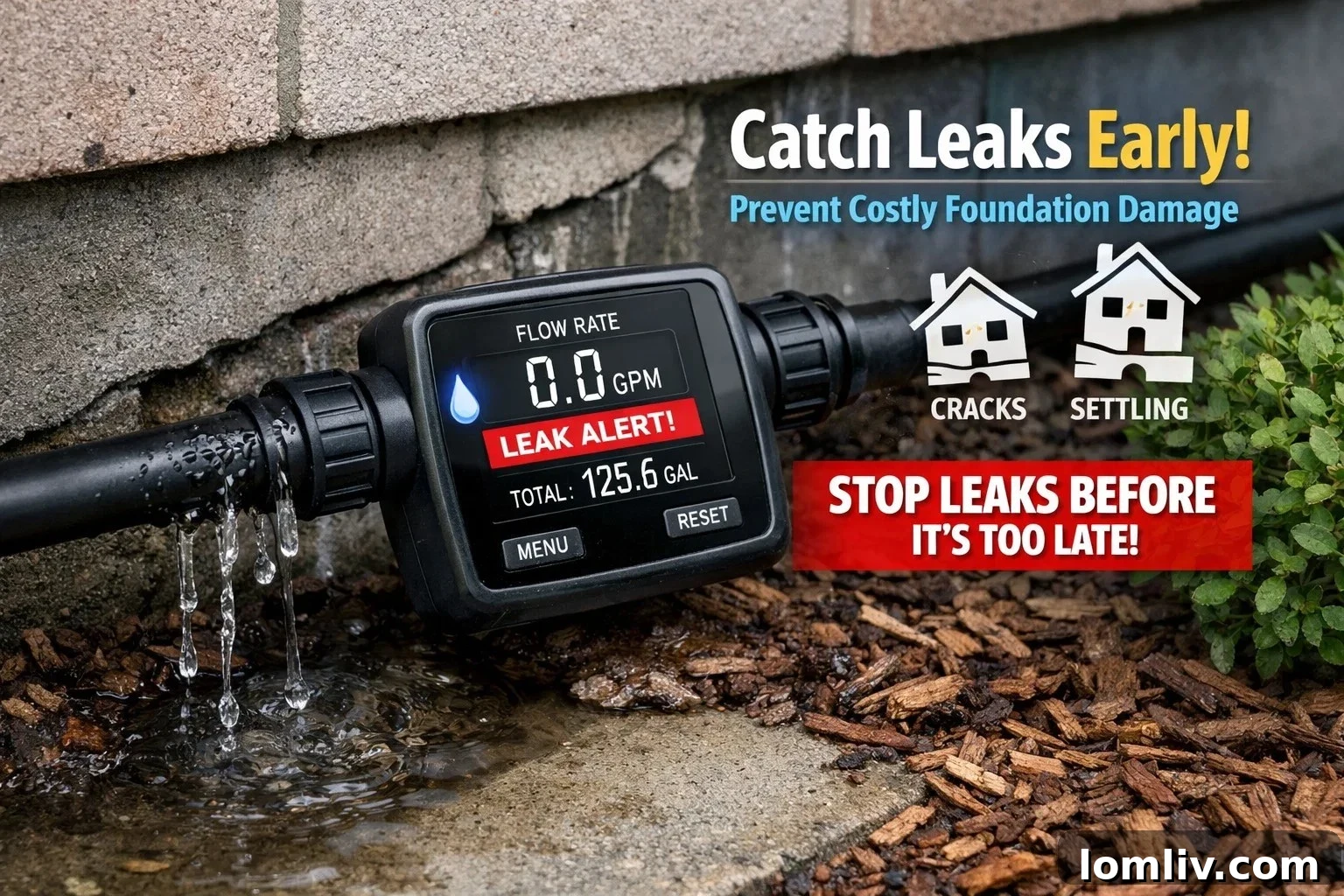
In my line of work, I frequently encounter situations where unseen damage to an irrigation system has been silently undermining a home’s foundation for months. For instance, I’ve excavated drip lines only to discover that tubing was chewed through by a dog half a year earlier. The homeowner was completely unaware of the physical break; they simply noticed a gradual, unexplained increase in their water bill. Crucially, this kind of unnoticed rupture can lead to a significant localized dump of water pressure in one spot, while the rest of the foundation drip line receives inadequate flow or, worse, nothing at all. This results in one section of the foundation remaining constantly saturated, while other critical areas have been slowly drying out for an extended period, creating the very differential movement that causes severe foundation damage.
This scenario highlights the invaluable role of a flow meter, particularly when installed on your foundation drip zone. A flow meter continuously monitors the volume of water passing through your irrigation lines. Any deviation from the normal flow rate – whether it’s an unusually high flow indicating a leak or a significantly low flow suggesting a blockage or break – is immediately detected. When paired with a smart controller, this technology becomes even more powerful. Instead of discovering a crack in your wall months later, you’ll receive an instant alert on your smartphone the moment an anomaly is detected. This early warning system allows for rapid intervention, enabling you to address the problem promptly before it escalates into costly foundation damage. A flow meter acts as a vigilant diagnostic tool, providing peace of mind and ensuring that your proactive foundation watering system is always performing as intended, safeguarding your home against unseen threats.
What to Take Away If You’re Buying or Already Own a Home in North Texas
Understanding the unique risks associated with expansive clay soils in North Texas is critical for both prospective buyers and current homeowners. It’s a sobering fact that standard homeowner’s insurance policies in Texas typically do not cover foundation damage caused by natural soil movement. This significant exclusion places the financial burden of repairs squarely on the homeowner, underscoring the importance of preventative measures. If you are in the process of buying a home in the DFW metroplex, it is absolutely essential to make the irrigation system a key point of discussion and inspection. Ask specific questions: Is there a dedicated foundation drip zone installed? Is the controller a modern smart system that adapts to weather conditions, or is it a basic manual model? Crucially, observe the property after a rain event: Does water visibly pool or pond anywhere near the house foundation? These inquiries can reveal critical insights into the home’s long-term vulnerability to foundation issues.
For those who already own a home in this challenging environment, proactive assessment and maintenance are your best defense. Investing in an irrigation audit that includes a comprehensive foundation moisture assessment can provide invaluable insights into the actual performance of your existing system. A professional audit will identify inefficiencies, recommend necessary upgrades, and ensure that your watering strategy is effectively doing its job to stabilize your foundation’s soil. Remember, regular preventative home checks and maintenance are, without a doubt, the most affordable and effective foundation insurance you can acquire. Proactive care is considerably less expensive and less stressful than discovering the hard way, through structural damage, that your foundation was not adequately protected. Safeguarding your home’s foundation is an ongoing commitment that pays dividends in preserving your property’s value and your peace of mind.
About the Author
Brandon is the proud owner of Better Earth Solutions, LLC, a highly respected and licensed irrigation and sprinkler repair company serving the expansive Dallas-Fort Worth metroplex. His extensive qualifications include a TCEQ Irrigation License (#LI0023963), certification as a Texas Certified Landscape Irrigation Auditor (TxCLIA) through the renowned Texas A&M AgriLife Extension, a TDA-licensed Commercial Pesticide Applicator (#0947069), and a recognized Rachio Pro installer. Brandon is also an active and contributing member of the Texas Irrigation Association, staying at the forefront of industry best practices.
Brandon’s journey into the irrigation business is a testament to hands-on learning and family tradition. He grew up immersed in the trade, learning directly from his father, who was also a licensed irrigator and successful nursery owner. This upbringing provided him with an unparalleled foundational understanding of water management and landscape care, a knowledge base he further developed working alongside his father before establishing his own venture.
Throughout his career, Brandon has accumulated a diverse range of experience, from intricate residential repairs to the meticulous maintenance of large-scale commercial systems at prominent locations such as the Capital One headquarters and Willow Bend Mall during his tenure at Landcare. Today, his focus is primarily on residential irrigation, specializing in essential services like sprinkler repairs, the installation of advanced smart controllers, the implementation of critical foundation watering systems, and thorough irrigation audits. He dedicates his expertise to homeowners in Garland, Plano, Richardson, Wylie, Rockwall, and numerous surrounding communities, helping them protect their most valuable asset.
When he’s not actively engaged in his profession, navigating the challenging North Texas clay, Brandon channels his energy into keeping up with his three active children and their diverse extracurricular pursuits, including DeMolay, JROTC, Student Council, and football. To learn more about the comprehensive services offered by Better Earth Solutions and how they can help safeguard your home’s foundation, please visit callbetterearth.com.