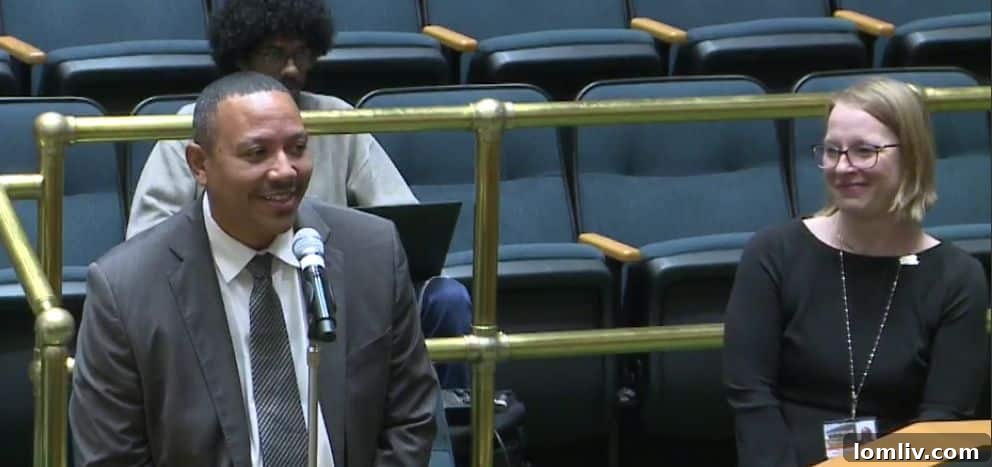
The corridors of Dallas City Hall, particularly those leading to Marilla Street offices, buzzed with speculation following the announcement of Julia Ryan’s departure from her role as Dallas Director of Planning and Urban Design. Her resignation, a significant shake-up in the city’s leadership, was swiftly followed by another notable exit: David Noguera, Director of Housing and Neighborhood Revitalization, also announced he would be leaving the city’s employ.
These twin announcements, conveyed to Dallas City Council members via a memorandum from City Manager T.C. Broadnax, stirred immediate questions about the state of affairs within the municipal government. Both Ryan and Noguera were recognized as leading experts in their respective fields, often engaging in robust and sometimes respectful disagreements with elected officials and the public regarding critical urban development and housing policies. Their expertise and outspokenness made their simultaneous departure all the more impactful, raising concerns about a potential brain drain from Dallas’s public sector.
The reasons for their exits, while officially attributed to pursuing new opportunities, added to the undercurrent of unease. Ryan transitioned to a role as a transportation planner with a consulting firm in Arkansas, signaling a shift to the private sector in a different state. Noguera, likewise, moved to a federal position with the U.S. Department of Housing and Urban Development in Miami. Both roles represented significant professional advancements, yet the loss of two such experienced and influential directors within Dallas’s critical urban planning and housing sectors left a void and prompted widespread discussion.
Dallas Planning Department Under Scrutiny: A Call for Reform
The discourse surrounding these departures intensified with the publication of an opinion column in the Dallas Morning News on October 14. Penned by Dallas Cothrum, president of Masterplan, a prominent Texas planning and permitting consulting firm, the article didn’t mince words. Titled “Dallas’ planning department is awful. Here’s the chance to turn it around,” the column provided a stark assessment of the department’s operational challenges and performance.
Cothrum’s critique resonated with many who had navigated the city’s planning processes. He specifically highlighted the persistent backlog of zoning cases and the deeply entrenched inefficient processes that have long plagued the department. These issues were not new; indeed, Ryan herself had acknowledged similar challenges in a 2022 interview with daltxrealestate.com, underscoring the systemic nature of the problems.
The column drew attention to alarming statistics from a recent citizen satisfaction study, which ranked the planning department near the bottom among city departments. Only a paltry 5 percent of respondents rated the department’s services as excellent, a stark contrast to the 41 percent who deemed them poor – the lowest possible category. An additional 30 percent found the service level merely “fair.” These figures paint a concerning picture of public perception and the department’s ability to meet the needs of its constituents.
“Land-use professionals might argue the scores are not low enough,” Cothrum asserted, reflecting a sentiment of deep-seated frustration within the development community. He further criticized the city for allowing a significant backlog of cases to remain unaddressed, while simultaneously dedicating numerous employees to the long-range “ForwardDallas” plan. This allocation of resources, Cothrum argued, was akin to a business failing to staff its checkout lines while focusing solely on future expansion. His analogy was clear: “It’s as if city leaders have never been to the grocery store when they summon more checkers to the front. The city of Dallas insists everyone wait in line.” This powerful imagery underscored the perceived disconnect between the city’s long-term vision and its immediate operational efficiency.
The challenges facing the Dallas Planning and Urban Design Department are undeniable. With Interim Director Andrea Gilles now at the helm, all eyes are on the department to see if the implementation of the ambitious ForwardDallas comprehensive land use plan can truly serve as a catalyst for reform. This pivotal moment presents both immense challenges and opportunities for the city to streamline its processes, address its backlogs, and ultimately enhance the efficiency and reputation of its critical urban planning functions.
Julia Ryan’s Response: Unpacking the “Toxicity” of Public Service
In response to the mounting criticism, particularly Cothrum’s pointed editorial, Julia Ryan offered her perspective through an October LinkedIn post. Her commentary shifted the focus from departmental inefficiencies to a deeper, more systemic issue: the pervasive negative attitude and often unreasonable expectations directed at public sector employees. Ryan argued that insufficient attention is given to the “toxicity faced by public sector employees by the public.”
She characterized Cothrum’s article as a “great (bad) example of a self-serving article by an author who runs one of the largest pay-for-zoning change companies in Dallas.” This direct accusation highlighted a perceived conflict of interest, suggesting that critics from the private sector might benefit from the very inefficiencies they decry. More importantly, Ryan explicitly linked this “toxicity (from developers and residents)” to her decision to step back from public service, revealing the significant personal toll such an environment can take on dedicated professionals.
Ryan elaborated on the broader challenges faced by local governments, including severe staffing shortages and a limited pool of qualified applicants for critical roles, such as senior urban planners. Attracting and retaining top talent in the public sector is increasingly difficult, especially when faced with lower compensation compared to private industry, coupled with immense public scrutiny. “We are then forced to quietly endure the parade of angry residents, business owners, [and] politicians for policy issues that are out of our control,” she stated, articulating the frustration of professionals who are held accountable for decisions made by elected officials or for systemic issues beyond their direct influence.
The limited engagement on Ryan’s LinkedIn post, apart from a follow-up query from Dallas civil designer Justin Moeller, underscored another facet of the problem: a reluctance within the municipal government to openly discuss these sensitive issues. While current city employees and council members largely chose to remain silent on the record, several privately acknowledged the profound challenges city staff face when offering expert opinions that may not align with popular or political sentiments, only to be publicly lambasted for their professional assessments. This environment can stifle vital expert input, leading to less informed decision-making and further exacerbating departmental inefficiencies.
The Short-Term Rental Debate: A Case Study in Political Pressure
The timing of Julia Ryan’s departure strongly suggests a connection to the contentious debate surrounding short-term rentals (STRs) in Dallas. Her professional opinion on the matter, voiced during a June council meeting, proved to be an unpopular one. Ryan argued that STRs should be regulated through the city’s existing registration ordinance, emphasizing that the issue was primarily a code compliance matter rather than a land use issue requiring zoning changes. This stance, rooted in her urban planning expertise, directly challenged a growing sentiment among some council members and resident groups who favored a more restrictive approach.
Her professional assessment was met with resistance. A couple of council members explicitly indicated that Ryan’s opinion had neither been requested nor was it supported, effectively dismissing the expert advice from the city’s lead planner. Despite City Manager T.C. Broadnax cautioning that they might not appreciate the outcome, other council members pressed for a formal, written recommendation from the Planning and Urban Design Department. Ultimately, the council disregarded the department’s professional advice and opted to address STRs as a land use issue, implementing a ban in residential neighborhoods.
This decision was highly controversial and has had significant repercussions. The City is currently facing a lawsuit from the Dallas Short-Term Rental Alliance, challenging the legality and implementation of the ban. With enforcement slated to begin soon, the STR issue remains a volatile and unresolved matter, serving as a powerful illustration of the political pressures and public backlash that city staff, like Ryan, frequently encounter when offering expert, albeit unpopular, opinions on sensitive urban development issues.
While Ryan’s LinkedIn post didn’t specifically name STRs, her allusions to intense pushback from residents and developers on zoning matters that are often “beyond the control of city staff” clearly resonated with the STR debate. This experience highlights the chasm that can exist between evidence-based planning recommendations and politically expedient decisions, leaving dedicated public servants caught in the crossfire.
The Growing Crisis in Public Service: A Warning for Dallas’s Future
Julia Ryan’s departing message served as a stark warning about the future of public service in cities like Dallas. She eloquently described the escalating “toxicity” as “growing by leaps and bounds and spreading like a cancer.” This sentiment reflects a deeper crisis in municipal governance, where the vital role of professional city staff is increasingly undermined by vocal opposition, political pressure, and a lack of understanding regarding the complexities of urban planning and policy implementation.
Her observations regarding resistance to “innocuous code amendments,” such as how to measure building height, highlight a fundamental challenge: many residents, having “bought into” a certain status quo, fiercely resist any changes, even those designed to improve urban fabric or address modern needs. This resistance often manifests in aggressive and uncompromising public discourse, creating an untenable environment for those tasked with guiding the city’s growth and development.
Ryan, speaking as a “recovering 16+ year public servant,” issued a compelling call to action: “we need to talk more about how to professionally confront and shut down this kind of toxicity. If we don’t, the good public servants will flee to the private sector and where will our cities be then?” This question poses a critical challenge for Dallas and other municipalities across the nation. The continuous attrition of experienced and dedicated public servants due to a hostile work environment can lead to a significant loss of institutional knowledge, a decline in governmental efficiency, and ultimately, a detrimental impact on the quality of life for all residents.
The exodus of professionals like Julia Ryan and David Noguera from Dallas City Hall should serve as a wake-up call. It underscores the urgent need for city leaders, the public, and the development community to foster a more respectful and constructive environment for public service. Without a concerted effort to value and protect its urban planning and development experts, Dallas risks losing the very talent essential to navigating its complex future challenges, including equitable growth, sustainable development, and effective governance. The path forward for the Planning and Urban Design Department, under its new interim leadership and with the ForwardDallas plan in motion, will be a crucial test of the city’s ability to address these profound challenges and rebuild trust and efficiency in its public institutions.